Kata at Black Belt: Why Your Approach Has to Change After Dan Grade and Most Practitioners Miss the Shift
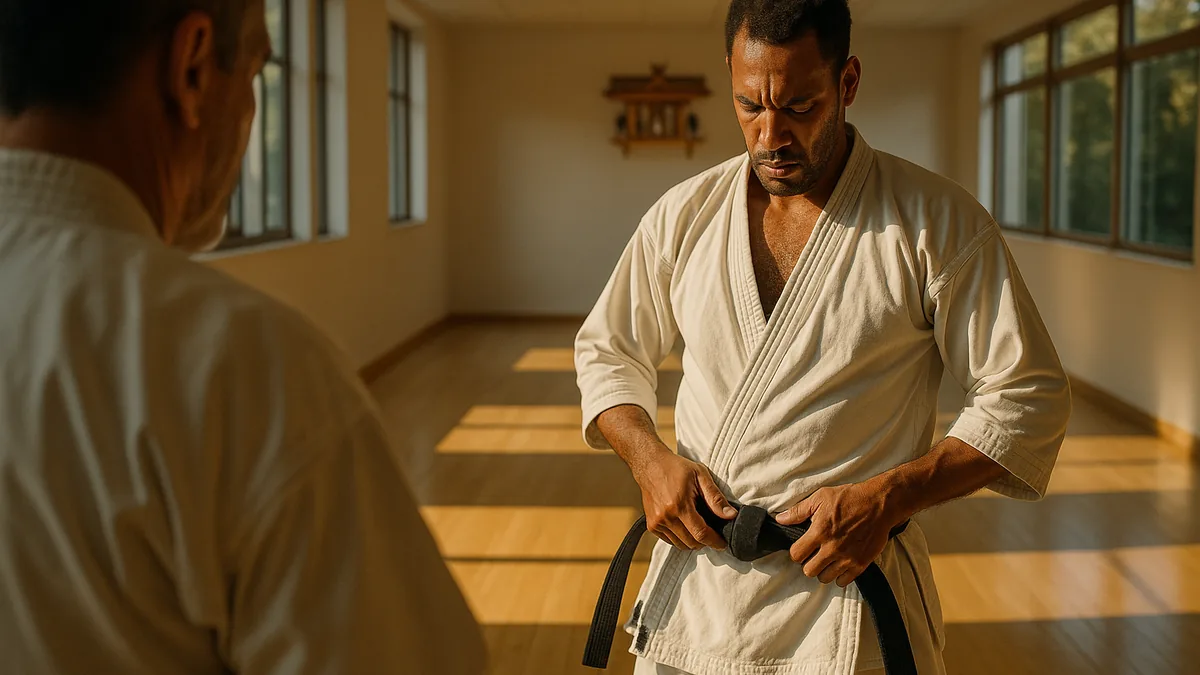
Most practitioners reach their first dan and do exactly what they did the week before grading - they keep drilling the same kata the same way, just with a black belt on. I’ve seen this pattern repeat itself across every dojo I’ve trained in. The belt changes, the approach doesn’t, and three years later you’re wondering why your kata feels hollow and your seniors look at you with polite patience during training.
That shift - the one that actually needs to happen at black belt - isn’t about learning more kata. It’s about changing your relationship with the ones you already know.
What You Were Actually Doing Before Dan Grade
Before shodan, kata is largely about survival. You’re learning sequences, building muscle memory, trying not to forget the next move under pressure. That’s legitimate work. It has to happen. But it creates a habit of mind that’s genuinely hard to break: the habit of thinking kata is about getting the pattern right.
I used to think that way. My instructor would watch me perform Bassai Dai and say “you know where you’re going but you don’t know why you’re going there.” I nodded like I understood. I didn’t. I was too focused on hitting every position cleanly to ask what the positions were actually for.
What changed my understanding wasn’t a seminar or a book. It was a sparring session where a training partner kept breaking my guard from a specific angle, and I was standing in the dojo afterward thinking about it - and I realised I’d performed a movement addressing exactly that problem dozens of times in kata without ever connecting the two. The kata had the answer. I just hadn’t been reading it.
That’s the problem with pre-dan kata training. You’re learning the text but not the language.
The Memorisation Trap
Here’s the honest version of what happens in most dojos: kata gets treated as a performance discipline. Clean lines, correct timing, sharp kiai. That’s what gets rewarded at grading, so that’s what gets trained. And it produces practitioners who can execute sequences flawlessly but can’t tell you what a single transition is actually doing.
I’ve noticed this most clearly when I ask students to bunkai a movement they’ve performed hundreds of times. There’s a specific look - a slight pause, then a recited answer that sounds like it came from a grading syllabus. They’re not thinking about the movement. They’re retrieving a stored answer. That’s memorisation dressed up as understanding.
The correction that actually works isn’t to make them study more bunkai. It’s to change how they train the kata itself. When you perform a sequence with the intent of feeling what each position controls - where the pressure goes, what you’re disrupting, what you’re protecting - the kata starts to give you information instead of just testing your recall.
This is also why kata at yellow belt looks the same as kata at brown belt for a lot of practitioners. The movement is correct but the intent is absent. Correct movement without intent is just choreography.
Application Has to Become the Primary Lens
After dan grade, every time you step into a kata, the first question should be “what is this solving?” Not “am I hitting the right angle” or “is my timing sharp” - those are secondary concerns. The primary question is strategic.
Take any kata you’ve trained for years. Pick three consecutive movements. Now ask yourself: what is the relationship between them? Is the second movement setting up the third? Is the first movement a response to a failed first option? Is there a transition that only makes sense if you understand what preceded it?
Most practitioners can’t answer those questions with any confidence. I couldn’t until well into my black belt years.
What I tell students now is this: treat every kata session as if you have to explain the strategy behind each movement to someone who has never seen it. Not the technique - the strategy. Why this, why here, why in this sequence. If you can’t explain it, you don’t understand it yet, and performing it more cleanly isn’t going to fix that.
The difference between a kata you know and a kata you own is exactly this. Ownership means you’ve interrogated the material. You’ve sat with it, questioned it, tested it, and formed a view on what it’s actually doing.
Partner Work Changes Everything
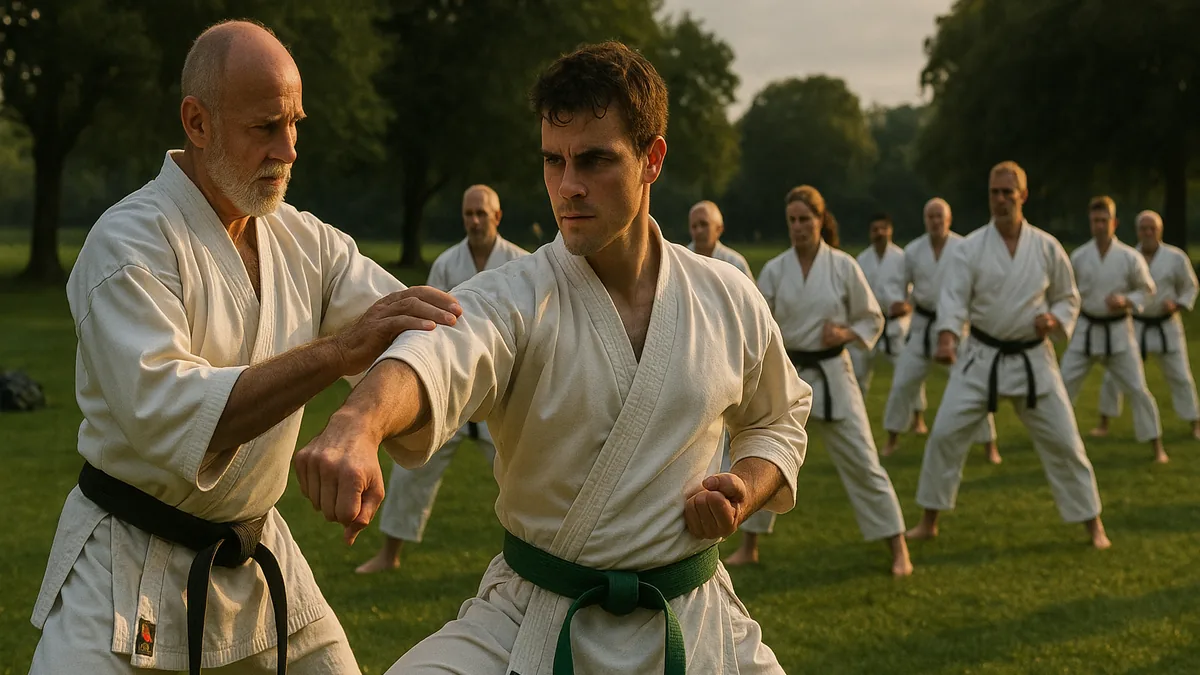
One of the most useful things I’ve done with senior students is take a single kata sequence and spend an entire session on partner drills built from it. Not formalised bunkai where everyone already knows the answer - open exploration where one person performs the kata movement and the other tries to make it fail.
This is uncomfortable at first. You’ll feel how many of your “correct” positions are actually just aesthetically correct - they look right but don’t hold up when someone is actually there. The difference between a position that works and one that doesn’t is something you feel through your whole structure, not something you see in a mirror. When a grip is genuinely controlling, you’ll feel the other person’s options close down. When it’s not, you’ll feel them slip out and you’ll know immediately.
That physical feedback is what kata is supposed to be building toward. The solo practice is preparation for the partner work. But most practitioners do the solo work indefinitely and never get to the test.
If you want to understand what kata actually contributes to sparring, this is where the answer lives - not in performing kata more often, but in taking its movements into partner drills and finding out what holds.
The Strategic Layer Most People Skip
There’s a level of kata analysis that goes beyond individual technique into positional strategy. Why does this kata keep returning to the same embusen position? What does the floor pattern tell you about the assumed engagement distance? What does the sequence of techniques reveal about the assumed threat profile?
I’ve spent time working through embusen as a tactical map rather than a performance requirement, and it genuinely changes how you read a kata. The floor pattern isn’t decoration and it isn’t arbitrary. When you start to understand why a kata moves the way it does spatially, you start to understand the scenario it’s encoding.
This is also where kata like Sanchin, which gets dismissed constantly by practitioners who haven’t sat with it long enough, reveals its depth. What Sanchin is actually training isn’t visible in the movement - it’s structural and internal. That’s exactly the kind of layer that gets missed when your primary concern is executing the sequence correctly.
One thing I’d add here: breathing is part of this strategic layer too. How you breathe through a kata shapes its timing, its intensity, and its meaning. If you’re not thinking about breath placement as a deliberate choice, you’re leaving half the information on the floor. The approach to kata breathing is worth revisiting at every rank because what makes sense at kyu level doesn’t always hold at dan level.
Community Perspective
This is genuinely a topic where dojos disagree, sometimes sharply. Some associations maintain that kata is primarily a competitive and aesthetic discipline, and that bunkai is a separate study. Others treat kata as inseparable from its application and won’t grade students who can’t demonstrate both.
I’ve trained in both environments. My honest view is that the competition-focused approach produces excellent performers who sometimes struggle to explain what they’re doing. The application-focused approach can produce rough performers who understand the material deeply. Neither is entirely right, and the best practitioners I’ve trained with have managed both.
What I’ve noticed is that experienced practitioners across almost all styles tend to converge on the same position eventually: kata without application is incomplete. They might get there at different rates and through different routes, but the destination is similar. The disagreement is usually about how much weight to give performance versus function in training and assessment - and that’s a legitimate ongoing conversation without a clean answer.
Key Takeaways
- After dan grade, shift your primary question from “am I performing this correctly?” to “what is this movement solving?” Correct execution without strategic understanding is a ceiling, not a destination.
- Pick three consecutive movements from a kata you know well. Spend one session doing nothing but understanding the relationship between them. If you can’t articulate why they’re in that order, that’s your next training focus.
- Build partner drills from kata sequences and let them fail. The positions that hold under pressure are the ones worth understanding. The ones that don’t tell you where your understanding is still surface level.
- Study the floor pattern of your kata as a tactical document. Where the kata moves spatially reflects assumptions about engagement, distance, and threat. That information is in the movement if you look for it.
- Revisit your breathing intentionally. At black belt, breath placement should be a deliberate choice that shapes the kata’s rhythm and intent, not a habit you formed at kyu grade and never questioned.
- Teach what you know. Explaining a kata movement to a junior student forces you to actually understand it. If your explanation is vague, your understanding is vague. The act of teaching is one of the most reliable ways to find the gaps in your own training.
The weekly digest
New karate articles, once a week
One email every week with everything new on Karate Lifestyle. No spam; unsubscribe in one click.
We'll email you to confirm. See our privacy policy.