Ashi-Barai in Kumite: How to Develop a Sweeping Game That Actually Disrupts Your Opponent Instead of Just Looking Good in Kata
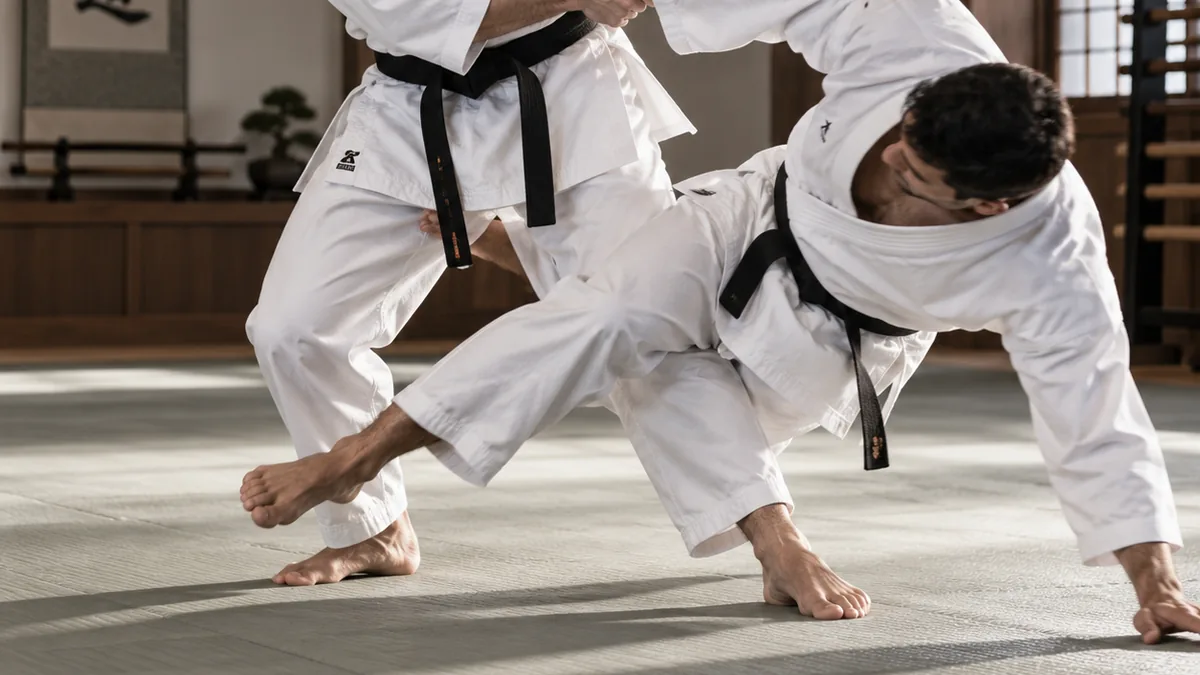
Most students treat ashi-barai like punctuation at the end of a kata sequence - something that looks clean in a grading but has no real weight behind it. Then they try it in jiyu-kumite and either miss completely, get countered, or produce something so telegraphed their partner just steps back and scores on them. I’ve watched this happen hundreds of times. The problem isn’t the sweep itself. The problem is that they’ve only ever practised it as a standalone technique, in a static context, against a compliant partner. That’s a completely different skill from using it when someone is actually trying to hit you.
Ashi-barai works. I’ve used it to disrupt opponents who were bigger, faster, and more experienced than me. But it only works when the timing is right and the setup is deliberate. Do it randomly and you’re just kicking someone’s foot. Do it at the right moment and you feel their whole structure collapse - not dramatically, not a throw, but enough that their next attack is compromised and you’ve taken the exchange.
Here’s what I’ve learned from training it properly, and the corrections I’ve made more times than I can count.
Why Most Ashi-Barai Attempts Fail Before They Start
The biggest difference between a sweep that disrupts and one that does nothing is what happens in the half-second before contact. I’ve seen students - even senior grades - try to sweep from a neutral, balanced position with no prior setup. It never works. You’re trying to move someone’s base while they’re stable and expecting nothing. The physics don’t favour you.
What actually works is using the sweep as a response to movement, not as an opening attack. When your opponent steps forward to attack, that trailing leg is briefly committed and partially unweighted. That’s your window. When they’re mid-combination and their weight is transferring, that’s your window. When they’ve just missed and are resetting, that’s your window.
My instructor used to say “sweep the moving foot, not the standing foot.” I didn’t really understand it until I started paying attention to when my own sweeps actually connected. Every time I got it right, the opponent was in motion. Every time I got it wrong, they were planted.
This is also why ashi-barai pairs so naturally with feinting. A well-timed feint draws a reaction - a step back, a shift of weight, a defensive movement - and that movement creates the opening. If you haven’t read through feinting in kumite, the principles there apply directly to setting up your sweeping game.
The Drills That Actually Build a Working Sweep
Drill 1: Reaction Timing with a Step-In Partner
This is the most important drill I use, and I’d put it ahead of any solo shadow work. It trains the thing that matters most: reading movement and matching your sweep to the moment of commitment.
Why it matters: You can’t develop timing against a static target. This drill forces you to respond to real movement, which is the only context where ashi-barai actually functions.
Setup: Two partners in fighting stance, normal kumite distance. Partner A’s only job is to step forward aggressively at irregular intervals - not attacking, just stepping in. Partner B’s job is to sweep the lead leg as it lands.
Execution:
- Start slow. Partner A takes deliberate, telegraphed steps. Partner B focuses on matching the sweep to the moment the foot touches down - not before, not after.
- The sweep is a low, hooking motion with the inside of your foot, aimed at the heel or ankle. You’re not trying to lift the leg - you’re taking the base out from underneath the weight that’s about to transfer onto it.
- After 10-15 repetitions, Partner A varies the timing. Some steps fast, some slow, some with a pause.
- Progress to Partner A adding a hand technique after the step, so Partner B has to decide: sweep the entry or deal with the attack.
What to feel for: When you get the timing right, you barely need any force. It feels like the leg just goes - there’s almost no resistance because the weight hasn’t fully committed yet. When you’re late, you feel the leg is heavy and planted. That feedback is everything. If it feels like you’re trying to kick through a post, you’re late.
The mistake I see most often: Students sweep too early, catching the leg in the air before it lands. This looks like it should work but it doesn’t - there’s no structure to disrupt. You need the foot to be on the ground, but the weight not yet fully transferred. That’s the window.
Drill 2: Sweep from the Combination Entry
This is where ashi-barai starts to feel like a real weapon rather than a single technique. The sweep works best as part of a sequence, not as a standalone gamble.
Why it matters: In actual kumite, you rarely get to throw a sweep from a standing start. You get to throw it because you’ve created a moment - with pressure, with a combination, with movement that forces your opponent to react and briefly compromise their base.
Setup: Partner work. You’re working a simple two-count entry: jab to close distance, sweep on the step through.
Execution:
- From fighting distance, throw a committed jab - not a tap, but something your partner has to respond to.
- As you step through after the jab, your lead foot passes close to their lead foot. That’s the sweep opportunity.
- The sweep happens as your step lands. Your body weight is moving forward, which adds momentum to the technique without you having to generate it separately.
- Follow the sweep immediately with a hand technique - even if the sweep doesn’t fully work, the combination keeps pressure on.
What to feel for: The jab and the sweep should feel connected - one fluid movement, not a jab and then a separate decision to sweep. When it’s working, your forward momentum does most of the work. You’re not stopping to sweep; you’re sweeping through your own movement.
The mistake I see most often: Students pause between the jab and the sweep. They throw the jab, check if it landed, then decide to sweep. By then the moment is gone. The sweep has to be committed before you know the outcome of the jab.
This connects to a broader problem I’ve written about - the gap between how we drill combinations and how we actually use them. If your combinations are breaking down under pressure, this piece on why combination attacks fail in kumite covers the underlying mechanics.
Drill 3: Sweep as a Counter off a Failed Attack
This is the application I’d prioritise for competition or hard sparring. When your opponent attacks and misses, their weight is committed forward and their base is temporarily compromised. A sweep in that moment is devastating because they can’t reset before you’ve already disrupted them.
Setup: Controlled sparring with one rule: after any missed attack, the non-attacking partner has three seconds to attempt a sweep. This forces both partners to look for the opportunity.
Execution:
- Normal jiyu-kumite, but both partners are actively watching for failed attacks.
- When your partner misses - overextends a gyaku-zuki, steps in and you slip the attack - immediately close the gap and sweep the lead leg.
- Follow with a scoring technique.
What to feel for: The sweep after a failed attack should feel almost effortless when the timing is right. You’re not fighting their balance - you’re exploiting the fact that they’ve already lost it slightly. The leg comes out from under them with minimal force because they’ve already shifted their weight forward into nothing.
Common Mistakes I’ve Corrected More Times Than I Can Count
Using too much leg and not enough body: I see students try to generate the sweep entirely from the sweeping leg - a big, swinging kick at ankle height. It looks dramatic and lands with almost no effect. The power in a sweep comes from your hip and your body weight moving through the technique. The leg is just the contact point. When the hip drives it, you feel the force travel up through your whole side, not just your foot.
Sweeping across instead of through: Most beginners sweep laterally - they try to knock the foot sideways. What actually works is sweeping through the leg, aiming at a point behind where the foot is. You’re not trying to move the foot; you’re trying to take away the ground it’s standing on.
Telegraphing with the eyes: I’ve noticed that students who look at the foot they’re about to sweep almost always get countered. Your eyes drop, your posture changes, and your opponent reads it. Keep your eyes on their centreline. You don’t need to see the foot - you need to feel where it is through your own movement and proximity.
Sweeping without a follow-up: A sweep that works and isn’t followed immediately is a wasted opportunity. A sweep that doesn’t fully work and is followed immediately is still useful - it puts your opponent on the defensive. Train the follow-up as part of the sweep, always.
Progression: Making It Harder
Once the basics are consistent in controlled drilling, the next step is adding resistance and unpredictability. Start drilling against partners who are actively trying to counter your sweep - either by checking it, stepping around it, or using your committed position to score. This is where you’ll find out whether your timing is actually good or whether you’ve just been drilling against cooperative partners.
After that, work on sweeping from your non-dominant side. If you only sweep off your right leg, a smart opponent will adjust their stance to take that option away. On that note - if you’re not already thinking about how stance switching affects your offensive options, this piece on using southpaw in kumite is worth your time.
The final progression is integrating ashi-barai into your actual game plan - knowing which opponents are vulnerable to it and when to look for it. Heavy forward-pressure fighters tend to be good targets because they’re always moving their weight forward. Defensive fighters who like to step back are harder to sweep but can be set up with feints that draw them forward. This is the point where ashi-barai stops being a technique you use and starts being part of how you think. For building that kind of strategic approach, this guide on building a kumite game plan for a specific opponent covers the broader framework.
Community Perspective
There’s a genuine split in how different dojos and styles approach ashi-barai in kumite, and I think it’s worth naming honestly. Traditional Shotokan training tends to treat it as a finishing technique - you sweep and that’s the point. Sport kumite practitioners, particularly those training under WKF rules, tend to use it as a destabiliser that creates scoring opportunities rather than a score in itself. Neither approach is wrong, but they produce very different timing and very different follow-up habits.
I’ve also seen real disagreement about whether to drill it extensively in kihon or jump straight to application. My position is that kihon drilling of the sweep builds the mechanical habit, but it can also create a false sense of competence if you spend too long there. The timing you develop against a static partner doesn’t transfer. I’d rather see a student with rough mechanics and good timing than clean mechanics and no sense of when to use them.
The other debate - and this comes up constantly on forums and in dojo conversations - is whether ashi-barai is even worth developing as a primary tool or whether it’s a situational add-on. I think it’s worth developing specifically because it’s so underused. Most opponents at club and regional level are not prepared for it. That’s an advantage you’d be leaving on the table.
Key Takeaways
- Sweep the moving foot, not the planted foot. Timing to the moment of weight transfer is everything - if it feels heavy, you’re late.
- The setup matters more than the sweep itself. Feints, combination entries, and counter-timing create the opening; the sweep just closes it.
- Drive from the hip, not the leg. When the hip is behind it, you’ll feel the force travel through your whole side. When it’s just the leg, you’ll feel nothing.
- Always train the follow-up. A sweep with no follow-up is a gamble. A sweep with an immediate hand technique is a sequence.
- Keep your eyes on the centreline. The moment your eyes drop to the target foot, you’ve telegraphed the sweep.
- If your sweeps aren’t working in sparring, the problem is almost certainly timing, not mechanics. Go back to the reaction timing drill and slow it down until you can feel the window.
The weekly digest
New karate articles, once a week
One email every week with everything new on Karate Lifestyle. No spam; unsubscribe in one click.
We'll email you to confirm. See our privacy policy.