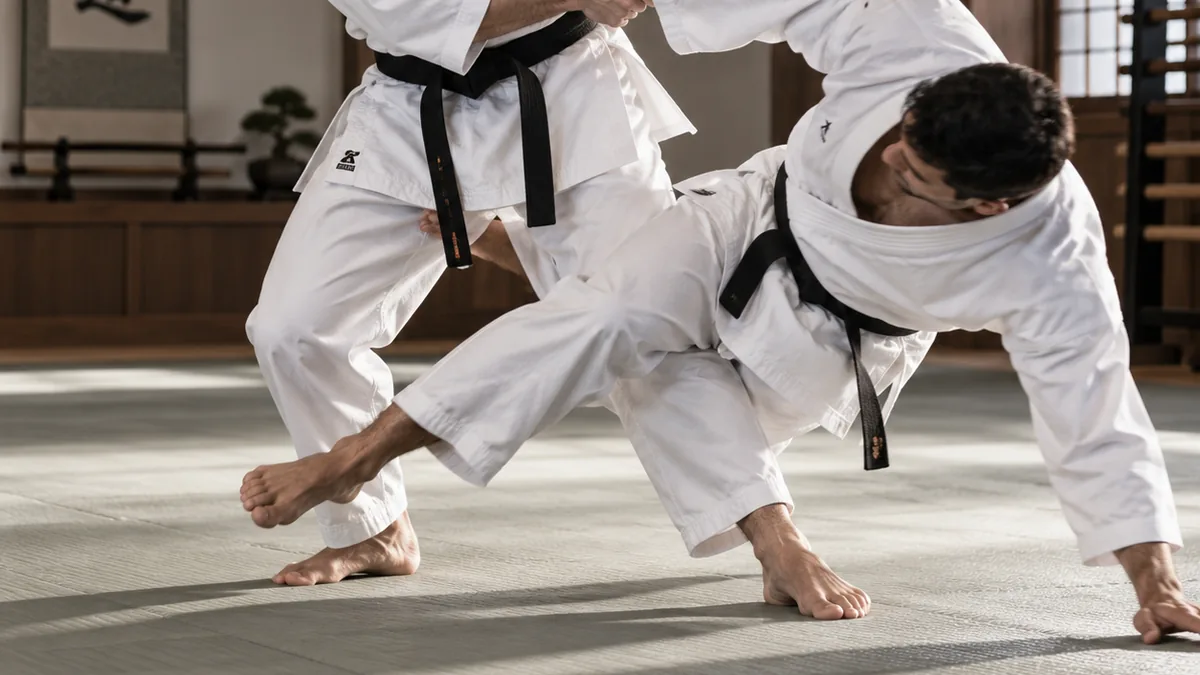
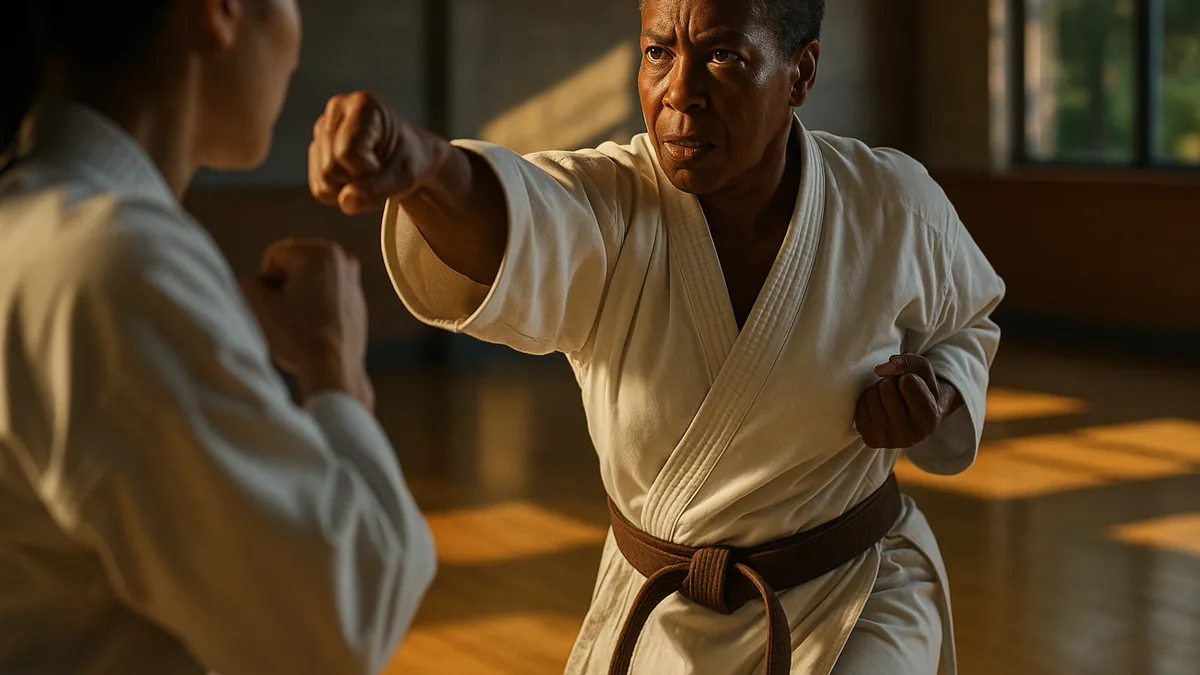
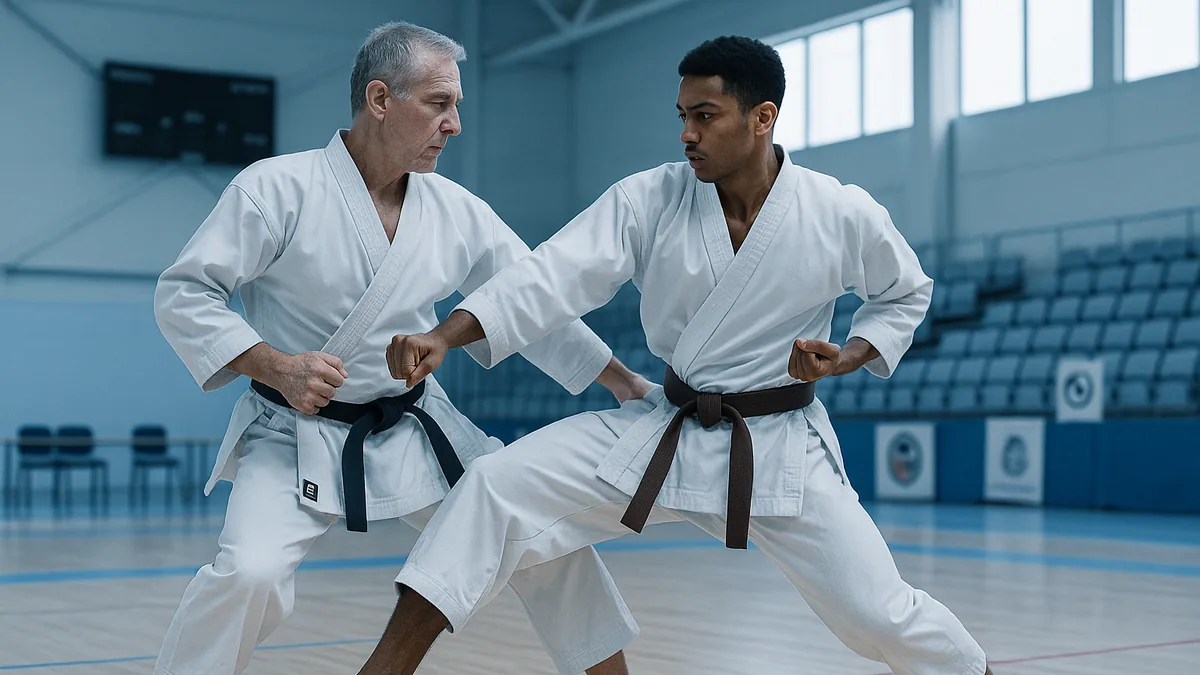
Why Combination Attacks Fail in Kumite (And How to Make Them Land)
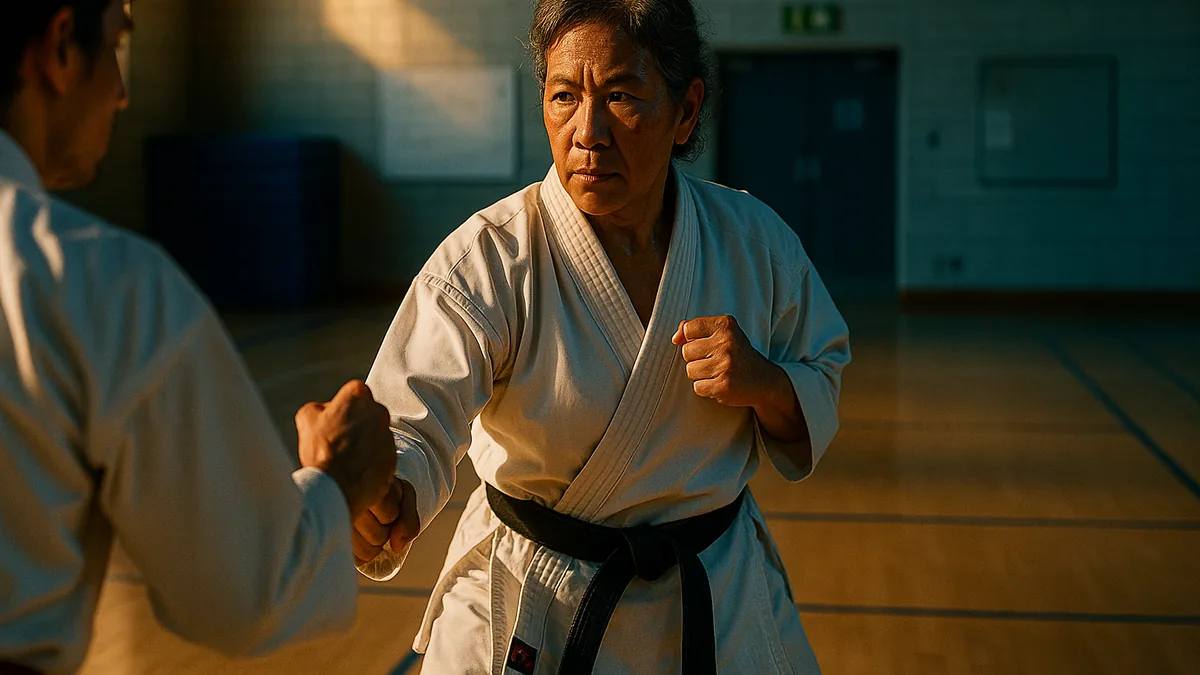
Most combinations fail before they start. Not because the techniques are wrong, but because the person throwing them has already telegraphed the whole sequence. I’ve watched this happen hundreds of times - a student loads up, throws a jab, and the opponent is already moving before the second technique leaves the chamber. The combination lands clean in the mirror and dies completely in sparring.
The problem isn’t the combination. It’s the assumptions built into how we practice them.
We drill combinations in lines, at a fixed distance, against a stationary target, in a predictable rhythm. Then we get into jiyu-kumite and wonder why nothing connects. The opponent moves. The distance changes. The timing window opens and closes faster than we expect. If your combinations only work under ideal conditions, they don’t actually work.
This is fixable. But it requires breaking some habits that feel like good training.
Why Your Combinations Aren’t Landing
The mistake I see most often is treating combinations as a single, pre-packaged unit. You decide “I’m going to throw gyaku-zuki, mawashi-geri, uraken” and you commit to all three before the first one even lands. That’s not a combination - that’s a script. And your opponent isn’t following the script.
What actually works is thinking of a combination as a series of decisions. The first technique creates a reaction. The second technique responds to that reaction. The third technique capitalises on whatever opened up. Each one depends on what happened before it.
I used to think the goal was to throw everything faster so the opponent couldn’t react. My instructor kept telling me “slow down, feel the response.” I didn’t understand it until I sparred with a senior who would let the first technique come in, then pick apart everything after it. He wasn’t faster than me. He was reading me. The speed wasn’t the problem - the rigidity was.
Understanding timing in kumite matters here because timing isn’t just about when you throw - it’s about whether you’re responding to what’s in front of you or executing a pre-planned sequence regardless of what’s happening.
Distance Is the Variable You’re Ignoring
Here’s the thing about combinations: every technique in a sequence requires a slightly different distance. A gyaku-zuki and a mawashi-geri to the head don’t work from the same range. If you enter at punching distance and then try to throw a head kick, you’re too close. The kick either gets jammed or you unconsciously step back to create space - and that pause kills the combination entirely.
I’ve seen students practice beautiful combinations on the bag and then look completely disjointed in sparring. Nine times out of ten, the distance management is the issue, not the technique.
What I tell students is: before you drill any combination, map the distance requirements of each technique. Where do you need to be for technique one? Where does that put you for technique two? Is there a natural transition, or are you fighting against the geometry?
Distance management in kumite is worth studying seriously if combinations are breaking down for you. The footwork between techniques isn’t filler - it’s the combination.
The Drills That Actually Fix This
Drill 1: Single Technique, Multiple Responses
This is the most important drill I teach for combination work, and it’s the one students most want to skip because it feels too simple.
Why it matters: Before you can build combinations, you need to understand what your first technique actually does to an opponent. What does it open? What does it close? This drill builds that awareness.
Setup: Work with a partner in light contact sparring. One person is the attacker, one is the defender/responder.
Execution:
- Attacker throws one technique only - a gyaku-zuki, for example.
- Defender responds naturally - they might block high, step back, cover, counter-punch.
- Attacker freezes after the technique lands and identifies what opened up.
- Both partners discuss what the logical follow-up would have been.
- Repeat 10 times, then switch roles.
What to feel for: You’re looking for the moment after your technique lands where you feel the opponent’s weight shift or their arms move to cover. That’s the window. It’s brief - maybe a quarter second - but you’ll start to feel it as a kind of “now” moment. When the timing is right, you feel the opponent’s reaction before you consciously process it.
What most people get wrong: They freeze and think rather than feel. The point isn’t to analyse - it’s to train your awareness so the response becomes instinctive. Keep the thinking in the debrief, not in the moment.
Drill 2: Two-Technique Combinations With Conditional Branching
Once you can read the response to your first technique, you train two possible second techniques depending on what happens.
Why it matters: This is where combinations stop being scripts and start being conversations. You’re not deciding what to throw second - you’re reacting to what opened.
Setup: Same partner work. Agree on a first technique. Agree on two possible responses from the defender - for example, they either cover high or step back.
Execution:
- Attacker throws the first technique.
- Defender randomly chooses one of the two agreed responses.
- Attacker throws the appropriate follow-up based on what they see.
- If the defender covers high, attack low. If the defender steps back, close distance and attack mid.
- Start slow - the defender signals their response clearly. Gradually make it more realistic.
What to feel for: The follow-up should feel like it’s being pulled out of you by the defender’s movement, not pushed out by your intention. When it’s working, you’re not deciding to throw the second technique - you’re responding to an opening that appeared. It feels less like attacking and more like answering.
What most people get wrong: They start with too many variables. Two responses is enough. Adding a third too early means the attacker starts guessing rather than reading. Keep it binary until the reactions are clean.
Drill 3: Broken Rhythm Combination Drilling
This one is less popular and more valuable than most students realise.
Why it matters: Combinations drilled at constant rhythm are predictable. Opponents time the gaps. Breaking the rhythm disguises the sequence and creates genuine hesitation.
Setup: Choose a three-technique combination you already know. Drill it alone, then with a partner holding pads.
Execution:
- Drill the combination at normal, even rhythm ten times.
- Now add a deliberate pause after technique one - throw, hold for a beat, then continue.
- Drill that ten times.
- Now vary where the pause goes - sometimes after one, sometimes after two.
- Finally, remove the deliberate pause and let the rhythm vary naturally based on what feels right.
What to feel for: The pause should feel like a feint in time rather than a hesitation. You’re not stopping because you’re uncertain - you’re stopping to create uncertainty in the opponent. When it’s working, partners on the pads will tell you the combination felt harder to anticipate even though they knew it was coming.
What most people get wrong: The pause becomes a tell. They slow down before the pause and speed up after it, which telegraphs the break in rhythm. The tempo of each individual technique stays constant - only the gap between them changes.
This connects directly to feinting work. If you want to go deeper on disguising your intentions, feinting in kumite covers the underlying mechanics well.
Capitalising on Openings: The Follow-Up Problem
Most students think about combinations as attack sequences. Senior practitioners think about them as opening-creation tools. The combination isn’t the point - what it sets up is the point.
I’ve noticed that the students who improve fastest are the ones who stop trying to land every technique in a combination and start focusing on what the combination exposes. The first two techniques are pressure. The third technique is the score. Train with that priority and the whole thing sharpens up.
The practical implication: in jiyu-kumite, your combination doesn’t need to land clean. It needs to create a reaction you can exploit. A gyaku-zuki that forces your opponent to cover high is successful even if it doesn’t score - because now you have a low line open and they’re weight-shifted backward. That’s your moment.
Reading your opponent in kumite is essential for this. You can’t capitalise on openings you don’t see, and seeing them is a trained skill, not a natural one.
One thing worth flagging: if you keep getting countered from the same side when you attack, your combinations may be creating predictable openings rather than exploiting them. Diagnosing kumite blind spots is worth reading alongside this work.
How This Changes With Experience
As a white belt, I thought combination training was about memorising sequences. By brown belt, I understood it was about building a vocabulary. The individual techniques are words. The combinations are sentences. But fluent conversation doesn’t happen by memorising sentences - it happens by understanding the grammar well enough to construct new ones in real time.
What I see in senior practitioners that I don’t see in intermediate students is this: they never seem to be executing a combination. They seem to be responding to a series of moments. The combination is invisible because it’s not pre-planned - it’s assembled on the fly from trained responses.
That’s the goal. It takes years. The drills above are how you start building toward it.
Community Perspective
There’s a real split in how different dojos approach combination training, and I think it’s worth being honest about it.
Traditional Shotokan training tends to emphasise drilling fixed combinations in kihon until they’re automatic - the argument being that under pressure, you default to what’s been most deeply grooved. There’s genuine merit to this. Automaticity matters when the adrenaline is up.
Sport-focused training, particularly in WKF-style kumite, tends to move faster toward variable and responsive drilling, because the competitive format rewards adaptability and disguise over raw power. The combinations look different, the distances are different, and the follow-up priorities are different.
I’ve trained in both environments and I think the honest answer is that you need both. Point fighting vs continuous sparring touches on how format shapes what you actually need to develop. Fixed drilling builds the raw material. Variable drilling builds the ability to use it.
Where I’d push back on traditional approaches is the tendency to drill combinations without any reference to what they’re supposed to open. A combination practiced in a vacuum for years can still fall apart in sparring if the practitioner has never trained the conditional logic - what do I do when this works, and what do I do when it doesn’t?
Key Takeaways
- Your first technique is a question. Your second technique is the answer to whatever your opponent says back. Train the conversation, not the script.
- Distance management between techniques is not footwork - it is the combination. If the geometry doesn’t work, the sequence doesn’t work.
- Break combinations into two-technique units with conditional branches before you drill the full sequence. This builds reading ability, not just motor patterns.
- The pause is a weapon. Broken rhythm combinations are harder to time than faster combinations. Train the gap as deliberately as you train the technique.
- Stop trying to land every technique. Use the first two to create reactions. Score with the third.
- Fixed drilling and variable drilling are both necessary. One builds the material, the other builds the ability to use it under pressure. You need both, and most training environments under-invest in the second.
The weekly digest
New karate articles, once a week
One email every week with everything new on Karate Lifestyle. No spam; unsubscribe in one click.
We'll email you to confirm. See our privacy policy.