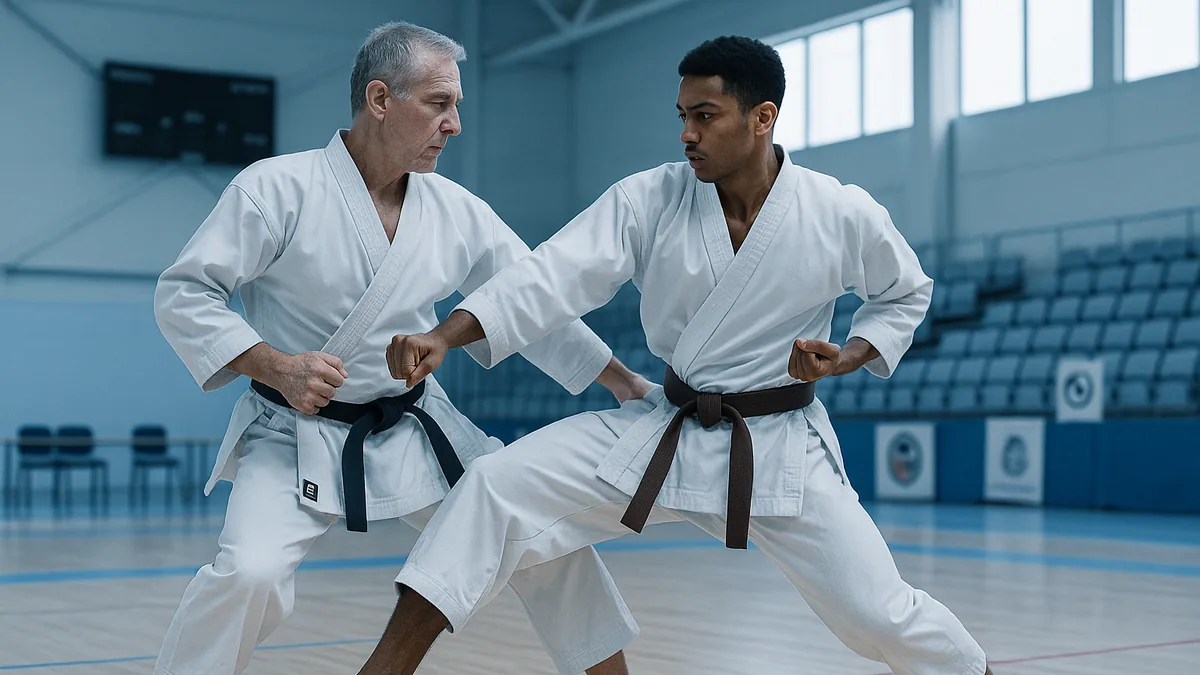
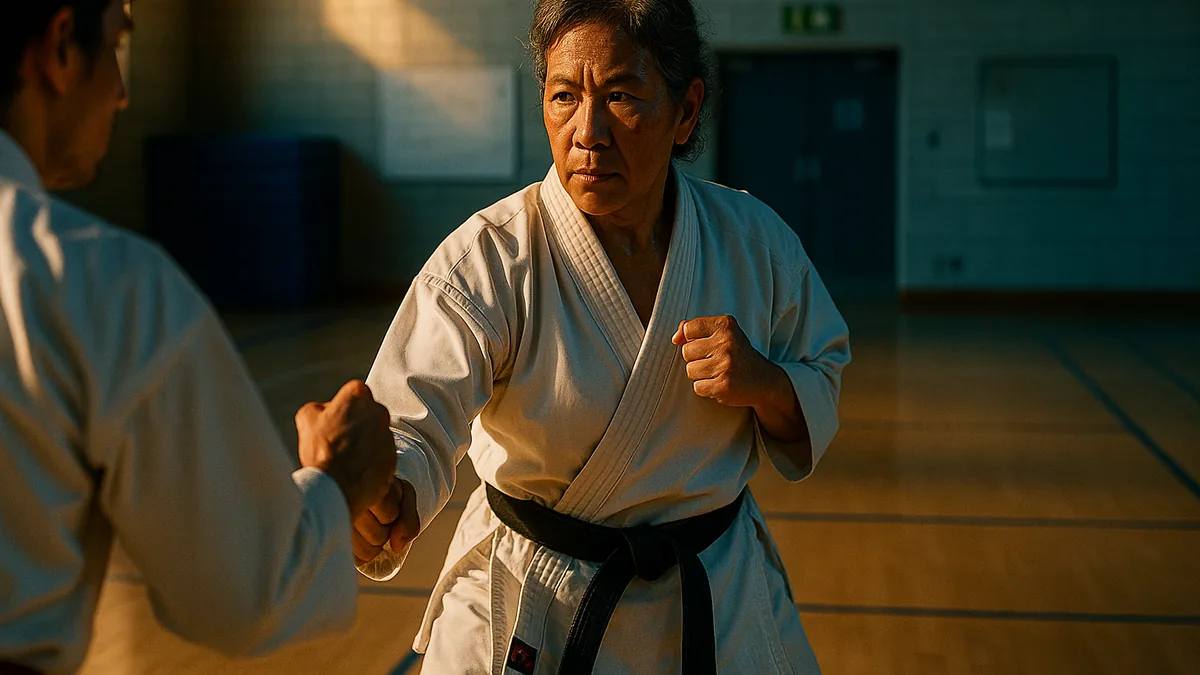
Why You Keep Getting Scored On From the Same Side: Diagnosing and Fixing Kumite Blind Spots
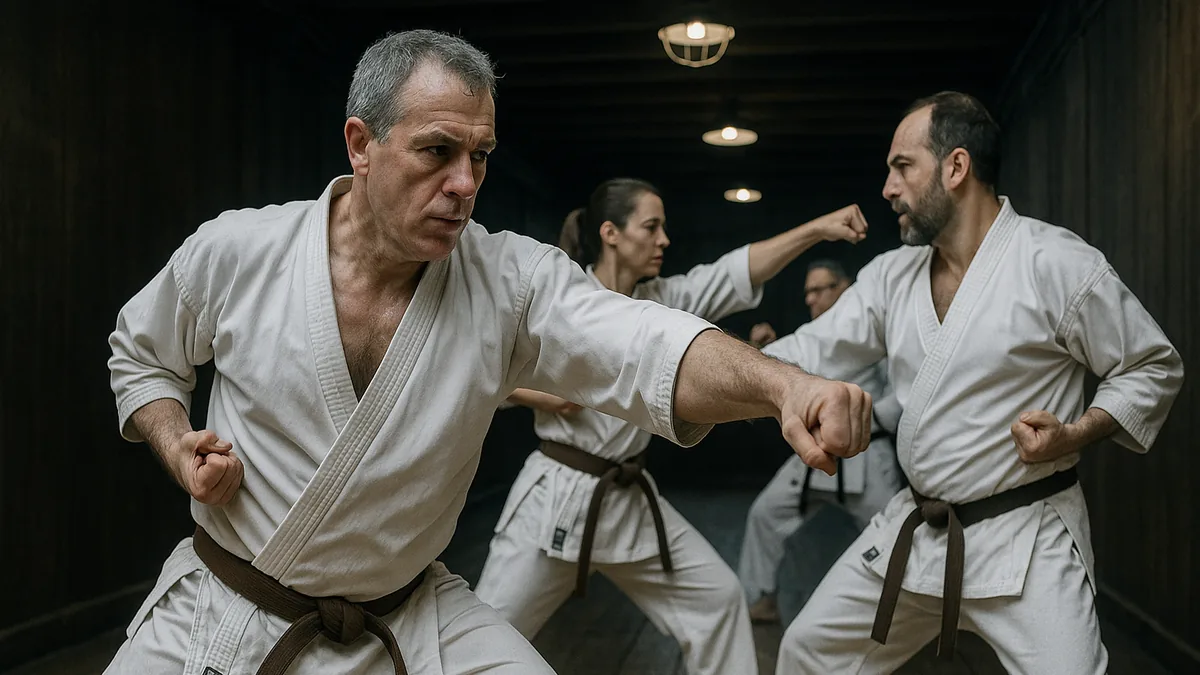
If you’re getting scored on from the same side in almost every sparring session, that’s not bad luck. That’s information. And most people ignore it for months, sometimes years, because they’d rather blame the opponent’s speed or their own reaction time than sit with the uncomfortable truth that their guard has a hole in it they’ve never bothered to fix.
I’ve been there. I had a period as a brown belt where every training partner with a strong gyaku-zuki seemed to find my right side with embarrassing consistency. I kept telling myself I was just slow on that day. It took my instructor pulling me aside after a grading and saying, “You know they’re all going the same way, yes?” for me to actually stop and look at the pattern.
That conversation changed how I approach both my own training and how I coach students through their kumite development.
The Blind Spot Isn’t Where You Think It Is
Most people, when they hear “blind spot,” assume it means they’re not watching that side. So they try to look harder, widen their gaze, stay more alert. And nothing changes.
The real issue is almost never attention. It’s structure. Your guard, your stance, your default movement patterns - they create predictable geometry, and experienced opponents read that geometry without thinking about it. They’re not consciously targeting your right side. They’ve just found the path of least resistance through repetition, and their body knows to keep going back there.
I’ve noticed that the practitioners who get scored on repeatedly from one side almost always share one of three structural problems: their lead hand drops on extension, their rear foot angles outward when they step back, or their weight distribution shifts forward when they feel pressure. Any one of these opens a reliable channel. All three together and you’re basically handing out invitations.
What makes this hard to self-diagnose is that these faults feel normal. The dropped lead hand feels like a natural return position. The angled rear foot feels like balance. The forward weight shift feels like engagement. You won’t feel them as mistakes until someone shows you what they’re exploiting.
Diagnosing the Pattern: What to Actually Look For
The first step is video. I know some people resist this, but there’s no substitute. What you think your guard looks like and what it actually looks like are two different things, and the gap between them is usually where your blind spot lives.
Record three or four rounds of jiyu-kumite and watch them back with one specific question: from which direction do the scoring techniques arrive, and what does my body do in the two seconds before they land?
You’re not looking at the technique that scored. You’re looking at what you did that created the opening.
The Three Patterns I See Most Often
The drop-and-reset habit. After attacking, the lead hand returns to guard position but drops slightly lower than it started. It’s a tiny movement, maybe five centimetres, but at sparring range that’s enough. The opponent has already clocked it after the second or third exchange and starts timing their counter to land in that window. I see this constantly in students who’ve been drilling kihon combinations without anyone watching the return path of their techniques.
The pivot blind spot. When practitioners move backward under pressure, they often pivot on the front foot to create angle. Done well, this is excellent footwork. Done with a lazy rear foot, the pivot rotates the body and leaves the rear-side ribs and head exposed for a split second. In point fighting, that split second is the whole game. If you’re getting scored on with jodan techniques to your rear side during exchanges, this is almost certainly what’s happening. Have a look at kumite footwork fundamentals if you want to work through the mechanics of this in detail.
The pressure lean. When an opponent pushes the pace, some practitioners unconsciously lean forward - not a deliberate forward movement, just a postural shift where the head moves in front of the hips. This compresses your ability to use your rear hand defensively and makes you slow to disengage. Opponents who attack the body will find chudan almost effortless against you in this state.
The correction that makes the biggest difference for the pressure lean isn’t a guard adjustment. It’s getting the practitioner to feel what it’s like to have their weight back. I’ll sometimes put a hand on a student’s chest during a drill and just hold light pressure while they move. The moment they stop fighting my hand and let their weight settle back, their whole guard reorganises. You’ll feel it immediately - there’s a kind of groundedness that comes back, a sense that you could move in any direction rather than just forward or backward.
Your Stance Is Telling Stories You Don’t Know You’re Telling
Stance analysis sounds technical, but what I’m really talking about is this: your resting position in kumite communicates your habits to your opponent. Not intentionally. Just through repetition.
If your left shoulder drops when you’re thinking about attacking, your opponent’s nervous system picks that up. If you always step to the same side when you’re uncomfortable, they’ll start pushing you that way on purpose. This is why experienced practitioners can seem almost psychic - they’re not reading minds, they’re reading patterns.
I used to think, as a kyu grade, that deception in kumite was about faking techniques. By the time I got to dan grade, I understood that the deeper deception is in having no readable pattern at all. The problem is you can’t remove a pattern you don’t know you have.
This is where a trusted training partner is worth more than any amount of solo drilling. Ask someone who spars with you regularly: “Where do you always attack me? What do you see that makes you go there?” Most training partners will tell you straight if you ask directly. The answers are usually uncomfortable and almost always useful.
For a broader framework on how to read and control distance in these exchanges, distance management in kumite covers the spatial side of this in a way that complements what we’re working through here.
Drills That Actually Address the Problem
Once you’ve identified your blind spot, generic sparring practice won’t fix it. You need to isolate the specific fault and overload it until the correction becomes automatic.
Constraint Sparring
This is the drill I come back to most often with intermediate students. You identify the side they’re getting scored on and you set up a round where the only techniques the partner is allowed to throw are attacks to that side. No variation, no mixing it up - just a sustained, controlled attack on the vulnerable channel.
It feels uncomfortable and slightly artificial, and that’s the point. You’re forcing your nervous system to solve one specific problem under pressure. Within a few rounds, most practitioners start making the structural adjustment without thinking about it, because the drill removes every other variable.
Return Path Drilling
For the drop-and-reset habit, I have students do their standard kihon combinations but with a focus on the return path of every technique. The drill is simple: throw the combination, freeze in guard position, have a partner check the hand height. Do it slowly enough that the return path is conscious, then gradually speed it up until it’s automatic.
It’s tedious. Students hate it. It works.
Pressure Response Drills
For the pressure lean, I’ll have a student stand in their fighting stance while a partner applies steady forward pressure with open hands - not an attack, just pressure. The student’s job is to maintain their posture and structure while moving backward. The moment the head comes forward of the hips, the drill stops. Reset, start again.
You’ll feel the difference immediately when you get it right. The pressure stops feeling threatening because you’re moving with it rather than resisting it. That sensation - of being relaxed and mobile under pressure rather than tense and leaning - is what you’re trying to make your default state.
The Timing Connection
One thing I want to flag that often gets missed: blind spots aren’t only structural. Sometimes you’re getting scored on from the same side because your timing on that side is consistently off - you’re a half-beat slow with your defensive response when the attack comes from a specific angle.
This is a different problem with a different solution. If your guard is structurally sound but you’re still getting caught, look at whether your reaction to attacks from that angle is slower than the other side. This often comes from a training history where you’ve drilled defensive responses asymmetrically - more repetitions defending from one side than the other.
If that’s what’s happening, how to improve kumite timing is worth working through alongside your structural fixes, because solving one without the other will only take you so far.
Community Perspective
There’s a genuine split in how different dojos approach this kind of analysis. Traditional training environments tend to emphasise kata and kihon as the foundation for fixing kumite problems - the argument being that if your fundamental movement is sound, your guard and structure will follow. I have some sympathy for this view, and I’ve seen students whose kumite transformed after they finally understood what they were supposed to be doing in a particular kata.
But I’ve also trained in environments that are much more video-analysis and constraint-sparring focused, and honestly, for fixing specific blind spots in active sparring, that direct approach tends to produce faster results. The kata-first approach works, but it requires the practitioner to understand the connection between the kata movement and the kumite application - and a lot of people never make that bridge without someone explicitly pointing it out.
My honest position: use both. Don’t let it be an either/or conversation. Fix the structural fault through direct drilling, and then look at whether your kata practice is reinforcing or undermining the correction. Sometimes you’ll find the kata was trying to teach you exactly what you needed - you just weren’t reading it that way.
Key Takeaways
- Video your sparring and watch it back looking specifically at what your body does in the two seconds before a score lands - not at the scoring technique itself.
- Ask a regular training partner to tell you honestly where they always attack you and what they see that makes them go there. Their answer will tell you more than an hour of solo analysis.
- The correction for most structural blind spots is postural, not technical - adjust your stance geometry first before adding defensive technique drills.
- Use constraint sparring to isolate the problem: have your partner attack only your vulnerable side for entire rounds until your nervous system builds a reliable response.
- Blind spots are often asymmetric timing problems as much as structural ones - if your guard looks right but you’re still getting caught, check whether your defensive reaction time differs between sides.
- Don’t confuse awareness of the blind spot with having fixed it. Knowing where the hole is and having trained a reliable response to close it are completely different things. The drill work is non-negotiable.
The weekly digest
New karate articles, once a week
One email every week with everything new on Karate Lifestyle. No spam; unsubscribe in one click.
We'll email you to confirm. See our privacy policy.