Distance Management in Kumite
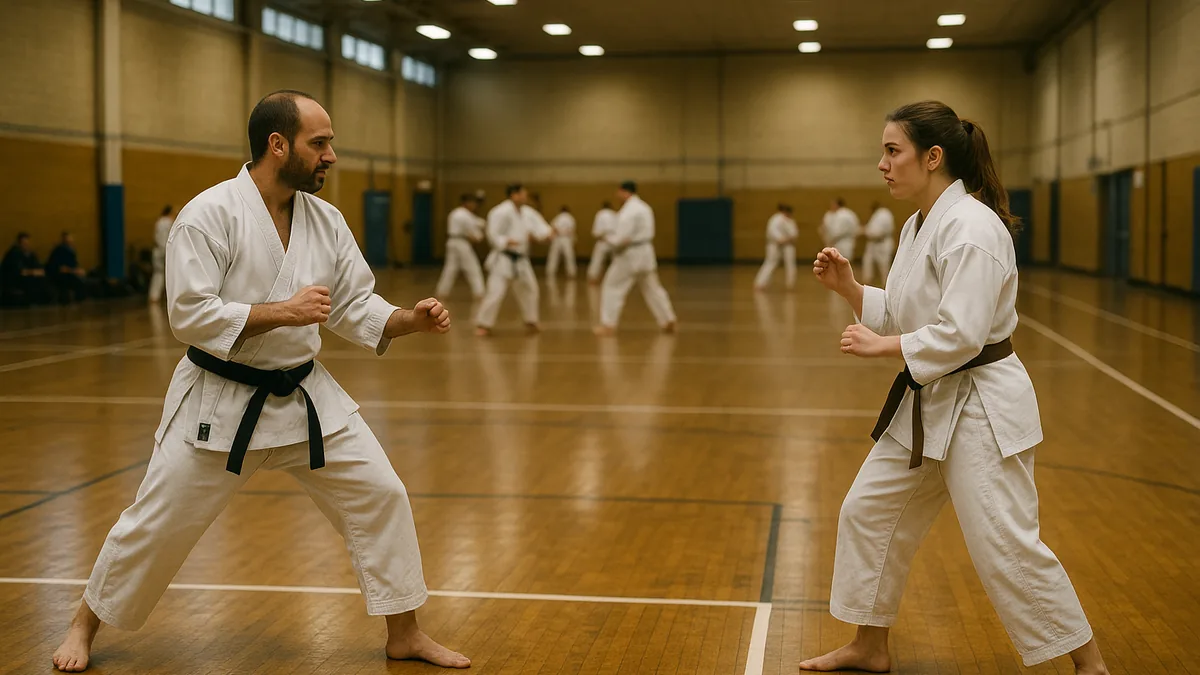
Most people who lose in kumite don’t lose because they’re too slow. They lose because they’re standing in the wrong place.
I’ve watched this play out hundreds of times. A student with decent technique, reasonable speed, good kime - gets picked apart because they’ve drifted into a distance where they can neither attack effectively nor defend in time. They’re not outclassed. They’re just in the wrong spot. And they have no idea, because nobody ever really explained to them what the right spot feels like.
That’s what this is about.
Understanding Ma-ai
Ma-ai is one of those concepts your instructor will say early in your training and you’ll nod along with, thinking you get it. You don’t. Not yet.
The literal translation is something like “interval” or “space between” - but that’s not particularly useful. What ma-ai actually means in practice is the distance at which you can attack with full effectiveness while also having enough time to respond to what your opponent does. It’s not a fixed measurement. It’s a relationship. And it changes constantly throughout a bout.
As a white belt, I thought ma-ai was about staying far enough away to be safe. By brown belt I realised that’s completely backwards. If you’re at a distance where you feel safe, you’re probably at a distance where you’re also ineffective. The point isn’t to be safe. The point is to be dangerous while making your opponent feel like they’re not in danger - right up until the moment they are.
What I tell students now is this: ma-ai is about controlling the moment of decision. When you’re at the right distance, your opponent has to commit before they know whether their attack will land. You don’t. That asymmetry is the whole game.
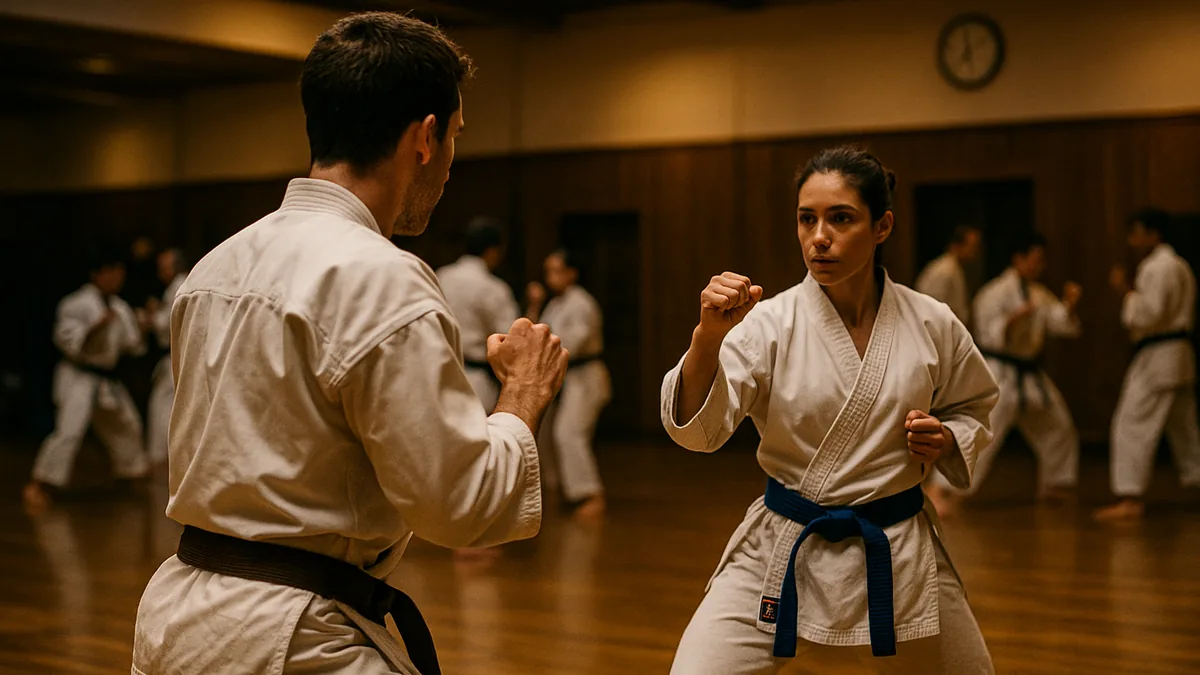
The feeling of correct ma-ai is subtle and takes time to develop. You’ll feel it as a kind of readiness - not tension, but a sense that movement in any direction is equally available to you. When you’re too close, you feel compressed, like you’re already reacting. When you’re too far, you feel disconnected, like you’re watching rather than participating. The right distance has a particular quality of attention to it. You’re present in a way you’re not at other ranges.
How Distance Changes With Your Opponent
This is where I see intermediate practitioners get into trouble most often. They find a distance that works against training partners of similar size and then try to apply it universally. It doesn’t work.
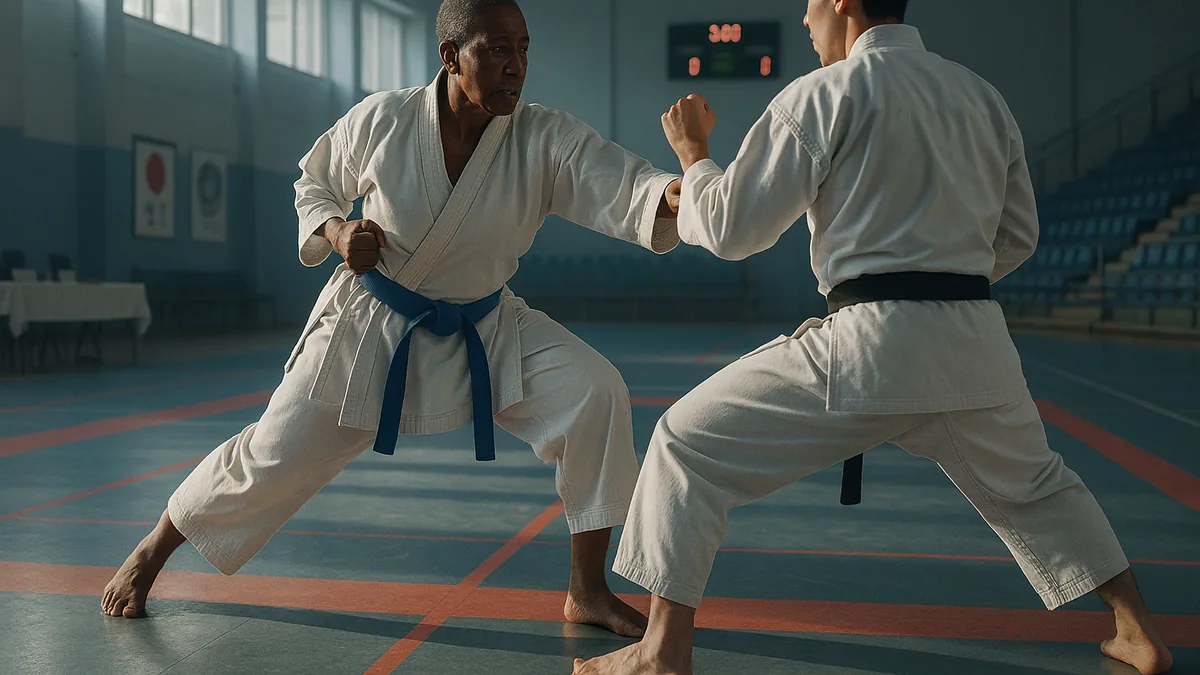
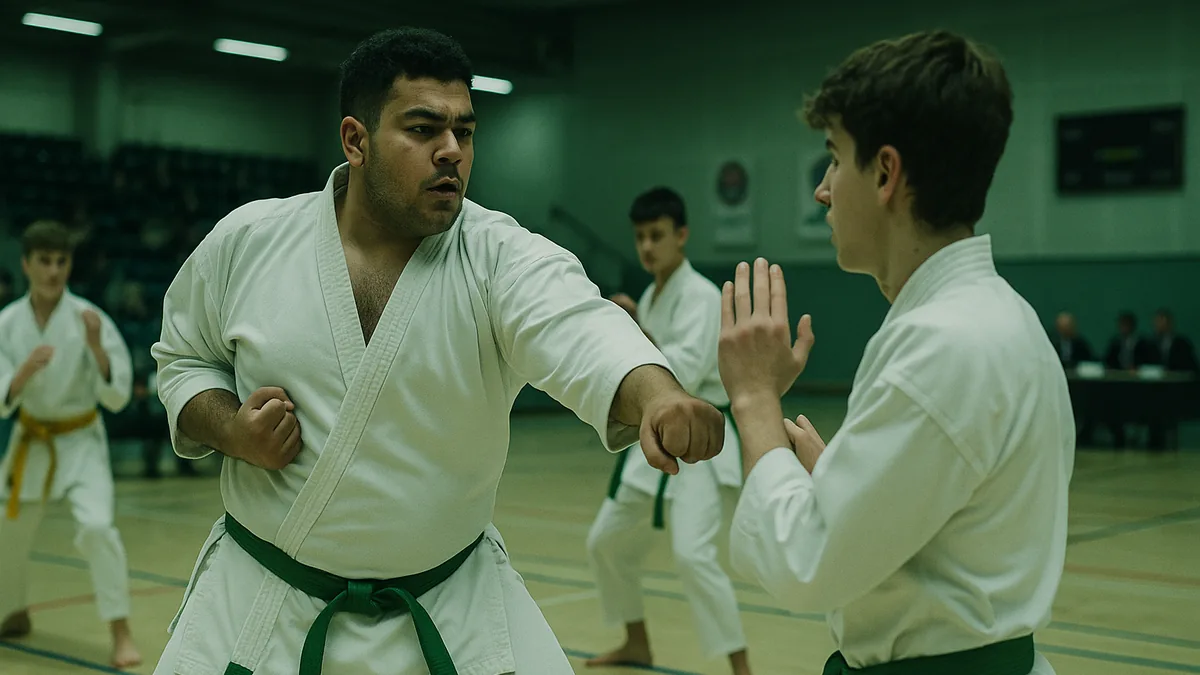
Against a shorter opponent, your natural ma-ai is too far. You’re used to a certain step-in distance, but their effective striking range is shorter than yours. If you maintain your usual spacing, you’re actually outside their optimal range but inside yours - which sounds like an advantage, and it is, but only if you recognise it and use it. Most people don’t. They drift closer out of habit, and suddenly they’re at a range where the shorter opponent’s speed advantage kicks in.
Against a taller opponent with longer limbs, your usual ma-ai puts you in range of their attacks before you’ve closed enough distance to land your own. I’ve noticed that this is where a lot of mid-kyu students get frustrated - they feel like they can’t get anything to land, but they can’t articulate why. The answer is almost always that they haven’t adjusted their entry distance. You need to either close the gap faster and more decisively, or work from further out and draw them onto your counter.
One specific moment that changed how I teach this: I was working with a student preparing for a grading, a solid kyu grade, technically competent. She kept getting caught by a taller training partner during jiyu-kumite. After watching for a few rounds, I could see she was initiating from the same distance regardless of who she was facing. Against the taller partner, she was essentially signalling her attack from a range where he had time to respond. The correction was simple - we spent twenty minutes just on recognising the different entry point needed and drilling the adjusted step-in. Her success rate changed immediately. Not because her technique improved, but because her distance was finally right.
Controlling Range - The Active Part
Here’s where most people misunderstand distance management. They think of it as reactive - you respond to where your opponent puts you. That’s the wrong frame entirely.
Controlling range means you decide where the fight happens. Your footwork, your timing, your feints - all of it is in service of positioning your opponent at the distance that suits you, not them. If you’re good at counter-attacking, you want them just close enough to commit. If your strength is a fast combination off the back foot, you want slightly more space. You’re not just moving around the floor. You’re engineering the situation.
The footwork fundamentals are what make this possible. Without clean, controlled footwork, you can understand distance management conceptually but you can’t execute it under pressure. The two things develop together.
What actually works, in my experience, is developing a small repertoire of distance-controlling habits rather than trying to think about it consciously mid-bout. These might include:
- A short retreating step that resets range after each exchange
- A lateral movement that disrupts your opponent’s preferred attacking line
- A half-step forward that invites a response without fully committing
- Deliberate pauses at specific distances to see how your opponent reacts
The goal is to make your distance management instinctive, so your conscious attention is free for reading your opponent rather than calculating geometry.
One mistake I see constantly at this level: students who control distance well when they’re fresh but abandon it completely when they’re tired or under pressure. Under pressure, they either freeze at whatever distance they happen to be at, or they close the gap aggressively without purpose. Both are distance management failures. What I tell students is that your footwork discipline under pressure is the real test - it’s easy to manage distance when you’re thinking clearly. The training goal is to make it automatic enough that it survives stress.
Why Distance Beats Speed
I want to be direct about this because it took me years to really accept it: if you’re relying on being faster than your opponent, you’re playing a losing game long-term.
Speed is trainable to a point, and then it plateaus. It also decreases with age, fatigue, and stress. Distance management doesn’t have those limitations. A practitioner who controls range effectively can neutralise a faster opponent repeatedly, because speed only matters if the faster person is at the right distance to use it.
The mechanism is simple. If your opponent is fast but you’re controlling the distance, they’re fast at the wrong moment - either too far to land, or so close that their speed doesn’t give them the time advantage they expect. You’re not trying to be faster. You’re trying to make their speed irrelevant.
My instructor used to say: “Give them nothing to hit.” I thought that meant defence. It doesn’t. It means positioning. If you’re at the right distance, their attack either falls short or overcommits, and in either case you have a counter. The counter-attacking opportunity comes directly from the distance management, not from your reaction speed.
The thing that actually changed my understanding was sparring regularly with a senior who was noticeably slower than me at the time - older, less explosive. He caught me constantly. Not because he was reading me better (though he was), but because he was never where I expected him to be. He wasn’t reacting to my speed. He was making my speed work against me by controlling where the exchange happened. I started paying attention to what he was actually doing with his feet between techniques, and that’s when distance management stopped being an abstract concept and became something I could feel and replicate.
Common Mistakes I’ve Seen
Camping at one distance. Students find a range where they feel comfortable and stay there. The problem is that a competent opponent will recognise this and adjust. You need to be able to operate at multiple ranges and shift between them deliberately.
Closing distance as a stress response. When someone feels threatened or uncertain, the instinct is often to close the gap - to get in close where big attacks can’t land cleanly. I understand the impulse, but it usually makes things worse unless you have a specific close-range game. Most intermediate students don’t. What they end up doing is getting tied up in a messy exchange at a range where neither person is effective, and the more aggressive fighter usually wins those. That’s not a skill outcome.
Ignoring distance after scoring. You land a point, there’s a pause, and then people reset to whatever distance they happen to be standing at. The reset is actually a huge opportunity to reclaim your preferred range. I’ve noticed that the students who use the reset deliberately - stepping back to their preferred distance before the next exchange begins - control bouts much more consistently than those who treat it as a neutral pause.
Thinking distance management is defensive. This is probably the most common misunderstanding. Students who are focused on distance often get told they’re being passive or running away. Sometimes that feedback is fair. But genuine distance management isn’t passive - it’s controlling. You’re not retreating. You’re choosing the battlefield. There’s a real difference, and you’ll feel it when you get it right. It feels like patience with intention rather than hesitation.
Community Perspective
This is a topic where there’s genuine disagreement between styles and even between dojos within the same association. Traditional Shotokan, for example, tends to favour longer fighting distance with deep stepping attacks - the classical kamae is set up for that range. Styles with more influence from competition sport karate often work at closer range with shorter, faster exchanges. Neither is wrong. They’re optimised for different things.
What I’ve seen change in my own training over the years is a gradual shift away from thinking about “the correct ma-ai” as a fixed thing toward thinking about range as a tool. Early in my training, I was taught a specific distance and told to maintain it. That’s a reasonable starting point for beginners - it gives you something concrete to work with. But at intermediate level and beyond, the goal is to be able to operate at any range and to choose your range based on the situation, not habit.
There’s also a genuine debate about how much of this is teachable versus how much develops through accumulated sparring experience. I lean toward thinking you can accelerate the development significantly by making it explicit in training - drilling distance control deliberately rather than just hoping students absorb it through repetition. But I’ve trained with senior practitioners who think that kind of deliberate analysis gets in the way and that you should just spar a lot and let it develop naturally. I don’t fully agree, but I understand the position. Some things do integrate better when you stop thinking about them. The article on karate vs other martial arts in sparring explores how distance management becomes karate’s biggest advantage — and vulnerability — when you face fighters from other systems.
If you’re still building your fundamental understanding of how kumite works, this overview is worth your time, and the beginners’ guide covers the context around distance before you get into the finer points covered here.
Key Takeaways
- Ma-ai is not a fixed distance - it’s the range at which you control the moment of decision. Train to feel it, not just measure it.
- Adjust your entry distance for every opponent. What works against someone your size will fail against someone significantly taller or shorter.
- Distance management is active, not reactive. You are deciding where the fight happens. Your footwork is how you enforce that decision.
- Speed is a limited resource. Distance management works regardless of whether you’re faster or slower than your opponent - and it doesn’t decline with fatigue the way speed does.
- Use the reset after scoring deliberately. Step back to your preferred range before the next exchange begins. Most people waste this opportunity entirely.
- If you feel safe, check your distance. Comfortable usually means ineffective. The right ma-ai should feel like readiness, not safety.
The weekly digest
New karate articles, once a week
One email every week with everything new on Karate Lifestyle. No spam; unsubscribe in one click.
We'll email you to confirm. See our privacy policy.