Kumite for Beginners: What to Expect
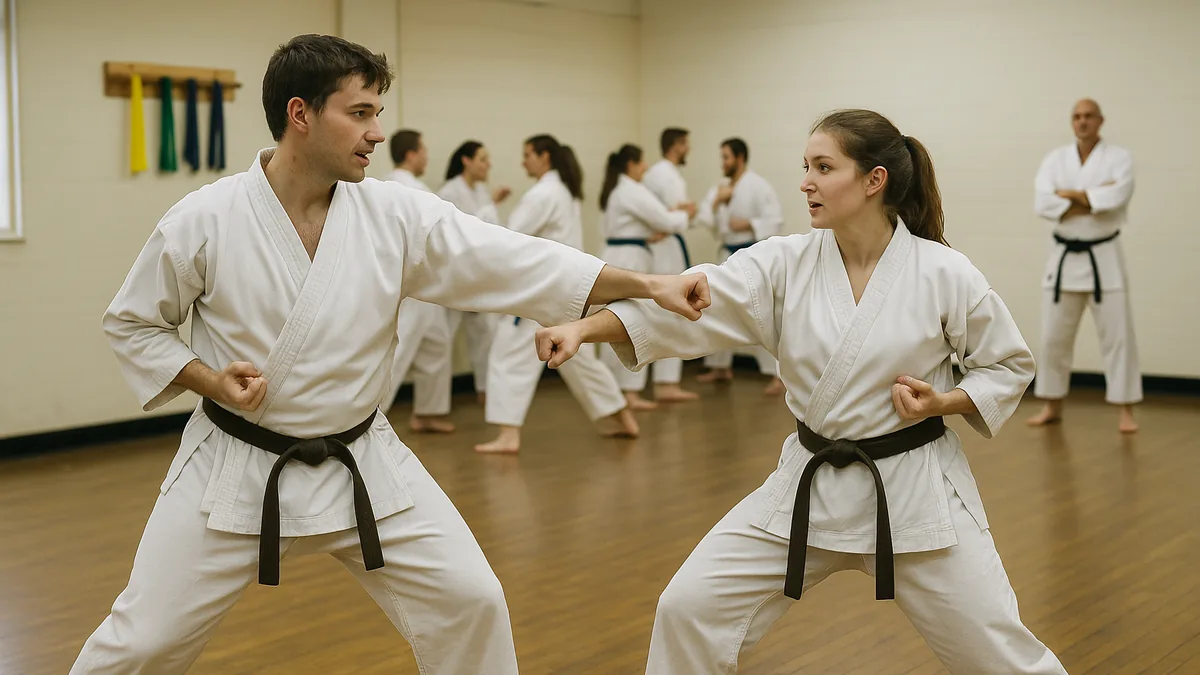
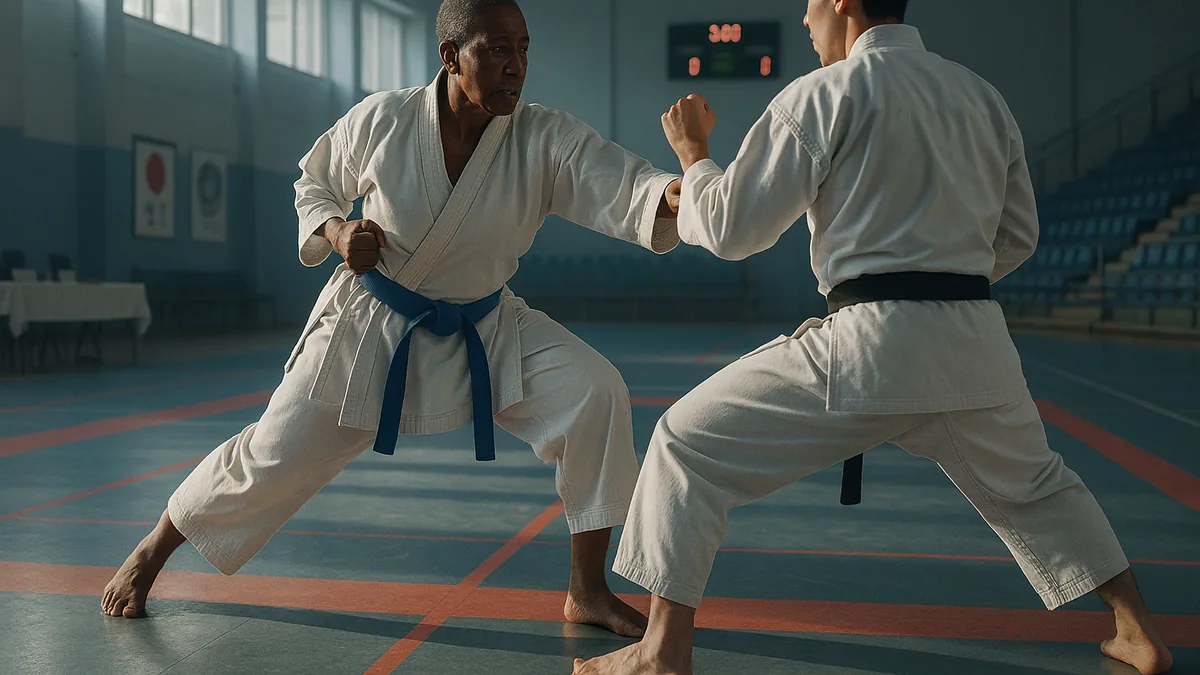
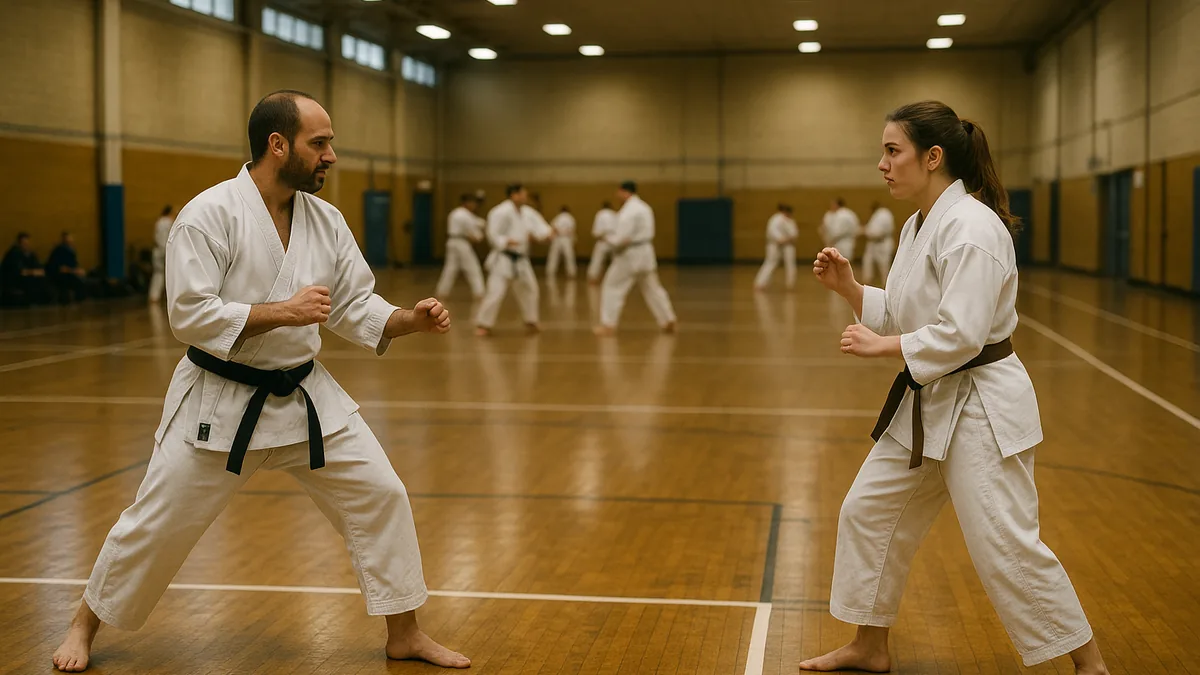
Most beginners walk into their first kumite session expecting a fight. What they actually get is far more disorienting than that - and understanding the difference early will save you months of frustration.
I’ve watched hundreds of white belts line up for their first sparring session. Almost every single one of them is thinking about what they’re going to do. They’ve been drilling gyaku-zuki for weeks. They’ve got a sequence in their head. They’re ready. Then the bow happens, the match starts, and their mind goes completely blank. The technique they drilled a hundred times that morning? Gone. They either freeze, or they windmill forward with something that barely resembles karate.
That’s not failure. That’s exactly what’s supposed to happen. The question is what you do with it.
What Actually Happens in Your First Sparring Session
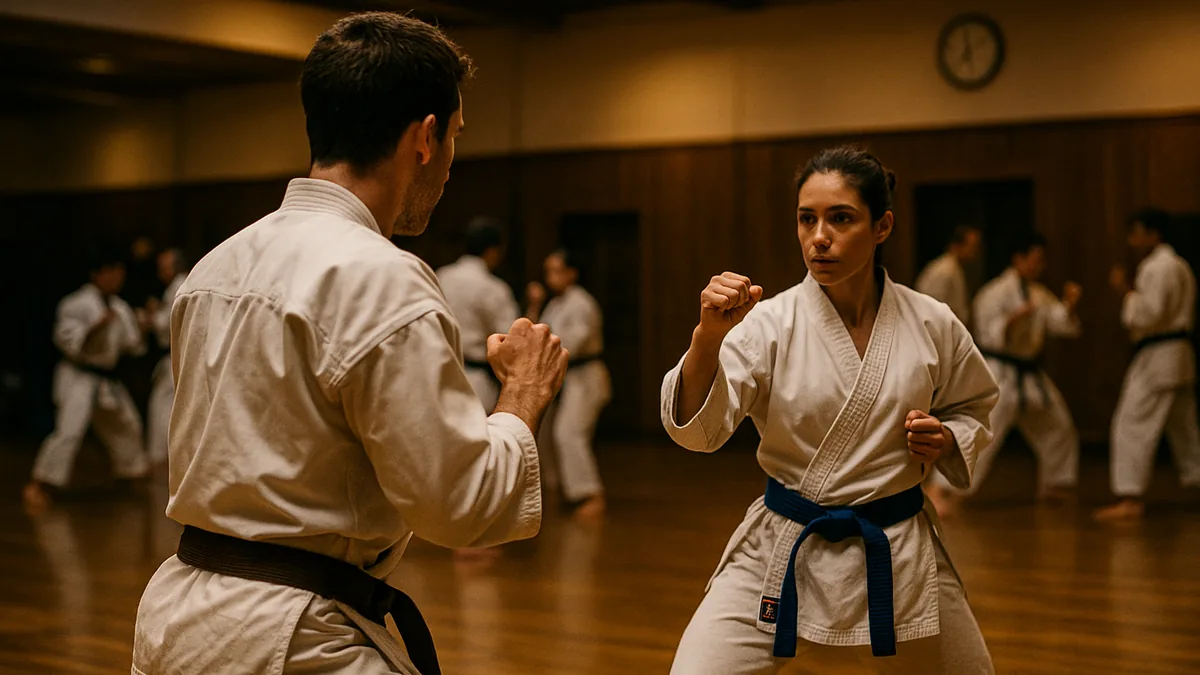
The first thing that hits you isn’t a punch - it’s the distance. Everything feels wrong. Your partner is either way too close or impossibly far away, and you can’t figure out which. The ma-ai you’ve been practising in partner drills suddenly feels completely different when someone is actually trying to score on you.
The second thing is the breathing. You’ll hold your breath. Everyone does. You won’t notice you’re doing it until you’re three exchanges in and suddenly gasping. I used to think this was a fitness issue when I first saw it in students. It took me years to understand that it’s a tension response - the body bracing for impact causes the breath to lock up, and once that happens, everything tightens. Your shoulders come up, your movement slows, your reactions narrow.
What I tell students before their first session is this: your job is not to win. Your job is not even to score. Your job is to stay in the fight mentally. Don’t turn away. Don’t cover up and wait for it to stop. Keep your eyes on your partner and keep moving. That’s the whole brief.
If you can do that - just stay present and keep moving - your first session is a success, regardless of what the score looks like.
Managing Fear (And Why You Shouldn’t Try to Eliminate It)
Here’s an opinion I’ve held for a long time and I’ll defend it: trying to get rid of pre-sparring nerves is the wrong goal. The nervousness is useful. It sharpens attention. The practitioners I’ve seen who claim they feel nothing before kumite are either very senior and very experienced, or they’re not taking it seriously enough to get anything out of it.
What you want to do is manage the fear, not eliminate it.
The practical version of this is simple. Before you bow in, take three slow breaths - not fast, not shallow, genuinely slow. Drop your shoulders deliberately. You’ll feel the difference immediately. That two-second reset before the match starts is worth more than most people realise. It doesn’t calm you down completely, but it gives you a half-second head start on not freezing.
The other thing that actually works - and this surprised me when I first noticed it - is committing to movement from the moment the match starts. Don’t stand still waiting to react. Move your feet immediately. Even if it’s just shifting your weight or adjusting your angle, movement breaks the freeze response. Kumite footwork fundamentals are worth studying early for exactly this reason - not because footwork scores points at white belt, but because it gives your body something to do while your brain catches up.
What Your Instructor Actually Wants to See
This is where most beginners get it wrong, and it’s not their fault - nobody tells them clearly.
Your instructor is not watching to see if you score. They’re watching to see if you’re trying to apply what you’ve been taught. There’s a huge difference.
I’ve graded students who scored nothing in kumite but passed because their structure was good, their zanshin was present, and they were clearly attempting to use their techniques rather than just surviving. I’ve also seen students score points through luck or aggression and still get pulled aside afterwards for a conversation about what they were actually doing.
What instructors are looking for in beginners:
- Kamae - Are you maintaining your guard? Are you in a recognisable fighting stance, or have you turned into a shoulder-hunched mess the moment pressure was applied?
- Controlled technique - Are your attacks finishing with some semblance of form, or are they just flailing in the general direction of your partner?
- Awareness - Are you watching your opponent, or are you staring at the floor?
- Attitude - Are you engaging, or are you backing into the corner and waiting for it to end?
The attitude point matters more than most beginners expect. An instructor would rather see a white belt throw a terrible gyaku-zuki with genuine intent than watch someone technically competent refuse to engage. Kumite is a test of character as much as technique. That sounds like a cliche until you’ve sat on the other side of it and watched students fold under mild pressure.
Common Mistakes I See Constantly
Telegraphing every single attack
The most common beginner mistake I see is the big wind-up. The student decides to punch, their shoulder drops back, their arm cocks, and they practically announce the attack before it leaves. In drilling, this doesn’t matter because your partner isn’t reacting. In kumite, it gets you countered every time.
The reason it happens is that beginners are thinking about generating power the way they do in basics - big hip, big rotation, full extension. That’s correct for kihon. In kumite, the mechanics shift. The attack has to be deceptive first, powerful second. What actually works is initiating from the centre rather than the shoulder - when the hip starts the movement, the arm follows without the telegraphing wind-up. You’ll feel it as a tighter, faster sensation through the whole side of your body, rather than the big sweeping feeling of a basics punch.
Chasing the score
White belts who’ve watched kumite competitions often come in trying to rack up points. They lunge forward after every exchange, overcommit, and leave themselves completely open. I understand why - it looks like the right thing to do. But at beginner level, chasing creates far more problems than it solves.
The correction that makes the biggest difference here is teaching beginners to reset after every exchange. Attack, land or miss, return to kamae, reassess. That rhythm - engage, disengage, reset - is the foundation of everything that comes later. Reading your opponent in kumite becomes possible only once you’ve built that habit of pausing to observe rather than constantly pressing.
Forgetting to breathe out on technique
I mentioned breath-holding earlier. The specific version of this in kumite is failing to kiai or exhale on technique. In basics, the kiai is drilled constantly. Under pressure, beginners forget it entirely. The result is technique that feels weak - and genuinely is weaker, because the breath drives the contraction that gives the technique its snap.
My instructor used to shout “breathe!” at me constantly in my early sparring. I thought he was talking about general fitness. It took me until about second kyu to understand he was talking about technique timing - that the exhale on impact is part of the strike, not just a byproduct of effort.
Defending by turning away
This one concerns me most because it’s a safety issue as well as a technical one. When beginners get hit or feel overwhelmed, the instinct is to turn the body away from the threat. It feels protective. It’s actually the opposite - it exposes the back, eliminates your ability to counter, and signals to your partner that the pressure is working.
The correction is to teach beginners to defend by moving into the line of attack, not away from it. Even a simple age-uke while stepping in is infinitely better than spinning away. It feels wrong at first because the instinct says “get away from the thing trying to hit you.” The training has to override that instinct, and it takes time.
How Understanding Kumite Changes With Experience
As a white belt, I thought kumite was about executing techniques under pressure. Hit them before they hit you, use the right technique for the right target, score the point.
By brown belt, I’d realised it was almost entirely about timing and distance. The techniques matter, but they’re almost secondary to whether you’re in the right place at the right moment. A mediocre technique at the right time beats a perfect technique half a second late, every single time. How to improve kumite timing is worth reading once you’ve got a few months of sparring behind you - not before, because the concepts won’t land until you’ve felt the problem yourself.
The deeper shift - and this one took longer - was understanding that kumite is mostly about what you do before the attack, not during it. Skill acquisition vs skill testing touches on this idea. The preparation, the reading of intent, the positioning that makes the attack possible - that’s where the real work is. The technique itself is almost the easy part.
Community Perspective
There’s a genuine split in how different dojos introduce beginners to kumite, and I think it’s worth being honest about it.
Some instructors hold beginners back from free sparring for months, keeping them in structured partner drills until their technique is considered solid enough. The argument is that bad habits formed in early kumite are hard to undo. I understand the reasoning, and I’ve seen it work.
My own preference - and I’ll be direct about it - is to get beginners into light, controlled kumite earlier rather than later. Not full jiyu-kumite with experienced partners, but structured free practice with other beginners under close supervision. The reason is simple: there are things you cannot learn from drills. The freeze response, the breath, the distance confusion - these only show up under real pressure, and the sooner a student encounters them, the sooner they can start working through them.
The counterargument is that early bad experiences put people off. That’s fair. It depends entirely on how the introduction is managed. Thrown in at the deep end with no preparation is different from a carefully supervised first session with clear, limited objectives. The method matters as much as the timing.
What I’d say to any beginner navigating this is: if your dojo delays kumite, don’t treat that time as waiting. Use it to build the footwork and distancing habits that will make your first sparring session less chaotic. If your dojo introduces it early, don’t treat it as a fight. Treat it as information.
Key Takeaways
- Your first session will feel chaotic - that’s not failure, it’s the starting point. Stay present, keep moving, and treat the experience as data rather than a performance.
- Manage pre-sparring nerves with deliberate breath and immediate movement. Don’t try to eliminate the nerves - use them.
- Your instructor is watching for kamae, controlled technique, and genuine engagement. Scoring is secondary at white belt.
- The most common mistake is telegraphing attacks through shoulder wind-up. Initiate from the hip and the deception takes care of itself.
- Reset after every exchange. The habit of returning to kamae and reassessing is the foundation of everything more advanced that follows.
- Understanding kumite shifts from “execute techniques under pressure” to “create the right conditions before the attack” - the sooner you start thinking about timing and distance, the faster everything else develops. The guide on distance management in kumite is worth reading once you’ve had a few sparring sessions - it makes the spacing feel less random.
The weekly digest
New karate articles, once a week
One email every week with everything new on Karate Lifestyle. No spam; unsubscribe in one click.
We'll email you to confirm. See our privacy policy.