Reading Your Opponent in Kumite
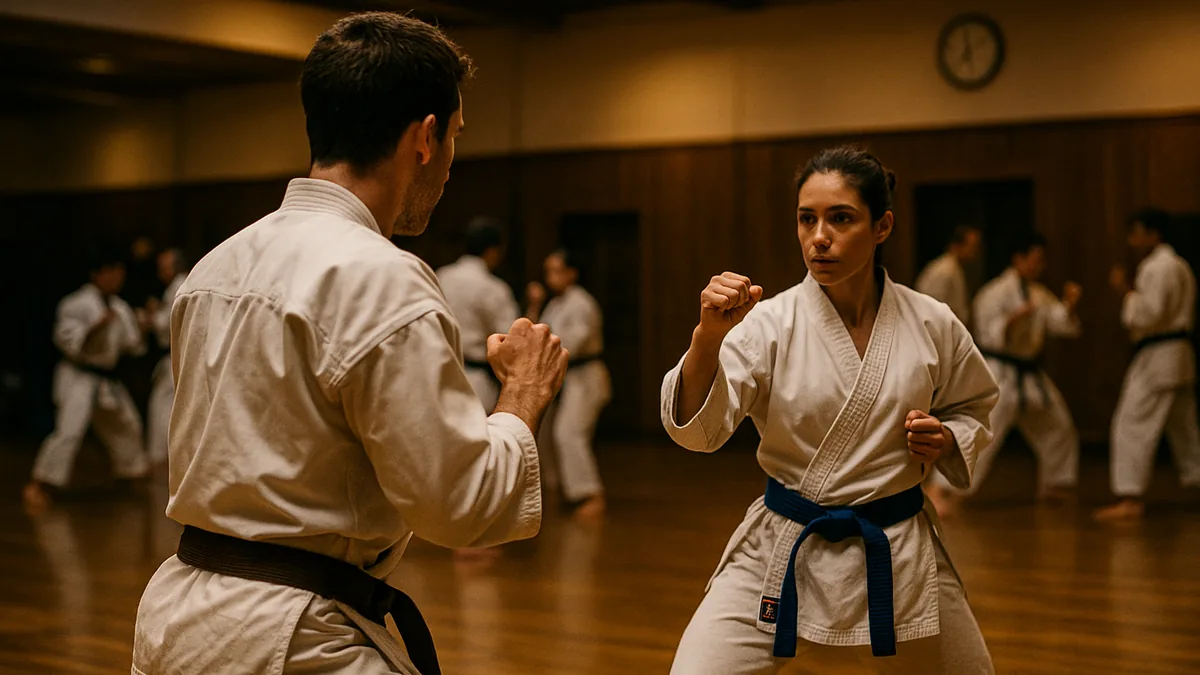
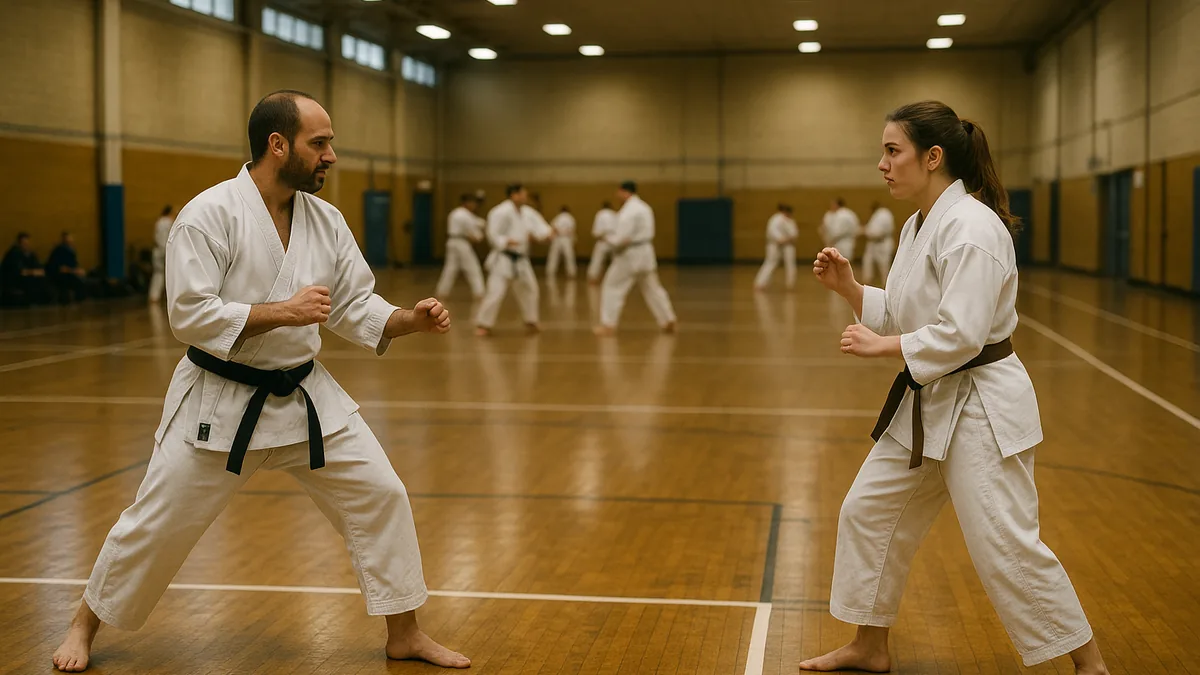
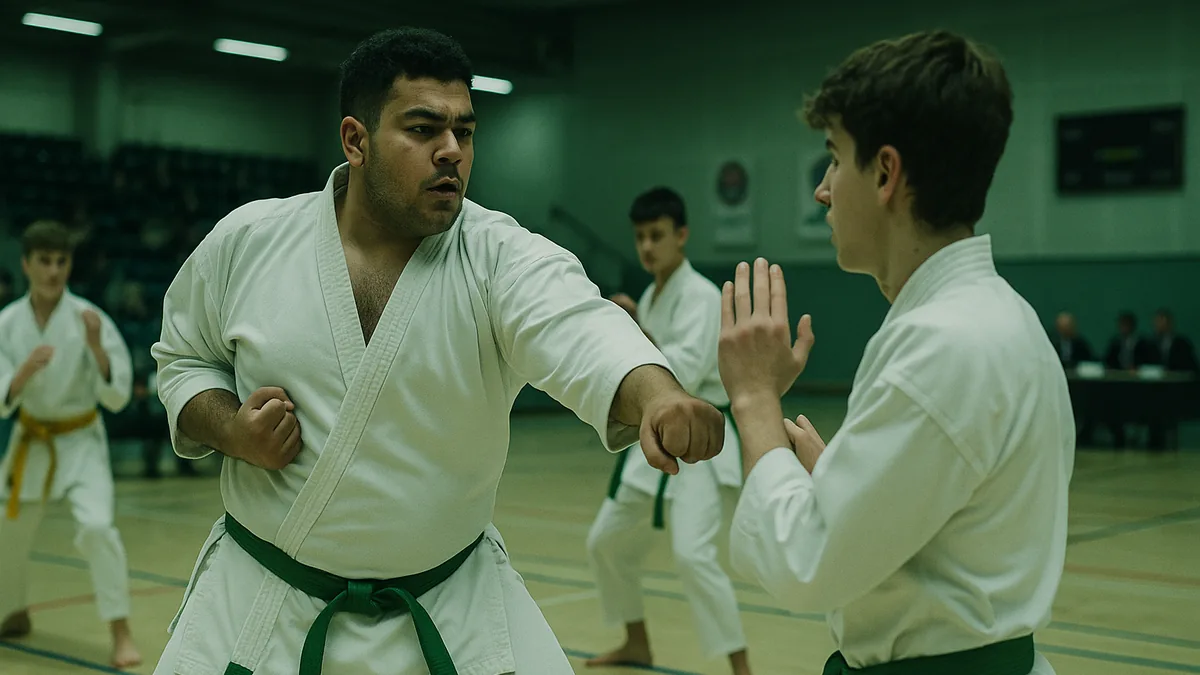
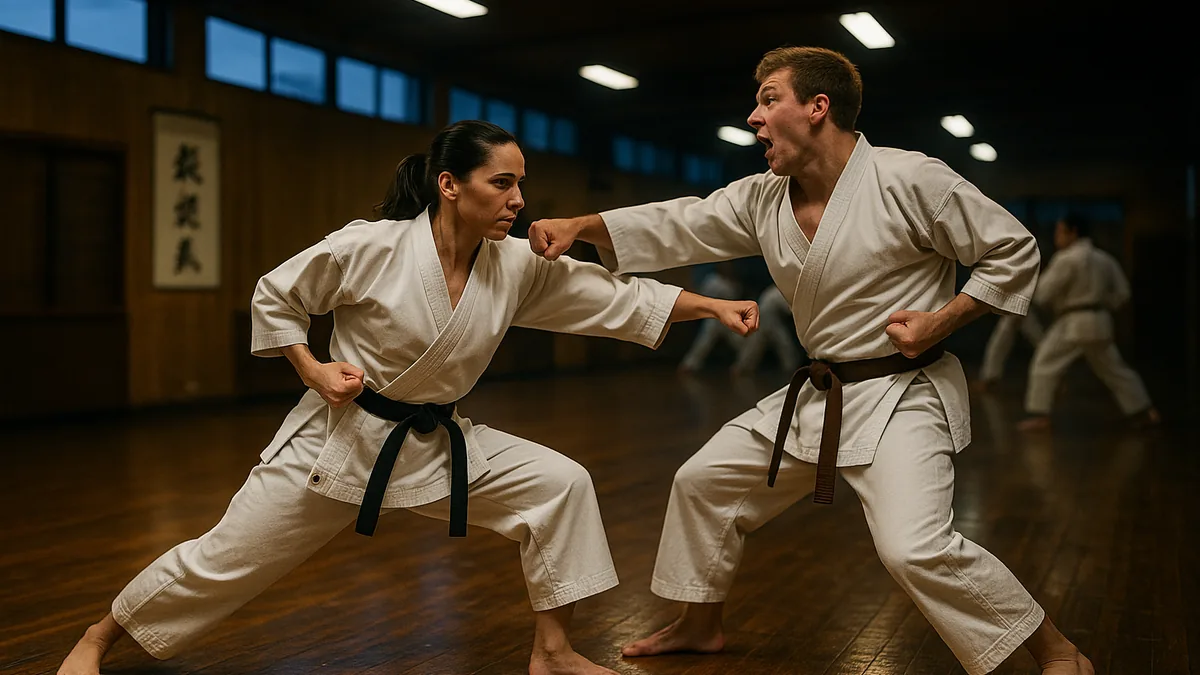
Most people who struggle in kumite think they have a timing problem. What they actually have is a reading problem. The timing will sort itself out once you start seeing what’s actually in front of you - but that second part is harder than it sounds, and nobody really teaches it directly.
I’ve been trying to articulate this for years to students who are technically solid but keep getting caught. They can execute. They just can’t anticipate. And the gap between those two things is where most intermediate practitioners live for a very long time.
What You’re Actually Looking For
As a white belt, I thought reading your opponent was about watching their hands. By brown belt I realised it’s about watching everything except the obvious thing. Hands are a distraction. They’re what the attack looks like at the end - by the time you’re tracking the fist, you’re already behind.
What you’re actually reading is intention before commitment. And intention shows up in three places before the technique does: the feet, the shoulders, and the eyes.
The feet tell you weight distribution. If someone is about to launch a gyaku-zuki with real commitment, the rear heel will often lift slightly or the stance will compress - a tiny loading phase that happens a fraction of a second before anything else. You won’t catch this consciously at first. It registers as a feeling, a sense that something is about to happen. That feeling is your nervous system processing information faster than your conscious mind can label it. What I tell students is: don’t try to name what you’re seeing. Just notice when something changes.
The shoulders are where most people telegraph without knowing it. A chudan attack that’s genuinely committed will almost always involve some shoulder rotation in the preparation phase. The problem is that people look at the shoulder of the attacking arm. I’ve noticed the more reliable tell is actually the opposite shoulder - the pulling shoulder. When someone is about to drive a reverse punch, the non-punching shoulder drops or retracts slightly first. Watch for that.
Eyes are the most controversial one. There’s a whole school of thought that says experienced fighters look at the centre of the body, not the eyes. I partially agree. But I’ve also found that eye direction tells you where someone intends to attack - not always, but often enough that it’s worth monitoring as one data stream among several. The fighter who looks at your head before attacking jodan is giving you information. Take it.
Pattern Recognition Is the Real Skill
Here’s what actually separates experienced fighters from intermediate ones: it’s not reaction speed. It’s that experienced fighters have a much larger library of patterns stored, and they start recognising them earlier in the sequence.
This is something I didn’t fully understand until about my eighth or ninth year of training. I used to think senior practitioners were just faster. They’re not - or at least, that’s not the main thing. What they’ve done is accumulate hundreds of hours of watching people initiate attacks, and they’ve built an unconscious map of how those sequences unfold. By the time you’re at the first visible movement, they’ve already run the probability calculation and committed to a response.
The practical implication is that you cannot shortcut this with theory. You have to do the reps. Skill acquisition in kumite is genuinely different from skill testing - you build the pattern library through controlled, repetitive exposure, not through constant full-intensity sparring. Jiyu-kumite is where you test what you’ve learned. Ippon kumite and drills are where you actually build the library.
One thing that changed my understanding of this was a session where my instructor paired me with someone whose style I’d never trained against. I kept getting caught because my pattern library didn’t have their sequences in it. Everything looked unfamiliar. That was genuinely humbling, but it taught me that reading isn’t a universal skill you develop once - it’s specific to the movement vocabulary you’ve been exposed to. Train with different people. Different body types, different styles, different timing. Your library needs breadth.
Telegraphing: What It Is and What It Isn’t
One mistake I see constantly with intermediate students is that they confuse telegraphing with slow technique. They’re not the same thing.
Telegraphing is giving away your intention before you’re committed to the action. You can have a fast technique that telegraphs badly - in fact, fast techniques often telegraph more, because the preparation phase is exaggerated to generate power quickly. And you can have a deliberate, measured technique that gives almost nothing away.
The most common telegraphing mistakes I correct:
- Looking before attacking - the eyes shift to the target zone a beat before the technique. This is almost universal in lower grades and persists in some senior grades too.
- Breathing out loud on the preparation - not the kiai, which is intentional, but an audible exhale or inhale that signals loading. You can hear this in sparring if you listen.
- Weight shift that precedes the step - the body starts moving toward the target before the foot picks up. A good fighter feels this through the floor in close range.
- Shoulder drop before a kick - almost everyone does this. Before a mae-geri or mawashi-geri, the same-side shoulder drops slightly as the hip loads. If you’re watching for it, you can see it clearly.
The correction that makes the biggest difference for telegraphing is usually not technical - it’s perceptual. Most students don’t know they’re doing it. What works is video review and partner feedback in slow, deliberate practice. Not sparring. Sparring is too fast and too noisy. Have a partner watch you execute single techniques from a fighting stance and tell you what they see in the half-second before you move. It’s uncomfortable information, but it’s the most useful feedback you’ll get.
Habits: The Gift Your Opponent Gives You
I think habits are underrated as a reading tool, and I’d argue they matter more than raw telegraphing in longer exchanges. Everyone has them. The question is whether you’re paying attention long enough to catalogue them.
What I look for in the first thirty seconds of a match or sparring round:
- What range do they prefer? Do they keep trying to close, or do they work better at distance?
- What’s their go-to combination when they score? People repeat what works.
- How do they respond to pressure? Do they back up, cover, or counter?
- What do they do when they miss? Do they reset quickly or do they leave openings in the recovery?
That last one is where a lot of matches are actually won. The attack itself is often not the moment of opportunity - the moment after a failed attack is. If you’ve noticed that your opponent tends to drop their guard slightly when they pull back from a failed chudan attack, that’s your window. But you only know it’s your window because you’ve been watching, not just reacting.
This connects directly to kumite timing - the timing of your counter is only as good as your reading of when the window opens. If you’re guessing, you’ll be either early or late. If you’ve tracked the pattern, you can time it properly.
What Beginners See vs What You Should Be Seeing
Beginners watch the attack. They see the punch coming and they respond to the punch. This means they’re always a step behind, because by the time the punch is visible, the decision has already been made by the attacker and the commitment is done.
Intermediate practitioners often overcorrect. They start trying to watch everything and end up watching nothing well. This is a real phase that most people go through, and it’s frustrating because you feel like you’re doing something more sophisticated but your results don’t improve.
What experienced practitioners actually do - and this took me years to articulate properly - is maintain a kind of soft, unfocused attention on the whole body while having a few specific things they’re actively monitoring. It’s not about staring harder. It’s about relaxing your gaze and letting the peripheral information come in. When something changes in that whole-body picture, your attention sharpens onto it.
This is related to what some instructors call “zanshin” - that sustained, alert awareness. But I’ve found the way it’s taught is often too mystical to be useful. The practical version is: stop staring at the hands. Soften your gaze to take in the whole person. Let changes in the picture alert you rather than hunting for specific signals.
Community Perspective
This is an area where there’s genuine disagreement between practitioners, and I think it’s worth being honest about that.
Some instructors teach that you should watch the eyes. Others say the chest or solar plexus. Others say footwork is the primary read. I’ve trained under instructors who held each of these positions firmly, and I’ve seen each of them produce good fighters.
My honest view is that the “watch the X” debate is slightly beside the point. The actual skill is developing broad, relaxed attention across the whole body and learning to notice change rather than fixate on a location. Where you anchor your gaze matters less than the quality of attention you’re bringing. That said, if I had to pick a default starting point for someone developing this skill, I’d say the centre of the chest - it moves before the limbs do, it’s central enough to catch peripheral movement in both directions, and it doesn’t get faked as easily as the eyes.
There’s also a real difference in how traditional and sport-focused training approaches this. In more traditional settings, reading is often taught through kata bunkai and slow partner work. In sport kumite training, it tends to be developed through high volume sparring and video analysis. I think both approaches have genuine merit, and the practitioners I’ve seen who are best at reading in live kumite have usually done both.
If you’re training in a more traditional context and wondering how kata connects to this, the kata vs kumite debate is worth thinking through - but the short version is that kata teaches you to read yourself, which is the foundation for reading others.
Key Takeaways
- Stop watching the hands. Train yourself to soften your gaze and take in the whole body - changes in the picture are what alert you, not fixating on a location.
- Build your pattern library deliberately. Do repetitive partner drills and ippon kumite with a wide variety of training partners. Jiyu-kumite tests the library; structured drills build it.
- Catalogue habits in the first thirty seconds of any exchange. What range do they prefer, what’s their go-to, and what do they do after a missed attack? The window after a failed technique is often where matches are decided.
- Get feedback on your own telegraphing through video and slow partner observation - not sparring. You cannot see your own preparation phase at speed.
- The moment of opportunity is usually not during the attack. It’s in the recovery phase after a failed or completed attack. Reading habits tells you when that window opens.
- Developing solid footwork is what makes your reads usable - you can see the opening perfectly and still miss it if you can’t get to the right position in time.
The weekly digest
New karate articles, once a week
One email every week with everything new on Karate Lifestyle. No spam; unsubscribe in one click.
We'll email you to confirm. See our privacy policy.