Skill Acquisition vs Skill Testing
Most people train the same way for years and wonder why they don’t improve in sparring. I’ve watched it happen across multiple dojos, different associations, different age groups. The pattern is almost always the same: they’re acquiring skills in conditions that never stress-test them, then they walk into kumite expecting those skills to show up. They don’t. And the frustration that follows is real - but it’s also predictable once you understand what’s actually going on.
Skill acquisition and skill testing are not the same thing. They’re not even close. Treating them as interchangeable is probably the single most common structural mistake in how recreational karate practitioners organise their training.
What Acquisition Actually Looks Like
When you’re acquiring a skill, you need repetition in a controlled environment. Slow, deliberate, correctable. You’re building a motor pattern. The feedback loop has to be tight - you make an error, you feel it, you adjust. That’s the process. It’s not exciting. It doesn’t feel like progress because nothing is threatening you.
I used to think that drilling combinations on a pad was basically the same as sparring with them. My first instructor set me straight on that pretty quickly. He watched me land a clean gyaku-zuki on a pad, then told me to use it in randori. I threw it twice in three minutes of sparring, both times too slow, both times telegraphed. He didn’t say much. Just asked me how many times I’d thrown it against resistance, against someone who was moving and trying to hit me back. The answer was almost never.
That’s the gap. Acquisition happens in controlled conditions. The nervous system learns the movement, but it learns it in a low-threat environment. The skill exists - it just doesn’t exist under pressure yet.
What Testing Actually Looks Like
Skill testing isn’t just competing or grading. It’s any time you put a skill into a context where it might fail. That’s the key distinction. If you already know it’s going to work, you’re not testing it - you’re confirming it. Real testing involves uncertainty.
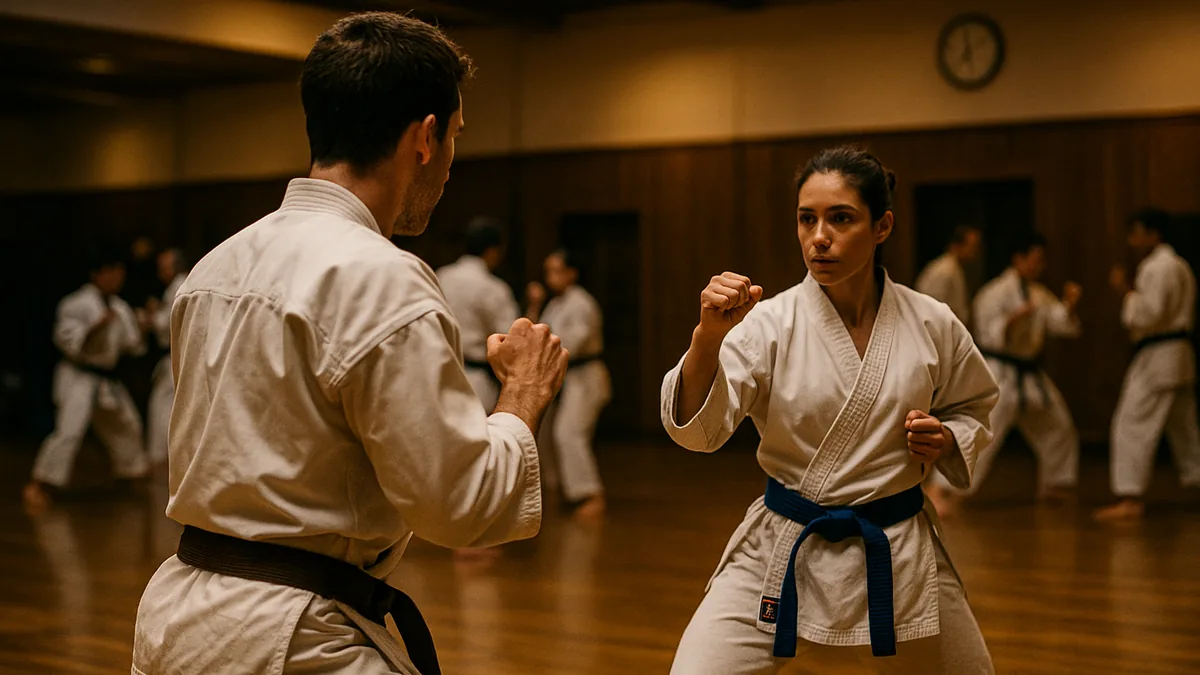
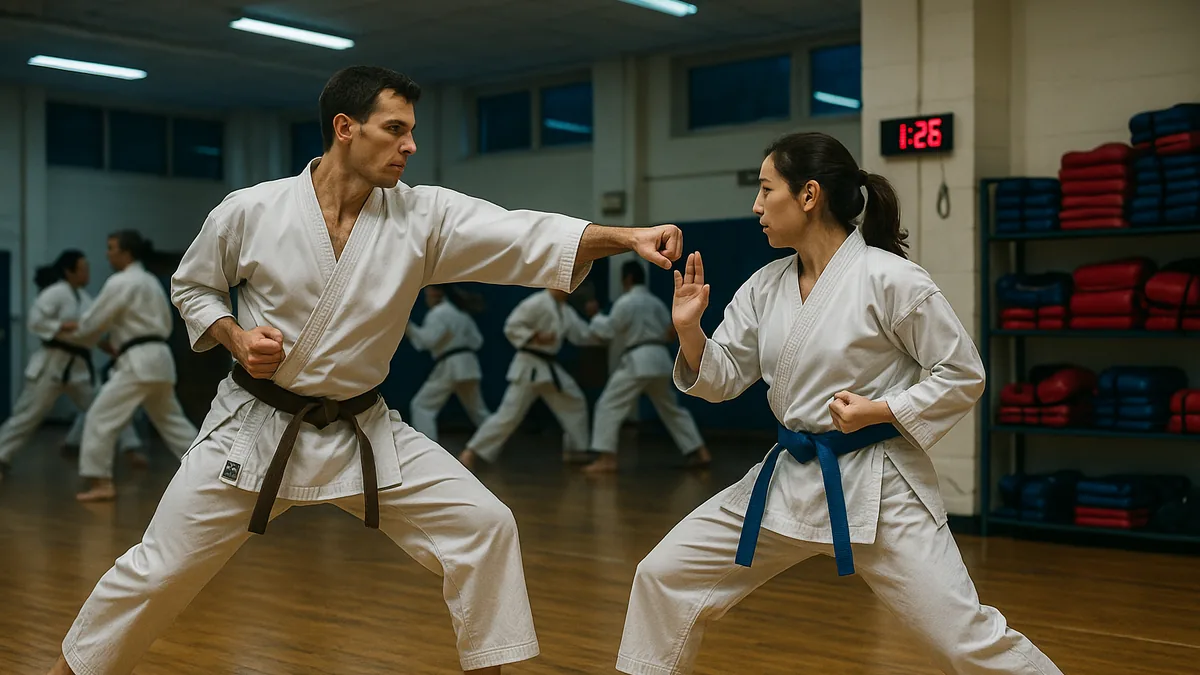
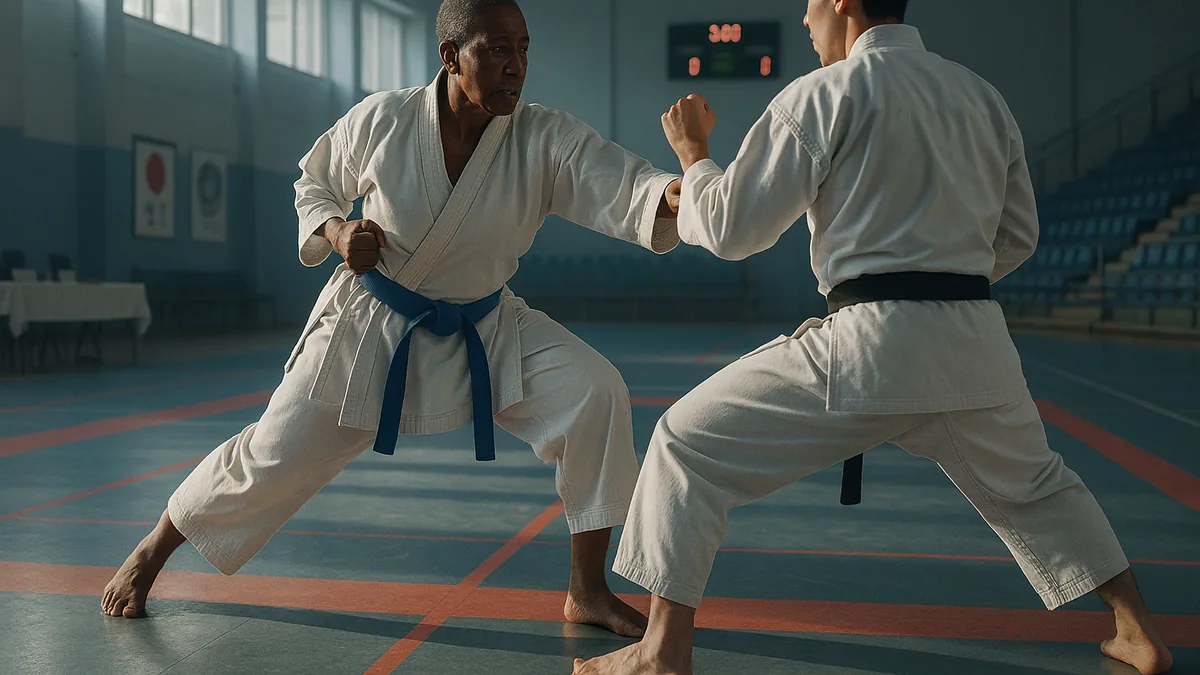
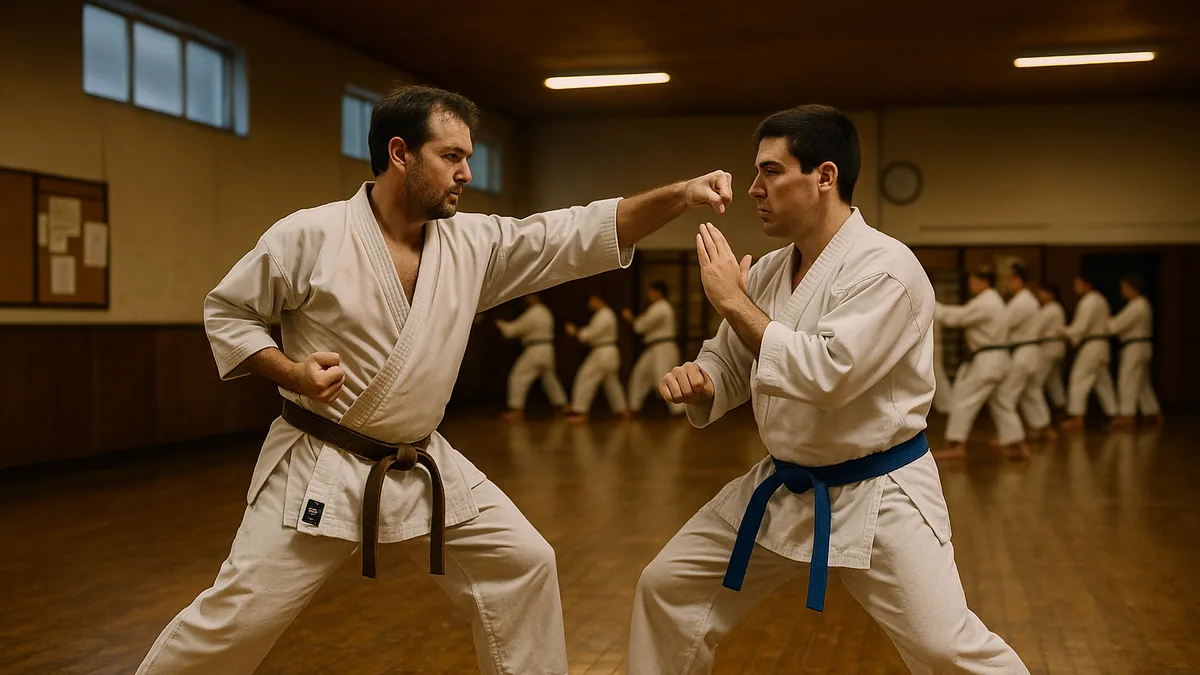
In jiyu-kumite, this is obvious. You throw something, it either works or it doesn’t, and you have to deal with the consequences in real time. But testing doesn’t have to mean full sparring. Constrained sparring - where you limit the techniques in play - is one of the most underused tools I’ve seen. Tell two practitioners they can only use jodan attacks and defences for three minutes. What you’ll see very quickly is which jodan skills are actually owned and which ones just looked good in the mirror.
I’ve noticed that a lot of practitioners avoid this kind of testing because it exposes gaps. There’s a psychological discomfort in discovering that a technique you’ve drilled for two years still falls apart under even moderate pressure. But that discomfort is information. It’s telling you exactly where the acquisition work needs to go next.
The Grading Problem
Gradings are skill tests in theory. In practice, a lot of them function as acquisition showcases - you perform techniques in a structured, predictable format with no real consequence if a movement is slightly off. That’s not a test. That’s a demonstration.
I’m not dismissing gradings - they serve a purpose. But I think practitioners make a mistake when they treat grading preparation as their primary training goal. You end up optimising for a very specific performance context that doesn’t transfer cleanly to actual kumite. The timing is different. The pressure is different. The feedback is delayed or absent.
What I tell students who are preparing for grading is this: the grading tests whether you can perform. The sparring tests whether you own it. You need both, but don’t confuse one for the other.
Where Most People Get Stuck
The biggest difference I see between practitioners who plateau and those who keep developing is how deliberately they move between acquisition and testing phases.
Most beginners spend almost all their time in acquisition mode. That makes sense - there’s a lot to learn, and the techniques are unfamiliar. But I’ve seen this pattern persist well into brown and black belt levels, where practitioners are still mostly drilling in comfortable, low-pressure environments and wondering why their kumite isn’t improving.
One mistake I see often is using sparring as the only form of testing, then blaming the sparring when skills don’t show up. The issue isn’t the sparring - it’s that the bridge between acquisition and full testing was never built. You need intermediate steps: structured partner drilling with resistance, constrained sparring, timed reaction drills. If you’re interested in building that bridge more deliberately, solo training drills that actually transfer to kumite can help you identify what’s worth drilling and how to stress-test it before you take it into free sparring.
The other mistake - less common but worth naming - is the opposite problem: practitioners who test constantly but never refine. They spar hard every session, they’re competitive, but their technique stops developing because they’re always in survival mode. Testing tells you what’s broken. Acquisition is where you fix it.
Timing Lives in the Testing Phase
One thing that took me longer than it should have to understand: timing can’t really be acquired in isolation. You can drill the mechanics of a counter until they’re automatic, but the timing of when to throw it only gets calibrated through testing. You need to feel the rhythm of an actual opponent - the hesitation before they commit, the slight weight shift that signals what’s coming - and that information only exists in a live context.
This is why I think improving kumite timing is fundamentally a testing problem, not an acquisition problem. You can do reaction drills and they’ll help. But the real calibration happens when you’re in front of someone who’s trying to score on you.
Community Perspective
There’s a genuine split in how different dojos approach this, and I think it’s worth being honest about it.
Traditional training environments tend to weight acquisition heavily. Long periods of kihon, kata repetition, structured partner work. The argument is that the foundations need to be solid before pressure is applied, and I have some sympathy for that view. There’s also a cultural dimension - some instructors see heavy sparring as disrespectful to the technical tradition.
Sport-oriented dojos tend to flip this. More kumite, earlier, more often. The argument is that pressure is the only real teacher and that too much acquisition work produces technically polished practitioners who can’t fight.
I’ve trained in both environments. My honest view is that neither extreme works well. The purely acquisition-focused dojo produces practitioners who look good in kata and fall apart in randori. The purely testing-focused dojo produces fighters who are effective but technically shallow - and that shallowness tends to catch up with them as they age or move into higher-level competition.
The kata-kumite divide is a related conversation, and if you want to dig into why treating them as opposites misses the point, that debate is worth reading through. The short version: kata is an acquisition tool. Kumite is a testing environment. Both are necessary. The problem is when practitioners mistake one for the other.
Key Takeaways
- Acquisition requires repetition in controlled conditions. You’re building the motor pattern. Low pressure is appropriate here. Don’t rush it, but don’t stay here indefinitely.
- Testing requires uncertainty. If you already know the technique will work, you’re not testing it. Build in conditions where it might fail - constrained sparring, live resistance drills, timed pressure.
- Grading and sparring test different things. Grading tests performance under structure. Sparring tests ownership under pressure. Both matter, but they’re not interchangeable.
- Timing is calibrated in the testing phase, not acquired in isolation. You can drill mechanics solo, but timing only sharpens against a live opponent.
- Deliberately cycle between acquisition and testing. After sparring exposes a gap, go back to acquisition work to fix it. After drilling builds the pattern, take it into testing conditions. This cycle is the actual mechanism of improvement.
- Intermediate steps matter. Full sparring isn’t the only form of testing. Constrained sparring, partner resistance drills, and scenario-based rounds are where most of the real skill transfer happens.
The weekly digest
New karate articles, once a week
One email every week with everything new on Karate Lifestyle. No spam; unsubscribe in one click.
We'll email you to confirm. See our privacy policy.