How to Train Your Guard in Kumite: Why Most Karateka Drop It and How to Stop
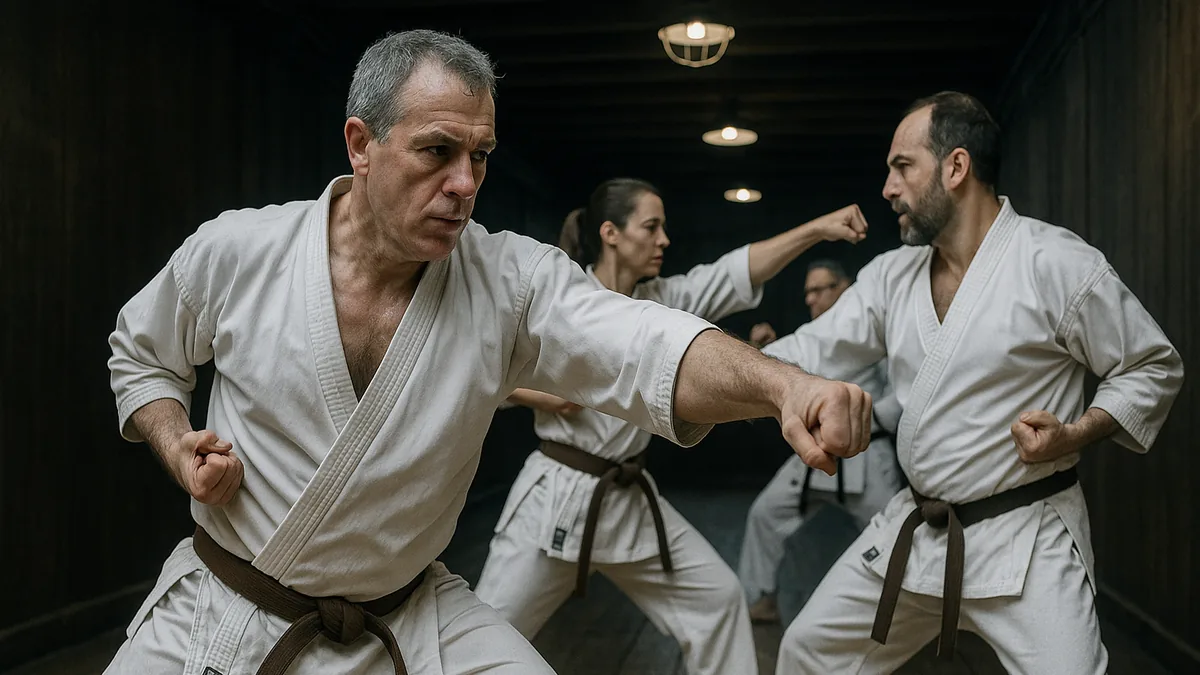
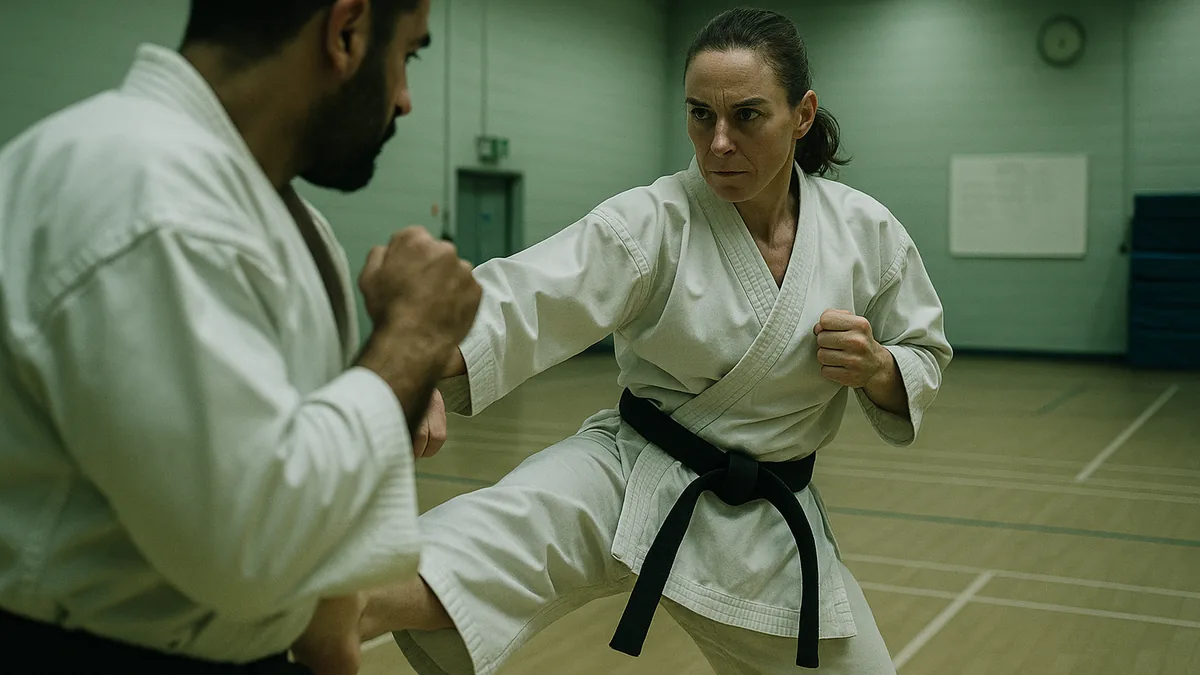
Most karateka don’t drop their guard because they’re lazy. They drop it because they got away with it. That’s the honest answer. You threw a gyaku-zuki, it landed, you got the point - and your hands were somewhere around your chin instead of your cheekbones. Nobody scored on you. So your brain filed that away as acceptable. Do it enough times and it becomes your default.
I’ve seen this pattern at every level, from white belts who haven’t yet built the habit to senior dan grades who’ve been sloppy for so long they don’t even notice anymore. The guard isn’t glamorous. Nobody wins a tournament because of their guard position. But a lot of people lose because of it.
The frustrating part is that most of the time, the person dropping their guard knows they shouldn’t. They’ve been told. Their instructor has said it a hundred times. The information isn’t the problem. The problem is that they’ve never built the physical habit strong enough to survive the stress of actual kumite. That’s what this is about - building it so it holds when things get fast and uncomfortable.
Why Your Guard Drops in the First Place
Understanding the mechanism matters here because the fix depends on the cause.
The most common reason is that the guard drops during the attack. You load up for a punch, your lead hand sinks, your rear hand pulls back for power, and for a split second you’re wide open. It feels like commitment. It feels like power. But you’re not generating more power by dropping your rear hand - you’re just exposing your face.
The second reason is the guard drops after the attack. You score, you see the point land, and your hands drift down as your brain registers success. This is the one that gets people countered on immediately. I’ve watched students land a clean jodan mawashi-geri, drop both hands in satisfaction, and eat a gyaku-zuki before they’ve even reset. The technique worked. The habit failed.
The third reason - and this is the one nobody talks about enough - is that people don’t actually know what their guard feels like when it’s correct. They think they’re up when they’re not. Their proprioception for hand position is just off. This is fixable, but it takes deliberate work.
Drills That Actually Build the Habit
I’ll be direct about ranking these: the mirror drill is the most important one for beginners, the partner pressure drill is the most important one for intermediate practitioners, and shadow kumite with specific constraints is what actually transfers the habit to free sparring. Start with the first, work toward the third.
The Mirror Drill (Foundation Level)
This sounds basic. It is basic. It’s also the one most people skip because they think they’ve got it covered. They don’t.
Why it matters: You cannot fix what you cannot feel. Most people drop their guard by 10-15 centimetres and genuinely believe it’s still up. The mirror gives you objective feedback that your internal sense can’t.
Setup: Stand in your kumite stance in front of a full-length mirror. Close enough that you can see your hands clearly.
Execution:
- Set your guard where you think it should be - lead hand roughly at chin height, rear hand protecting your cheekbone.
- Look at where your hands actually are. Don’t adjust yet. Just look.
- Now throw five gyaku-zuki at full speed into the mirror, returning to guard after each one.
- Pause and check your guard position again without adjusting first.
- Repeat with jodan mawashi-geri, oi-zuki, and any combination you use regularly in kumite.
What to feel for: When your guard is genuinely correct, your lead forearm should feel slightly uncomfortable - almost like it’s in the way. That’s right. It should be in the way. If it feels natural and relaxed, it’s probably too low.
The mistake I see most often: People set the guard correctly, then check it in the mirror, then adjust it - and then throw their techniques from the adjusted position rather than from their natural one. You need to see where your guard goes when you’re not thinking about it. That’s the data that matters.
Do this for three minutes at the start of every session for a month. By the end of that month, your proprioception for guard position will be genuinely better. You’ll start to feel when it drops without needing the mirror.
The Partner Pressure Drill (Intermediate Level)
This is the drill I come back to more than any other when I’m working with students who have the knowledge but not the habit. It creates exactly the kind of stress that exposes a weak guard without the chaos of full free sparring.
Why it matters: The mirror drill builds awareness in isolation. This drill builds the habit under pressure - which is the only environment that actually counts.
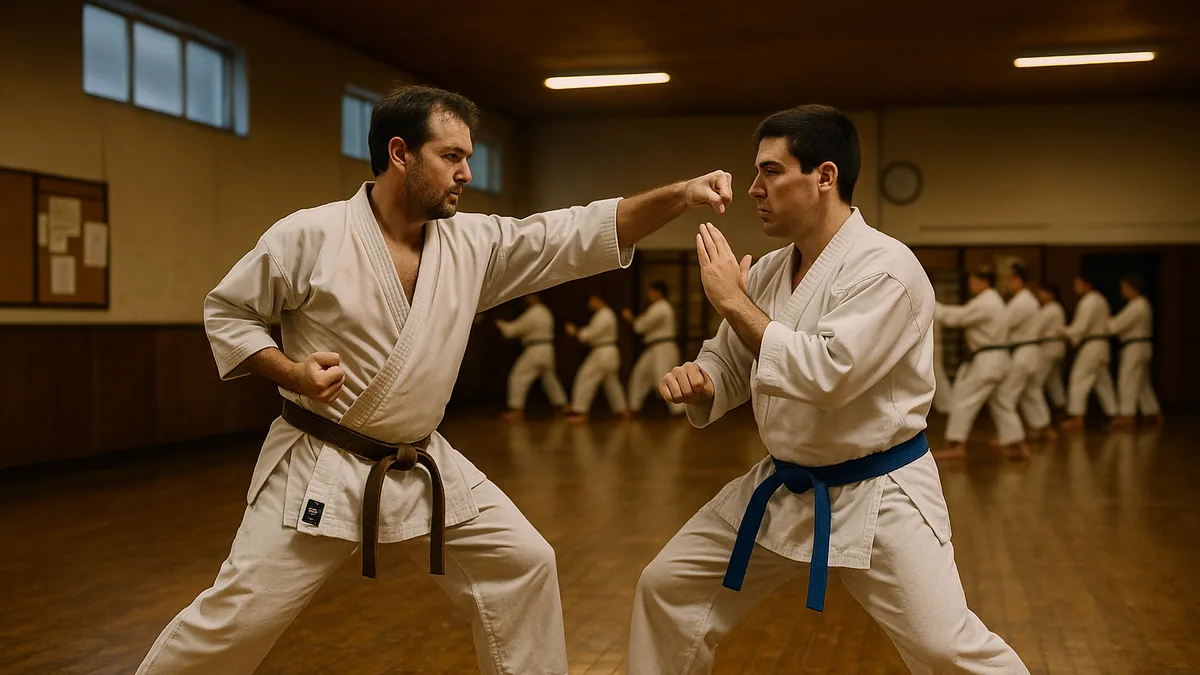
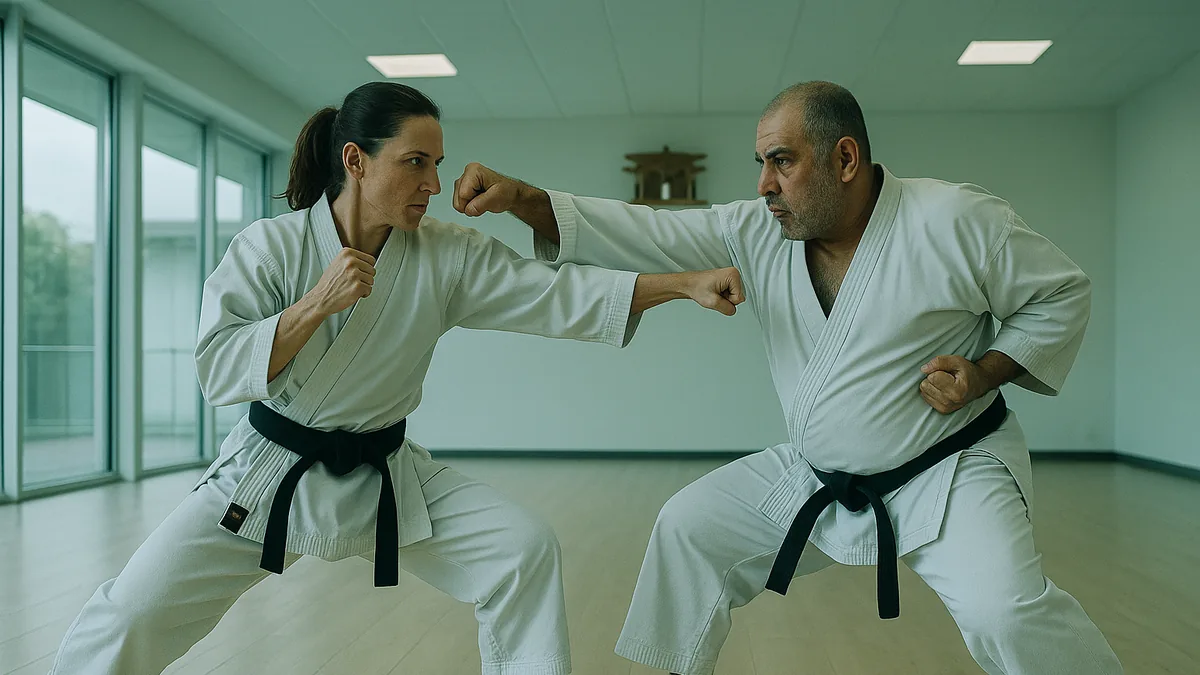
Setup: Two practitioners, both in kumite stance, close to engagement distance. One is the attacker, one is working on their guard.
Execution:
- The attacker throws slow, controlled jodan attacks - not full speed, but with genuine intent and variety. Jodan mawashi-geri, jodan gyaku-zuki, jodan oi-zuki, kizami-zuki to the face.
- The defender blocks, evades, or counters - but the primary focus is returning to a clean guard after every exchange.
- The attacker’s job is to call out any guard drop they see, not to score points. They say “guard” and point to where the gap was.
- Run this for two-minute rounds with thirty seconds rest.
What to feel for: You’ll feel the temptation to reach for the block rather than intercepting from your guard position. When the timing is right and your guard is genuinely up, the block feels like a small redirection - the attack hits your forearm and deflects. When your guard is low and you’re reaching, it feels like you’re chasing the technique. That chasing sensation is the signal that your guard failed before the block even started.
The mistake I see most often: The attacker goes too fast and turns it into free sparring. This defeats the purpose. The drill only works if the attacker is controlled enough that the defender can actually process the feedback. Slow this down more than feels comfortable. If you’re both sweating from effort after one minute, you’ve gone too fast.
Progression: Once the defender is maintaining guard consistently, add a counter requirement. They must block and counter before resetting. This is where guard habits really get tested - because now they’re thinking about the counter, and that’s exactly when the guard drops.
Shadow Kumite with Guard Checkpoints (Transfer Level)
This is the drill that actually moves the habit into free sparring. I’d argue it’s underused in most dojos because it looks like nothing is happening. But this is where the pattern gets embedded.
Why it matters: Free sparring is too chaotic to train guard position directly. Shadow kumite gives you the movement, timing, and decision-making of kumite without a partner - which means you can slow down and add structure.
Setup: Alone, in a space where you can move freely. Set a timer for two-minute rounds.
Execution:
- Move as you would in kumite - changing angles, feinting, managing distance.
- Every five to eight seconds, freeze completely. Check your guard position without adjusting first.
- Note whether it’s correct. If it’s not, reset it and continue.
- After two minutes, reflect on which movements caused the most guard drops.
What to feel for: Over time, you’ll notice patterns. Your guard drops when you step back. It drops when you change direction. It drops after a combination. These are your specific failure points. Once you know them, you can target them.
The thing that changed my understanding of this drill: My instructor used to tell me to “own your guard.” I thought that was just a motivational phrase until I started doing shadow kumite with checkpoints and realised I was dropping my guard specifically when I was retreating. Every time I stepped back, my hands came down. I’d never noticed it because in free sparring, the retreat itself was enough to create distance. But against a faster opponent who followed immediately, that dropped guard was a free jodan gyaku-zuki. The checkpoint drill showed me exactly where my habit was breaking down.
Awareness and Mindset - The Part Most People Skip
Drills build the habit, but awareness keeps it alive under pressure. I think this is where most guard training falls short - it treats the guard as a purely mechanical problem when it’s also a focus problem.
The guard drops when your attention moves somewhere else. You’re thinking about your next attack. You’re reacting to a feint. You’re processing whether your last technique scored. In all of those moments, your guard is unattended.
What I tell students is to treat the guard as a background process - something that runs continuously without requiring active thought. The drills above build the physical habit. But you also need to develop the mental habit of checking in. Not obsessively, but regularly. During movement, during exchanges, during resets. A half-second awareness check: where are my hands?
This connects directly to reading your opponent. When you’re tracking their movement, their weight distribution, their shoulder position - you’re engaged. That engagement keeps your guard up because your attention is on the fight, not on your own thoughts. The guard drops most often when you go passive. When you’re waiting instead of reading.
If you’re getting scored on from the same side repeatedly, the guard is often part of the problem - but so is your positional awareness. Why You Keep Getting Scored On From the Same Side: Diagnosing and Fixing Kumite Blind Spots covers the diagnostic side of this in detail, and it’s worth working through alongside the guard drills.
The overconfidence issue is real and worth naming directly. I’ve seen students with genuinely good guards in controlled drilling who drop everything the moment they start winning in free sparring. Winning feels like confirmation that what you’re doing is working. But a dropped guard that didn’t get punished isn’t evidence that your guard is fine - it’s evidence that your opponent didn’t take the opportunity. Better opponents will.
Community Perspective
There’s a genuine disagreement in many dojos about how much emphasis to place on guard training versus movement and distance management. The argument goes: if your distance control is good enough, your guard position matters less because you’re not in range to be hit anyway.
I understand the argument. I’ve trained with practitioners who have almost no conventional guard and are extremely difficult to score on because their distance work is exceptional. But I’d push back on using that as a reason to neglect the guard, for two reasons.
First, distance management fails. Feints work. Opponents close faster than you expect. The guard is your last line when distance breaks down, and if it’s not there, you have nothing. If you want to understand how feints specifically compromise your guard and distance simultaneously, Feinting in Kumite: Why Most Karateka Do It Wrong and How to Make It Work is worth reading alongside this.
Second, the practitioners who can get away with minimal guard have usually spent years building exceptional timing and reading ability. If you’re still developing those skills, you need the guard more than they do. The guard is partly a compensation for incomplete reading ability - and there’s no shame in that. Most of us are always developing our reading ability.
The other debate is about guard height and position, which varies significantly between styles and even between dojos within the same style. Some schools favour a higher lead hand, almost covering the face. Others prefer a lower, more mobile position that allows faster hand speed. I prefer the higher guard for most practitioners because the most common scoring technique in competition is jodan, and the guard should reflect that. But I’ll acknowledge this is a genuine stylistic difference, not a clear right and wrong.
Key Takeaways
- Your guard drops because it hasn’t been trained under pressure - knowledge isn’t the same as habit, and the drills above build the habit specifically.
- The mirror drill is not beneath you. Do it at the start of every session for a month and your proprioception for guard position will genuinely change.
- In the partner pressure drill, slow the attacker down more than feels comfortable. The feedback only works if the defender can process it.
- Your guard drops at specific moments - retreating, after scoring, during combinations. Shadow kumite with checkpoints will show you exactly which moments those are for you.
- Overconfidence is the real enemy. A guard that didn’t get punished isn’t a guard that worked - it’s a guard that got lucky.
- Controlling distance and controlling your guard are not alternatives. You need both. Controlling the Centre in Kumite covers how positional control and guard work together in practice.
The weekly digest
New karate articles, once a week
One email every week with everything new on Karate Lifestyle. No spam; unsubscribe in one click.
We'll email you to confirm. See our privacy policy.