How to Fight a Southpaw in Kumite: Why Left-Handed Opponents Expose Your Defaults and How to Prepare for Them
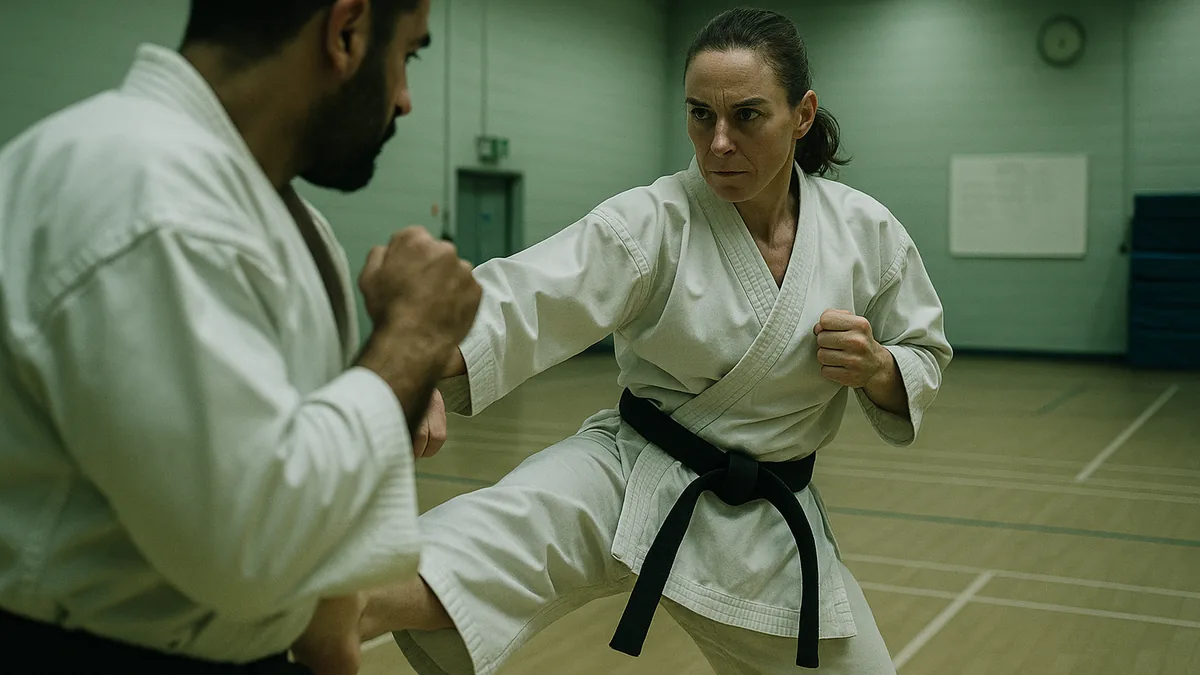
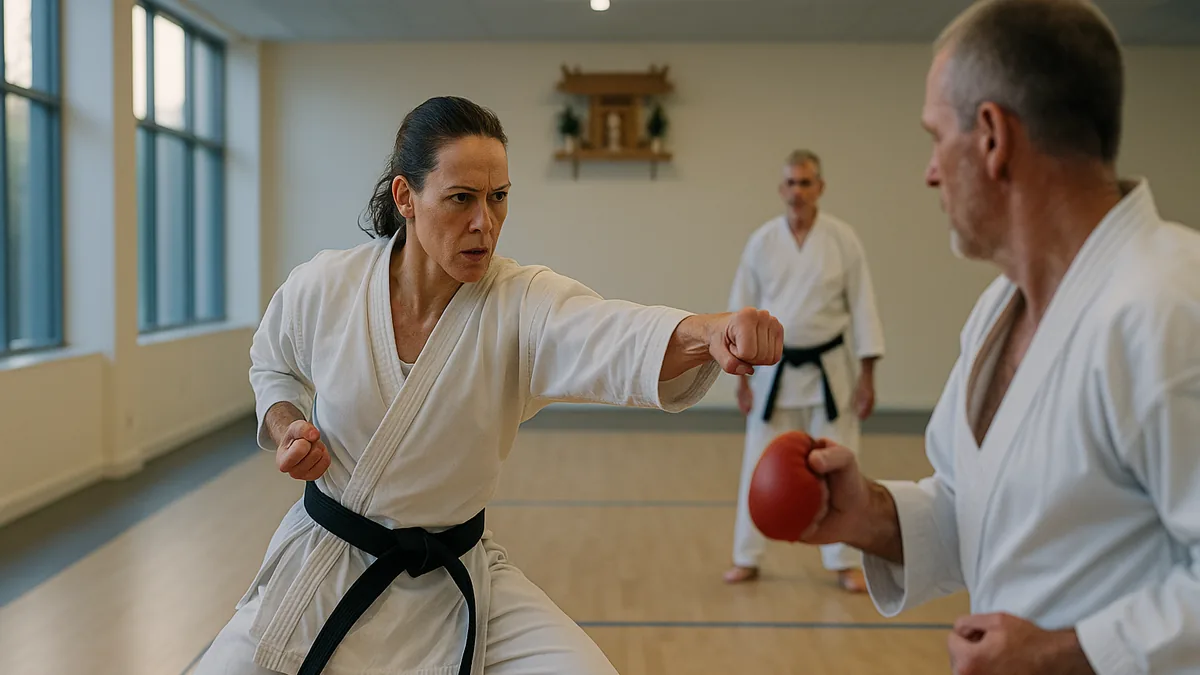
Most students don’t realise how much their kumite is built around an orthodox opponent until they face a southpaw and everything stops working. The distance feels off. The lead-hand jab that usually sets up your gyaku-zuki is suddenly pointing at empty space. Your default block angles the wrong way. And that left reverse punch comes in from a direction your body hasn’t been trained to read.
I’ve seen this happen to genuinely good fighters - people with clean kihon, solid timing, real competition experience - and they fall apart in the first thirty seconds against a left-handed opponent. Not because they lack skill, but because their skill was built almost entirely in a mirror-image that doesn’t apply here.
The good news is that the fix isn’t complicated. It’s just specific, and most dojos don’t train it specifically enough.
Why Southpaws Expose Your Defaults
When you train kumite regularly, you build pattern recognition. You stop thinking about individual techniques and start reading combinations. That’s the goal. But that pattern recognition is built from thousands of reps against orthodox fighters. Your nervous system learns to expect the jab from the left side and the reverse punch from the right. It learns which angles to cover, where the threat lives, what a committed attack looks like before it lands.
A southpaw reverses all of it. Their power hand is now on the side your body expects the weaker lead. Their angle of attack puts their rear leg on the outside of your stance - which means their gyaku-zuki can come straight down your centreline while yours is angling away from theirs. This is the geometry problem that catches people out, and it’s not obvious until someone explains it.
My instructor used to say that fighting a southpaw is like reading in a mirror - the letters are all there but your brain keeps tripping over the reversal. I didn’t fully understand what he meant until I competed against a left-handed fighter in my second year of competition and lost badly, not on technique but on timing. I kept reacting half a beat late because my reads were all wrong.
[Controlling the centre]((/kumite/controlling-the-centre-in-kumite-what-it-means-and-why-most/) matters even more against a southpaw, because if you let them establish their preferred angle - outside your lead leg - you’re already fighting from a disadvantage. The drills below are designed to fix that before you step on the mat.
The Stance Adjustment Nobody Makes Early Enough
Before we get into drills, there’s a positional fix that makes everything else easier. When you’re fighting orthodox vs orthodox, your lead feet are roughly aligned. When you’re fighting a southpaw, your default is to let your lead feet clash or your stances mirror each other. Neither is what you want.
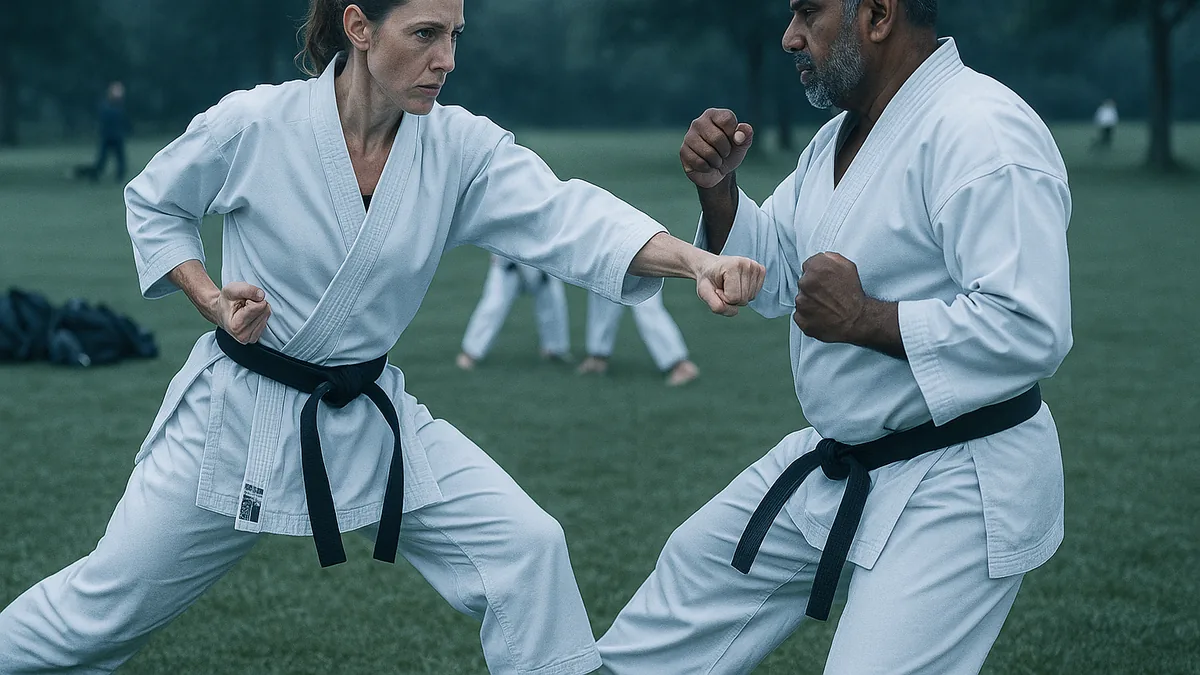
What you want is to step your lead foot to the outside of theirs. This puts you at an angle where your reverse punch has a clear line to their body and their power hand has to travel across their centreline to reach you. It’s the same principle southpaws use against you - you’re just taking it back.
I’ve noticed that most students understand this intellectually and then completely forget it the moment sparring starts. The reason is that stepping to the outside feels like moving toward the threat. It feels wrong at first, but trust the mechanics - you’re actually removing yourself from the dangerous line while opening your own.
Drill this as a footwork pattern before you ever add techniques. Just the step. Southpaw partner throws a lead jab, you step your front foot to the outside of their front foot as you parry. Do it slowly. Do it until the footwork is automatic.
Drills That Actually Solve the Problem
Drill 1: Mirrored Parry-Counter (The One I Use Most)
This is the drill I come back to more than any other when I have a student preparing for a southpaw opponent. It directly addresses the most common timing failure.
Why it matters: Your habitual parry for a jab is built for an orthodox opponent. Against a southpaw, the jab comes from the opposite side and your parry mechanics are slightly off - not completely wrong, but wrong enough to cost you the counter.
Setup: Partner in southpaw stance, you in orthodox. Light contact or no contact to start. They throw only the lead jab at this stage.
Execution:
- Stand in your regular kamae. Have your partner throw a slow lead jab.
- Parry with your rear hand (right hand for orthodox) - this is the correct parry for a southpaw jab and it’s the one most people resist because it’s backwards from what they’ve trained.
- As you parry, step your lead foot to the outside of their lead foot.
- Counter with kizami-zuki or gyaku-zuki depending on range.
- Reset. Repeat 20 times slowly, then increase speed.
What to feel for: When the step and parry happen together, you’ll feel a momentary sense of being side-on to them rather than square. That’s correct. Your weight should shift slightly onto your front foot as you step. The counter should feel like it’s coming from a position of safety, not scramble.
What most people get wrong: They parry with the lead hand out of habit. This works against orthodox fighters but against a southpaw it takes your parrying hand across your own body and leaves you off-balance for the counter. The correction that works is to have them slow the jab down to almost nothing and physically guide the rear hand into the parry. Once they feel the angle, they get it.
Drill 2: Outside Angle Pressure Drill
This is the drill I’d say is most important for competition preparation. It builds the habit of fighting for the outside angle rather than accepting the neutral position.
Why it matters: A southpaw who establishes their preferred angle will land their gyaku-zuki repeatedly and you’ll struggle to understand why your defence isn’t working. This drill makes outside angle control automatic.
Setup: Both partners moving freely. Southpaw is instructed to keep trying to get their lead foot to the outside of yours. You are trying to do the same to them. No techniques at first - just footwork competition.
Execution:
- Start facing each other in stance, lead feet roughly aligned.
- Both partners move continuously, each trying to establish the outside angle.
- After two minutes of footwork only, add a rule: whoever achieves the outside angle gets to throw one controlled technique. The other person defends.
- Run this for three-minute rounds.
What to feel for: You’ll feel the difference between reactive footwork and intentional footwork. When you’re just reacting to their movement, you’ll constantly feel like you’re a step behind. When you’re actively hunting the angle, your movement becomes more purposeful and your weight distribution changes - you’re pushing off the back foot more, driving laterally rather than drifting.
What most people get wrong: They focus on the technique opportunity and forget the footwork competition. The drill becomes sloppy sparring. Keep bringing the focus back to the angle - the technique is just the reward for winning the footwork exchange.
Drill 3: Combination Reading Against Reversed Patterns
This is the drill most people skip, and I think that’s a mistake. Your combination reading is pattern-based, and southpaw combinations follow different patterns.
Why it matters: Orthodox fighters tend to finish combinations with the rear hand. Southpaw fighters do too - but their rear hand is now on the left. Your body expects the finishing shot from the right. This is where late reactions come from.
Setup: Your partner calls out three orthodox combinations you know well. Then they mirror them into southpaw combinations. You practise reading and countering the mirrored versions.
Execution:
- Partner throws jab-gyaku-zuki in southpaw. You defend and counter.
- Partner throws jab-kizami-zuki-gyaku-zuki in southpaw. You defend and counter.
- Partner adds a kick combination - lead roundhouse to gyaku-zuki.
- Run each combination 10 times before moving to the next.
- Once you’ve drilled each separately, partner mixes them without calling.
What to feel for: Initially this feels like learning combinations from scratch, which is frustrating. After enough repetitions, you’ll start reading the southpaw’s shoulder and hip rather than their hand. That’s the shift you’re looking for - when you can feel a combination coming before it arrives, not just react to it after it starts.
For more on the decision-making side of this, the article on why karateka with strong kihon freeze in kumite is worth reading alongside this drill work. The pattern-reading problem is related to the decision-making problem.
Adjusting Your Attacking Strategy
Defence is only half the equation. You also need to adjust how you attack.
I prefer using kizami-zuki as the primary entry against a southpaw rather than the reverse punch. The reason is range - kizami-zuki gives you a scoring option from a distance where your gyaku-zuki hasn’t fully loaded, and against a southpaw the jab-gyaku-zuki combination can expose you to their counter if your timing is slightly off. The kizami-zuki, thrown from the outside angle, is harder for them to read and gives you a cleaner exit.
That said, once you’ve established the outside angle, the gyaku-zuki is excellent - you have a clear line and they don’t. The problem is most people try to land the gyaku-zuki before they’ve won the angle, and it doesn’t work.
I’ve noticed that fighters who do well against southpaws also tend to be good at controlling aggression under pressure. The frustration of having your defaults disrupted can push you into over-committing. That’s when southpaws score - not with brilliant technique, but by letting you walk onto their counter while you’re chasing the fight.
Community Perspective
There’s genuine disagreement in the karate community about how much time to spend on southpaw-specific preparation. Some instructors take the view that good fundamentals transfer - if your distance management and timing are solid, the adjustment to a southpaw is minor. I’ve heard this from experienced coaches who I respect.
My experience doesn’t support it. I think fundamentals are necessary but not sufficient. The pattern recognition problem is real and it requires specific exposure to fix. The practitioners I’ve seen handle southpaws best are the ones who have sparred with them regularly, not the ones who have the best general kumite skills.
The other disagreement is about stance switching - some coaches recommend orthodox fighters learn to switch to southpaw stance to create symmetry. I’d say this is useful at advanced level but a distraction for most competitors. Fix your orthodox game against southpaws first. Stance switching is a separate skill that takes years to use effectively under pressure.
Key Takeaways
- Step your lead foot to the outside of the southpaw’s lead foot - this is the single most important positional habit to build, and it needs to be drilled until it’s automatic.
- Use your rear hand to parry the southpaw jab, not your lead. This feels backwards and that’s exactly why you need to drill it.
- The mirrored parry-counter drill is the most direct fix for the timing problem - prioritise it over the other drills if training time is limited.
- Your combination reading is built for orthodox opponents. You need specific repetitions against southpaw combinations to rewire it - there’s no shortcut.
- Win the outside angle before you throw the big techniques. The angle is the setup. Without it, your attacks are harder and their counters are easier.
- Frustration is the southpaw’s best weapon against you. When your defaults stop working, the temptation is to force them harder. Don’t. Slow down, reset the angle, and fight the fight you’ve prepared for.
The weekly digest
New karate articles, once a week
One email every week with everything new on Karate Lifestyle. No spam; unsubscribe in one click.
We'll email you to confirm. See our privacy policy.