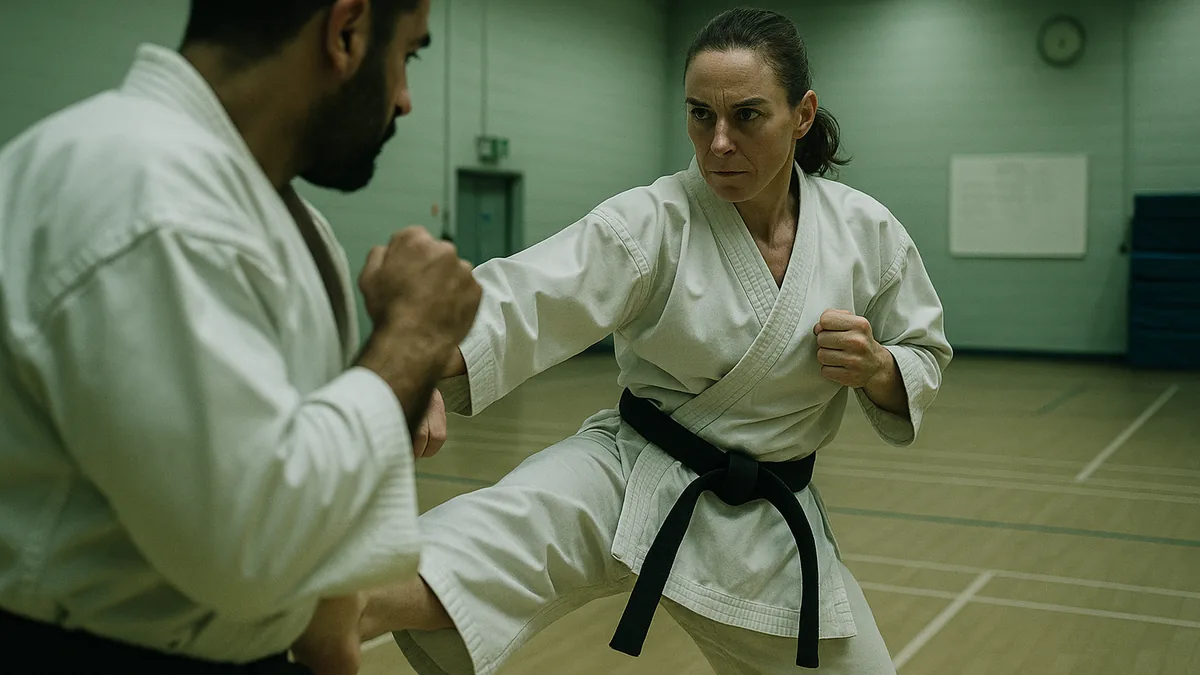
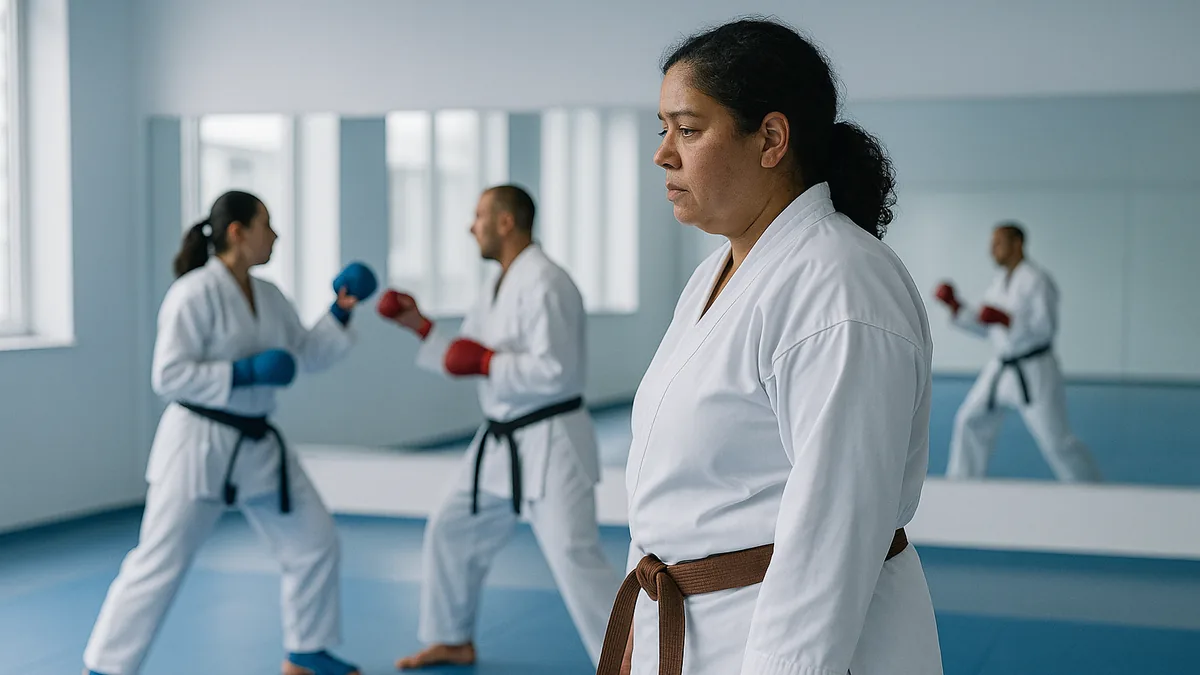
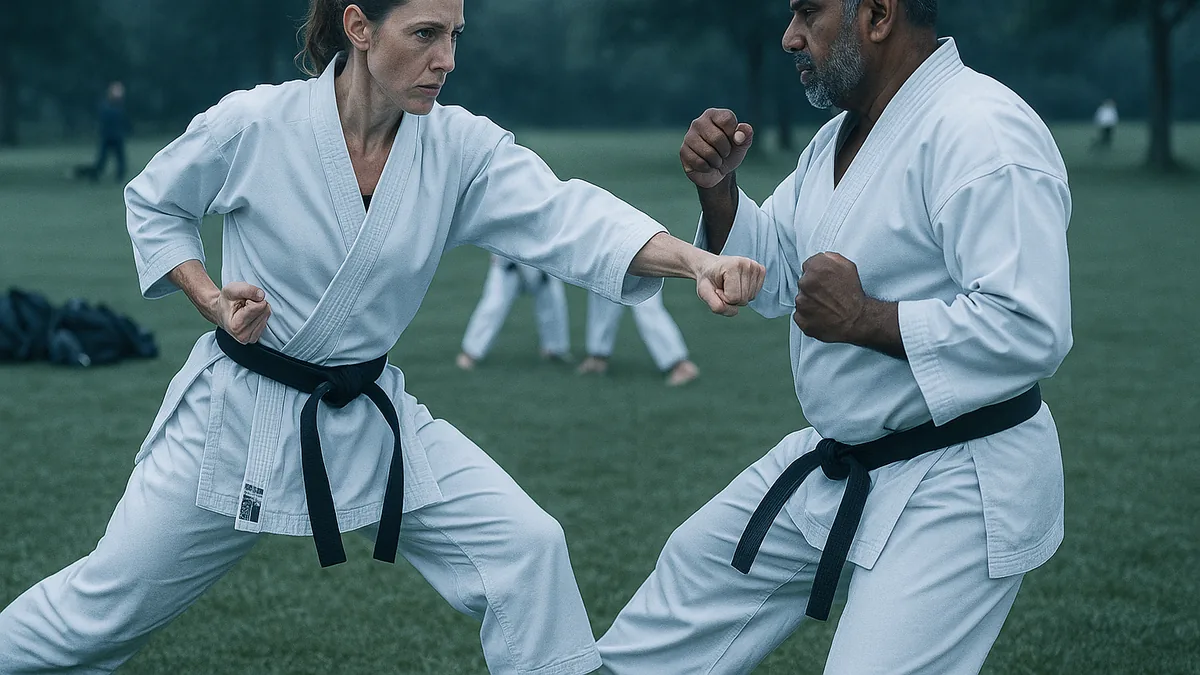
Why You Win in the Dojo and Lose at Competition: The Kumite Transfer Problem Most Practitioners Never Solve
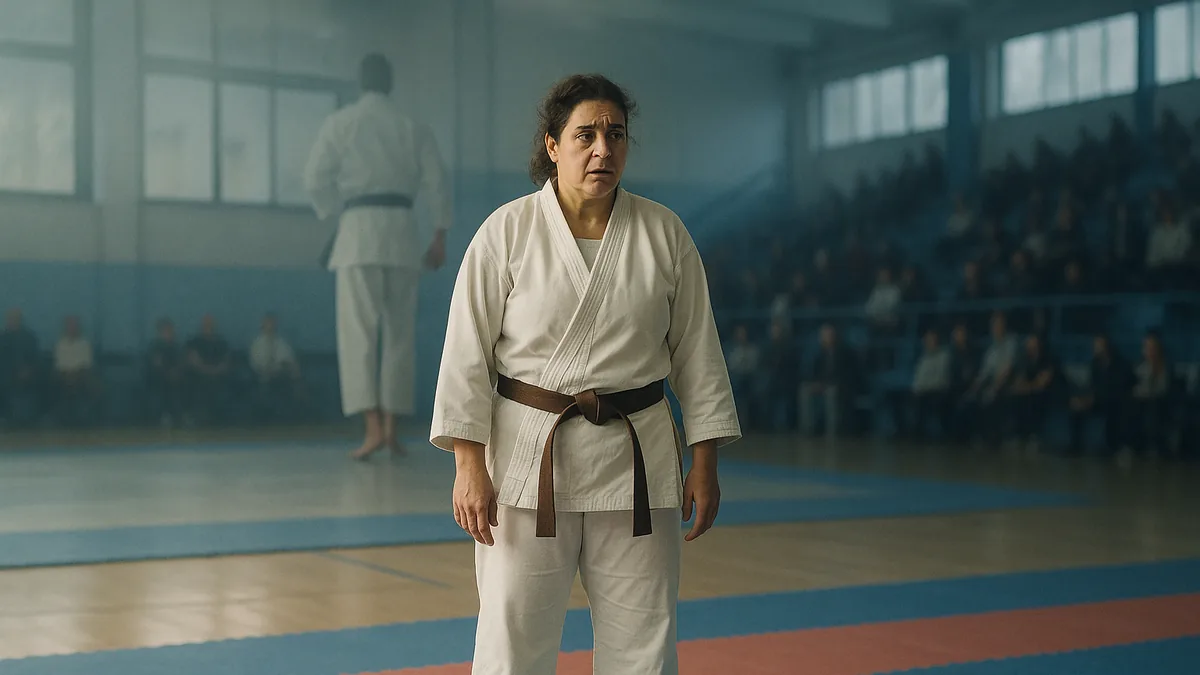
I’ve watched good karate practitioners fall apart at tournaments more times than I can count. Not nervous white belts on their first competition day. I mean people who are genuinely sharp in the dojo - controlled, technical, timing that makes you nod when you watch them spar. Then they step onto the competition mat and something breaks down. The sharpness goes. The timing feels off. They come home with a first-round loss and spend the next week convinced they need to train harder.
Training harder isn’t the problem. The problem is that they’ve been training for one environment and competing in another, and nobody ever made that gap explicit to them.
This is the kumite transfer problem. And most practitioners never solve it because most practitioners never name it.
The Dojo Is a Controlled Experiment. Competition Isn’t.
Think about what your regular sparring session actually looks like. You know your partners. You’ve felt their timing before. You know who throws combinations and who likes to sit back and counter. You know which side your instructor watches from. You know the mat dimensions, the lighting, the temperature of the room after an hour of training. Your nervous system has mapped all of this.
I’ve noticed that experienced practitioners often perform better against higher-ranked training partners than against lower-ranked ones at tournaments. That sounds backwards until you understand why it happens. Against your seniors in the dojo, you’ve trained yourself to stay composed under pressure because you had no choice. Against a stranger at competition, the familiarity scaffolding is gone - and a lot of practitioners don’t realise how much of their performance was built on that scaffolding.
The dojo environment also has an implicit agreement about intensity. Nobody says it out loud, but everyone knows roughly how hard the session is going to push. Competition has no such agreement. Your opponent might come out at a pace or angle you’ve never seen before, and your body’s first response is to stall. That stall - that half-second of recalibration - is where most points get scored against you.
What Actually Changes Between Dojo and Competition
The physical skills don’t disappear. That’s the thing that confuses people. Your gyaku-zuki is still your gyaku-zuki. Your footwork hasn’t changed overnight. What changes is the context those skills are embedded in, and if your training never separated the skill from the context, you can’t access the skill cleanly when the context shifts.
Here’s what I’ve seen change most consistently:
- Distance management - In the dojo you’ve calibrated your maai against familiar bodies. Unfamiliar opponents throw that calibration off, and you either over-commit or stay too far out to score.
- Reaction speed - Not because your reflexes got slower, but because you’re reading unfamiliar patterns and your pattern recognition is running slower than usual.
- Commitment on attack - Dojo sparring often lets you half-commit and still score because your partner reads your intention. Competition doesn’t reward half-committed technique. If you haven’t trained full commitment with full extension, you’ll pull it in competition.
- Recovery after a point - This one surprises people. In the dojo, after a point is scored, the pace resets naturally. In competition, some opponents deliberately come at you during the reset. If you’ve never trained that moment, you’re vulnerable there.
I’d also point you toward the controlling the centre in kumite piece, because the transfer problem hits spatial awareness particularly hard. Centre control that feels instinctive in a familiar space often has to be actively rebuilt on an unfamiliar mat.
The Mental Architecture Problem
My instructor used to say that competition doesn’t reveal who you are under pressure - it reveals who you are when your habits don’t work. I didn’t fully understand that until I had a tournament where I kept throwing the same combination that was scoring all week in training, and it kept getting read and countered. I couldn’t adapt in the moment because I hadn’t practised adapting. I’d practised the combination.
This is the mental architecture problem. Most practitioners build their competition preparation around technique refinement. More reps, sharper kizami, cleaner hip rotation. What they don’t build is the cognitive flexibility to operate when the plan stops working.
What I tell students now is this: your competition preparation needs to include sessions where you deliberately do things that don’t work, and you have to keep going. Throw your best technique, get countered, reset, find something else. Do that under time pressure. Do it when you’re tired. The discomfort of not having a working answer in the moment - that feeling of your default options closing down - is exactly what competition will give you, and if you’ve never trained through it, you’ll freeze.
If you’re thinking about passive vs aggressive kumite styles and which suits you better, this is where that question gets complicated. A lot of practitioners default to passive in competition because it feels safer when the environment is unfamiliar. But passive without a plan is just waiting to lose.
The Mistake I See Most Often
The most common mistake I see at competitions - and I’ve watched enough of them to be confident about this - is practitioners who spar in the dojo at one intensity level and then try to compete at a different one without ever having practised the transition.
They train controlled, semi-contact sparring all week. Then competition day comes and they try to shift into a sharper, faster gear they haven’t actually rehearsed. It feels wrong at first, like the timing is off, like your own body is slightly ahead of or behind where you expect it to be. That’s not nerves. That’s an unfamiliar gear ratio.
The correction that actually works is simple but most people resist it: you need to train at competition intensity, including the psychological state that goes with it, before you get to competition day. That means structured rounds with a clear scoring framework, time limits that matter, and consequences for losing (even if those consequences are just having to do ten push-ups). You need your nervous system to have been in that state before. Otherwise competition is the first time you’ve ever actually been in it, and you’re learning on the job.
Building the Bridge Between Environments
I think the practitioners who handle this best are the ones who treat competition preparation as a separate training discipline - not just harder versions of what they already do, but genuinely different sessions with different objectives.
Some things that actually work:
- Unfamiliar partner training - Specifically seek out sparring with people you’ve never trained with before. Visit other dojos. Bring in guests. The point isn’t to win those sessions. The point is to train your nervous system to operate without the familiarity scaffolding.
- Scenario-based rounds - Start rounds with a specific score deficit. You’re down by two points with thirty seconds left. How do you operate? This is a skill and it has to be practised.
- Deliberate environmental variation - Different mats, different lighting, different time of day. Sounds trivial. It isn’t. Your body has more environmental memory than you think.
- Post-point protocols - Train what you do in the three seconds after a point is scored, both when you score and when your opponent does. Most people have no protocol for this and it costs them.
Physical preparation matters too, but the conditioning needs to be specific to competition demands. The kumite conditioning piece goes into this properly - the short point, though, is that competition fitness and dojo fitness aren’t the same thing, and training only for one won’t get you ready for both.
Community Perspective
There’s a genuine split in how different dojos approach this, and I think it’s worth being honest about it.
Traditional instructors - and I’ve trained under a few who fall firmly in this camp - will tell you that if your fundamentals are solid enough, the transfer takes care of itself. Get the kihon right, get the kata right, and the kumite will follow. I have some sympathy for this view. I’ve seen practitioners with genuinely deep fundamentals adapt to competition faster than technically sharp but shallow practitioners.
But I’ve also seen too many technically excellent karateka who simply cannot perform under competition conditions to believe the fundamentals argument is complete. The transfer problem is real and it requires direct attention. Hoping your kihon will carry you across the gap is a reasonable bet for some people and a losing one for others.
The other split is between practitioners who think competition experience itself is the only real solution - just compete more, lose more, eventually you’ll adapt - versus those who think you can deliberately accelerate the transfer through specific training methods. I sit firmly in the second camp. Competing more helps, but competing more without understanding why you’re losing the way you’re losing just gives you more reps of the same problem.
Key Takeaways
- The transfer problem is real and separate from technical ability - address it directly rather than hoping better technique will fix it.
- Familiarity scaffolding is a hidden crutch in dojo performance. Deliberately remove it in training by seeking unfamiliar partners and environments.
- Build cognitive flexibility alongside technique - train what you do when your default options stop working, not just the options themselves.
- Match your training intensity to competition intensity before the day arrives. Your nervous system needs to have been in that state before it counts.
- Develop post-point protocols. What you do in the three seconds after a point is scored is a trainable skill that most practitioners leave to chance.
- Scenario-based rounds with specific score deficits and time pressure are one of the highest-value things you can add to competition preparation. If you’re not doing them, start.
If you’re also thinking about the gyaku-zuki vs kizami-zuki question in competition, the transfer problem applies there too - which technique scores isn’t just about mechanics, it’s about whether you can execute that technique cleanly when the environment is unfamiliar and the pressure is real.
The weekly digest
New karate articles, once a week
One email every week with everything new on Karate Lifestyle. No spam; unsubscribe in one click.
We'll email you to confirm. See our privacy policy.