Why Karateka With Strong Kihon Still Freeze in Kumite: The Decision-Making Problem Nobody Talks About
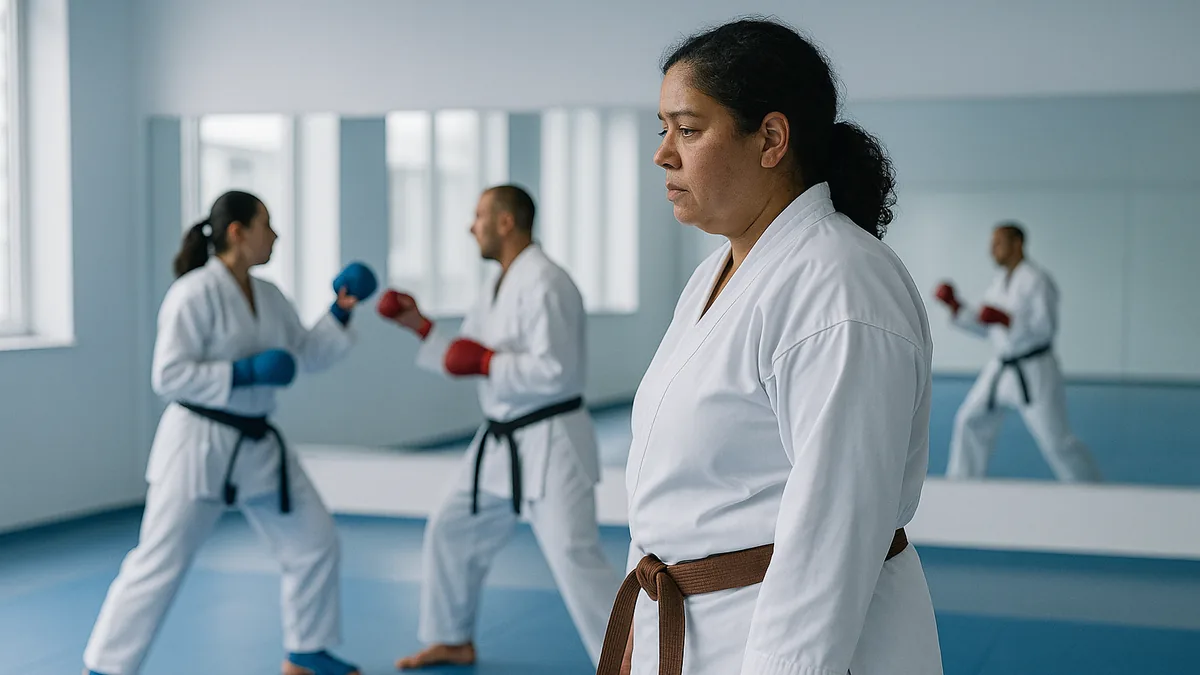
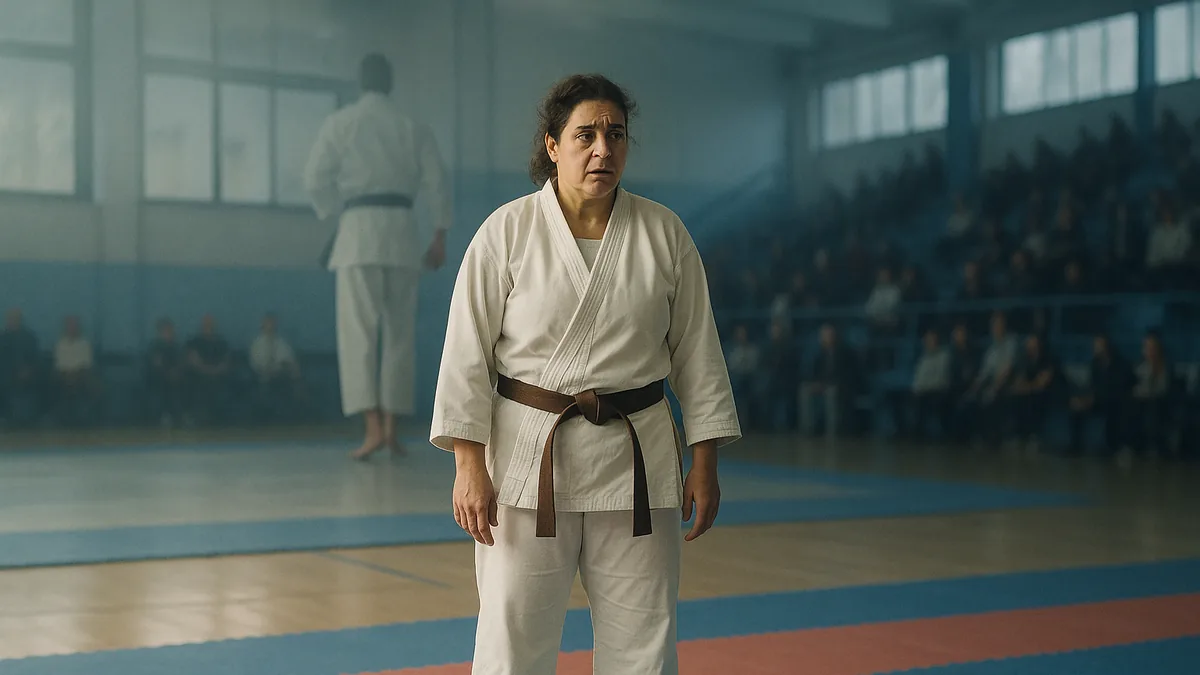
I’ve watched students freeze in kumite so many times that I’ve stopped being surprised by it. What still gets me is which students freeze. Not the white belts who don’t know what they’re looking at. Not the beginners who are still figuring out distance. I’m talking about the brown belts. The ones with clean, powerful kihon. The ones who can drive through a whole class of basics without a single correction from the instructor. Those students. They step into jiyu-kumite and become statues.
It took me a long time to understand why. And honestly, my understanding shifted completely once I started coaching more than competing.
The Kihon Trap
Here’s what I think is happening. When we train kihon, we remove the decision. The instructor calls the technique, you execute it. The repetitions build muscle memory, they build speed, they build power. All of that is real and valuable. But what they don’t build - what they almost can’t build in that format - is the habit of choosing.
Kumite isn’t about executing technique. It’s about selecting technique under pressure, in real time, against someone who is actively trying to disrupt your timing. Those are completely different cognitive tasks, and we train one obsessively while treating the other as something that will just sort itself out.
I used to think that if a student’s kihon was good enough, the kumite would follow naturally. My first instructor used to say the opposite - “kihon is the vocabulary, kumite is the conversation” - and I nodded along without really getting it. It wasn’t until I was coaching a senior student who had genuinely excellent basics but kept getting picked apart in sparring that I understood what he meant. The student knew every word. She just couldn’t form a sentence under pressure.
What Freezing Actually Looks Like
It doesn’t look like standing still. That’s the thing. Students who freeze in kumite are often moving - shuffling, adjusting, repositioning. They look like they’re doing something. What they’re not doing is committing. They’re waiting for a perfect moment that never arrives, and while they wait, their opponent is making decisions and acting on them.
I’ve noticed this pattern consistently across multiple dojos: the students with the strongest kihon are often the worst at initiating. They’ve been trained to execute correctly, so they wait until they can execute correctly. But kumite doesn’t give you that. The opening is there for half a second and then it’s gone, and if you spent that half second evaluating whether your hip position was right, you missed it.
The correction that actually works isn’t telling them to attack more. That just produces rushed, panicked attacks that fall apart. What works is training the decision separately from the technique.
The Decision Layer Nobody Trains
Most kumite training I’ve seen focuses on one of two things: drilling specific combinations, or doing rounds of free sparring. Both are useful. Neither directly trains the decision-making layer that sits between them.
What I mean by that is this: there’s a moment in every exchange where you read the situation and choose a response. That moment has to become as automatic as the technique itself. If you’re consciously thinking “he’s dropped his guard, I should throw gyaku-zuki,” you’re already behind. The read and the response need to compress into something closer to a reflex.
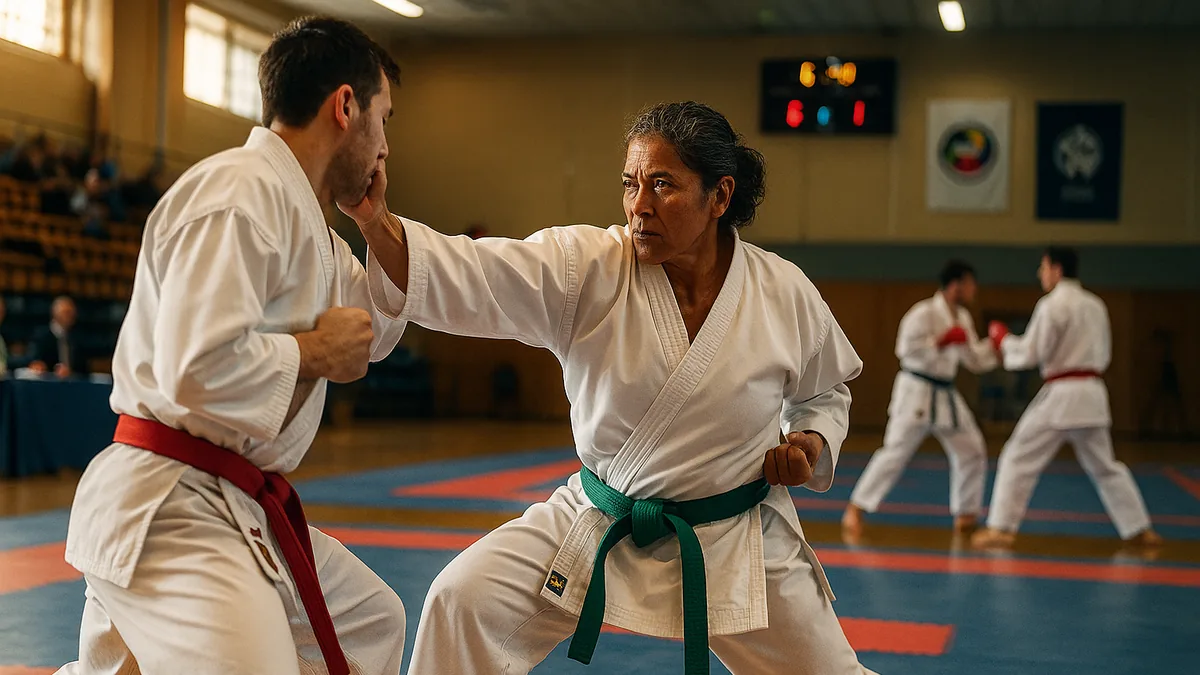
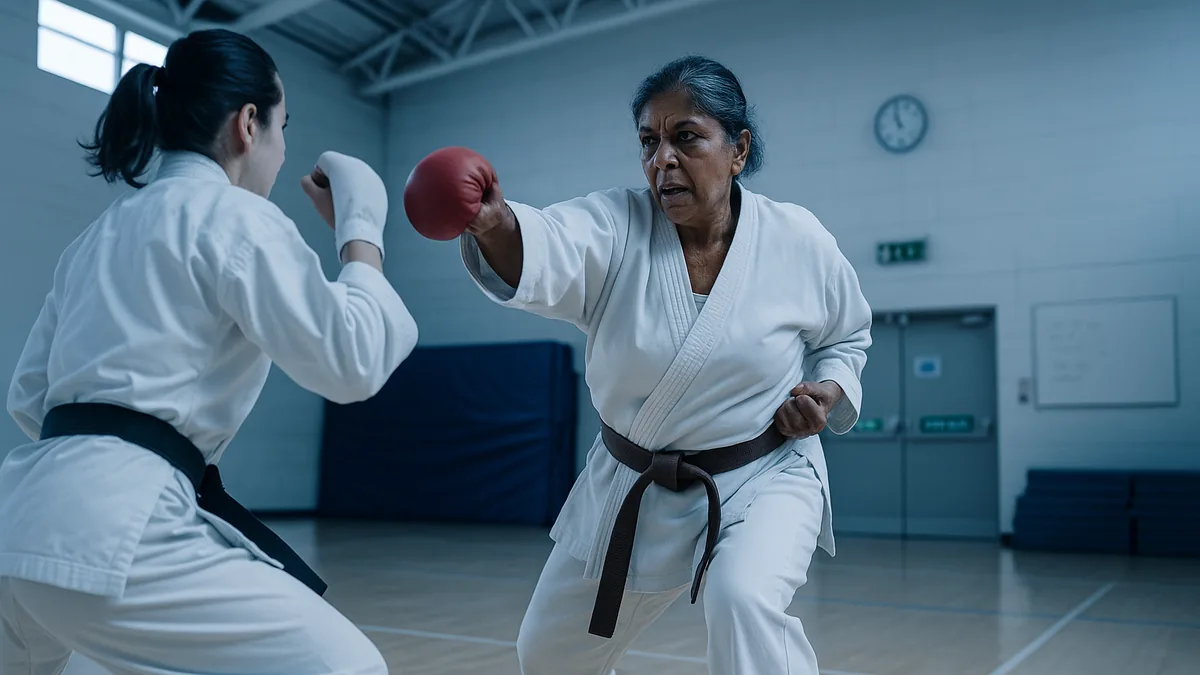
The way I build this in training is through constrained sparring. One person can only attack, one person can only counter. Or you limit the available techniques to two or three options and the student has to select from that small menu in real time. What you’re doing is forcing the decision to happen without the option of waiting. The cognitive load drops because the choice space is small, but the decision habit starts forming.
If you want to go deeper on what actually wins exchanges at the technical level, the piece on gyaku-zuki vs kizami-zuki in competition kumite is worth reading - because understanding which tools score changes how you prioritise your decision tree in the first place.
Why Off-Mat Time Actually Matters Here
This is the part that sounds like a detour but isn’t.
I’ve trained in dojos where everyone showed up, trained hard, bowed out, and left. Efficient. Professional. And the kumite was often stiff and disconnected, even among senior grades. I’ve also trained in clubs where people hung around after class, grabbed food together occasionally, sparred at gradings and then talked about it for an hour afterwards. The kumite in those dojos was different. More fluid. More willing to take risks.
I think the reason is trust. Not just trust that your training partner won’t hurt you - though that matters - but the deeper kind of trust that comes from actually knowing someone. When you know how someone thinks, how they react, how they handle frustration, you’re more comfortable engaging with them fully. And that comfort translates directly into willingness to commit in kumite.
I’ve noticed that students who socialise together outside of training are significantly more likely to spar with genuine intent. They’re not holding back out of social awkwardness or fear of embarrassing someone they barely know. That kind of hesitation looks exactly like the decision-freezing I described earlier. The root cause is different, but the symptom is the same - a student who won’t commit.
What I tell instructors who ask me about this: build the social fabric deliberately. Post-training events, club dinners, even just encouraging people to stay and talk for fifteen minutes after class. It sounds soft, but it has a direct impact on kumite quality. The off-mat relationships are load-bearing. Students who feel genuinely part of a community train harder, push each other more honestly, and - critically - are more willing to look bad in front of each other. That last one is huge. Fear of looking bad in sparring is one of the biggest brakes on decision-making.
The same principle applies to how instructors interact with students outside of the formal class structure. If students only ever see you in teaching mode, there’s a distance there that affects how they receive feedback. When they’ve had a conversation with you that wasn’t about karate, corrections land differently. There’s more trust in the relationship, and trust is what allows a student to actually hear “you’re hesitating” without getting defensive.
Aggression and Decision-Making Are Connected
One thing I’ve come to believe strongly: the inability to make decisions in kumite and the inability to manage aggression are two sides of the same problem. Students who freeze are often managing a kind of anxiety - about getting hit, about making the wrong choice, about looking slow. Students who go in wild are often avoiding the same anxiety by overriding it with forward pressure.
Neither is actually controlling the situation. There’s a piece on controlling aggression in kumite that gets at this well - fighting with intensity is different from fighting with panic, and learning the difference is a significant part of kumite development.
What I’d add from my own experience is that the emotional regulation piece is inseparable from the decision-making piece. When you’re anxious, your decision window narrows. You either freeze or you rush. Training the decision-making layer in low-pressure environments - constrained sparring, partner drills, even just talking through scenarios with training partners you trust - builds the capacity to stay clear-headed when the pressure is real.
You’ll feel the difference when it starts working. It’s not that the decisions become conscious and deliberate. It’s almost the opposite - the noise drops out, and you find yourself moving before you’ve finished thinking. That’s what you’re training toward. It feels like clarity rather than speed, even though the speed is there.
Community Perspective
This is an area where I’ve seen genuine disagreement between instructors. Some coaches believe that kumite decision-making is purely a technical problem - that if you drill the right combinations enough times, the selection happens automatically. I understand that view. There’s truth in it. But I’ve watched too many technically excellent students fall apart in free sparring to think it’s the whole picture.
The other camp, which I’m more sympathetic to, believes that kumite is primarily a psychological problem and that the technical training is almost secondary. I think that overcorrects. The technique has to be there. But the psychological and social environment in which training happens shapes how that technique gets deployed under pressure more than most instructors acknowledge.
Different dojos handle this differently. Traditional clubs often rely on the sheer volume of kihon and kata to eventually produce kumite capability - and sometimes it works, over years of consistent training. Sport-focused clubs often drill specific kumite scenarios until the responses are automatic. Both approaches produce good fighters. Neither consistently solves the decision-freezing problem in students who have the physical tools but can’t use them under pressure.
My honest view is that the missing piece in most clubs is the social and relational environment. The trust between training partners. The willingness to engage fully. Those things don’t come from more kihon repetitions. They come from building a club where people actually know each other.
Key Takeaways
-
Kihon builds the technique. It does not build the habit of selecting technique under pressure. These are different skills and need to be trained separately.
-
Constrained sparring is one of the best tools for training decision-making. Limit the available techniques, force the student to choose in real time. Start small - two options is enough.
-
Freezing in kumite is usually anxiety, not ignorance. The student knows what to do. They’re waiting for certainty that will never come. The correction is learning to act without certainty.
-
Social trust between training partners directly affects kumite quality. Invest in off-mat relationships. Club events, post-training conversations, and informal time together are not separate from training - they shape the environment in which training happens.
-
Instructors who only interact with students in formal teaching mode create distance that limits development. The relationship matters. Build it deliberately.
-
If your students have strong kihon but poor kumite, look at the decision layer first - and then look at the social fabric of your club. Both are likely contributing. Fixing only one won’t solve it.
The weekly digest
New karate articles, once a week
One email every week with everything new on Karate Lifestyle. No spam; unsubscribe in one click.
We'll email you to confirm. See our privacy policy.