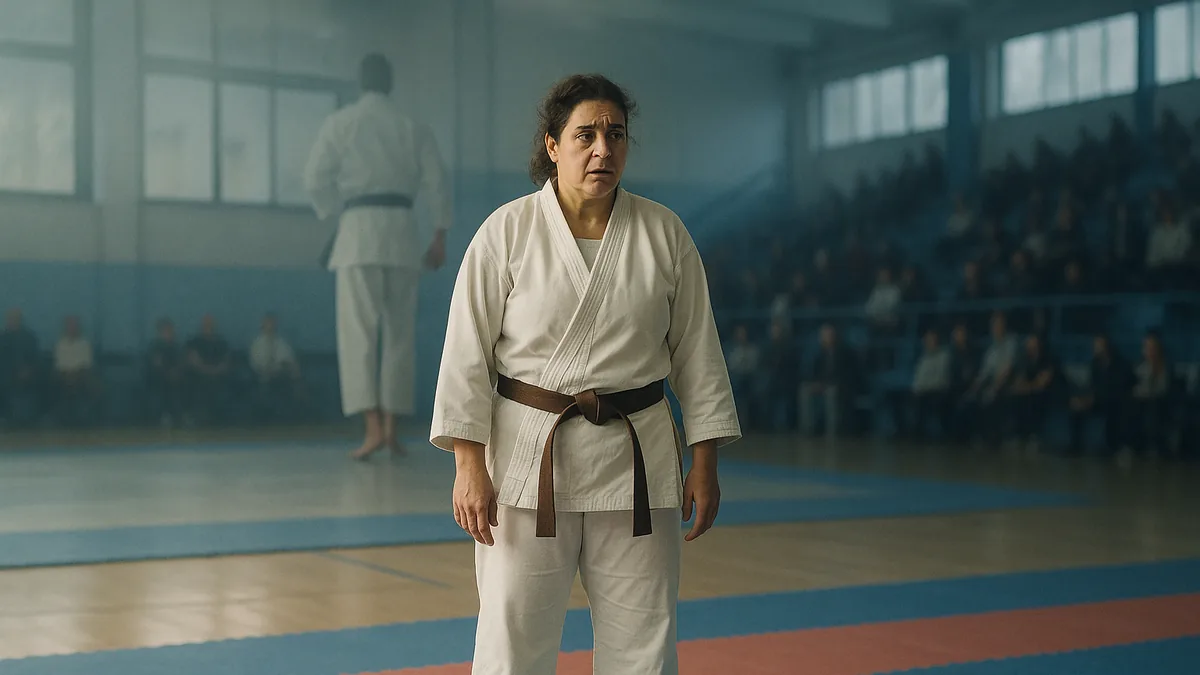
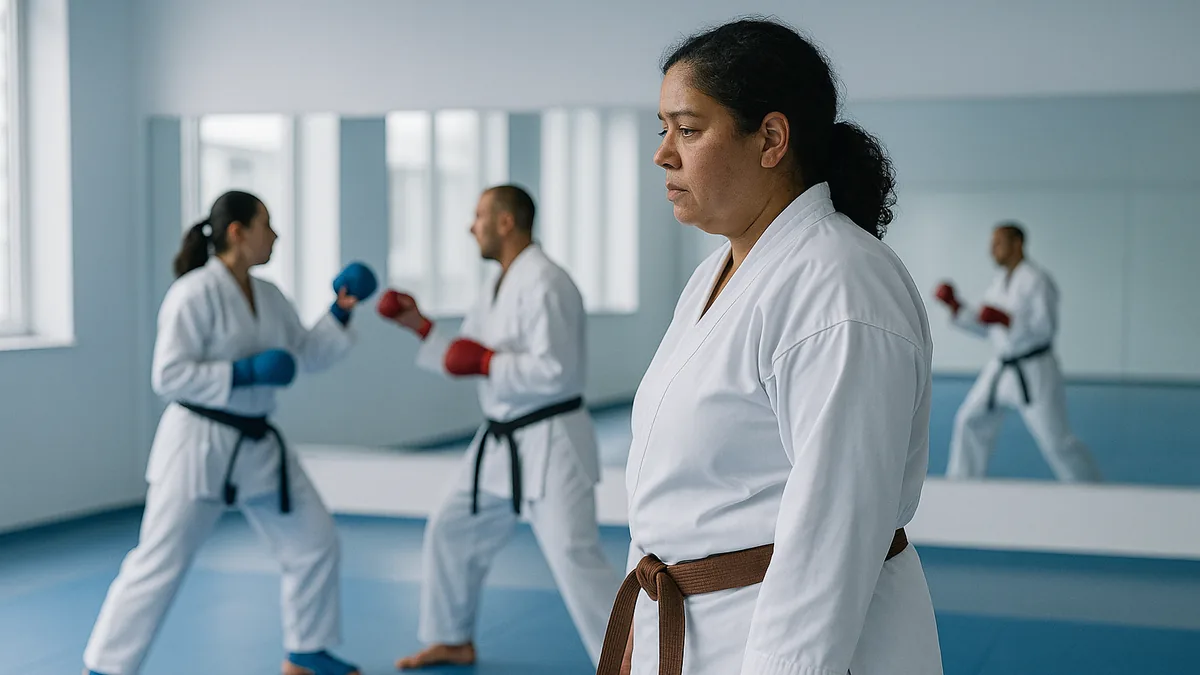
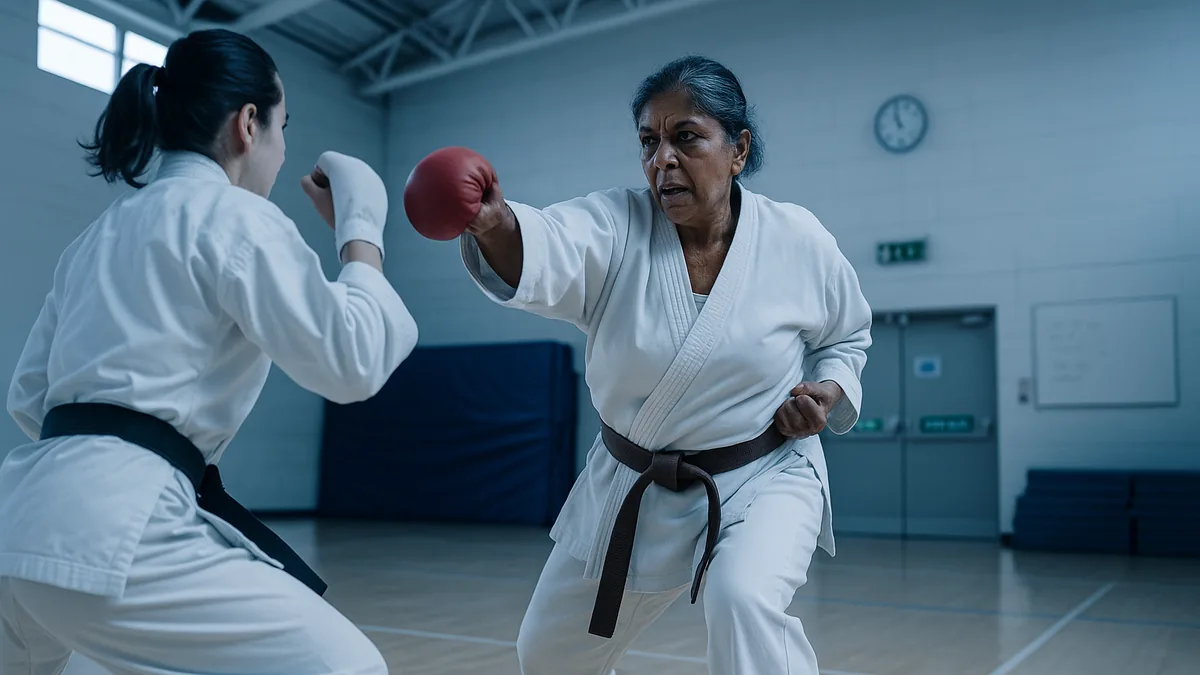
Controlling Aggression in Kumite: How to Fight with Intensity Without Losing Your Head
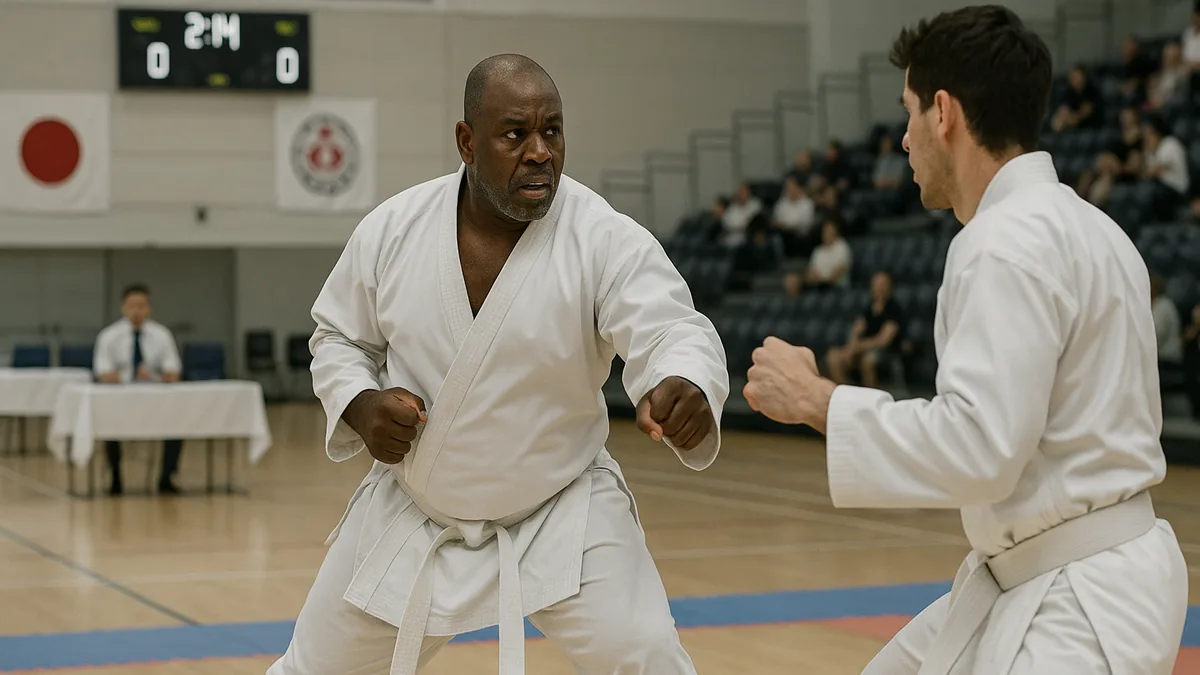
The moment you lose your temper in kumite, you’ve already lost the fight. I don’t mean that as a motivational poster. I mean it literally - the second your emotions take over, your technique collapses, your guard opens, and a composed opponent will pick you apart. I’ve watched it happen hundreds of times, and I’ve had it happen to me more times than I’d like to admit.
What I’ve noticed over years of competing and grading students is that most people confuse aggression with intensity. They think fighting with more emotion means fighting harder, faster, better. It doesn’t. Uncontrolled aggression is just noise. Channelled intensity is what actually scores points and keeps you safe.
The frustrating part is that nobody tells you this clearly when you’re coming up through the ranks. You’re told to “fight with spirit” and “show kiai” and “be assertive.” All of that is true. But nobody explains that there’s a difference between the kind of controlled fire that makes your techniques sharp and the kind of blind rage that gets you disqualified or dropped.
What Aggression Actually Does to Your Fighting
Here’s what happens physically when you lose control in kumite. Your breathing gets shallow and fast. Your shoulders come up. Your vision narrows - this is the tunnel vision that everyone talks about but few people understand until they experience it. You stop reading your opponent and start reacting to your own emotions instead.
I used to think this was just a mental weakness thing - something that happened to people who weren’t mentally tough enough. I was wrong. It’s physiological. The stress response kicks in, cortisol and adrenaline flood your system, and your body essentially goes into survival mode. The problem is that survival mode is not the same as fighting mode. Survival mode makes you grab, flail, and swing wide. It burns your gas tank in about thirty seconds.
The thing that actually changed my understanding was a tournament I competed in about eight years into my training. I was drawn against someone I’d had a bad experience with in dojo sparring - someone who’d been unnecessarily rough with me a few months earlier. The moment the match started, I was already angry. I know I threw three techniques in the first twenty seconds and scored nothing. He was calm, he was reading me, and he scored twice on my overcommitment. I lost on points and walked away genuinely puzzled, because I’d trained harder than him, I was fitter than him, and I knew it.
What he had that I didn’t that day was composure. And composure is a skill, not a personality trait.
Channelling Intensity Instead of Suppressing It
One mistake I see constantly with competitors who are trying to manage their emotions is that they try to calm themselves down completely before a match. They meditate, they breathe slowly, they try to feel nothing. Then they get on the floor and they’re flat. No snap in their techniques, no kime, no forward pressure. They’ve suppressed the intensity along with the anxiety.
What I tell students is that you don’t want to eliminate the pre-fight energy - you want to redirect it. That adrenaline is fuel. The goal is to burn it cleanly rather than letting it detonate.
Practically, here’s what I think actually works. Before a match, controlled breathing - not slow, passive breathing, but deliberate rhythmic breathing that you’re in charge of. You’re not calming down, you’re taking ownership of your physiological state. There’s a difference. When you breathe intentionally, you’re telling your nervous system that you’re in control. When you just try to “relax,” you’re often just suppressing the signal without addressing it.
The second thing - and this took me years to understand why it works - is to focus on a specific technical intention rather than a general outcome. Not “I’m going to win this” but “I’m going to control the centre and force him left.” Specific technical focus gives the mental energy somewhere to go. Vague outcome focus leaves it circling as anxiety.
If you want to go deeper on controlling space as a mental anchor, the piece on controlling the centre in kumite is worth reading alongside this - because having a spatial intention gives your mind something concrete to grip during a match.
The Mistakes I’ve Seen Wreck Good Fighters
Chasing the Score
This is the big one. A fighter gets scored against, and suddenly all their training goes out the window because they need to equalise immediately. I’ve seen good brown belts completely disintegrate after conceding the first point - not because they lack ability, but because they can’t tolerate the emotional discomfort of being behind.
What happens mechanically is that they start throwing techniques without setting them up. They abandon their distance management. They walk onto counters. The opponent, who is now ahead and composed, simply waits and picks them off.
The correction that makes the biggest difference here is training fighters to treat a conceded point as information rather than a crisis. Your opponent scored - fine. Why? What did you give them? What was your position when it happened? That’s a tactical question, not an emotional one. The moment you make it emotional, you’ve handed them the match.
Retaliating Instead of Responding
There’s a difference between a counter-attack and retaliation. A counter-attack is tactical - you’ve seen an opening and you’re exploiting it. Retaliation is emotional - you’ve been hit and you want to hit back. The physical actions might look similar from the outside, but the internal state is completely different, and it shows in the technique.
Retaliation tends to be wide, over-committed, and poorly timed. It’s the haymaker that misses because you threw it at where your opponent was rather than where they’ll be. I’ve seen this cost competitors matches at every level, from junior club competition to national grading panels.
If you want to build genuine counter-attacking ability rather than reactive flailing, the work you do on fixing slow reactions in kumite is directly relevant here - because fast, clean counters require you to be calm enough to read the attack before you respond to it.
Misreading Intensity as Aggression
Some fighters go the other direction. They’re so worried about losing control that they become passive. They wait, they retreat, they don’t commit. This is also a problem - not just tactically, but because it creates a habit of hesitation that’s very hard to break later.
I think the distinction that matters is this: intensity is internal, aggression is external. You can be completely internally fired up - sharp, alert, ready - while appearing controlled and reading the fight clearly. That internal intensity is what gives your techniques snap and your movement purpose. You want that. What you don’t want is the external expression of it as wild, uncontrolled forward pressure.
Mental Strategies That Actually Hold Up Under Pressure
The breathing work I mentioned earlier is foundational, but there are a few other things I’ve found genuinely useful - not from a book, but from trying them in competition and watching them work or fail.
Anchoring to a physical cue. Before a match, I used to press my thumb into my palm as a reset cue during practice - any time I noticed my composure slipping, I’d use that physical anchor to return to a neutral, focused state. Over time, that association builds. It’s not magic, it’s just conditioning. You’re training a reset response the same way you train a counter.
Verbal internal focus. I know this sounds odd, but talking to yourself quietly during a match - not out loud, obviously - keeps the analytical mind engaged. Something like “distance, distance, wait” or “centre, centre, move” gives your internal monologue something to do other than catastrophise. The inner voice is going to be active anyway. Give it a job.
Accepting the discomfort of not scoring. This is a mental skill that most competitors never develop. Being comfortable with a period of the match where neither of you is scoring - where you’re reading, circling, setting up - requires you to tolerate the anxiety of potential loss without acting on it impulsively. This is probably the hardest thing to train, because you can’t really replicate it in the dojo. You can work on it in hard sparring, but the tournament pressure is different.
For fighters who use feinting as part of their game, this composure work is also what makes feints effective. If you’re already anxious, your feints will be telegraphed and half-committed. A relaxed, focused fighter can sell a feint because they’re not rushing. The piece on feinting in kumite gets into the mechanics of this, but the emotional foundation has to be there first.
Community Perspective
There’s a genuine split in how different dojos approach this. Traditional schools tend to emphasise mushin - the no-mind state - as the ideal. The idea is that if you train correctly and sufficiently, the right response will emerge without conscious thought, and emotion becomes irrelevant because you’re not thinking at all.
I respect that framework, and I think it describes something real that happens at a very high level of training. But I’ve also watched it become an excuse to not address emotional management directly. “Just train more” isn’t useful advice for a competitor who needs to manage their state in three weeks at a tournament.
The more sport-oriented associations tend to be more pragmatic - sports psychology, pre-competition routines, explicit mental skills training. Some traditionalists find this uncomfortable, as if acknowledging that you need to manage your psychology somehow undermines the purity of the training.
My view, for what it’s worth, is that both approaches are pointing at the same thing. Mushin isn’t the absence of emotion - it’s the absence of emotional interference. Getting there through explicit mental skills training is a legitimate path, not a shortcut. The destination is the same.
This conversation also shifts depending on age and experience. Fighters in their twenties often have enough physical dominance to compensate for emotional volatility. By the time you’re competing into your forties, composure isn’t optional - it’s your primary weapon. If that’s relevant to where you’re at, the piece on kumite after 40 deals with this honestly.
Key Takeaways
- Uncontrolled aggression doesn’t make you fight harder - it makes you fight worse. The goal is channelled intensity, not suppression and not explosion.
- Before a match, anchor to a specific tactical intention rather than a general outcome. “Control the left side and force him onto my gyaku-zuki” is more useful than “I want to win.”
- When you concede a point, treat it as tactical information. Why did it happen? What was your position? That question is useful. Panic is not.
- Train a physical reset cue in the dojo during regular sparring - something you can use in competition to return to a focused state when you feel the emotion rising.
- The internal monologue is going to run during a match regardless. Give it a job - a simple verbal focus cue - rather than letting it catastrophise.
- Composure is a trainable skill, not a personality trait. It requires the same deliberate, repetitive practice as any physical technique. If you’re not training it explicitly, you’re not training it.
The weekly digest
New karate articles, once a week
One email every week with everything new on Karate Lifestyle. No spam; unsubscribe in one click.
We'll email you to confirm. See our privacy policy.