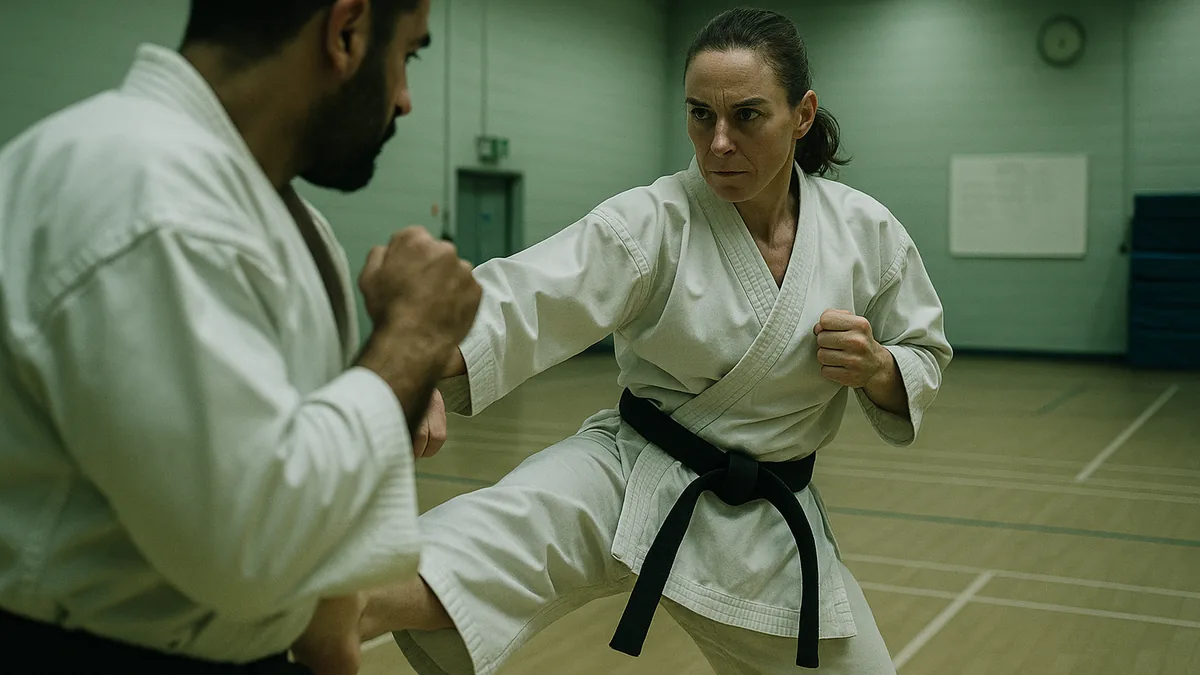
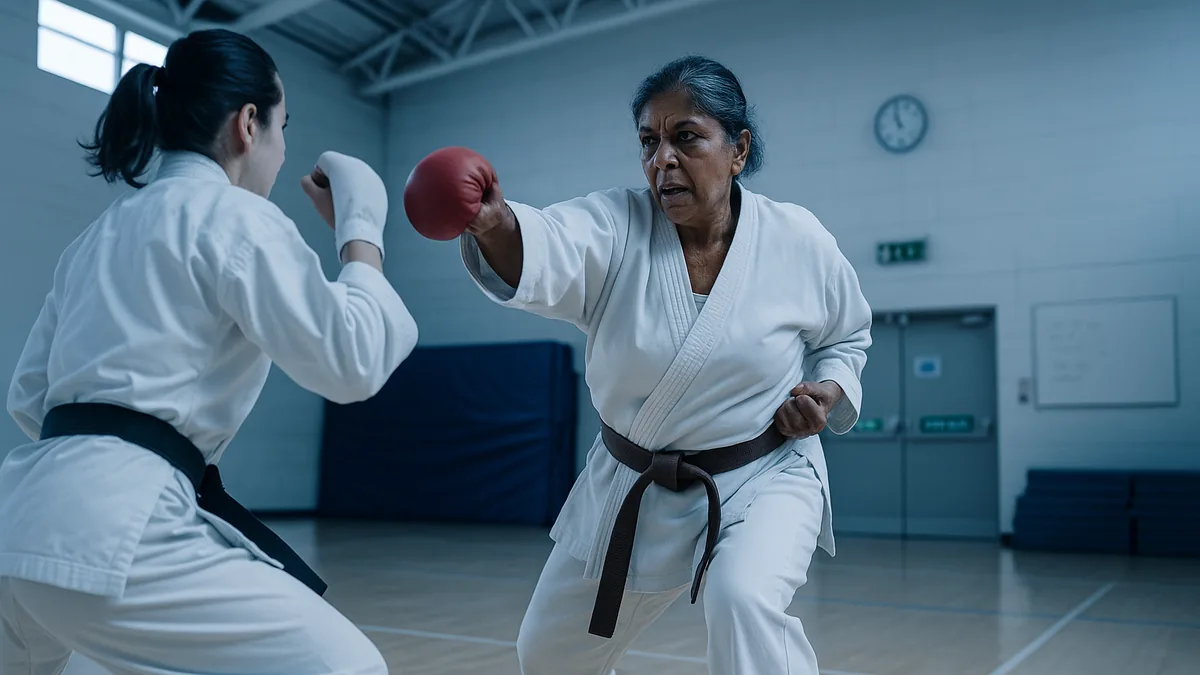
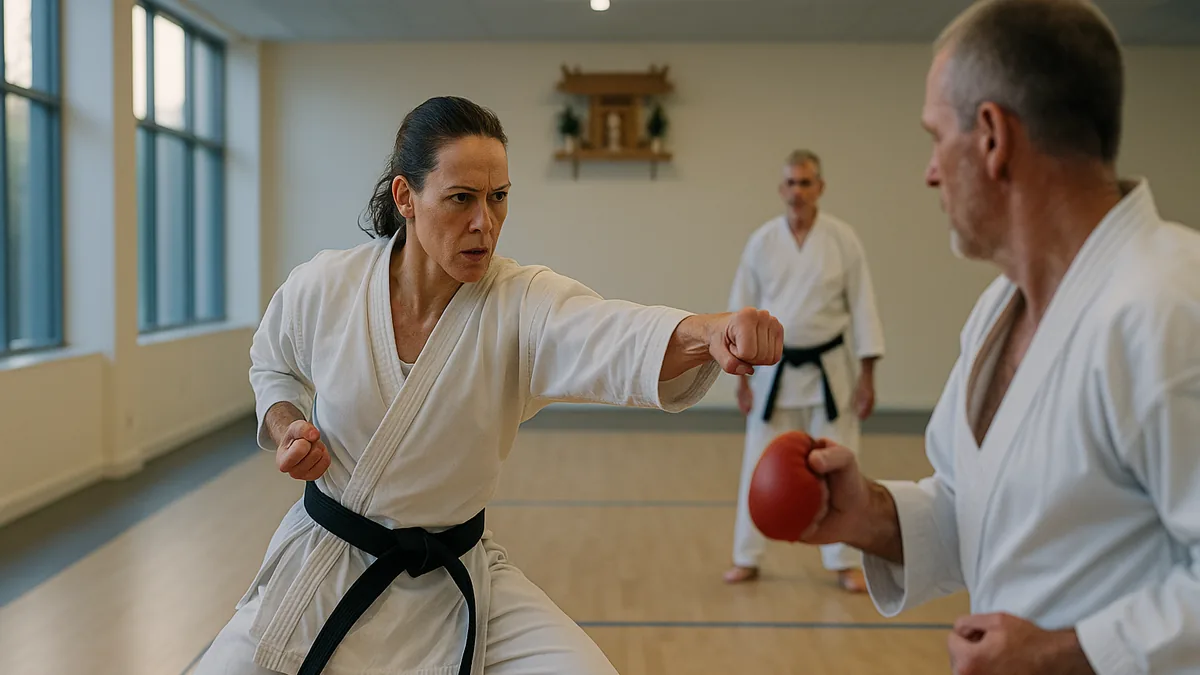
Kumite After 40: What Changes, What Doesn't, and How to Keep Competing
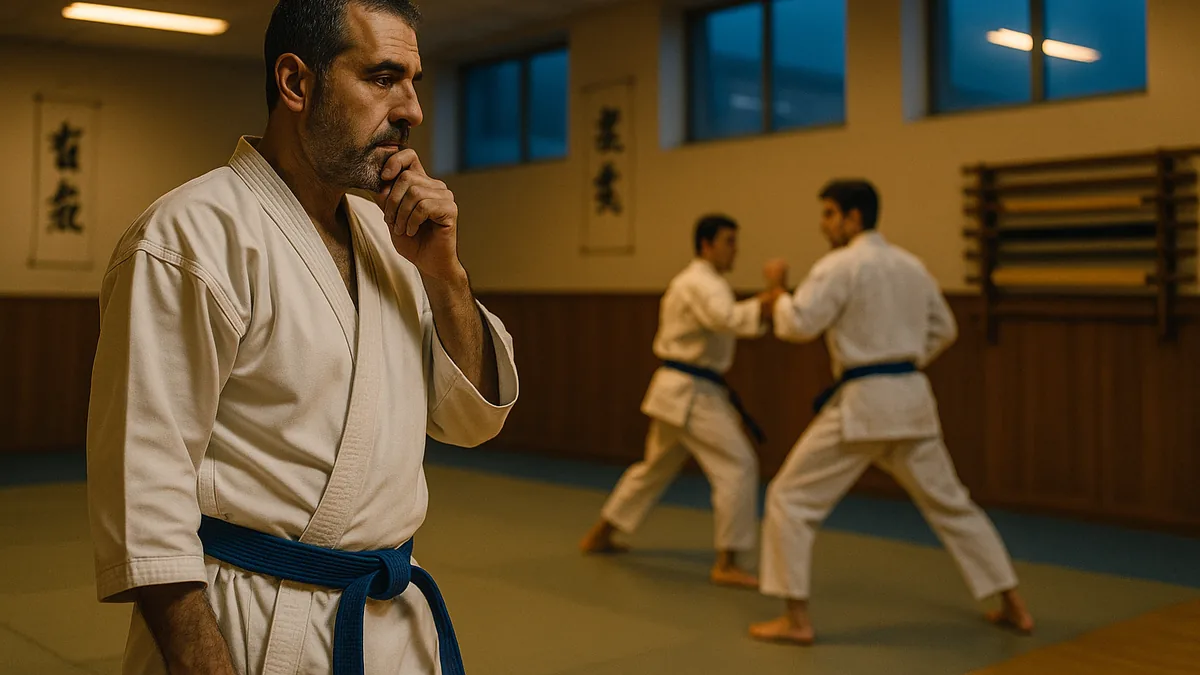
I still remember the first time I got properly tagged by a 52-year-old in sparring. I was in my early thirties, reasonably fit, and genuinely thought I was doing him a favour by going light. He read my rhythm inside the first thirty seconds, waited for me to commit to a combination, and scored cleanly off my own momentum. I stood there a bit embarrassed, and he just nodded like it was expected. That was the moment I stopped thinking of older competitors as people managing decline and started thinking of them as a completely different category of dangerous.
If you’re over 40 and still competing or thinking about getting back into kumite, that story is for you. Not as a comfort, but as a frame. What changes with age is real and worth being honest about. What doesn’t change - and what actually gets better - is also real, and most people undersell it.
What Actually Changes (And What You’re Probably Overestimating)
Recovery takes longer. That’s the one I can’t argue around. The days when you could train hard on Monday, spar Tuesday, and be fresh again by Thursday - those compress. I’ve noticed in my own training that the soreness from a heavy session now sits in me for an extra day, sometimes two. Joints that never complained in my twenties have opinions now. Your cardiovascular ceiling probably drops, and explosive output - the kind of snap you get from a pure fast-twitch burst - does fade.
But here’s where I think a lot of practitioners make a mistake: they assume that because those things change, their kumite has to shrink. They start training less, competing less, and apologising for being in the room. That’s the wrong response.
What I tell students who are heading into their forties is this: your body is changing its contract with you, not cancelling it. The terms are different. You need more recovery, which means you train smarter about frequency. You lose some raw speed, which means you have to get better at timing - and timing is a skill, not a physical attribute. It’s learnable at any age. If you haven’t already, read through how to improve kumite timing because the principles there apply even more sharply once you’re not relying on pure pace to compensate.
Technique Becomes Non-Negotiable
When you’re young and fast, you can get away with sloppy mechanics. I did it for years. A punch that’s slightly off-angle still lands if you’re quick enough. A combination that telegraphs still works if your opponent can’t read fast enough to counter it. Bad habits hide behind speed.
After 40, those bad habits stop hiding. I’ve seen this pattern so many times it’s almost predictable - a practitioner who’s been coasting on athleticism hits their mid-forties and suddenly their kumite falls apart. Not because they’ve lost that much physically, but because the technique underneath was never solid. The speed was doing too much of the work.
The flip side of this is genuinely encouraging. If you’ve built real technique - if your hikite is actually pulling, if your hip rotation is driving the punch, if your guard positioning is honest - those things don’t age the way fast-twitch muscle does. Good mechanics feel different from the inside. When a punch is right, you feel it travel through your body from the floor up, not just from the shoulder forward. That’s not something that disappears at 45.
This is also where distance management becomes your most important skill. Younger competitors can afford to be approximate about distance because they can adjust in real time. You need to be in the right place before the exchange starts. Not close enough that you’re eating punches, not so far out that you’re always chasing. Getting that calibration right is a technical skill, and it’s one that experienced practitioners are often better at than they give themselves credit for.
Strategy Over Athleticism
I prefer to think of this as the shift from playing the game fast to playing the game well. They’re not the same thing.
One mistake I see often with older competitors is that they try to maintain the same game they had at 30 but with less gas. They’re still going for the same exchanges, the same combinations, the same rhythm - just slower. That’s the wrong approach. The game you play at 45 should look different from the game you played at 28, not because you’re doing less, but because you’re doing different things.
Controlling the centre is one of those concepts that becomes genuinely useful later in your career in a way it often isn’t when you’re young. Young competitors tend to be reactive - they move around a lot, they chase, they respond. Experienced competitors who understand centre control can dictate where the exchange happens without burning the same energy. You’re not chasing the fight. You’re positioning so the fight comes to you on your terms.
My instructor used to tell me that the best kumite looks effortless because the work is done before the technique. I didn’t understand that until maybe brown belt, when I started seeing the gaps in an opponent’s rhythm rather than just reacting to their movements. After 40, that kind of reading becomes your primary weapon.
Reaction speed is worth addressing directly here, because a lot of older practitioners assume it’s gone. It does slow, but not as much as people think, and more importantly, a lot of what looks like reaction speed is actually anticipation. You’re not reacting faster - you’re reading earlier. That’s a trainable skill. The article on fixing slow reactions in kumite covers this well, and I’d push back on anyone who thinks slow reactions are just an age thing. They’re often a pattern-reading thing, and pattern reading gets better with experience.
Adapting Training Without Abandoning Competition
I want to be direct about this: I think too many practitioners over 40 stop competing, and they do it before they need to. They retire from competition because training feels harder, not because they’ve actually hit a wall in terms of competitive ability. Those are different things.
Adapting training to your body is not the same as reducing your ambition. You might need to cut a sparring session and add a technical drilling session. You might need to be more selective about which training partners you go hard with and when. You might need to be honest about the fact that a full week of intense training followed by a competition is going to wreck your body in a way it didn’t at 30.
I’ve noticed that practitioners who stay competitive longest are the ones who get very good at managing their own training load - not just following whatever the class schedule says, but knowing when to push and when to hold back. That’s not laziness. That’s experience applied to self-management.
If you’re carrying extra weight or dealing with a build that was always more powerful than agile, the principles in kumite for heavier or shorter karateka are worth reading. The same logic applies - you’re not fighting against your body, you’re figuring out how to use what you have.
One more thing worth mentioning: blind spots tend to calcify with age. The defensive habits you’ve had for twenty years are deeply grooved, which means if there’s a side you consistently get scored on, it’s not going to fix itself. You need to actively work on it, because the habits are harder to change the longer they’ve been there. Get someone you trust to watch you spar and give you an honest read.
Community Perspective
This is genuinely an area where dojos disagree, and where I’ve had real arguments with people I respect. Some instructors believe that after a certain age, the focus should shift entirely to kata and away from kumite. Their reasoning is sound - the injury risk is real, and there’s plenty of depth in kata practice to occupy a lifetime. I don’t agree with the conclusion, but I understand the logic.
Others think masters divisions in competition are a watered-down consolation prize and that older practitioners should compete in open categories or not at all. I’ve heard this from some very serious competitors and I think it misses the point. The game changes. Masters kumite is not lesser kumite - it’s a different expression of the same art, and it rewards different things.
What I’ve seen change in my own views: I used to think that keeping up with younger students in sparring was the measure of whether your kumite was still good. I don’t think that anymore. The measure is whether you’re still learning, still being honest about your weaknesses, and still competing with intent. Those things don’t have an age limit.
Key Takeaways
- Recovery is your new training variable. Frequency and intensity need to be managed more carefully after 40. More recovery is not weakness - it’s how you stay in the game long-term.
- If your technique was sloppy, it will show now. Use this period to actually fix the mechanics you’ve been coasting around. The corrections will stick better than they would have at 25.
- Shift your game from athletic to strategic. You’re not playing the same game slower - you’re playing a different game. Centre control, distance, and timing become your primary tools.
- Anticipation is not the same as reaction speed. Pattern reading improves with experience. Work on reading earlier, not just responding faster.
- Stop competing only when you have a real reason to. Feeling older is not a reason. Audit your actual kumite ability honestly before making that call.
- Blind spots harden with age. Get external feedback on your defensive gaps and address them deliberately - they won’t self-correct.
The weekly digest
New karate articles, once a week
One email every week with everything new on Karate Lifestyle. No spam; unsubscribe in one click.
We'll email you to confirm. See our privacy policy.