Kumite for Heavier or Shorter Karateka: How to Use Your Build Instead of Fighting It
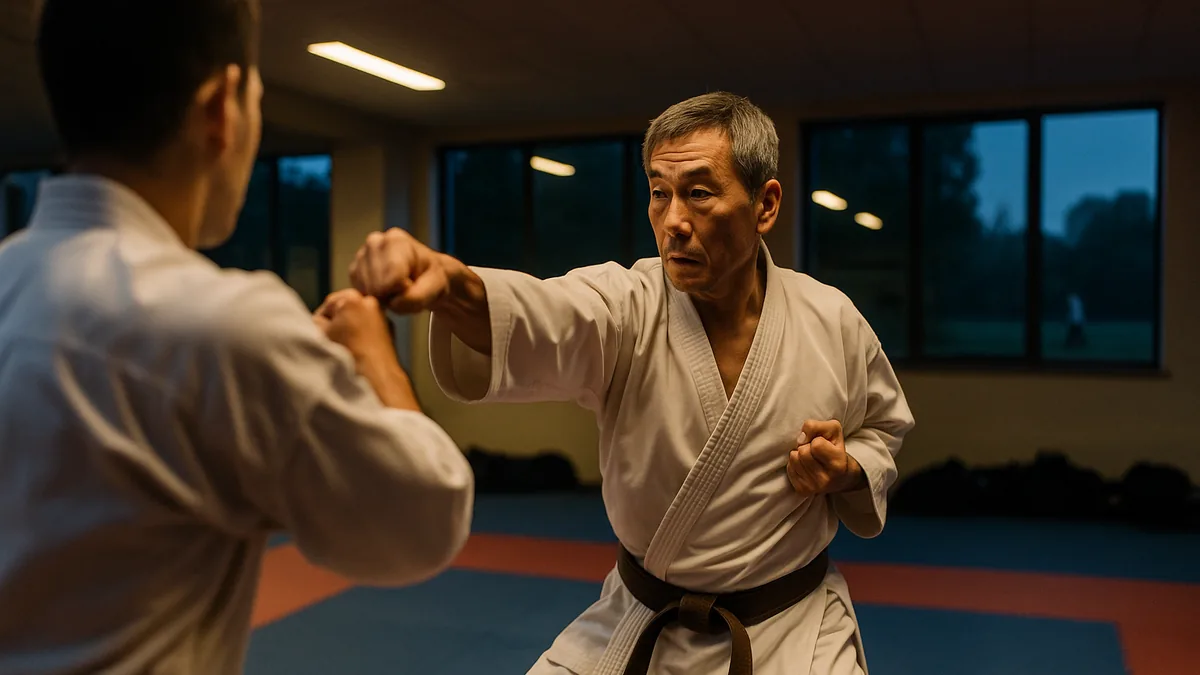
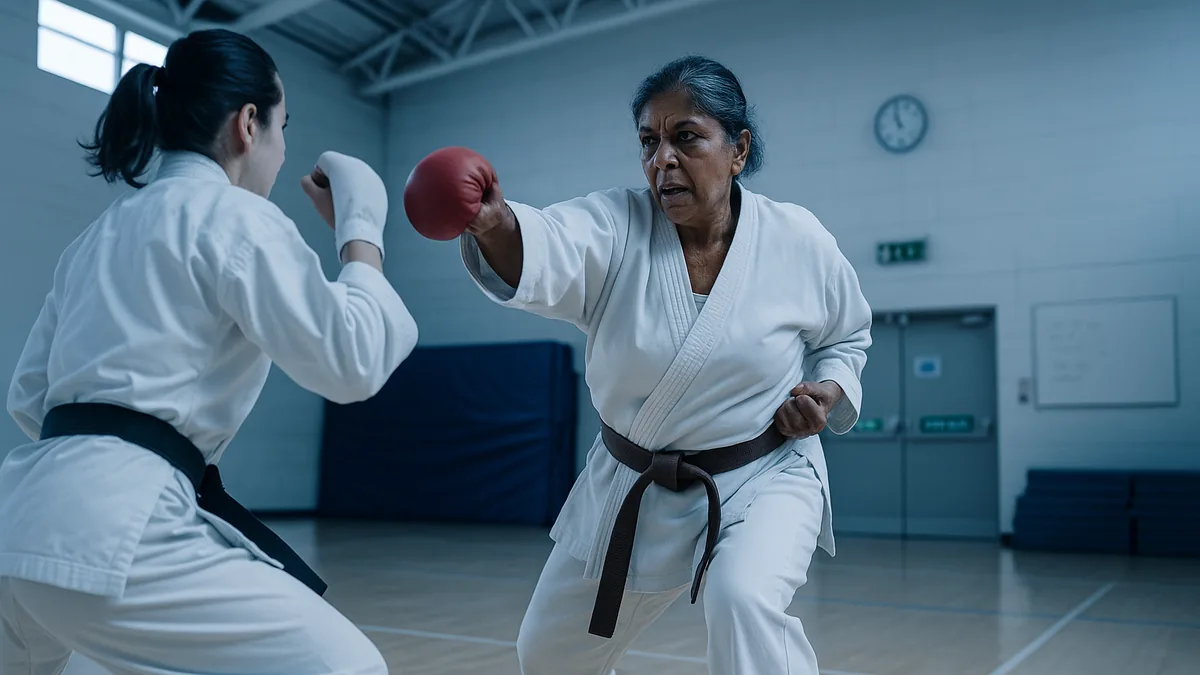
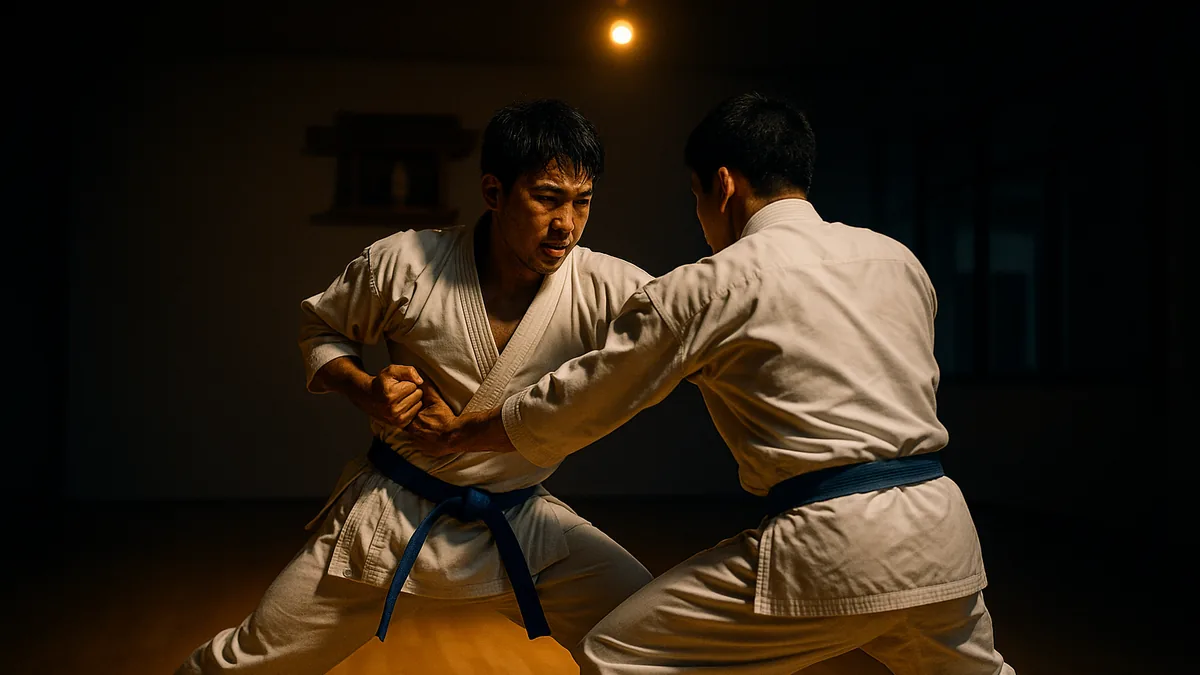
Most heavier or shorter karateka I’ve worked with come into kumite trying to fight like someone they’re not. They’ve watched faster, longer-limbed competitors and decided that’s the template. So they chase distance, try to out-jab people with shorter arms, and spend most of the match feeling like they’re a half-step behind. The frustration is real, and I understand it - but the problem isn’t their body. The problem is the strategy.
Your build is not a handicap you need to compensate for. It’s a set of mechanical advantages that most opponents aren’t prepared to deal with - if you know how to use them. A lower centre of gravity means stability they can’t match. A heavier frame means that when you make contact, it lands differently. Shorter limbs mean your techniques are faster through their arc and harder to read at close range. None of that matters if you’re trying to fight at the wrong distance with the wrong timing.
What I tell students is this: your first job in kumite isn’t to attack. It’s to understand where you’re dangerous and get there.
Understanding Your Natural Range
The biggest mistake I see with stockier or shorter practitioners is fighting at their opponent’s preferred range instead of their own. A taller fighter wants you at the end of their reach - that’s where their jab lands clean and your counters fall short. If you stay there, you’re playing their game.
Your range is closer. Not grappling distance, but inside the point where long techniques have full power. That half-step inside their comfort zone is where your build starts working for you. At that distance, their reverse punch has to travel further to reach you and loses structure on the way in. Your punch, travelling a shorter arc, is already there.
The challenge is getting there without eating a technique on the way in. That’s a timing and footwork problem, and it’s worth reading through Distance Management in Kumite if you haven’t already - the principles there apply directly to what we’re working on.
The Core Drills
Drill 1: Pressure-Step Entry with Low Guard
This is the drill I come back to more than any other for heavier practitioners. It teaches you to close distance without telegraphing, using your weight as an asset rather than a liability.
Why it matters: Most entries fail because they’re too fast or too committed too early. You rush in, your opponent reads it, and you eat a counter. This drill teaches you to move your weight first and your intention second - which is the opposite of what most people do.
Setup: Partner holds a light guard. You start at a distance where their front hand could just reach you with a jab. No pads needed for the basic version.
Execution:
- Shift your weight forward onto your front foot without moving your feet. Just the weight transfer - nothing else changes.
- Watch your partner’s reaction. If they move back, you’ve already changed the equation.
- Now take one small step forward - not a lunge, a controlled step - while keeping your guard compact and your chin down.
- From there, initiate your attack. Gyaku-zuki, oi-zuki, whatever your strongest technique is.
What to feel for: The weight shift should feel like you’re leaning into a door before you push it open. There’s pressure, but no commitment yet. When the step comes, it should feel heavy and deliberate - not bouncy. You want your partner to feel your mass arriving before your technique does.
What most people get wrong: They move their feet and their arms at the same time, which telegraphs everything. The entry and the technique need to be two separate moments, even if they’re only a fraction of a second apart. I’ve corrected this hundreds of times. The student thinks they’re being efficient; actually they’re being readable.
Drill 2: Low-Line Counter off a High Attack
This is where your lower centre of gravity becomes a direct weapon. Taller opponents tend to attack high - jodan level - because that’s their natural range. When they do, they open the body completely.
Why it matters: I used to think blocking high attacks was about the block. My instructor kept telling me the block was just the beginning. I didn’t really understand it until I started sparring people who were significantly taller than me and realised that every time they came in high, their midsection was right there. The block wasn’t the technique - it was the setup.
Setup: Partner throws a controlled jodan oi-zuki or jodan gyaku-zuki. You work the counter.
Execution:
- As the attack comes in, step slightly offline - not back, offline. Forty-five degrees to the outside.
- Use a gedan or chudan block to redirect, not absorb. When the timing is right, you feel the block redirect the attack rather than meeting it head-on. There’s a difference in how it feels through your forearm - redirection has almost no impact, absorption does.
- From that position, your counter goes to chudan - their ribs, their solar plexus. You’re already lower than they are. Use it.
- Return to guard immediately. Don’t admire the counter.
What to feel for: The offline step is the key. If you step straight back, you’re still in their line and the counter has to travel further. Stepping offline puts you beside the attack and shortens your counter to almost nothing. It should feel like you’ve slipped out of the way and they’ve punched past you - because that’s exactly what’s happened.
Common mistake: Students block and then counter as two completely separate actions. There’s a pause in the middle where nothing is happening. The correction that works is to think of the block and the counter as one continuous movement - the block arm redirects while the counter arm is already moving.
Drill 3: Rooted Sparring (Stability Under Pressure)
I’ve seen a lot of drills come and go, and this one is genuinely underused for heavier practitioners. It sounds simple. It’s not easy.
Setup: Both partners spar, but neither is allowed to move their feet more than one small adjustment step. You’re essentially fixed in place and have to work with what you’ve got.
Execution:
- Start in fighting stance facing your partner.
- Work attacks and defences, but stay rooted. If you get pushed off balance, that’s a point against you.
- Focus on using your hips and your weight to generate power, not your momentum.
- After two minutes, discuss what you found - where did you feel strong, where did you feel exposed?
Why this matters: Lighter, faster opponents rely on movement to create their opportunities. When you remove movement from the equation, you start discovering what your body can do from a fixed base. A heavier practitioner who is genuinely rooted is very hard to move and very hard to outwork in close range. This drill teaches you what that feels like so you can access it in free sparring.
What changes with experience: Beginners doing this drill try to stay rooted by tensing everything up. Senior practitioners stay rooted by sinking their weight - there’s a relaxation in the hips and knees that makes them feel planted rather than rigid. The difference is enormous. Rigid is easy to topple. Sunk weight is not.
Using Feints When You’re Shorter
Most practitioners treat feints as something fast, light fighters do. That’s wrong, and it costs heavier karateka a lot of opportunities.
Your body type makes certain feints more effective, not less. A weight shift forward from someone heavier creates a bigger reaction in an opponent than the same movement from someone lighter. You can use that. A slow, deliberate pressure step that you don’t complete will pull a reaction from an opponent who is watching your weight, not just your hands.
The mistake I see most often is heavier practitioners doing small, fast feints that don’t match their movement signature. It looks wrong to the opponent and doesn’t sell. Your feints should match your body - heavier, more committed-looking, with your weight behind them. Feinting in Kumite: Why Most Karateka Do It Wrong and How to Make It Work covers the mechanics in more detail, and the principles apply directly here.
Timing Over Speed
This is the thing I wish someone had told me clearly when I was training as a younger, heavier practitioner: you do not need to be faster than your opponent. You need to be earlier.
Those are not the same thing. Speed is about how fast your technique travels. Timing is about when you initiate it. A technique that starts at the right moment will beat a faster technique that starts late. Every time.
For heavier practitioners, this is the unlock. You’re not going to out-speed a lighter, faster opponent in a straight race. But you can read their rhythm, identify the moment they’re committed to an attack, and counter before they’ve finished. At that point, their speed is working against them - they can’t stop or change direction because they’re already moving.
If you want to work this specifically, How To Improve Kumite Timing has drills that will develop this directly. And if slow reactions feel like your problem, How to Fix Slow Reactions in Kumite is worth reading - because often what feels like slow reactions is actually a reading problem, not a speed problem.
Community Perspective
There’s a genuine split in how different dojos approach this. Some instructors - particularly in competition-focused environments - push heavier practitioners to work on speed and mobility first, essentially trying to minimise the build difference. Others, particularly in traditional dojos, lean into stability and power from the start.
I’ve trained in both environments, and my honest view is that the competition-focused approach often produces heavier practitioners who are mediocre at someone else’s game. The traditional approach, when it’s done well, produces fighters who are genuinely difficult to deal with because they’ve developed what their body actually does well.
The practitioners I’ve seen change their minds most often are those who spent years trying to be faster and lighter, and then had a senior instructor show them what their weight could actually do in close range. That tends to be a turning point. It was for me.
Key Takeaways
-
Get to your range. Your job in the first ten seconds of any kumite exchange is to understand where you’re effective and close to that distance without telegraphing. Fighting at your opponent’s preferred range is a choice you’re making, and it’s the wrong one.
-
Your weight is a tool, not a problem. A rooted, sunk stance is harder to move and harder to outwork than a light, mobile one. Train the rooted position until it becomes your default under pressure.
-
Time the entry, don’t force it. The pressure-step entry only works when your opponent’s weight is back or they’re mid-reaction. Rushing it gets you countered. Patience is part of the technique.
-
Low-line counters off high attacks are your highest-percentage option against taller opponents. Every time they attack jodan, the body is open. That’s not a sometimes thing - that’s a structural reality you can rely on.
-
Feints should match your movement signature. Heavy, committed-looking feints sell. Small, quick feints from a heavier frame look wrong and don’t pull reactions. Use what your body actually does.
-
Timing beats speed. Stop trying to be faster and start trying to be earlier. The moment your opponent commits is the moment you move - not before, not after.
The weekly digest
New karate articles, once a week
One email every week with everything new on Karate Lifestyle. No spam; unsubscribe in one click.
We'll email you to confirm. See our privacy policy.