Gyaku-Zuki vs Kizami-Zuki in Competition Kumite: Which Scores More and Why That Should Change How You Train
I’ve watched a lot of competitors lose matches they should have won because they trained one punch obsessively and ignored the other. Usually it’s gyaku-zuki. They drill it until it’s sharp, powerful, technically clean - and then they walk into a competition and spend three minutes chasing someone who keeps tagging them with kizami-zuki and resetting before they can counter. The score fills up against them. They never see it coming, because in their dojo, kizami-zuki was a warm-up technique, not a scoring weapon.
That’s a training problem. And it’s more common than most coaches want to admit.
Why Gyaku-Zuki Gets All the Attention
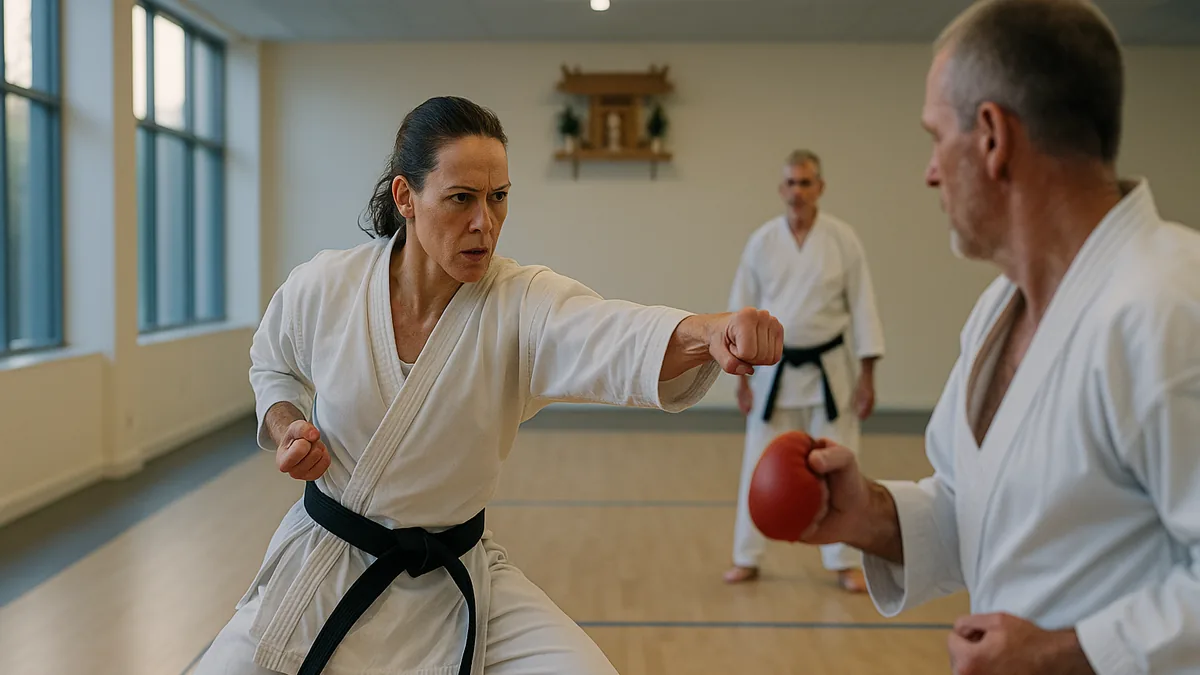
The reverse punch gets prioritised for good reason. It’s powerful, it’s biomechanically sound, and when it lands clean, there’s no ambiguity about what happened. The hip drives through, the shoulder follows, the fist arrives with the weight of your whole body behind it. You feel it through your body when you throw it correctly - not just in your arm but from your back foot all the way through your core. That’s not a description, that’s literally what correct gyaku-zuki feels like: a chain reaction, not a punch.
Judges know what it looks like. Referees score it consistently. And in WKF competition, a clean gyaku-zuki to the body or head has historically been one of the most reliable point-getters at every level. It’s the punch that wins finals.
I’ve noticed that most students, when they first start competing, default to gyaku-zuki as their primary attack because that’s what they’ve been praised for in kihon and kata. The hip rotation is drilled endlessly. They understand the mechanics. So they go to competition and try to land it as their first-choice attack - which means they’re constantly trying to close distance against opponents who are specifically trained to not let you close distance. The punch that works beautifully in static kihon suddenly becomes the hardest thing to land against a moving, thinking opponent.
My instructor used to say that gyaku-zuki is the destination, not the journey. I didn’t fully understand that until I started competing at regional level and realised that the punch itself almost never lands without setup. The athletes who score with it consistently aren’t just throwing it harder - they’re engineering the moment when it becomes available.
What Kizami-Zuki Actually Does in Competition
Here’s where most people underestimate the lead-hand punch. Kizami-zuki isn’t a powerful technique. If you’re comparing raw force, there’s no contest. But that framing misses the point entirely.
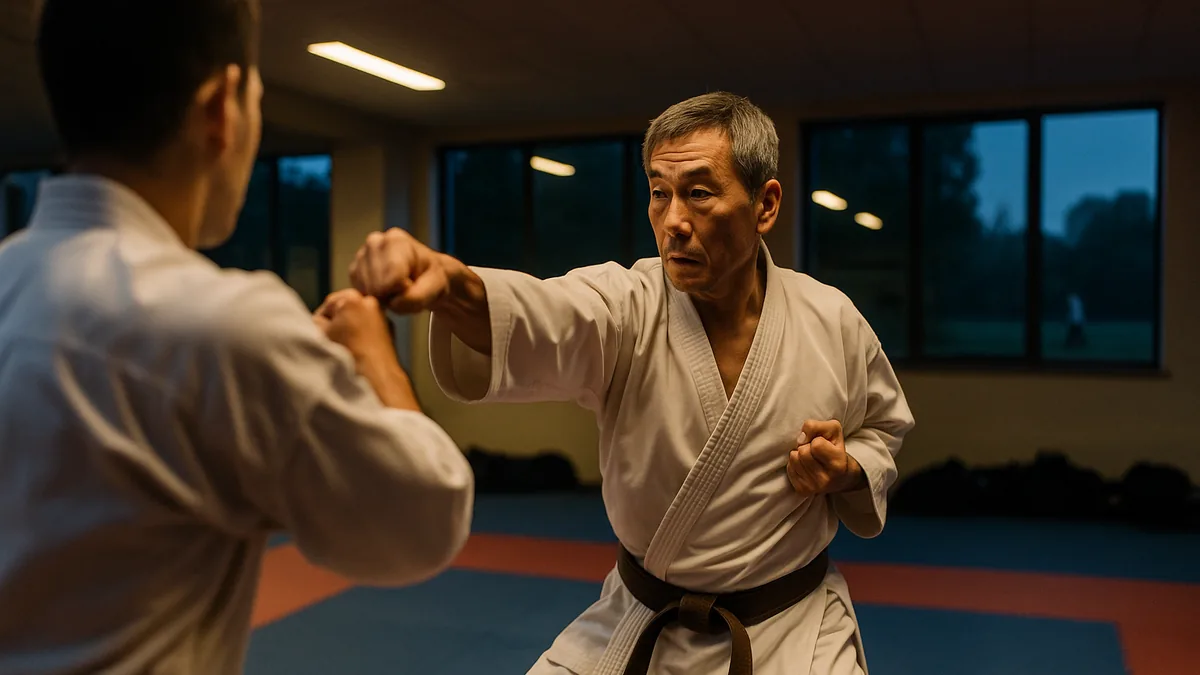
What kizami-zuki does is exploit time. The lead hand is already forward. There’s no hip chamber to initiate, no weight transfer to complete before the punch arrives. Against an opponent who is reading your body for pre-movement signals - which every serious competitor is doing - kizami-zuki gives them almost nothing to read before it’s already happening.
I’ve seen competitors at national level use kizami-zuki as their primary scoring technique and it works because of how they deploy it: not as a power strike, but as a precision tool thrown at the exact moment the opponent commits to movement. The opponent steps in, the lead hand fires, and it’s over before the defensive response can activate. The technique scores because it arrives first, not because it hits hardest.
The correction I give most often to students who throw kizami-zuki badly is this: stop punching and start pointing. That sounds strange, but what I mean is that most beginners load the shoulder before they throw - they pull back slightly, telegraph the movement, and give the opponent a free half-second. When you throw kizami-zuki correctly, the sensation is more like your fist is already at the target and you’re just confirming it’s there. There’s almost no feeling of travel. If you feel yourself punching, you’re probably already too slow.
This connects directly to reaction speed. If you want to understand why kizami-zuki fails for some competitors and works for others, a lot of it comes down to how quickly they can trigger the movement without conscious deliberation. How to Fix Slow Reactions in Kumite: What Actually Causes Them and How to Train Out of It covers this in detail, and it’s relevant here because kizami-zuki is fundamentally a reaction-speed technique more than a power technique.
The Scoring Reality in Competition
Let me be direct about what I’ve observed across years of watching and competing at regional and national events.
Gyaku-zuki scores more points per successful technique. When it lands clean, it’s often awarded yuko or waza-ari without question. Referees respond to it. It has visual authority.
Kizami-zuki scores more frequently overall, particularly at higher levels of competition, because it lands more often. A technique that scores 60% of the time at a lower value can outperform a technique that scores 15% of the time at a higher value. The maths isn’t complicated, but a lot of coaches never sit down and think about it this way.
One mistake I see often in junior competitors is that they train the more impressive technique at the expense of the more reliable one. They want to land the big reverse punch because it feels like a real punch. Kizami-zuki feels like a jab, and jabs aren’t exciting. But in a three-minute match, the competitor who scores early with kizami-zuki and then manages the clock has a structural advantage that gyaku-zuki alone cannot overcome.
The other factor is distance. Gyaku-zuki requires you to be at the right range, and getting to that range costs time and exposes you to counter-attack. Kizami-zuki works at a slightly longer distance, which means you can score without fully committing to the pocket. For competitors who are working on controlling the centre in kumite, kizami-zuki becomes a way to punish opponents who crowd the centre line without having to give up your position to do it.
How This Should Change Your Training
If you’re training gyaku-zuki and kizami-zuki as separate techniques in separate drills, you’re missing what makes both of them work in competition. They’re not alternatives - they’re a system.
What I tell students who want to compete seriously is this: your kizami-zuki is your probe and your threat. Your gyaku-zuki is your finisher. The lead punch creates the reaction - the opponent covers, steps back, shifts weight - and that reaction is what opens the gyaku-zuki. If you try to throw the reverse punch without creating that opening first, you’re gambling that the opponent won’t see it coming. Sometimes you win that gamble. At higher levels, you stop winning it.
Practically, this means your training needs to include:
- Kizami-zuki as a standalone scoring technique, not just as a setup. Drill it to score on its own, not just to create combinations.
- Combination work where the kizami-zuki is thrown with genuine intent, not as a tap. If your partner isn’t reacting to it, it’s not realistic enough.
- Reaction drilling where gyaku-zuki is thrown specifically off the opponent’s response to kizami-zuki - not on a count, but on a visual cue.
- Distance management work, because both punches fail when you’re at the wrong range, and the ranges are different.
I’d also recommend thinking about which technique suits your physical profile. Shorter, stockier competitors can generate serious power through gyaku-zuki because their build supports that hip drive. Taller competitors often find kizami-zuki more naturally effective because they’re already operating at a longer range. This isn’t a fixed rule, but it’s worth understanding. Kumite for Heavier or Shorter Karateka: How to Use Your Build Instead of Fighting It gets into this more specifically.
Community Perspective
There’s a genuine split in how different dojos approach this, and it usually comes down to the instructor’s background. Traditional Shotokan dojos often treat kizami-zuki as a secondary technique - it’s in the syllabus, it gets drilled, but gyaku-zuki is the serious punch. Sport-oriented dojos with WKF competition focus tend to give the lead punch much more attention because the coaches have watched enough competition footage to know how often it scores.
I’ve trained in both environments, and honestly, I think the traditional approach undersells kizami-zuki to the point where competitors are underprepared. That’s my opinion. I know coaches who would disagree and point to competitors who win predominantly with gyaku-zuki combinations. They’re not wrong that it works. I just think those competitors would win more if they were more dangerous with the lead hand.
The other debate is whether kizami-zuki should be trained primarily as a setup or as a scoring technique in its own right. Older practitioners often insist it’s only a setup. Younger competitors who’ve grown up watching WKF footage know it scores directly, frequently, at the highest levels. Experience tends to shift people toward the second view over time.
For masters competitors still competing in their 40s and beyond, this becomes even more relevant. The ability to generate the hip power needed for a clean gyaku-zuki diminishes with age. Kizami-zuki, thrown with timing and precision rather than raw speed, becomes more valuable. Kumite After 40: What Changes, What Doesn’t, and How to Keep Competing deals with this directly, and the kizami-zuki versus gyaku-zuki balance is part of that conversation.
Key Takeaways
- Gyaku-zuki scores higher per technique when it lands, but kizami-zuki lands more consistently - train both with equal competitive seriousness, not in a hierarchy.
- The biggest difference between competitors who use kizami-zuki well and those who don’t is intent. Throw it to score, not to set up. If you’re not committed to it landing, your opponent won’t react to it, and the combination you wanted won’t open.
- The correction that fixes most bad kizami-zuki is removing the pre-movement tell. If your shoulder loads before the punch moves, you’re handing the opponent a warning. The fist should feel like it arrives before you’ve consciously decided to throw it.
- Train gyaku-zuki specifically off your opponent’s reaction to kizami-zuki - not on a count, not on a signal, but on the visual cue of their defensive response. This is where the combination becomes competition-ready rather than drill-ready.
- Your physical build should influence which technique you weight more heavily, but not to the point of neglecting the other. Versatility is what makes you unpredictable.
- If you want to understand why your techniques aren’t landing in competition, look at how you’re acquiring versus testing skills in training. Drilling a technique in isolation is not the same as having it available under pressure.