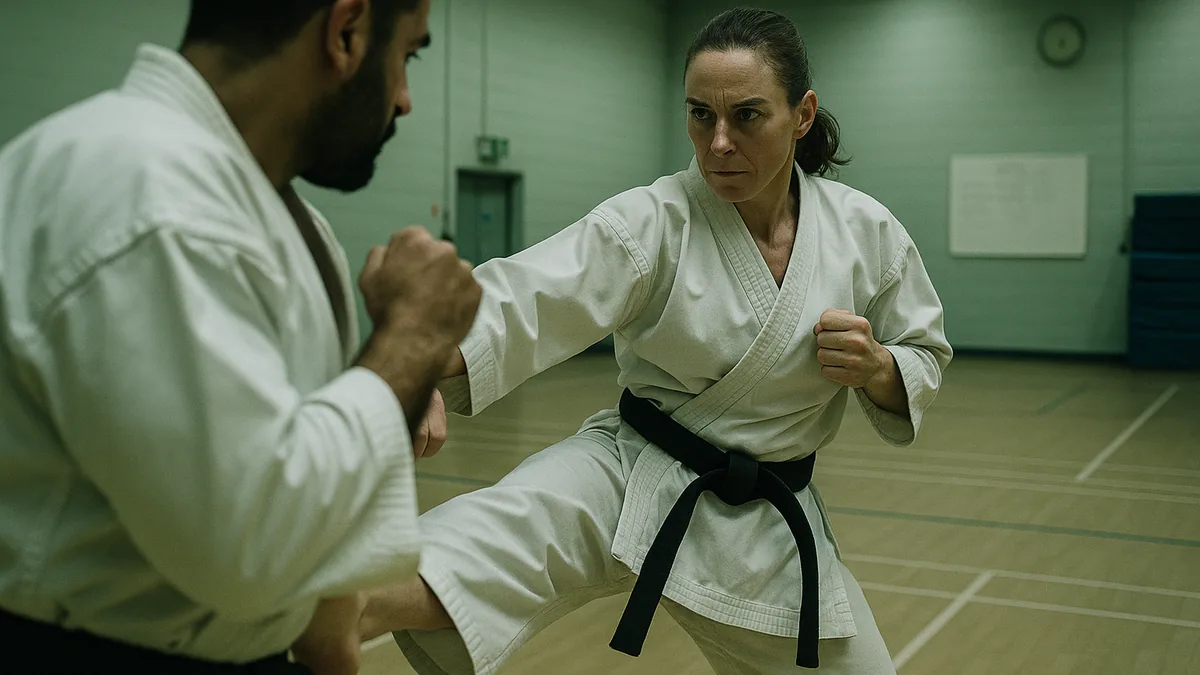
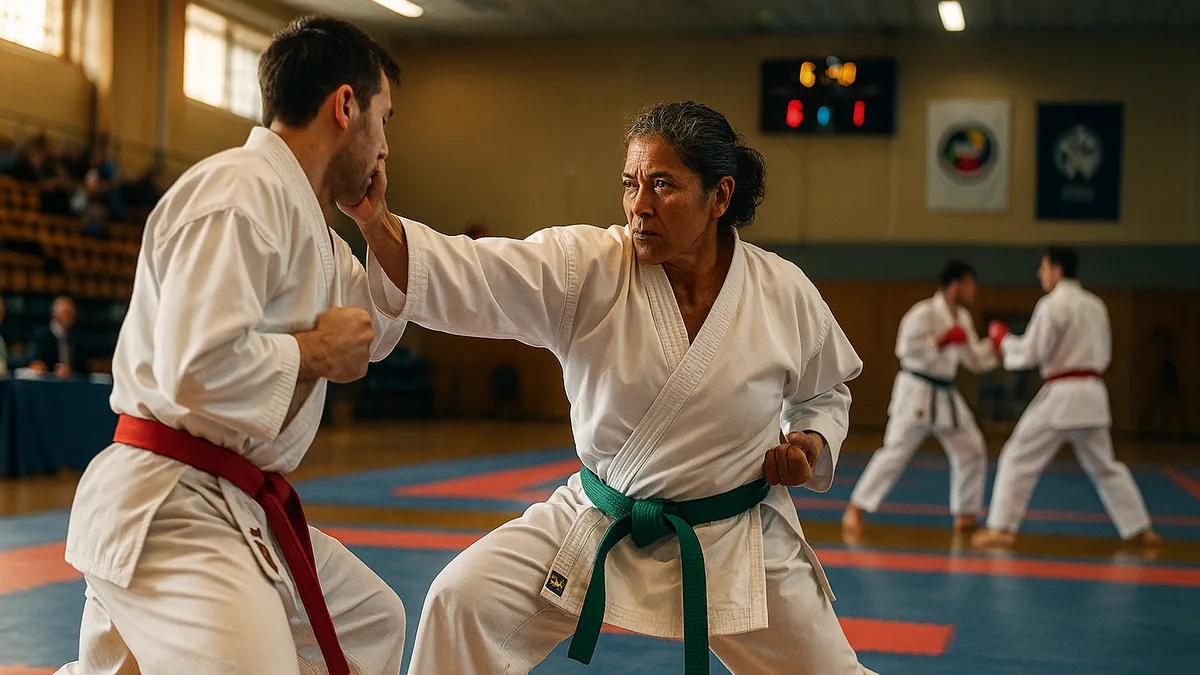
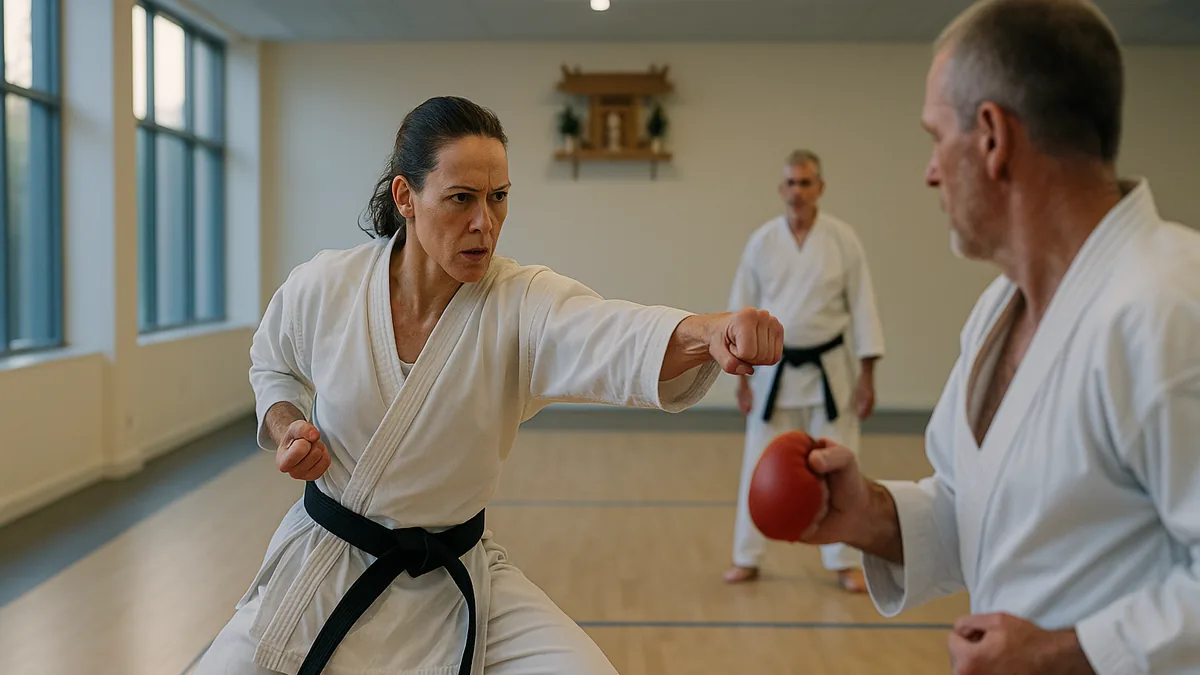
Jodan vs Chudan Attacks in Kumite: Which Level Should You Favour, What the Data Says About Scoring Rates, and How to Train Both Without Becoming Predictable
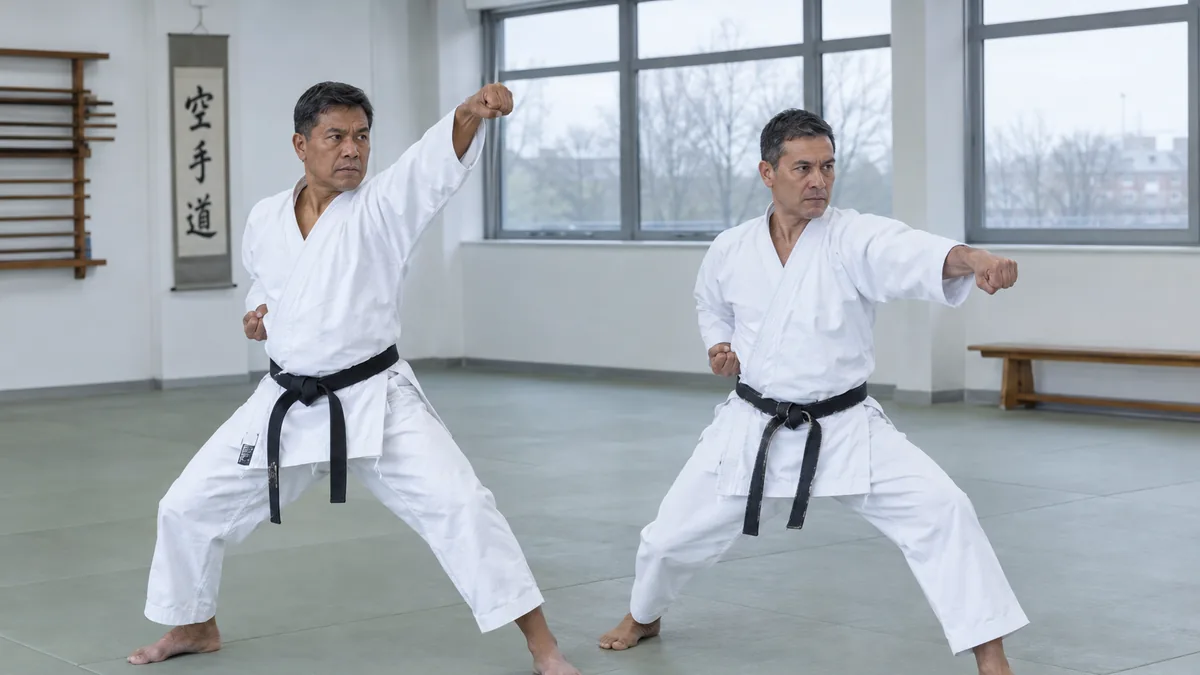
Most competitors have a preferred level. Ask them to reflect honestly and they will usually admit they return to the same height under pressure - jodan when they want to impress, chudan when they want to score. The problem is that opponents notice this within two or three exchanges, and once they have read your default, your scoring rate drops sharply regardless of how good your technique is.
This article takes a position: chudan is the more reliable scoring level for most competitors at most stages of their development, but jodan is the level that wins close fights and championship rounds. The goal is not to pick one - it is to understand when each is appropriate and to train in a way that makes switching between them feel automatic rather than calculated.
Why Chudan Scores More Consistently
The research evidence supports this. Notational analysis of elite male kumite competition - including data from World Championship bouts - consistently shows that gyaku-zuki chudan (reverse punch to the body) is one of the highest-frequency scoring techniques at senior level.12 It is not glamorous, but it lands.
The mechanical reasons are straightforward. The chudan scoring area is the body above the pelvis, up to and including the collarbone, excluding the shoulders themselves.3 It is a larger target than the jodan area, it is closer to your natural punching line, and it requires less postural adjustment to reach. Your hip rotation drives the punch without you needing to raise your shoulder or tilt your torso. The technique stays structurally sound at the point of delivery, which matters for recognition by the panel. Under WKF rules, all punches (tsuki) and strikes (uchi) to any scoring area earn yuko (1 point), chudan kicks earn waza-ari (2 points), and jodan kicks earn ippon (3 points).3 A clean gyaku-zuki chudan delivered with full hip commitment is easier for judges to read as controlled than a jodan kick that arrives with your body slightly off-axis.
There is also a recovery argument. When a chudan attack misses or is blocked, you are still upright, your guard is not pulled out of position, and you can either continue the combination or disengage cleanly. That matters more than most competitors realise until they start losing points to counters off failed jodan attempts.
If you want a deeper look at how gyaku-zuki specifically compares to kizami-zuki in competition, our article on gyaku-zuki vs kizami-zuki in competition kumite covers the scoring patterns in more detail.
Why Jodan Still Matters - and When It Is Worth the Risk
The key distinction in the WKF scoring framework is between punches and kicks, not simply between jodan and chudan. All punches and strikes earn yuko (1 point) regardless of level. It is jodan kicks specifically that earn ippon (3 points), while chudan kicks earn waza-ari (2 points).3 A clean jodan mawashi-geri that lands with controlled focus is worth three times a gyaku-zuki to either level. That difference in point value can decide a match in a single exchange.
The risk side is real and should not be underestimated. Jodan attacks travel further, take longer to execute, and expose your centreline during delivery. A committed jodan punch that misses leaves your head forward and your guard temporarily compromised. A jodan kick - particularly a mawashi-geri - takes your base leg off the floor, which means any timing miscalculation results in a counter that you cannot defend while airborne.
The correction that helps most competitors here is not technical - it is tactical. Most people throw jodan attacks from too far away and too early in the exchange. The technique is not the problem; the setup is. Jodan attacks work best as second-in-combination techniques, as counters off a blocked incoming attack, or when you have already established chudan as your primary threat and the opponent’s guard has shifted down to protect it. Throwing jodan as your opening move against a prepared opponent is low-percentage regardless of your technical level.
A common mistake is treating jodan mawashi-geri as a power technique. It is not - it is a timing technique. When it lands correctly, the leg arrives from the opponent’s blind angle with the hip already turned. When it requires muscular effort at the point of contact, the timing was off and you forced it through.
The Predictability Problem
Here is the real issue: the jodan vs chudan question is not about which level is better. It is about what happens when you commit to only one.
An opponent who has seen you attack three times can start to read your preferred level before you have committed. They do not need to be conscious of this - it happens through pattern recognition, the same process described in our piece on why karateka with strong kihon still freeze in kumite. Once they are anticipating your level, their defensive timing improves significantly and your scoring rate drops even if your technique has not changed.
The solution is not to randomise your attacks - that just produces incoherent kumite. The solution is to build genuine combinations that threaten both levels so that the opponent cannot commit to defending one without opening the other.
The classic structure is chudan-jodan: establish the body shot as a real threat, then use the opponent’s lowered guard to attack the head. This only works if both techniques in the combination are genuinely threatening. If your chudan attack is weak or telegraphed, the opponent will not react to it, and your jodan follow-up arrives against a guard that has not moved.
Only the first correctly executed technique of an exchange will score, with the exception of an effective combination of techniques, in which case the highest scoring technique will count regardless of the sequence of techniques in the combination.3 This rule rewards combination work directly: a yuko-entry chudan punch that sets up an ippon-value jodan kick scores the ippon, not the yuko.
The less common but equally effective structure is jodan-chudan: draw the guard up with a jodan feint or committed jodan attack, then drive into the body as the guard rises. This is harder to execute because the jodan entry needs to be convincing enough to produce a reaction without exposing you to a counter.
Training Both Levels Without Becoming Predictable
The training problem is that most people drill jodan and chudan separately, in separate lines, against a static partner. That builds technical competency but does not build the decision-making capacity to select the right level in real time.
What actually works:
-
Reaction-based combination drills. Partner holds a pad or raises their guard to one level; you respond with the opposite level. The decision has to be fast enough that it is instinctive, not calculated. Start slow, build speed, and resist the urge to call the target in advance.
-
Constrained sparring. One round, chudan only. Next round, jodan only. Then free sparring with both. The constrained rounds force you to solve the tactical problem within a limited toolkit - you will discover very quickly how to set up a chudan attack when the opponent knows it is coming, which is exactly the skill you need when your jodan has been read.
-
Video review of your own sparring. Count how many of your attacks go to each level in a three-minute round. Most competitors are surprised by how skewed their distribution is. If you are throwing eight chudan attacks for every two jodan attacks, your opponent has already adjusted.
-
Pressure testing under fatigue. Your preferred level becomes even more dominant when you are tired. Kumite conditioning work that pushes you into the final thirty seconds of a round, then asks you to execute a specific jodan or chudan combination, is more honest training than drilling fresh.
The physical sensation to aim for in combination work is continuity. A chudan-jodan combination should not feel like two separate techniques with a pause between them. It should feel like one movement that changes direction - the hip that drove the chudan punch is already rotating back to generate the jodan follow-up. When the combination feels like two distinct decisions, it will look like two distinct decisions to the opponent, and they will have time to reset between them.
Community Perspective
There is a genuine disagreement in the karate coaching community about how much emphasis to place on jodan attacks at junior and youth level. Some coaches argue that young competitors should prioritise chudan until their timing and distance management are reliable enough to make jodan attacks safe and effective - both for scoring and for not picking up excessive contact warnings. Others argue that jodan needs to be drilled from an early stage or competitors develop a permanent chudan bias that is very difficult to correct later.
The pattern among junior competitors moving through to senior level suggests both camps have a point. Competitors who were never pushed to develop jodan attacks tend to plateau once they reach senior level, where opponents are experienced enough to sit on a chudan-only game. But competitors who were pushed into jodan attacks before their fundamentals were solid often develop ingrained technical flaws - particularly in shoulder alignment and guard recovery - that follow them for years.
The position we take: chudan should be the foundation, but jodan needs to be introduced as a genuine tactical tool, not just a demonstration technique, before the competitor reaches brown belt. The longer you leave it, the harder the adjustment.
The passive vs aggressive kumite styles discussion is related here - aggressive competitors tend to default to jodan because it feels more committed, while passive counter-fighters often over-rely on chudan because it is safer to execute off a counter. Neither tendency is wrong in itself, but both become liabilities at high level.
Key Takeaways
- Chudan is your bread and butter. It scores more consistently, is structurally cleaner to execute, and leaves you in better position when it misses. Build your competition game around it.
- Jodan kicks are your highest-value tool. Under WKF rules, jodan kicks score ippon (3 points) - three times the value of a punch to any level. Use them to win tight matches, to respond when the opponent has adjusted to your chudan, or as a second technique in combination - not as your primary opening move.
- Know the scoring framework precisely. All punches and strikes score yuko (1 point) regardless of jodan or chudan. Only kicks to the head score ippon. That distinction should shape how you build your combination strategy.
- The correction for failed jodan kick attempts is almost always tactical, not technical. The problem is setup and timing, not the technique itself.
- Track your level distribution in sparring. If you are not consciously monitoring it, you are almost certainly more predictable than you think.
- Combination work should feel continuous, not sequential. If there is a physical pause between your first and second technique, the combination is not working yet.
- Introduce jodan kicks as a genuine tactical weapon before brown belt. Leaving it until senior level makes the adjustment significantly harder and limits what you can do at competition level.
References
Checked by the KarateLifestyle editorial team against WKF official competition rules (versions 2024 and 2026) and peer-reviewed notational analysis studies in November 2026. The scoring-frequency research available covers competition data to 2016 and may not reflect subsequent rule or tactical changes.
- WKF Kumite Competition Rules, Version 2026.01. World Karate Federation, 2026
- Notational analysis of scoring techniques in competitive men's karate. Laird P. and McLeod K., International Journal of Performance Analysis in Sport, 2009
- Scoring Techniques in Final Competitions of Karate World Championships 2016. ResearchGate, 2016 World Championships analysis
The weekly digest
New karate articles, once a week
One email every week with everything new on Karate Lifestyle. No spam; unsubscribe in one click.
We'll email you to confirm. See our privacy policy.