Scoring With Kicks in WKF Kumite: Why Karateka Underuse Them and How to Build a Kicking Game That Judges Actually Reward
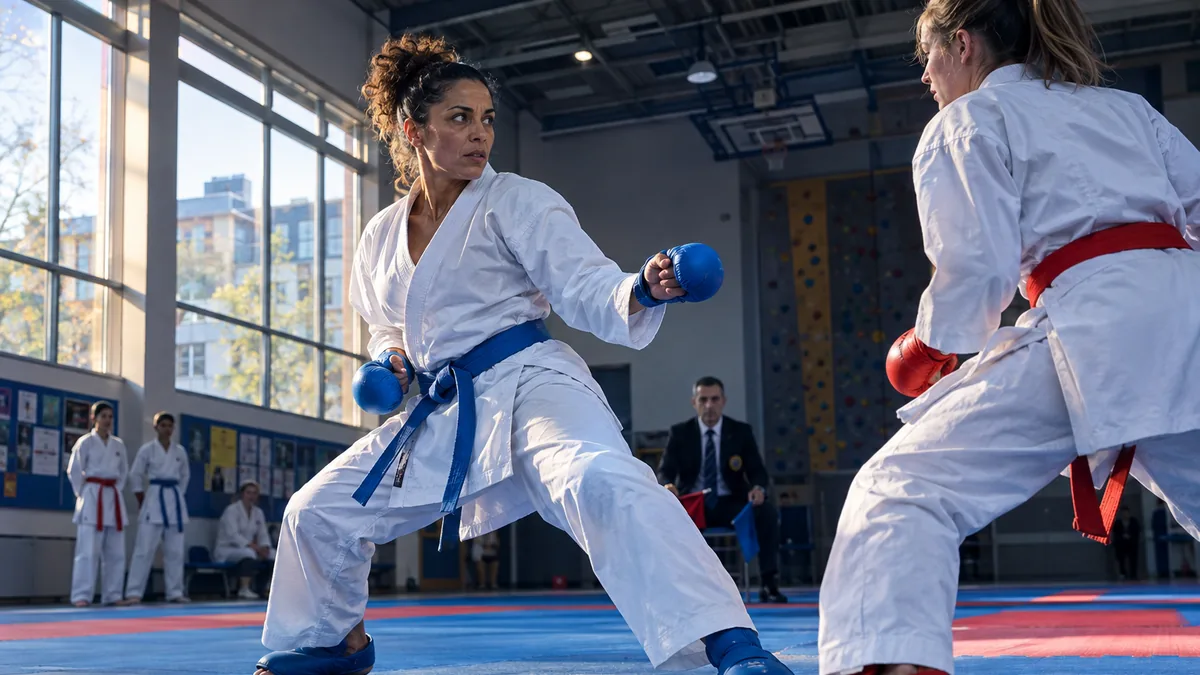
Most competitors underuse kicks not because they lack the ability, but because they’ve been told kicks are risky. That’s true - but it’s an incomplete truth. Kicks are risky when they’re thrown badly. When they’re thrown well, with correct timing and setup, they’re worth more points and harder to counter than most hand techniques. The problem is that most competitors never build a kicking game properly, so they default to punches and wonder why their scoring rate plateaus.
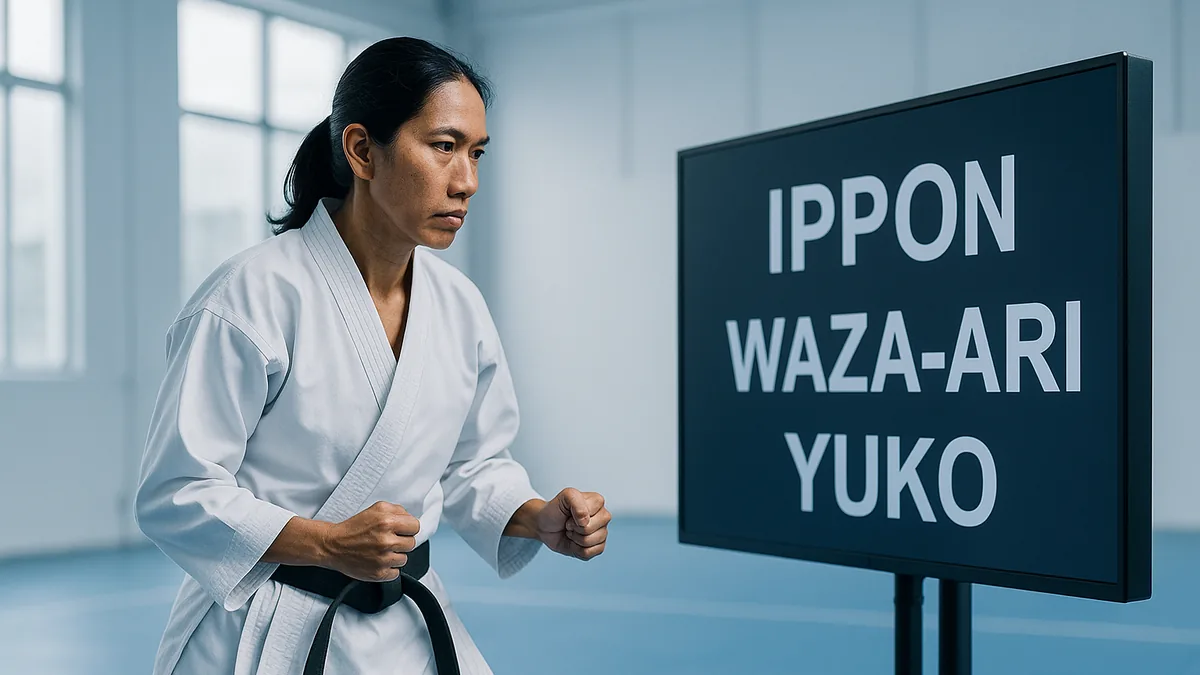
Under WKF rules, the point values alone make a strong case for kicking.1 Yuko (1 point) is awarded for any tsuki or uchi to a scoring area; waza-ari (2 points) is awarded for chudan kicks; and ippon (3 points) is awarded for jodan kicks, or for hand techniques delivered on an opponent who is down.1 That means a clean mawashi-geri jodan scores three times as much as a gyaku-zuki jodan, and a chudan kick scores twice as much as a punch. The risk-reward calculation changes entirely once you understand those ratios. If you want to understand the scoring criteria in more detail before working through this, Ippon, Waza-ari, and Yuko: Understanding Scoring Criteria So You Actually Train for Points is worth reading first.
Why Karateka Avoid Kicks - and Why That Logic Breaks Down
The standard reasoning goes: kicks take longer to chamber, they put you on one leg, and if they fail, you’re exposed. All of that is correct in isolation. The mistake is treating those facts as reasons to avoid kicks entirely rather than as problems to solve through training.
The real issue is that most competitors practise kicks in isolation - on a bag, in kihon lines, or in kata - and then expect them to transfer to kumite without ever drilling them in context. They don’t. Kicks in kumite require different timing, different entry, and different recovery than kicks in any other training format.
There’s also a tactical argument for kicks that gets overlooked. Punches are what your opponent is most prepared to defend against. They see punches all day in sparring. A well-placed mawashi-geri or a fast mae-geri to the midsection disrupts rhythm in a way that a gyaku-zuki rarely does, precisely because it comes from an unexpected angle and height. When you combine that disruption with the right entry - and if you’re working on entries, Feinting in Kumite: Why Most Karateka Do It Wrong and How to Make It Work covers the mechanics - you create scoring opportunities that punching alone won’t generate.
What Judges Actually Reward
Before drilling kicks, you need to understand what you’re training for. Judges aren’t scoring your kick - they’re scoring the technique as a whole. Under WKF rules, a technique must fulfil six criteria to be considered a score: good form (properly executed technique), sporting attitude (delivered without intent to cause injury), vigorous application (delivery with speed and power), maintaining awareness of the opponent both during and after execution of the technique - meaning not turning away or falling down after completing a technique - plus good timing and correct distance.1
Zanshin is the criterion most often missed when a score is assessed. It is the state of continued commitment in which the competitor maintains awareness of the opponent’s potentiality to counter-attack - not turning the face away during delivery, and remaining facing the opponent afterwards. The kick lands, but there’s no zanshin. The competitor kicks and immediately retreats or looks away. Judges see that and withhold the score, or award a lower value than the technique deserved. A kick that lands clean but is followed by a scramble looks like a lucky shot, not a controlled technique.
The other common failure is vigorous application. A kick that brushes the target, even if it’s in the right place, doesn’t score. A technique that is badly deficient in good form, or lacking power, will score nothing. You need to feel the snap at the point of contact - not a push, not a swing through, but a focused impact that stops at the target. If your kick feels like you’re swinging through the opponent, the power and commitment aren’t there.
Building the Kicking Game: The Drills That Matter
We’d recommend prioritising these three areas in order. The first is the most important by a significant margin.
1. The Entry Drill - Getting Close Enough to Kick Without Telegraphing
This is the foundation, and it’s the drill most competitors skip because it doesn’t feel like kicking practice. It is.
Why it matters: The biggest reason kicks fail to score in kumite isn’t poor technique - it’s poor entry. The kick is thrown from too far away, or the setup is so obvious that the opponent has already moved.
Setup: Work with a partner in fighting stance. No pads yet. Your partner’s job is to watch your hips and step back the moment they see any preparatory movement.
Execution:
- Start from your normal fighting distance.
- Use a small, deceptive step - not a full lunge - to close distance. This step should look identical to your normal footwork.
- As you arrive at kicking distance, chamber the knee without cocking the hip first. The hip rotation comes with the kick, not before it.
- Kick to the target zone (your partner indicates where with a pad held loosely at the side).
- Return to stance and maintain eye contact. Don’t look at where you kicked.
What to feel for: When the entry is working, you’ll feel like you arrived at the kick rather than reached for it. There’s a difference between a kick you throw and a kick you find yourself in position to land. The second one is what scores.
The most common mistake: Dropping the shoulder or dipping the head before chambering the knee. This telegraphs the kick before the leg moves at all. The correction that works is to practise the entry step in isolation - twenty repetitions with no kick at all - until the step looks neutral. Then add the kick.
2. Mawashi-Geri Timing Drill - Counter-Kicking Off the Attack
This is the drill that turns a kick into a weapon rather than a gamble.
Why it matters: A mawashi-geri thrown as an attack into a prepared opponent is risky. The same kick thrown as a counter the moment your opponent commits to their attack is much harder to deal with - they’re moving into it, and their weight is forward and committed.
Setup: Pads or light contact sparring. Your partner attacks with a committed gyaku-zuki.
Execution:
- Read the attack as it begins - not the hand, but the shoulder rotation that precedes it.
- Move offline with a small diagonal step to your outside.
- As your partner’s punch extends and they’re committed, chamber your rear leg.
- Deliver mawashi-geri chudan or jodan to the now-exposed target.
- Land, recover stance, and hold zanshin for a full beat before moving.
What to feel for: When the timing is right, the kick feels almost effortless because your opponent’s forward momentum is doing part of the work. You’re not chasing the target - the target arrives. If it feels like you’re fighting to reach them, the timing is off and you’ve waited too long or moved too early.
The most common mistake: Blocking first, then kicking. Many beginners do this because it feels safer. The problem is that by the time the block is complete, the window for the counter has closed. The correction is to train the offline step as the defensive action - the step takes you out of the line of attack, the kick is the counter. They happen together, not in sequence.
3. Mae-Geri as a Range Tool - Not Just a Scoring Technique
Mae-geri is underrated in WKF kumite, and we think that’s because competitors try to use it as a primary scoring technique when it works better as a range disruptor that creates scoring opportunities.
Why it matters: A sharp mae-geri to the midsection doesn’t need to score by itself. It stops your opponent’s forward pressure, resets their rhythm, and creates the half-second gap you need to follow with a hand technique or a second kick. When it does land cleanly to chudan, it earns waza-ari (2 points)1 - so the upside is real, but the primary function in combination play is disruption.
Setup: Bag work first to establish the feel, then partner work with a pad held at chudan level.
Execution:
- From fighting stance, drive the knee forward and up - the foot follows the knee, not the other way around.
- Extend through the ball of the foot, making contact at the moment of full extension.
- Snap the leg back to chamber before returning to stance. Do not let the leg drop after contact.
- Immediately follow with a hand technique - gyaku-zuki or uraken - to the head.
What to feel for: The snap back to chamber is the part most people miss. When you get it right, you’ll feel the leg return under control and your balance stays forward. When it goes wrong, the leg swings down and your weight shifts back, which kills any follow-up.
The most common mistake: Pushing with the mae-geri rather than snapping. This comes from bag training where pushing produces satisfying movement of the bag. In kumite, it pushes your opponent away and kills the combination. The correction that works is to practise the kick without a target, focusing entirely on the snap-back. The kick should feel like it’s trying to retract even as it extends.
Combination Kicks - When to Add Them and When Not To
Once the single kicks are working, the temptation is to build elaborate combination sequences. Resist this until the fundamentals are solid. A two-kick combination where both kicks are sharp and well-timed is worth far more than a four-kick sequence where the last two are desperate.
The combination that works most consistently in WKF kumite is mae-geri chudan followed by mawashi-geri jodan. The first kick disrupts posture and draws the guard down, the second comes over the top to the head. A chudan kick scores waza-ari (2 points), and a jodan kick scores ippon (3 points)1 - so when the combination lands cleanly, the pay-off is significant. The timing between them needs to be tight - if there’s a pause, your opponent recovers and the jodan kick walks into a counter. For more on making combinations land rather than just look busy, Why Combination Attacks Fail in Kumite (And How to Make Them Land) goes into the mechanics in detail.
Community Perspective
There’s a genuine split in how coaches approach kicking development at competition level. One camp argues that kicks should be drilled extensively as primary scoring techniques - that competitors who are punch-heavy are leaving points on the table. The other camp holds that kicks are best used sparingly and tactically, as disruption tools and counters, with punching as the primary scoring method.
Both positions have merit, and which one suits you depends partly on your physical attributes. Competitors with longer legs and good hip flexibility can build a kick-heavy game that genuinely scores. Shorter, stockier competitors often find that the same investment of training time produces better returns in hand speed and combination work.
What does seem to shift with experience is how competitors use kicks. Beginners often try to score with kicks directly. Senior competitors tend to use kicks to create the conditions for scoring - breaking rhythm, forcing a reaction, creating the opening. That shift in understanding is worth accelerating if you can.
It’s also worth noting that this is an area where switching stance can open up significant tactical options. A rear-leg mawashi-geri from a southpaw stance catches opponents who have calibrated their defence for orthodox. Switching Stances in Kumite: When Southpaw Gives You an Edge and How to Develop It covers how to develop that without creating new vulnerabilities.
Key Takeaways
- The point values favour kicks decisively: a chudan kick earns waza-ari (2 points), a jodan kick earns ippon (3 points), while a punch or strike earns yuko (1 point).1 Use that when thinking about risk and reward.
- The entry is the technique. A kick thrown from the wrong distance or with a telegraphed setup will not score regardless of how good the kick itself is. Drill entries separately from the kicks.
- All six scoring criteria matter. The kick landing is necessary but not sufficient. Zanshin - the state of continued commitment in which the competitor maintains awareness of the opponent’s potentiality to counter-attack - is the criterion most often missed when a score is assessed. Hold your position and your awareness after every technique.
- Mae-geri is most useful as a disruptor, not a primary scorer. Use it to create the opening, then take the opening.
- Counter-kicking is lower risk than attacking with kicks. Train the timing off your opponent’s committed attacks - that’s where kicks score cleanly.
- Don’t build combination sequences until single kicks are reliable under pressure. Two sharp kicks beat four messy ones.
- If your kicking game isn’t transferring from training to competition, the problem is almost always timing and entry, not the kick itself. Go back to the entry drill before adding anything else.
References
Checked by the KarateLifestyle editorial team against the current WKF Kumite Competition Rules (version 2026.01, valid from 1 January 2026) in October 2026. This article contains no medical or injury advice beyond general training guidance.
- WKF Kumite Competition Rules, Version 2026.01. World Karate Federation, valid from 1 January 2026. Official rules document.
The weekly digest
New karate articles, once a week
One email every week with everything new on Karate Lifestyle. No spam; unsubscribe in one click.
We'll email you to confirm. See our privacy policy.