Karate and Alcohol: What Serious Practitioners Actually Need to Know About Recovery, Performance, and Club Culture
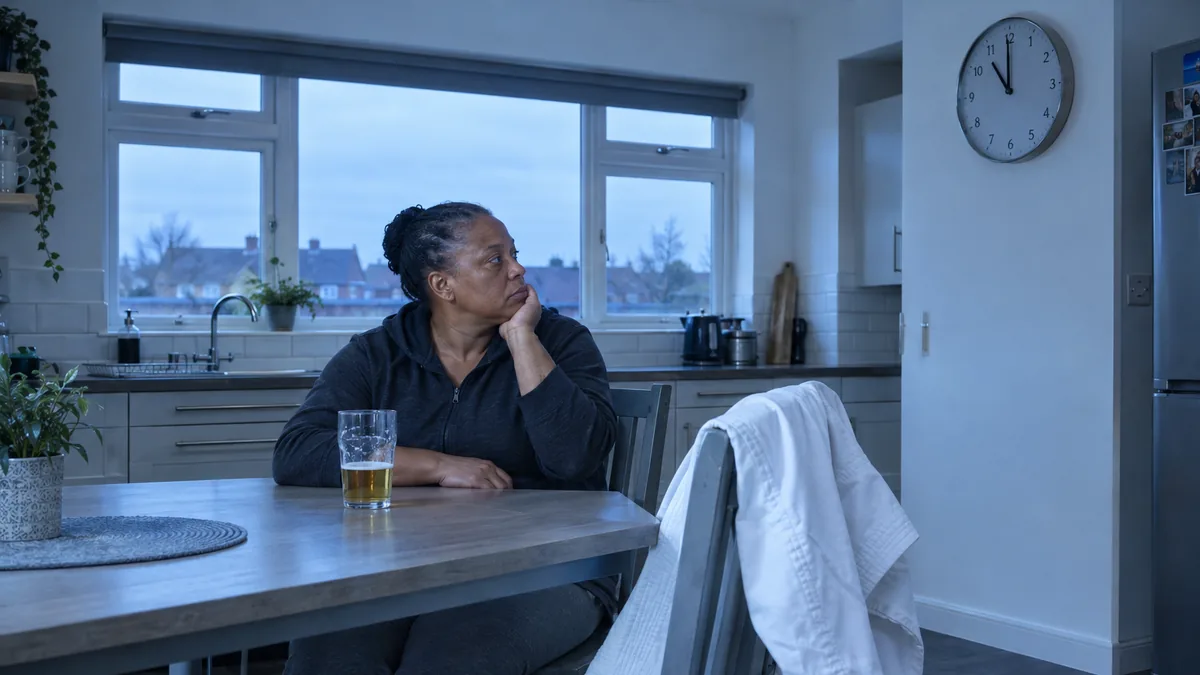
Most karate practitioners have had a drink after training at some point. That is not the problem. The problem is not knowing what alcohol actually does to your body in the 24 to 72 hours after a hard session - and making choices based on habit or club culture rather than understanding.
This is not a lecture about sobriety. We are not telling you to stop drinking. What we are saying is that if you are serious about your training, you should know exactly what you are trading when you have a few pints after a grading or a post-tournament night out. Some of that trade might be worth it. Some of it probably is not.
What Alcohol Actually Does to Your Recovery
The window immediately after training is when your body does its most important repair work. Muscle protein synthesis is elevated, glycogen stores need replenishing, and your central nervous system is recovering from the coordination demands of kata, kumite, and kihon. Alcohol disrupts all three.
On the protein synthesis point specifically: a 2014 study by Parr, Burke, Hawley, Coffey and colleagues, published in PLOS ONE, found that alcohol consumed after concurrent resistance and endurance exercise significantly reduced rates of myofibrillar protein synthesis, even when protein was also consumed.1 For karate, where explosive hip rotation, fast-twitch muscle recruitment, and fine motor control all depend on muscular recovery, this is directly relevant. One important caveat: the dose used in that study was high (roughly 1.5 g of alcohol per kg of body weight), and it is not certain that lower, more typical social drinking amounts produce the same magnitude of effect.1 The principle is well-established; the dose-dependency is worth keeping in mind.
Sleep is where the real damage accumulates. Alcohol disrupts sleep architecture in a consistent two-phase pattern: it suppresses REM sleep in the first half of the night and fragments sleep in the second half, once the alcohol clears.2 You may fall asleep quickly and feel like you slept well, but the quality and structure of that sleep are measurably impaired.3 Sleep plays a documented role in the consolidation of motor learning, though research now suggests that NREM Stage 2 sleep and slow-wave sleep are also involved, alongside REM sleep, in different aspects of procedural and motor memory.4 Alcohol disturbs the architecture of all of these stages.2 You spent two hours drilling your gyaku-zuki timing in kumite. Drink enough to disrupt your sleep, and you have paid the physical cost of training without collecting the full recovery reward. That is a bad trade by any measure.
Hydration is the other factor that gets underestimated. Alcohol acts as a diuretic by suppressing the release of antidiuretic hormone (vasopressin), leading to increased urine output.5 Hard karate training already puts you in a dehydrated state. Combining the two means you are going into the next training session already compromised - and dehydration affects reaction time, decision-making under pressure, and the ability to sustain the kind of focused attention that jiyu-kumite demands.
The Performance Effects You Will Actually Notice
The abstract stuff about protein synthesis matters, but here is what it translates to in the dojo.
Reaction time is measurably slower after drinking, and the effect persists longer than most people expect. The American College of Sports Medicine (ACSM), in its position statement on alcohol in sport, states that acute alcohol ingestion impairs a wide range of psychomotor skills including reaction time, hand-eye coordination, accuracy, balance, and complex coordination.6 Broader evidence suggests that performance effects from drinking can persist for up to 72 hours, with binge drinking specifically implicated in longer-lasting impairment of athletic skills.7 If you train on a Saturday morning after a Friday night out, you are not operating at full capacity - and in kumite, that gap shows up exactly where you cannot afford it: in the counter-attack window after your opponent’s attack lands short.
Coordination is the next casualty. Karate technique at a high level is built on precise sequencing - the hip drives the shoulder, the shoulder drives the arm, the kime arrives at the exact moment of impact. That chain is a fine motor skill. Alcohol degrades fine motor control and reaction time before it touches gross motor function, which is why you can still walk in a straight line while your gyaku-zuki has lost its snap.7 You might not feel impaired. Your technique will tell a different story.
The correction that makes the biggest difference here is not tactical - it is scheduling. If you are serious about a grading, a tournament, or simply getting the most out of a technically demanding training block, treating the 48 hours before training as a recovery window matters as much as what you do during the session itself.
Club Culture: The Part Nobody Talks About Honestly
This is where the conversation gets more complicated, because club culture around alcohol is not uniform and the pressure - where it exists - is usually subtle.
Post-training drinks are a genuine part of many clubs’ social fabric. Research on sport and alcohol notes that alcohol intake is positively associated with group-based sports, where drinking often functions as part of team bonding and social cohesion. For some practitioners, especially those training in a club that functions as their primary social community, the pub after training is where relationships are built, where senior grades become approachable, and where the culture of the club gets transmitted informally. That has real value. The camaraderie built over a drink after a hard session is not nothing.
The problem arises when the culture makes it difficult to opt out without social cost. A common mistake is assuming that everyone in the group is equally comfortable with the drinking culture, or that opting out signals a lack of commitment to the club. Neither is true. If you are training seriously - managing load, prioritising sleep, tracking progress toward a grading - choosing not to drink after training is a training decision, not a social rejection.
Clubs with a strong drinking culture can also, over time, create an environment where social participation gets weighted more heavily than training quality. This is worth paying attention to. If the post-training social is becoming the main event, and the training is becoming the warm-up for it, that is a shift worth noticing - both in yourself and in the club around you. For more on how club culture shapes individual training commitment, it is worth reading Karate and Ego: How to Train Hard Without Becoming Someone Your Club Dreads, which covers the related question of how to stay serious without alienating yourself from the group.
Common Misconceptions - And What Actually Helps
“I train hard enough that it does not affect me.”
This is the most common one. The reasoning is that high training volume somehow offsets the physiological effects of alcohol. It does not. If anything, the harder you train, the more dependent your progress is on recovery quality - which means alcohol has more to take from you, not less. The correction here is not willpower, it is reframing: serious training creates a higher need for recovery, not a tolerance to things that disrupt it.
“One or two drinks is fine.”
This depends entirely on timing. One or two drinks on a rest day, well away from training, is genuinely low-impact. One or two drinks within a few hours of training - or the night before a technically demanding session - falls in a different category. The ACSM position notes that even small to moderate amounts of alcohol impair reaction time, hand-eye coordination, accuracy, balance, and complex coordination.6 The volume matters less than the timing.
“I sleep fine after a drink.”
Falling asleep quickly is not the same as sleeping well. Alcohol suppresses REM sleep in the first half of the night; as it clears from your system, sleep fragmentation increases in the second half.2 You will feel like you slept. The structure of your sleep will not have supported full recovery at the same rate as an alcohol-free night. Motor learning consolidation during sleep is supported by multiple sleep stages, and alcohol disrupts the architecture of all of them.4 Many coaches emphasise resting properly after hard training; the reason it matters is exactly this - the learning is not finished when you leave the dojo.
Community Perspective
This is a topic where practitioners genuinely disagree, and the disagreement tends to shift with experience.
At junior and early intermediate grades, the social dimension of club life often feels more important - partly because the training itself is less technically demanding, and partly because the effects of poor recovery are less visible when you are still making large gains regardless. It is easy to conclude that drinking does not affect your training when you are improving week on week anyway.
The shift tends to happen somewhere in the dan grade journey, when progress becomes more incremental and the factors that limit it become more visible. Many senior practitioners report that they reduced their drinking not because of a principled decision but because they started noticing the difference in training quality. The connection between a Friday night and a flat Saturday morning session became too obvious to ignore.
There is also a legitimate debate about whether the social cost of opting out of club drinking culture is worth the performance gain - and the honest answer is that it depends on the club and the individual. For practitioners who are also managing other lifestyle pressures, the social support of a club community can be as important to long-term training consistency as any physiological optimisation. If you are finding that balance difficult to navigate, How to Stay Motivated in Karate When Progress Feels Invisible addresses the broader question of what actually sustains commitment over the long term.
We would not tell every practitioner to stop drinking socially with their club. We would say that the practitioners who are most honest with themselves about the trade-off tend to make better decisions - including sometimes deciding the social drink is worth it, and sometimes deciding it is not.
Practical Positions, Not Rules
We favour a timing-based approach over a volume-based one. The question is not really “how much did I drink?” but “when did I drink, relative to training?” A glass of wine on a Tuesday when you train Thursday and Sunday is a very different situation from three pints on a Friday night before a Saturday morning session.
If you are in a training block - preparing for a grading, a competition, or working through a technically demanding period - we would recommend treating alcohol the same way you treat junk food in that window: not a moral issue, but a practical one. You are asking your body to do specific work. Give it the conditions to do it.
For practitioners managing training alongside significant life commitments - parenting, demanding jobs, irregular schedules - recovery quality is often the first thing that gets compressed. If that sounds familiar, Training Karate as a Parent: How to Stay Serious About Your Own Practice When Your Child Joins the Same Club covers how to protect training quality when life is already pulling in multiple directions.
Key Takeaways
- Alcohol consumed close to training measurably reduces muscle protein synthesis and disrupts sleep architecture - including the stages where motor learning consolidates - and the timing matters more than the volume [[1],[2]]
- Reaction time, coordination and fine motor control are all impaired by alcohol; performance effects can persist well beyond the morning after a night out [[6],[7]]
- Club drinking culture has genuine social value, but the correction is knowing when you are participating by choice versus by social pressure - those are different situations
- The practitioners who tend to manage this best are not the ones who never drink; they are the ones who are honest about the trade-off they are making when they do
- If you are in a serious training block, treat the 48 hours before a demanding session as part of the training, not separate from it - that includes sleep, hydration, and alcohol
- You will feel the difference between a well-recovered session and a poorly-recovered one in your kumite timing and kata precision before you feel it anywhere else - use that as your feedback
References
Checked by the KarateLifestyle editorial team against peer-reviewed journal sources (PubMed/PMC), an official ACSM position statement, and a peer-reviewed sports physiology journal in November 2026. The evidence base on alcohol and motor learning consolidation during sleep is genuinely mixed, and claims in this article have been softened accordingly.
- Alcohol Ingestion Impairs Maximal Post-Exercise Rates of Myofibrillar Protein Synthesis following a Single Bout of Concurrent Training. Parr EB, Camera DM, Areta JL, Burke LM, Phillips SM, Hawley JA, Coffey VG. PLoS ONE 9(2): e88384, 2014.
- Alcohol disrupts sleep homeostasis. Varga AW et al. Frontiers in Psychiatry / PMC, 2014. PMID: PMC4427543.
- The Acute Effects of Alcohol on Sleep Architecture in Late Adolescence. Hasler BP, Clark DB. Alcoholism: Clinical and Experimental Research, 2013. PMC3987855.
- NREM2 and Sleep Spindles Are Instrumental to the Consolidation of Motor Sequence Memories. Laventure S et al. Journal of Neuroscience, 2016. PMC4816304.
- Restoration of fluid balance after exercise-induced dehydration: effects of alcohol consumption. Shirreffs SM, Maughan RJ. Journal of Applied Physiology 83(4):1152-1158, 1997.
- American College of Sports Medicine Position Statement on the Use of Alcohol in Sports. American College of Sports Medicine. Published via Medscape, 2010. Originally published as ACSM Position Stand.
- Alcohol, Athletic Performance and Recovery. Vella LD, Cameron-Smith D. Nutrients 2(8):781-789, 2010. PMC3257708.
The weekly digest
New karate articles, once a week
One email every week with everything new on Karate Lifestyle. No spam; unsubscribe in one click.
We'll email you to confirm. See our privacy policy.