Training Karate as an Introvert: How to Thrive in a Dojo Culture Built Around Group Energy
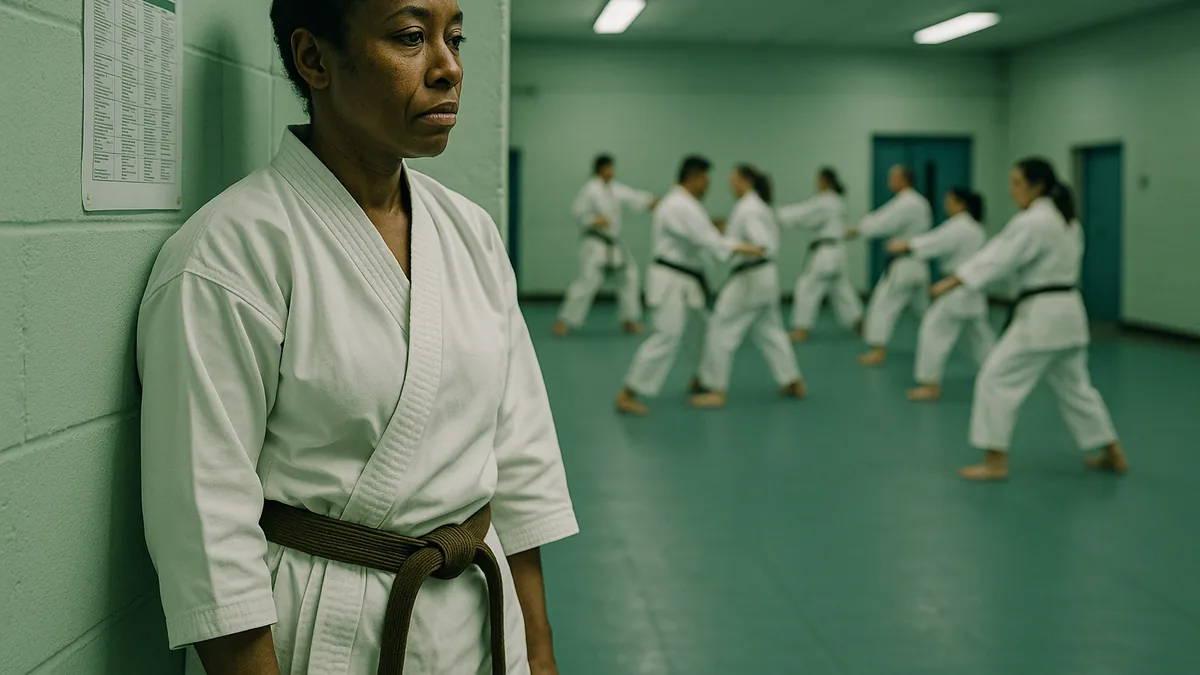
Most dojos are built around collective energy. The kiai rings out, the count drives the pace, the group moves as one. That’s not a flaw in the design - it’s the design. And for a lot of introverted practitioners, it creates a slow, grinding friction that nobody talks about openly.
I’ve trained with people who were technically gifted, clearly committed, and quietly miserable in the social structure of dojo life. Not because they didn’t love the art. Because they were spending enormous energy managing the environment while simultaneously trying to train. That’s a tax on your focus that extroverted training partners don’t pay in the same way, and pretending it doesn’t exist doesn’t make it go away.
What I want to talk about is how you actually work with this, not around it. Because the answer isn’t to become someone else on the dojo floor. The answer is to understand your own training patterns well enough that you can build something sustainable.
Finding a Rhythm That Actually Works for Your Energy
One mistake I see constantly with introverted students is that they front-load their social energy at the beginning of class - chatting during the warm-up, engaging with everyone during partner drills - and then hit a wall halfway through. By the time kumite comes around, they’re running on empty and their technique shows it. The footwork gets sloppy. The reactions slow down. They start making errors they wouldn’t make fresh.
The fix isn’t to be less friendly. It’s to be more deliberate. What I tell students is to think of social engagement in the dojo like kime - you don’t apply it everywhere, you apply it at the right moment with the right intensity. Save the longer conversations for after class. During class, it’s fine to be focused and brief. A nod, a bow, a “good one” - that’s enough. Nobody worth training with will read that as coldness.
Training alongside a full-time job compounds this, because you’re often arriving at the dojo already depleted. If that’s your situation, the patterns discussed here about managing energy across a full training week are worth thinking through carefully - the same energy management principles apply, just with an added layer for introverts.
Timing Your Best Training
I used to think the best training happened at the end of class when everything was flowing and the group was warmed up. It took me years to understand why I was consistently sharper in the first half of most sessions. I’m not a slow starter - I’m an introvert who does better before the accumulated noise of a group session wears on me.
Once I understood that, I stopped treating the second half of class as the “real” training. I started using it differently - more observation, more internal focus, less trying to hit peak performance in kumite when my bandwidth was already stretched. That shift improved my consistency more than almost anything technical I worked on that year.
Pay attention to when your best technique shows up in a session. Track it honestly. If you’re sharper in the first 40 minutes than the last 20, that’s information, not a character flaw.
Talking to Your Instructor - And Why Most Introverts Don’t
Here’s something I’ve noticed over many years of watching students: introverted practitioners are often the least likely to advocate for themselves with their instructor, and the most likely to quietly drift away from the dojo when something isn’t working. They don’t want to make a fuss. They don’t want to be the person who needs special consideration. So they say nothing, absorb the friction, and eventually stop showing up.
I’ve lost good students this way. Looking back, there were signs I should have caught earlier, but the students weren’t giving me much to work with either. That’s not blame - it’s just what happens when communication doesn’t happen.
What actually works is a brief, direct conversation at the right moment. Not during class. Not when your instructor is running warm-up. After class, when things have settled. Something like: “I train better when I have a bit of time to process corrections before we move on - is there anything you’d suggest?” Most instructors will respect that immediately. The ones who don’t are telling you something important about whether this is the right dojo for you.
You don’t need to explain your personality type. You don’t need to frame it as a limitation. Frame it as what it is - a training preference, like preferring to drill a technique slowly before adding speed. Instructors understand training preferences. They work with them every class.
When the Dojo Culture Is the Problem
Some dojo cultures genuinely don’t suit introverted practitioners. High-volume noise, constant partner rotation, instructors who reward the loudest kiai over the sharpest technique - these environments exist, and they’re harder to navigate. I’d rather you knew that plainly than spent years trying to adapt to something that fundamentally doesn’t fit.
If you’re in a dojo where the social dynamics are creating real problems for your training, it’s worth separating two questions: is this a me problem, or is this a this-particular-dojo problem? Both are solvable, but differently. One requires you to adapt. The other might require you to find a different training environment.
Solo Practice Is Not a Consolation Prize
I want to be direct about this because I think it gets framed wrong. Solo practice isn’t what you do when you can’t get to the dojo. For introverted practitioners especially, it’s where some of the deepest learning happens - and I mean that technically, not just psychologically.
When you’re training alone, you’re not managing anyone else’s energy. You’re not adjusting your pace to a partner’s rhythm. You’re not half-listening to a conversation three mats over. You have full access to your own attention, and that’s a significant training resource.
The kata practice I did alone in my garage for two years - working through the same sequences hundreds of times, stopping to feel what was actually happening in my hip rotation, my weight transfer, my breathing - produced more technical refinement than most of my dojo time in that period. Not because dojo training isn’t valuable. It absolutely is. But because the quality of attention I could bring to solo work was different.
When the hip rotation in a gyaku-zuki finally connects properly, you feel it as a wave through the whole body - the floor through your back foot, the drive through the hip, the delivery through the fist. You don’t feel that in a group drill at count. You feel it in slow, deliberate solo work where you’re actually listening to what your body is doing.
Building a Solo Practice That Complements Group Training
The mistake most people make with solo practice is doing the same thing they do in class, just without the class. That’s fine for maintenance, but it’s not where the real value is.
What I’d recommend instead is using solo time to work on the specific things that get lost in group training:
- The transitions between techniques that the count glosses over
- The moments of stillness and reset that group pace never allows
- Kata sections that you always rush through because the group is moving on
- Breathing patterns that collapse under the pressure of a full class
- Any correction your instructor gave you that you didn’t fully process in the moment
If you’re finding it hard to stay motivated when you’re training outside a group structure, the strategies in this piece on staying motivated when progress feels invisible apply directly - solo training makes invisible progress even more invisible, which is a real challenge worth planning for.
Community Perspective
There’s a genuine split in how different dojos and instructors think about the quieter student. Some instructors - particularly those from older, more traditional backgrounds - interpret introversion as lack of commitment or fighting spirit. The student who doesn’t kiai loudly, doesn’t chat much in the changing room, and seems to disappear after class gets read as half-hearted. I’ve seen this cause real problems for technically excellent practitioners who just don’t perform their enthusiasm visibly.
Other instructors, especially those who’ve trained for a long time across multiple dojos, have usually figured out that quiet students often have the deepest practice. They’ve learned not to confuse volume with investment.
The honest truth is that dojo culture varies enormously on this. Some clubs feel like they’d suit a team sport - high energy, high noise, lots of group identity. Others are quieter, more internally focused, and suit a different kind of practitioner. Neither is wrong. But if you’ve been telling yourself that your discomfort in a particular dojo is something you need to push through, it’s worth asking whether you’d thrive somewhere else instead.
I’ve changed my mind on this over time. I used to think that discomfort was always the training. Now I think some discomfort is the training, and some discomfort is just a bad fit. Learning to tell the difference is part of the long-term journey - and it gets easier once you’ve seen enough of both.
Key Takeaways
- Track when your best technique shows up in a session and structure your effort accordingly - if you’re sharper early, stop treating the second half as the “real” training
- Social energy in the dojo is a finite resource; brief, focused engagement during class is not unfriendliness, it’s good training management
- Have a direct conversation with your instructor about how you process corrections best - frame it as a training preference, not a limitation, and do it after class when there’s space for a proper exchange
- Solo practice deserves a serious training plan of its own, not just a repetition of what you do in class - use it to work on transitions, breathing, and corrections you didn’t fully absorb in group sessions
- If a dojo’s culture is consistently working against your training rather than challenging it, that’s worth examining honestly - there’s a difference between productive discomfort and a structural mismatch
- If your club folds or your instructor moves on, introverted practitioners are particularly at risk of drifting away entirely - having a plan for that scenario in advance matters more than most people think until it happens
The weekly digest
New karate articles, once a week
One email every week with everything new on Karate Lifestyle. No spam; unsubscribe in one click.
We'll email you to confirm. See our privacy policy.