How to Keep Training Seriously When Your Instructor Moves On or the Club Folds
The club folds on a Tuesday. By Friday, half the students have disappeared. By the following month, most of the rest have quietly moved on. I’ve watched this happen more than once, and every time, the people who keep training are the ones who had already decided that their practice belonged to them - not to the instructor, not to the dojo, not to the schedule on the noticeboard.
That’s not a comfortable thing to say, because we all owe something to the people who taught us. But if your training only exists when someone else shows up to run it, you were always one resignation letter away from quitting. The disruption is just revealing something that was already true.
So the question isn’t really “how do I stay motivated when the club folds?” The real question is: what kind of practitioner were you before it folded?
The First Mistake People Make After Losing Their Dojo
The most common thing I see is people going into a holding pattern. They tell themselves they’ll train properly once they find a new club. They do a few kata in the garden, half-heartedly, and then stop. Six weeks pass. Then twelve. Then they’re explaining to someone at a party that they “used to do karate.”
I understand why it happens. The dojo provides structure, and most of us underestimate how much we rely on that structure until it’s gone. Showing up at 7pm on a Wednesday because that’s what you do - that’s doing a lot of the motivational work for you. Remove the structure and suddenly you have to want it on purpose, every single session. That’s harder.
What I tell students who are in this situation is to treat the first two weeks as critical. Not because anything magical happens in two weeks, but because the pattern you establish immediately after the disruption tends to stick. If you train through the transition, you’ll keep training. If you wait until everything is sorted, you probably won’t.
Set Goals That Don’t Depend on Anyone Else
One thing that separates the practitioners who come through disruptions intact from those who don’t is having goals that belong entirely to them.
I used to think goal-setting in karate was about grades. Get to brown belt. Get to shodan. That’s not wrong, but it’s fragile - because those goals require an instructor, a grading panel, an association. When the infrastructure disappears, so does the goal.
The goals that survive disruption look different:
- Nail every transition in Bassai Dai to the point where you could perform it at 3am half-asleep
- Get your gyaku-zuki fast enough that a training partner actually has to move
- Train every day for 30 days without exception
- Learn to teach the first three kihon combinations well enough that a complete beginner can follow you
None of those require a dojo. None of them require an instructor to validate. And when you achieve them, you’ve actually improved - which is what grades are supposed to measure anyway.
If you’re struggling with the motivational side of training without external structure, How to Stay Motivated in Karate When Progress Feels Invisible is worth reading. A lot of what makes training feel purposeless during a disruption is the same thing that makes it feel purposeless during a plateau - and the solutions overlap more than you’d expect.
What Solo Training Actually Teaches You
Here’s something I didn’t expect when I went through my own extended period of training without a regular club - about eighteen months, after my instructor relocated and the dojo effectively dissolved around him. Solo training exposed gaps I didn’t know I had.
When you train in a group, other people’s timing covers for your timing. You move when they move. The count gives you a rhythm to hide inside. Alone, there’s nowhere to hide. Your kata either has internal rhythm or it doesn’t. Your stances either hold under pressure or they collapse when you push them. Your transitions are either controlled or they’re sloppy and you’ve been getting away with it for years.
I’ve noticed that practitioners who’ve had significant solo training periods often have a stillness to their technique that group-trained students lack. Not always - solo training done badly just reinforces bad habits with no one to correct them. But done with genuine attention, it builds something.
The correction that made the biggest difference to my own solo training was learning to train slowly. Not because slow is better than fast - it isn’t, always - but because slow training forces you to feel what’s actually happening. When you do a gyaku-zuki at full speed, you can convince yourself the hip is doing the work. Slow it down to a crawl and you’ll feel immediately whether the hip is driving the punch or whether the arm is just going first and dragging everything else behind it. It feels wrong at first, like you’re not really training. Give it a month and you’ll understand why some of the best practitioners I’ve trained with spend half their solo sessions moving at half speed.
Finding Alternative Training - And Being Honest About What You Actually Need
I’ll be direct here: online training has real limitations, and anyone who tells you otherwise hasn’t trained seriously enough to know what they’re missing. You can’t feel an online instructor correct your kamae. You can’t do partner work through a screen. The feedback loop is broken.
That said - I’d rather you train with a good online instructor than not train at all, and I’d rather you train with a mediocre online instructor than spend six months waiting for the perfect local club to materialise. The perfect is the enemy of the good, and in karate, consistency beats quality of environment over the long run.
What I’d suggest is being honest about what you actually need from alternative training. If you’re a kyu grade who hasn’t yet internalised the core kihon, you need correction more than content - find an online option that includes some form of feedback, even if it’s just video submission. If you’re a dan grade who knows what good technique feels like and just needs structure and accountability, a solid online programme with a clear curriculum might be enough to keep you moving.
The other option - and I think this is underused - is reaching out to other local clubs in different styles. I’ve trained at Shotokan clubs when my Wado dojo was closed. I’ve done sessions with Goju practitioners when I was travelling. The techniques are different, the emphases are different, but the training is real and the experience is genuinely useful. You’ll learn things about your own style by training in someone else’s. You’ll also realise, usually within the first session, that the fundamentals of good body mechanics transcend style labels.
If you’re starting the search for a new permanent home, How to Choose a Karate Club covers what to actually look for - beyond the obvious stuff like location and cost.
Community Perspective
There’s a genuine split in how experienced practitioners think about dojo loyalty and training continuity, and I don’t think there’s one right answer.
Some instructors - particularly those from more traditional backgrounds - would argue that training outside your association during a disruption is disrespectful, or that it muddies your technique. I’ve heard this position argued seriously by people I respect. The thinking is that style integrity matters, that cross-training at a formative stage embeds conflicting habits, and that waiting for the right environment is better than training in the wrong one.
I disagree, but I understand the position. My view is that the risk of not training at all is far greater than the risk of picking up slightly different habits from a few months at a different club. Habits can be corrected. Six months of detraining is harder to reverse, especially if you’re over 40 - and if that’s relevant to you, Training Karate After 40 addresses the physical reality of coming back after a break more directly than most articles on the subject.
Where I think the traditionalists have a point is this: if you’re a junior grade and you spend a year in a completely different style with no intention of returning to your original path, you probably should have just joined that other style. Drifting between clubs without commitment doesn’t serve you. But training thoughtfully at an alternative dojo while you sort out your situation? That’s just being a serious practitioner.
Use Other Practitioners for Accountability - Not Just Motivation
I’ve noticed that people tend to think of training partners primarily as motivation - someone to train with so it’s more fun, someone to push you. That’s real, but it’s only part of it. The more valuable thing a training partner provides is accountability, and that’s different.
Motivation gets you to the first session. Accountability gets you to the thirty-first. If you’ve told someone you’re going to train on Thursday, you train on Thursday. The social commitment does work that willpower alone can’t sustain.
After a club folds, the instinct is to go it alone - partly because you don’t want to impose, partly because there’s no obvious structure to invite someone into. Push through that instinct. Even if you can’t train together in person, find one or two people from your old dojo and set up a simple check-in. “Did you train this week?” is enough. It sounds almost embarrassingly simple, but I’ve seen it keep people training through periods when they would otherwise have drifted away completely.
Online communities - forums, social media groups, even WhatsApp threads with former dojo members - can provide a version of this. I’m sceptical of online communities as a replacement for real training relationships, but as a supplementary accountability structure during a disruption, they’re genuinely useful. The mental benefits of consistent training are real, and they don’t disappear just because your dojo does - but you have to keep training to access them.
The Mistake That Loses People Permanently
The single mistake I’ve seen end more training careers than any other during a disruption is this: waiting to feel ready before training again.
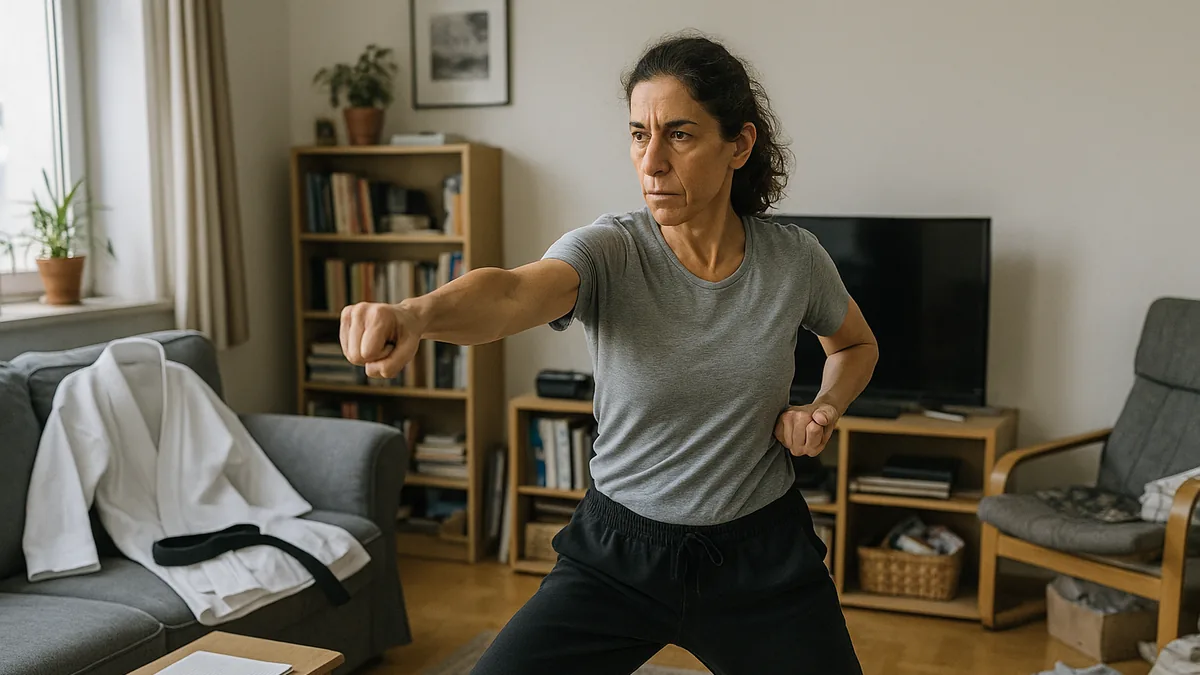
It sounds reasonable. You want to find the right club first. You want to sort out your schedule. You want to feel motivated. But motivation follows action - it doesn’t precede it. Every practitioner I’ve known who has come through a major disruption intact trained through the uncertainty. They didn’t wait until the situation was resolved. They trained badly, in their living room, in their garden, in a hired sports hall with two other people from the old club, and they kept going until something better materialised.
The people who waited for the right conditions mostly didn’t come back. Not because they lacked commitment, but because the gap got wide enough that returning felt like starting over - and starting over is psychologically harder than continuing badly.
If you’re also managing the reality of fitting training around work and life, Training Karate Alongside a Full-Time Job is worth reading alongside this - because the skills that keep you training through a busy week are the same skills that keep you training through a disruption.
Key Takeaways
- Set personal goals that don’t require a dojo to validate - specific, measurable, and owned entirely by you. Grade-dependent goals are fragile; skill-dependent goals aren’t.
- Train through the transition, not after it. The pattern you establish in the first two weeks after a disruption is the pattern that sticks.
- Use slow training deliberately during solo sessions - it exposes what you’ve been hiding inside group rhythm and builds the kind of internal awareness that fast training alone won’t give you.
- Be honest about what you need from alternative training. Kyu grades need correction; dan grades may need structure more than instruction. Match the solution to the actual problem.
- Find one person to be accountable to. Not for motivation - for the social commitment that keeps you showing up when motivation isn’t enough.
- Don’t wait to feel ready. Motivation follows action. Train badly in your garden if that’s what’s available, and keep going until something better materialises.
The weekly digest
New karate articles, once a week
One email every week with everything new on Karate Lifestyle. No spam; unsubscribe in one click.
We'll email you to confirm. See our privacy policy.