How to Stay Motivated in Karate When Progress Feels Invisible
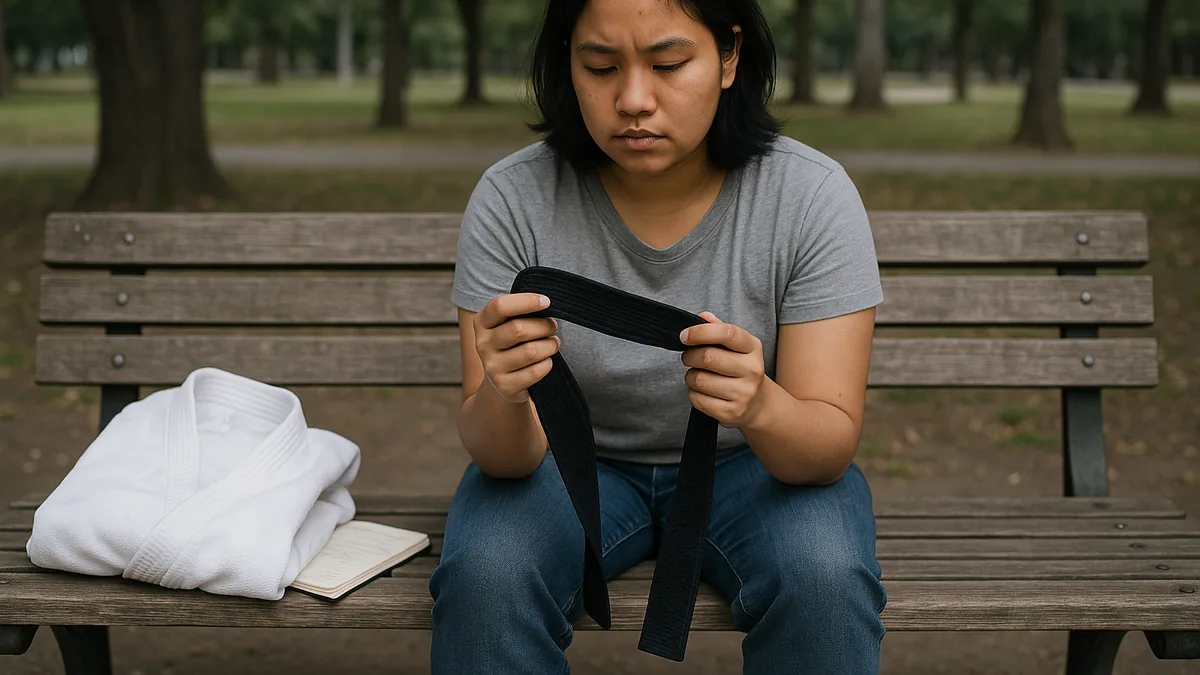
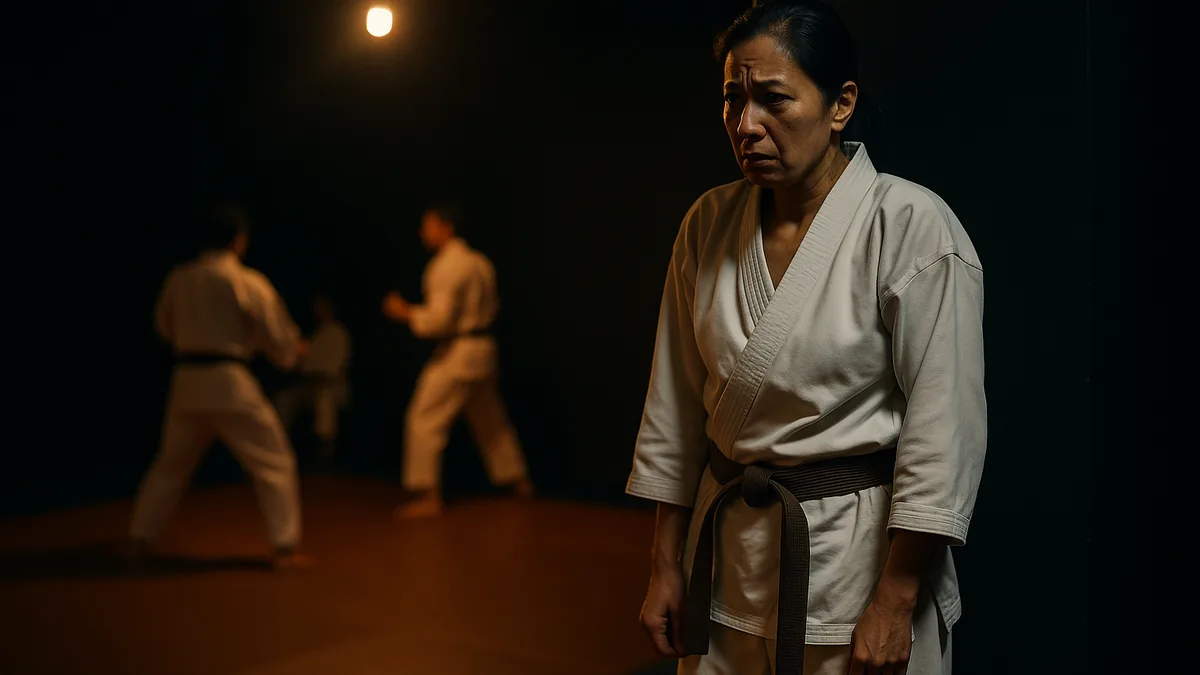
Most people quit karate between green belt and brown belt. Not because they stop enjoying it. Not because life gets too busy. They quit because they look at themselves in the mirror during kihon, compare what they see to where they were six months ago, and genuinely cannot tell if anything has changed.
I’ve been there. And I’ve watched it happen to students I genuinely didn’t want to lose.
The frustrating truth is that progress in karate is almost never linear, and it’s almost never visible to the person experiencing it. You improve in layers, not in straight lines. Your body is learning things your conscious mind hasn’t caught up with yet. But none of that helps when you’re standing in the car park after training, wondering why you still feel like you’re getting everything wrong.
Here’s what I’ve learned about staying motivated through those stretches - and what I’ve seen actually work for students who stuck it out versus those who didn’t.
The Problem With Waiting to Feel Good at Karate
One mistake I see constantly - especially with adults who are used to being competent at things - is tying motivation to feeling skilled. They train hard, they show up consistently, and then somewhere around the six to twelve month mark, they expect to feel like it’s coming together. When it doesn’t, they interpret that as evidence that they’re not progressing, or worse, that they’re not suited to it.
The thing is, karate is unusual in how it withholds feedback. In a lot of pursuits, effort produces a visible output fairly quickly. You run more, you get faster. You lift weights, you get stronger. You can measure it. Karate doesn’t work like that. You can drill a technique for months and feel like you’re going backwards - and then one session, something clicks and you realise your body has been building the movement pattern the whole time. It just hadn’t surfaced yet.
My instructor used to say something I found infuriating as a junior grade: “The kata is teaching you. You’re not teaching the kata.” I didn’t understand what that meant until I was a brown belt, drilling Bassai Dai for the hundredth time and suddenly feeling a hip connection I’d never felt before. It wasn’t something I’d consciously worked on that session. It just arrived. The body had been processing it quietly, and I’d nearly given up waiting.
If your motivation depends on feeling skilled, you’re going to struggle. What you need instead is a different system for tracking where you are.
Set Goals That Actually Reflect How Karate Progress Works
The biggest mistake I see with goal-setting in karate is that people set outcome goals - pass my next grading, get my brown belt - and then have nothing to measure between gradings. That’s six months to a year of training with no visible checkpoint. Of course motivation drops.
What I tell students is to set process goals instead, and make them specific enough that you can genuinely assess them at the end of each month.
Not “get better at mae geri.” That’s meaningless. Something like: “By the end of this month, I want to be able to chamber my mae geri without my hip dropping before the kick extends.” That’s a specific, observable thing. You can check it. You can ask your instructor to check it. You can film yourself and compare.
Here’s how I’d break it down practically:
- Weekly goals - One specific technical point you’re working on from last session’s feedback. Not a list of five things. One thing.
- Monthly goals - A measurable change in one area of your training. Technique, fitness, kata retention, whatever is most relevant to where you are.
- Grading goals - These sit at the end of a longer runway and shouldn’t be your only marker of progress.
I’ve noticed that students who keep a training diary - even just a few lines after each session - are significantly less likely to feel like they’re not progressing. Because when you go back and read what you wrote three months ago, you can see the difference. You were worried about your stance width. Now you’re worried about your timing. That’s progress, even if it doesn’t feel like it from the inside.
If you’re juggling training around work commitments, the goal-setting piece becomes even more important. There’s more on managing training consistency in Training Karate Alongside a Full-Time Job: How to Make It Work Long-Term - the principle applies directly here.
Celebrate Small Victories - And Stop Dismissing Them
I used to be dismissive of this advice. It sounded soft to me. You get your black belt, that’s worth celebrating. Getting your stance right once during kihon? Come on.
I changed my mind about this after watching what happened to a student I’ll call Mark - mid-thirties, came to karate late, worked incredibly hard but was brutal on himself. Every session he’d focus on what went wrong. His technique was genuinely improving, but he couldn’t see it because he was always measuring himself against an ideal rather than against where he’d started. He quit at blue belt. I think about that a lot.
The thing that actually changed my understanding was realising that small victories aren’t just feel-good moments - they’re evidence. They’re data points that tell you the work is doing something. When you dismiss them, you’re throwing away the most accurate feedback you have about your actual progress.
What counts as a small victory in karate?
- Your instructor corrects the same thing three sessions in a row, and on the fourth session, they move on to something different. That means the first thing is fixed. That’s a win.
- You get through a kata without losing your place for the first time.
- In jiyu-kumite, you land a counter off a failed attack when six months ago you would have just backed away.
- You show up to training when you really didn’t want to.
That last one matters more than people admit. Showing up on the hard nights - when you’re tired, when you’re not in the mood, when everything felt wrong at the last session - is a form of progress in itself. It’s building the habit. The habit is what gets you to black belt, not talent.
I’d also say this: if you’re training after 40 and feeling like progress is slower than it should be, the small victories framework is especially valuable. The Training Karate After 40 piece goes into this in more depth, but the short version is that your progress markers might look different from a younger student’s, and that’s fine. Different doesn’t mean absent.
Your Dojo Community Is Not Just a Nice Extra
Here’s an opinion I hold strongly: training in isolation - even if you’re technically training in a group class - is one of the fastest routes to quitting.
What I mean by that is showing up, doing the session, going home, and never engaging with the people around you. No conversations before class, no training with different partners, no asking questions after the session. You’re using the dojo as a facility, not as a community.
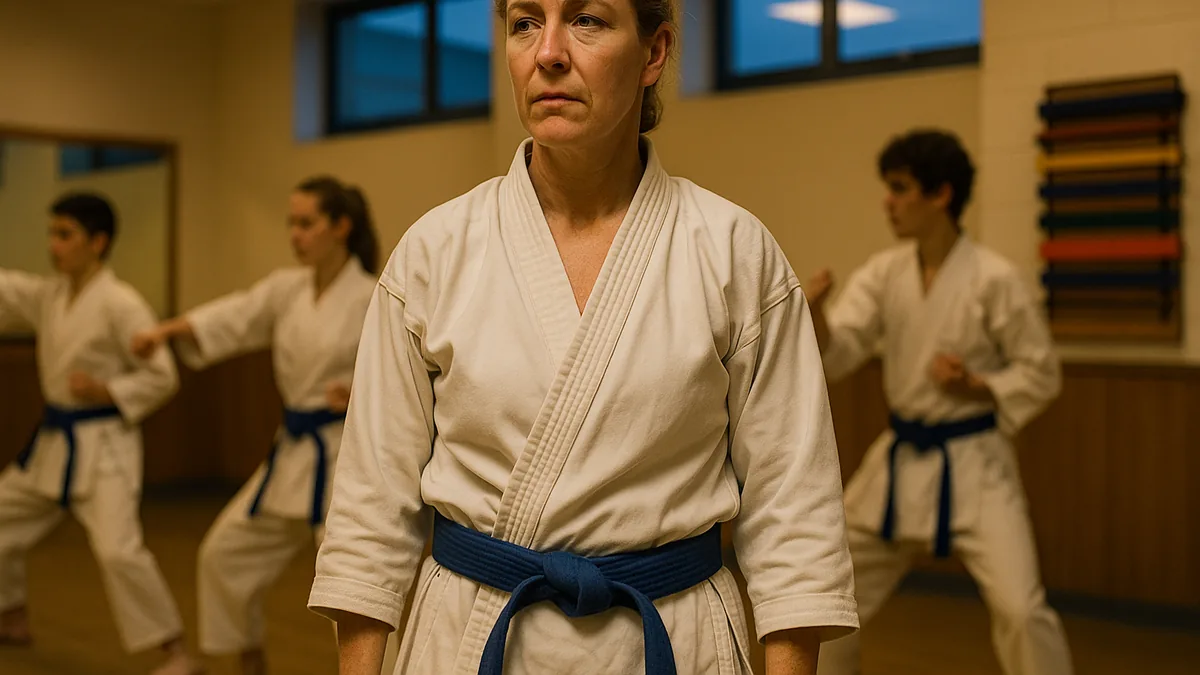
I’ve noticed that the students who stay longest are almost never the most naturally talented. They’re the ones who have friends in the dojo. They’re the ones who feel like they’re part of something. Because when motivation drops - and it will - the thing that gets you through the door on a Wednesday night when you’d rather be on the sofa is that you know someone in that dojo is expecting to see you.
There are practical ways to build this:
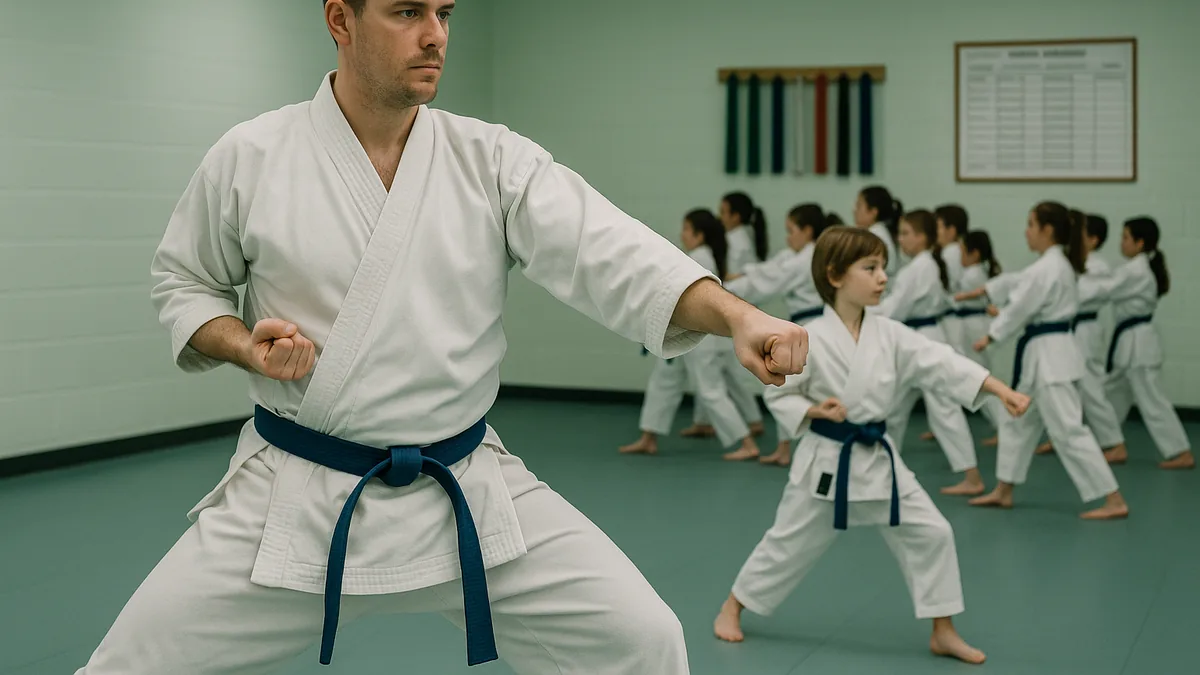
- Train with different partners. If you always pair with the same person, you’re limiting your development and your connections. Training with someone more senior than you is uncomfortable and useful. Training with someone less senior than you forces you to articulate what you’re doing, which deepens your own understanding.
- Ask questions after class. Not during - that disrupts the session and can irritate your instructor. But after, when your instructor is still around, a specific question about something from the session shows you’re engaged and usually gets you a much more useful answer than the general instruction during class.
- Show up to gradings and events even when you’re not grading. Supporting your training partners through their grading builds a different kind of connection than just drilling next to each other.
The community aspect also acts as a reality check when your self-assessment is off. I’ve had students who were convinced they were terrible and on the verge of quitting, and their training partners were genuinely surprised - because from the outside, the progress was visible. We are almost always our own harshest critics.
Community Perspective
This is worth being honest about: not every dojo has a strong community culture, and that’s a real problem that’s worth naming.
Some clubs are technically excellent but cold. You train, you leave, there’s no real connection between students. I’ve trained in dojos like that, and while my technique improved, I never stayed long. Other clubs are warmer but technically weaker. The honest answer is that both things matter, and if your dojo is making you feel isolated rather than supported, that’s worth taking seriously.
There’s also a genuine disagreement in the karate community about how much weight to put on grading as a motivational tool. Some instructors use gradings frequently as a way of giving students regular milestones. Others grade rarely and treat it as a significant event. I’ve trained under both systems, and I think I prefer the less frequent grading model - it puts more emphasis on the quality of training rather than the accumulation of belts - but I can see why regular gradings help some students stay motivated. The key is understanding which system your dojo uses and adjusting your expectations accordingly, rather than assuming the grading schedule is the only measure of where you are.
If you’ve reached a point where you’re questioning whether your club is actually serving your development, When to Quit Your Karate Club: Signs It’s Time to Leave and How to Do It Without Burning Bridges is worth reading. Sometimes the demotivation isn’t about your progress - it’s about the environment.
What the Invisible Progress Actually Feels Like
I want to end on something practical, because I think it helps to know what you’re looking for.
When karate progress is happening but invisible to you, there are usually small physical signals that you’re improving, even if your conscious mind hasn’t registered it. You’ll feel your stance become more stable without having to think about it. A combination you’ve drilled a hundred times will start to feel fluid rather than sequential - like it’s one movement rather than three. Your body will start to react in kumite before you’ve consciously decided to react.
These things feel wrong at first, in a specific way - they feel too easy. You’ll do something correctly and think “that can’t be right, it felt too simple.” That feeling is actually a good sign. Correct technique in karate is efficient, not effortful. When something stops feeling like a struggle, that’s usually because you’ve internalised it.
The mistake is interpreting the absence of struggle as stagnation. It’s often the opposite.
Key Takeaways
- Set process goals, not just outcome goals - specific, monthly technical targets give you something to measure between gradings
- Keep a training diary, even briefly - three months of notes will show you progress your daily experience can’t
- Treat small victories as evidence, not as consolation prizes - they’re the most accurate data you have
- Build real connections in your dojo - the students who stay are almost never the most talented, they’re the most embedded in the community
- When something starts to feel too easy, that’s often progress, not stagnation - correct technique is efficient, not effortful
- If your motivation has been low for months, check whether it’s about your progress or about your environment - sometimes they’re different problems with different solutions
The weekly digest
New karate articles, once a week
One email every week with everything new on Karate Lifestyle. No spam; unsubscribe in one click.
We'll email you to confirm. See our privacy policy.