Training Karate With Anxiety: How to Stay on the Mat When Your Head Is Working Against You
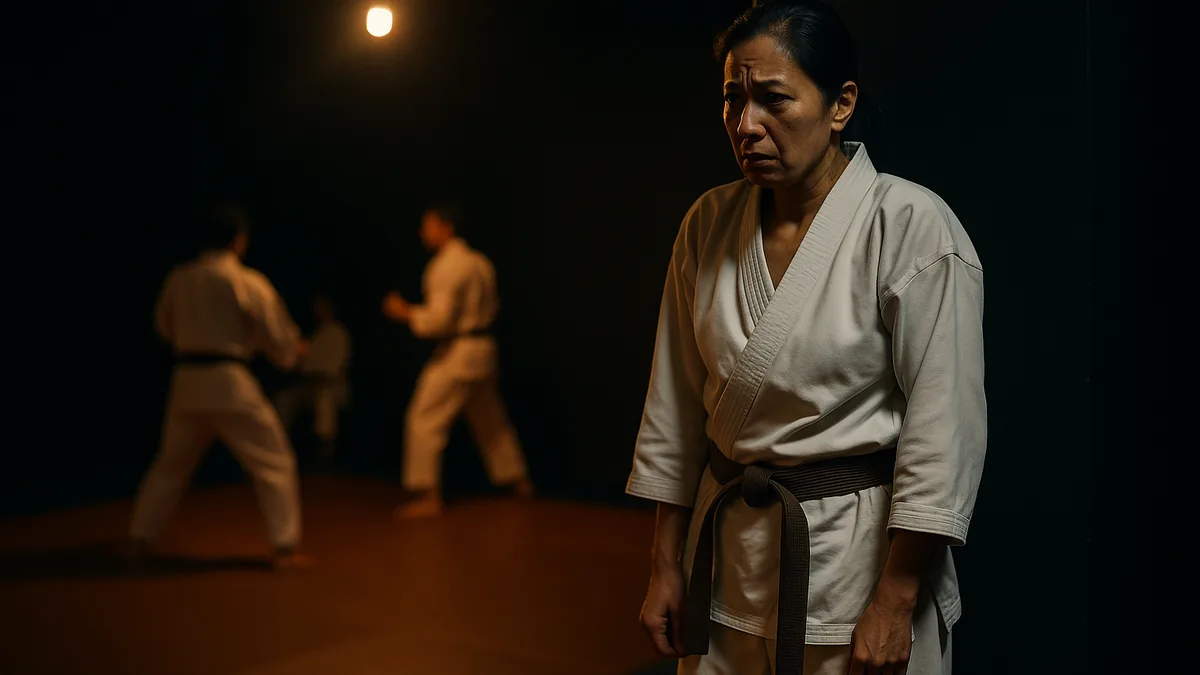
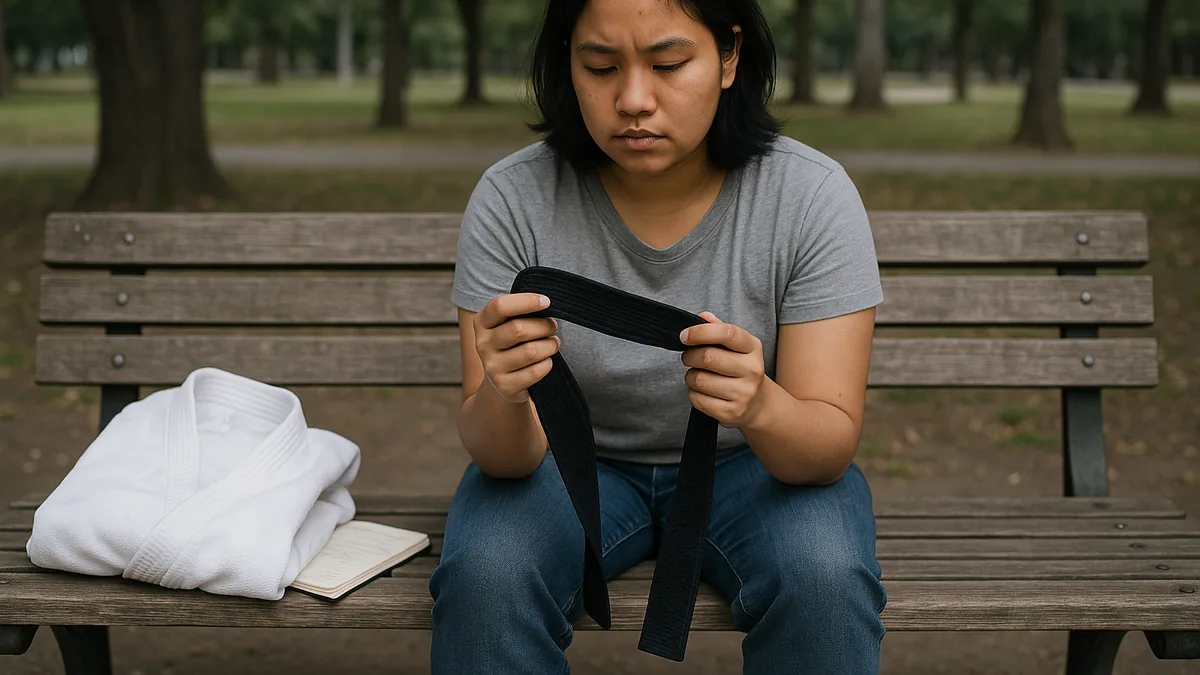
The first time I watched a student walk out mid-session and not come back, I thought it was about the training. Too hard, too fast, not what they expected. It took me a few more years and a few more students disappearing to understand what was actually happening. The training was fine. Their head wasn’t.
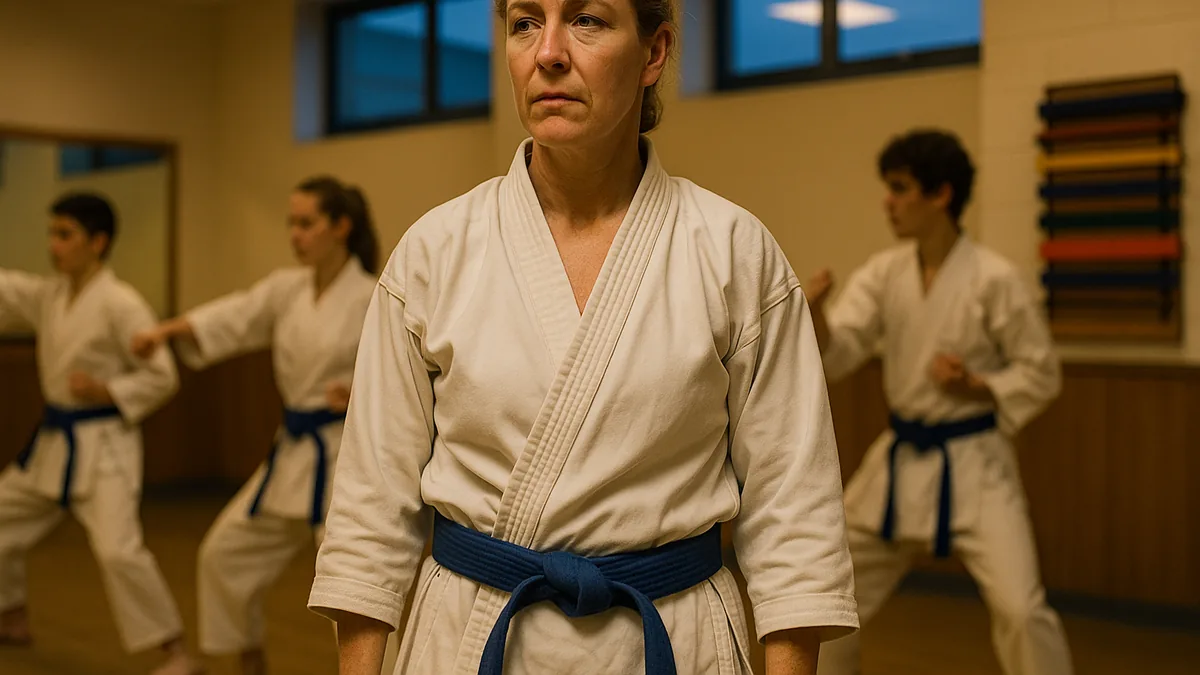
Anxiety in the dojo is far more common than anyone talks about openly. I’ve seen it in white belts who freeze during partner work, in brown belts who suddenly stop grading, in senior students who start finding reasons to skip sessions they used to never miss. It doesn’t always look like anxiety from the outside. It looks like inconsistency, avoidance, excuses. But once you know what you’re looking at, you see it constantly.
If you’re training with anxiety, this is for you. Not the clinical version of this conversation, not the theoretical one - the practical one. What actually happens on the mat, what makes it worse, and what I’ve found actually helps.
Why the Dojo Is Both the Hardest and the Best Place to Be
Here’s something I’ve believed for a long time: the dojo is a genuinely difficult environment for an anxious person, and that’s also exactly why it’s worth staying in.
There’s constant social evaluation. You’re being watched by your instructor, by seniors, by peers. You’re asked to perform under pressure repeatedly. You’re put in close physical proximity to people you may not know well. You’re corrected in front of others. If you designed an environment specifically to activate anxiety responses, you’d come close to describing a traditional karate class.
And yet, I’ve watched people with serious anxiety - people who described themselves as barely functional in social situations outside the dojo - become some of the most composed, capable practitioners I’ve trained alongside. Not because karate cured their anxiety, but because they learned to train with it rather than against it.
The distinction matters. You’re not trying to eliminate anxiety from your training. You’re trying to stop letting it make decisions for you.
What Anxiety Actually Looks Like in Training
I want to be specific here, because the generic version of this conversation isn’t useful.
I’ve noticed that anxious practitioners often train with a particular kind of tension - not the productive tension of focus, but a bracing quality, like they’re waiting to be hit even when nothing is coming. You can see it in the shoulders, which ride up toward the ears. You can feel it when you’re doing partner drills and their grip is too tight, their response too fast, their breath held.
The thing that actually changed my understanding of this was working with a student - competent, technically solid - who kept falling apart in kumite. Not because she lacked skill. Because the moment she had a real opponent in front of her, she stopped breathing properly. Full stop. She’d hold her breath for entire exchanges, then gasp, then lose her timing completely. When I pointed it out, she had no idea she was doing it.
That’s the core of it. Anxiety operates below the level of conscious awareness most of the time. You’re not choosing to tense up, hold your breath, or go blank. Your nervous system is making those calls before your thinking brain catches up.
One mistake I see constantly is practitioners trying to think their way out of anxiety during training. They’re mid-kata, something goes wrong, and instead of continuing, they stop and mentally review what happened. This is the worst thing you can do. You’ve just given your anxious brain exactly what it wants - a reason to pause, analyse, catastrophise. The kata falls apart not because of the original mistake but because of everything that happened after it.
What I tell students is this: the mistake is not the problem. Stopping is the problem. Keep moving.
Breathing Is Not a Relaxation Technique - It’s a Training Tool
I used to think breathing exercises were for meditation classes. By the time I hit brown belt, I’d completely reversed that position.
Your breath is the one thing you can consciously control that directly affects your nervous system response. When anxiety spikes, your breathing goes shallow and fast. That pattern feeds the anxiety. When you deliberately slow and deepen your breath, you’re not just calming yourself down - you’re sending a physiological signal that overrides the threat response.
In a karate context, this is not abstract. Kiai is a breath. The exhalation on technique is a breath. The stillness before a kata begins is a breath. The structure of good karate training is built around breath, and if you’re anxious, you’re almost certainly disrupting that structure without knowing it.
Here’s what I’d recommend as a concrete practice: before every session, before you even step onto the mat, take three slow deliberate breaths. Not deep yoga breaths - just controlled, longer exhalations than inhalations. Do this in the changing room, not on the mat. By the time you bow in, your nervous system is already in a different state.
During training, if you feel anxiety spiking - in kumite, before a grading, when you’re asked to demonstrate - the recovery tool is the same. One breath. Slow exhalation. Then continue. You’ll feel the difference immediately. It feels like your vision widening slightly, like the room becoming less close. That’s not imagination. That’s your threat response stepping back.
The Grading Problem
Gradings concentrate anxiety in a way that regular training doesn’t. Everything is higher stakes, you’re being formally evaluated, and there’s often an audience. I’ve seen technically excellent students perform below their ability in gradings for years, and I’ve seen students who train inconsistently somehow pull together their best performance under pressure.
The difference isn’t talent. It’s relationship to the pressure itself.
What I tell students who struggle with grading anxiety is to change what they’re orienting toward. Most anxious practitioners in a grading are focused on the examiner. Every movement is performed for the examiner, evaluated against what the examiner might be thinking. This is a disaster, because you’re now training your attention outward at exactly the moment you need it inward.
The correction that makes the biggest difference here is simple: perform for yourself. Not in an arrogant sense - in a technical sense. Your attention should be on the feeling of your techniques, not on how they look. When the hip rotation connects properly, you feel the impact through your whole body - that’s your feedback mechanism. Not the examiner’s expression.
This sounds obvious. It isn’t obvious when you’re standing in front of a panel with your grade on the line. You have to practice this orientation during regular training, not just try to apply it on grading day.
Building a Relationship With Your Training Environment
If anxiety is making the dojo feel like a threat, the environment itself becomes part of the problem. I’ve seen this play out in students who are fine in regular classes but deteriorate the moment the class structure changes - a different instructor, a visiting senior, a larger group, an unfamiliar venue.
The solution isn’t to control the environment. You can’t. The solution is to build consistency in your own pre-training routine so that wherever you are, you have something familiar to anchor to.
I have a warm-up sequence I’ve done for years. Not because it’s the optimal warm-up - I’ve changed my views on what’s optimal several times. But because it’s mine, and doing it signals to my nervous system that what follows is training, not threat. By the time I’m through it, I’m in a different mental state than when I walked in.
If you’re struggling with this, training alongside a full-time job presents similar challenges around mental transition - getting your head into training mode when you’re carrying the weight of the day. The same anchoring principles apply.
The Mistake of Hiding It
Here’s an opinion that might be unpopular in more traditional dojo cultures: hiding anxiety from your training partners and instructor makes it worse, not better.
I’m not suggesting you announce it to the class. I’m saying that training in secret discomfort - white-knuckling through partner work without ever letting anyone know you’re struggling - creates a performance that’s entirely about concealment. And concealment is exhausting. It consumes exactly the mental resources you need for training.
The practitioners I’ve seen manage anxiety most effectively in the dojo are the ones who found at least one training partner they could be honest with. Not to offload or seek reassurance - just to have one person who knows, so you’re not carrying it alone on top of everything else.
This connects to something I’ve written about elsewhere. If you’re training as an introvert in a dojo culture built around group energy, you’ll recognise the particular exhaustion of performing extroversion on top of everything else. Anxiety adds another layer to that. The answer in both cases is finding your people within the dojo, not performing for the whole room.
Community Perspective
This is an area where I’ve noticed real differences between dojo cultures. In more traditional environments, there’s an implicit expectation that you leave your personal difficulties at the door. The dojo is a place of discipline, not therapy. I understand that position, and I don’t entirely disagree with it - there’s something valuable about training demanding your full presence regardless of what’s happening outside.
But I’ve also trained in environments where instructors actively created space for practitioners to struggle openly, where grading nerves were discussed rather than suppressed, where the psychological dimension of training was treated as seriously as the physical. And I’ve seen better long-term retention in those environments. Fewer students walking out mid-session and not coming back.
The debate within the community tends to fall along traditional versus contemporary lines. Traditionalists argue that pushing through discomfort without accommodation is the point - that’s where growth happens. Contemporary practitioners often argue that ignoring the psychological dimension produces technically capable but mentally brittle students.
I think both sides are partially right. The answer I’ve landed on, after years of watching both approaches play out, is that you don’t accommodate anxiety by making training easier. You accommodate it by making the environment honest enough that practitioners don’t have to pretend it isn’t there. The training stays hard. The culture stops pretending everyone is fine.
What Actually Helps - Not a List, a Hierarchy
I prefer to be direct about this rather than presenting options neutrally. Here’s what I think matters most, in order.
Breath control first. Everything else depends on it. If your breathing is wrong, your timing is wrong, your technique is wrong, and your anxiety has a direct line to your nervous system. Fix the breath before anything else.
Consistency of routine second. Anxiety thrives on uncertainty. The more of your pre-training and training environment you can make predictable, the less cognitive load your anxious brain has to carry.
Honest training relationships third. One person who knows what you’re dealing with is worth more than a whole class who doesn’t. This is also why staying motivated when progress feels invisible is harder when you’re carrying anxiety alone - the setbacks feel more significant when there’s no one to reality-check them with.
And finally: keep showing up. This sounds reductive, but it’s the thing I’d say above everything else. Anxiety makes avoidance feel like relief. It isn’t. Every session you talk yourself out of makes the next one harder. Every session you get through - even badly, even uncomfortably - makes the one after it slightly more possible.
Key Takeaways
- Before each session, use three slow controlled breaths in the changing room before you step on the mat. This is not optional if anxiety is affecting your training - it’s the first intervention, not the last.
- If you freeze or make a mistake during kata or kumite, keep moving. The mistake is recoverable. Stopping to analyse it mid-performance is not.
- In gradings, shift your attention from the examiner to the physical sensation of your technique. Train this orientation during regular classes, not just on grading day.
- Build a personal pre-training routine and use it consistently across different environments. Familiarity in your own preparation reduces the cognitive load that anxiety feeds on.
- Find one training partner you can be honest with. You don’t need the whole dojo to know. You need one person who does.
- If you’re considering stopping training because of anxiety, treat that as information rather than a decision. Talk to your instructor or a trusted senior before you act on it. Avoidance feels like relief and isn’t.
The weekly digest
New karate articles, once a week
One email every week with everything new on Karate Lifestyle. No spam; unsubscribe in one click.
We'll email you to confirm. See our privacy policy.