Karate and Ego: How to Train Hard Without Becoming Someone Your Club Dreads
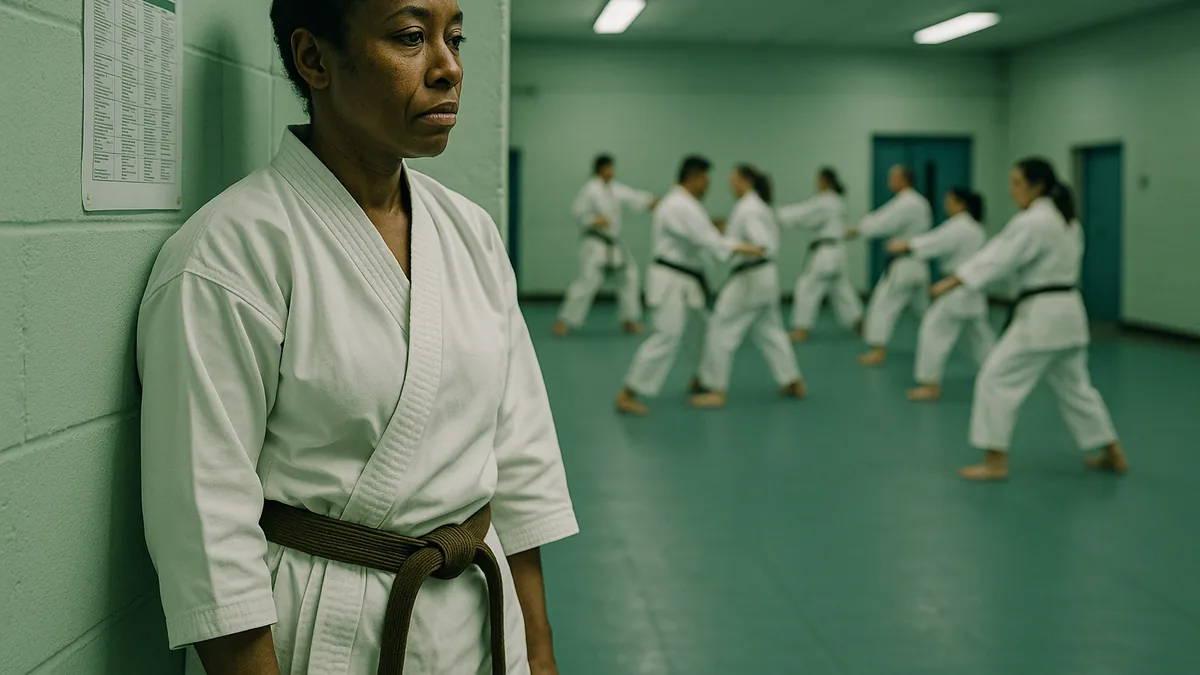
There’s a particular type of training partner I’ve encountered at almost every dojo I’ve trained in. You probably know the one. They’re technically capable, sometimes genuinely skilled, but something about training with them feels off. You leave the session feeling drained rather than energised. You find yourself hoping they’ll be paired with someone else. And after a while, you notice that the better students quietly start avoiding them.
The problem is almost never their karate. It’s their ego.
What Ego Actually Looks Like on the Dojo Floor
I want to be specific here, because ego in training doesn’t always look like arrogance. Sometimes it does - the senior grade who corrects juniors mid-drill without being asked, the person who visibly sulks after losing a point in sparring, the one who cranks up the pressure in partner work because they can’t stand the idea of a lower grade landing a clean technique on them.
But I’ve noticed the subtler versions are just as damaging. The student who only trains hard when the instructor is watching. The one who dismisses feedback by immediately explaining why they did it that way. The person who treats every sparring session as a personal audition, performing for the room rather than actually engaging with their partner.
What connects all of these is the same thing underneath: training is being used to confirm a self-image rather than to improve. And that’s when ego stops being a minor personality quirk and starts actively poisoning the environment for everyone else.
Why This Matters More Than You Might Think
I’ve trained in clubs where the atmosphere was genuinely joyful - where senior grades would happily get thrown by juniors and laugh about it, where everyone pushed each other hard but nobody felt unsafe or undermined. And I’ve trained in clubs where the hierarchy was weaponised, where getting something right felt like surviving a gauntlet rather than learning.
The difference wasn’t the syllabus. It wasn’t the instructor’s technical level. It was the culture around ego.
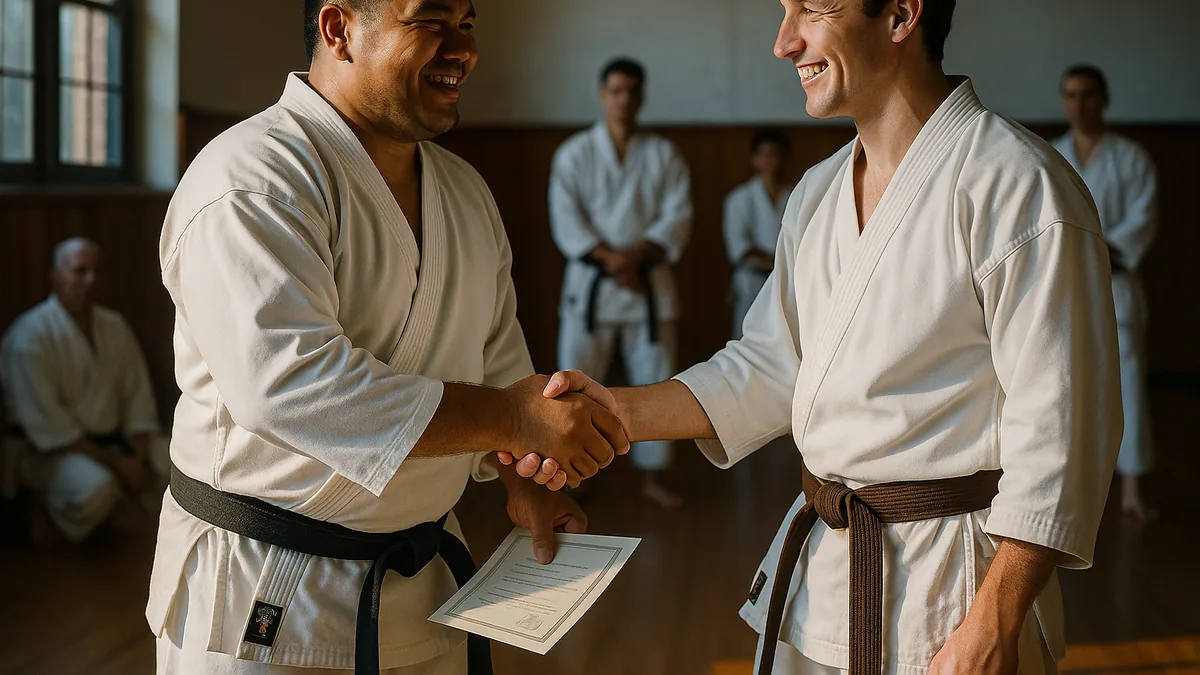
The clubs that felt like the best training environments shared something: the senior students had figured out that their value wasn’t diminished by someone else doing well. That’s not a soft, feel-good observation - it’s a practical one. When people feel safe to make mistakes, they try harder things. They push further. The whole room improves faster.
If you’re thinking about what makes a good club environment in the first place, it’s worth reading how to choose a karate club - because the ego culture of a dojo is one of the most important things to assess before you commit.
The Mistake I See Most Often in Intermediate Grades
The biggest ego problems I’ve witnessed don’t come from beginners. Beginners are usually too busy surviving to have ego about their karate. The danger zone is somewhere around brown belt - when you know enough to feel competent, but not enough to know how much you’re still missing.
I went through this myself. I remember a period where I was genuinely convinced I had sparring figured out. I’d been training for about six years, I was landing combinations cleanly, and I started getting impatient with drills that felt too basic. My instructor at the time noticed it before I did. He didn’t say much - just started pairing me with people who dismantled everything I thought I knew. An older student with thirty years of experience who barely seemed to move but was never where I aimed. A smaller, younger student who was faster than anyone I’d trained with.
It was humbling in the best possible way. What I tell students now when I see that same impatience creeping in is this: the moment you think you’ve got it, you’ve stopped looking. And the moment you stop looking, you stop improving.
Humility Isn’t Passivity
One thing I want to push back on is the idea that humility means rolling over. I’ve seen this misunderstood badly, usually by people who are new to the idea that ego might be a problem. They overcorrect. They become apologetic, hesitant, reluctant to push hard in sparring because they don’t want to seem aggressive or arrogant.
That’s not humility. That’s a different kind of ego problem - the performance of humility for social approval.
Real humility in training looks like: hitting hard when you’re supposed to hit hard, holding nothing back in your own training, and then being genuinely curious when something doesn’t work rather than defensive. It feels different from the inside too. When you’re training without ego, there’s a lightness to it. You’ll feel less tension in your shoulders, less of that tight, braced quality that comes from needing to prove something. Ironically, your technique usually improves when you stop trying to look good doing it.
This connects to something broader about the mental benefits of karate training - the psychological shift that happens when you stop performing and start actually training is significant, and it tends to ripple into other areas of life too.
Competing With Yourself Is Not a Cliché
I know “focus on your own journey” sounds like a poster on a gym wall. But I’ve seen what happens when people actually apply it, and the results are not subtle.
I’ve noticed that the practitioners who improve most consistently over years are almost never the ones obsessed with where they rank relative to others. They’re the ones who remember what they were doing six months ago and can feel the difference now. They’re the ones who get genuinely interested in a technique that’s giving them trouble rather than avoiding it because it exposes a weakness.
The comparison trap is particularly vicious in karate because the grading system makes it so visible. You can see exactly where everyone sits in the hierarchy. And for some people, every session becomes about defending or advancing that position rather than actually training. I’ve watched people spend years in that loop and barely improve, while students who joined after them quietly overtake them.
If you’re struggling with motivation and finding yourself measuring progress against other people rather than against your own previous self, it’s worth reading how to stay motivated in karate when progress feels invisible - because the ego comparison trap and the motivation problem are usually the same problem wearing different clothes.
What Senior Grades Owe the Room
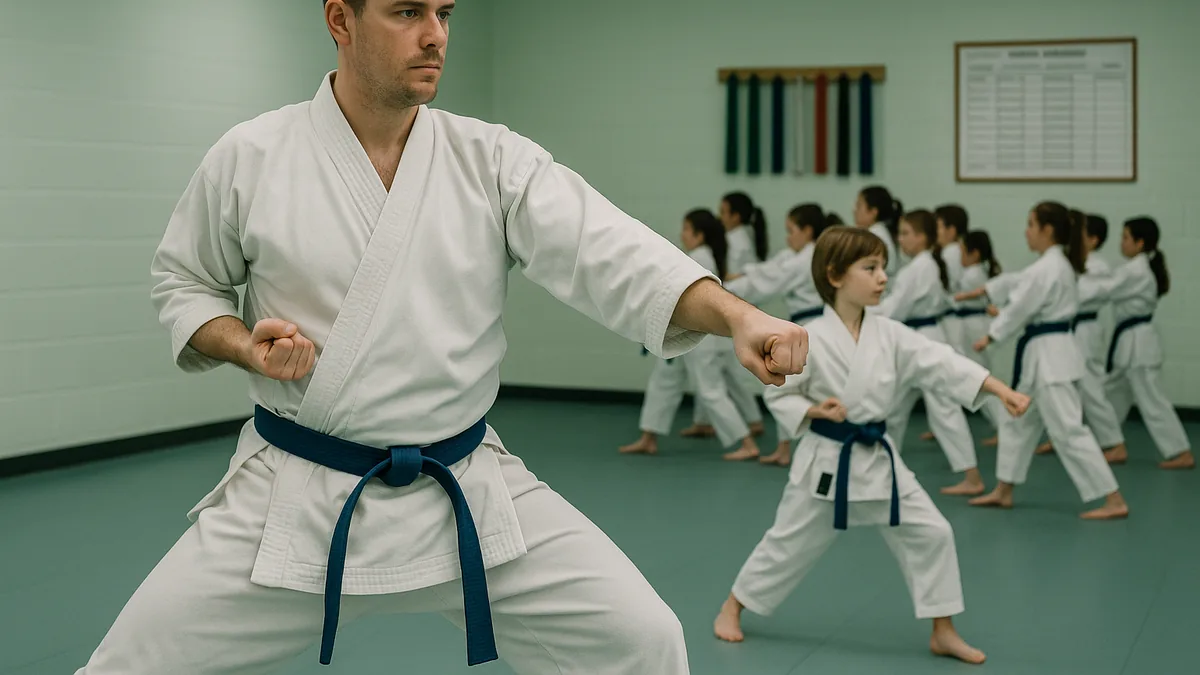
I think senior grades carry a specific responsibility here that doesn’t get talked about enough. When you’ve been training for a long time, your attitude sets the tone whether you intend it to or not. Juniors watch how you handle corrections, how you behave when something doesn’t go your way, how you treat people who are less skilled than you.
The correction that actually works - when I’ve seen ego in a senior student start to damage the club - isn’t a lecture about humility. It’s modelling. A senior grade who takes feedback gracefully, who laughs when they get caught out, who works with the same focus on a white belt drill as on advanced kata, does more to shape the culture of a dojo than any speech about respect.
I’ve also seen senior grades who trained well into their forties and beyond become some of the most grounded, ego-free practitioners in the room - partly because time and experience has a way of filing the edges off, and partly because training karate after 40 tends to shift your relationship with what you’re trying to prove. The body stops letting you perform, and you start actually training.
Community Perspective
This is genuinely one of the topics where I’ve heard very different views depending on the dojo culture and the style.
In some traditional clubs, the hierarchy is treated as almost sacred - seniors are deferred to, juniors don’t question, and the structure is seen as the thing that keeps ego in check. The argument is that if everyone knows their place, there’s less jostling for position. I understand the logic, and I’ve seen it work reasonably well in clubs with genuinely humble senior grades.
But I’ve also seen that same structure become a vehicle for ego rather than a check on it. When the hierarchy protects seniority rather than rewarding genuine development, it can give ego a formal structure to hide behind.
Other clubs, particularly those with a more modern or sport-focused approach, are more openly egalitarian - rank matters less in the moment, and a junior who can out-perform a senior is celebrated rather than managed. That has its own problems: it can tip into a pure results culture where the older, slower, still-technically-excellent practitioner gets written off.
My honest view is that neither extreme gets it right. What works is a culture where rank earns respect but doesn’t grant immunity from feedback - and where everyone, at every level, is visibly still learning.
Key Takeaways
- Notice what you’re training for in the moment. If you’re trying to look good rather than improve, you’ve let ego into the session. The correction is simple: pick one thing you want to understand better and focus on that instead.
- Take the corrections that sting. The feedback that makes you want to explain yourself is usually the feedback you most need to sit with. Let it land before you respond.
- Your training partners are not your competition. The person you’re working with in partner drills is giving you something. Treat them accordingly, regardless of their grade.
- Model what you want the room to feel like. If you’re a senior grade, your behaviour is already shaping the culture. That’s not pressure - it’s just true.
- Use grading and comparison as data, not as verdict. Knowing where you are relative to others is useful information. Letting it determine your worth in the room is where it becomes a problem.
- When progress feels slow, ego gets louder. This is the pattern I’ve seen most consistently. If you notice yourself becoming more defensive or dismissive in training, it’s usually a sign that something isn’t working - and the answer is curiosity, not protection.
The people who are genuinely good to train with - the ones you look forward to being paired with, the ones who make the whole session better - are almost never the most technically gifted in the room. They’re the ones who’ve figured out that training is not about them in the way ego wants it to be. That shift is available to everyone, and it doesn’t require you to be a better karateka first. It just requires you to decide what you’re actually there for.
The weekly digest
New karate articles, once a week
One email every week with everything new on Karate Lifestyle. No spam; unsubscribe in one click.
We'll email you to confirm. See our privacy policy.