Who Was Chojun Miyagi? The Founder of Goju-Ryu and How His Trips to China Shaped the Style
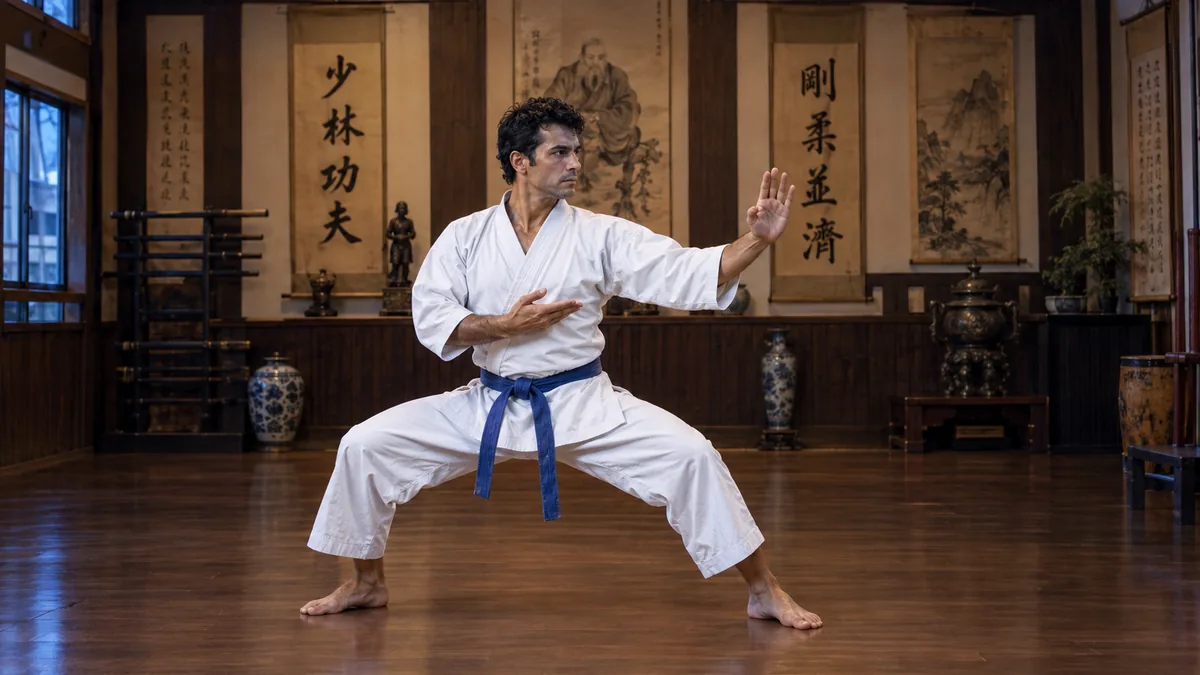
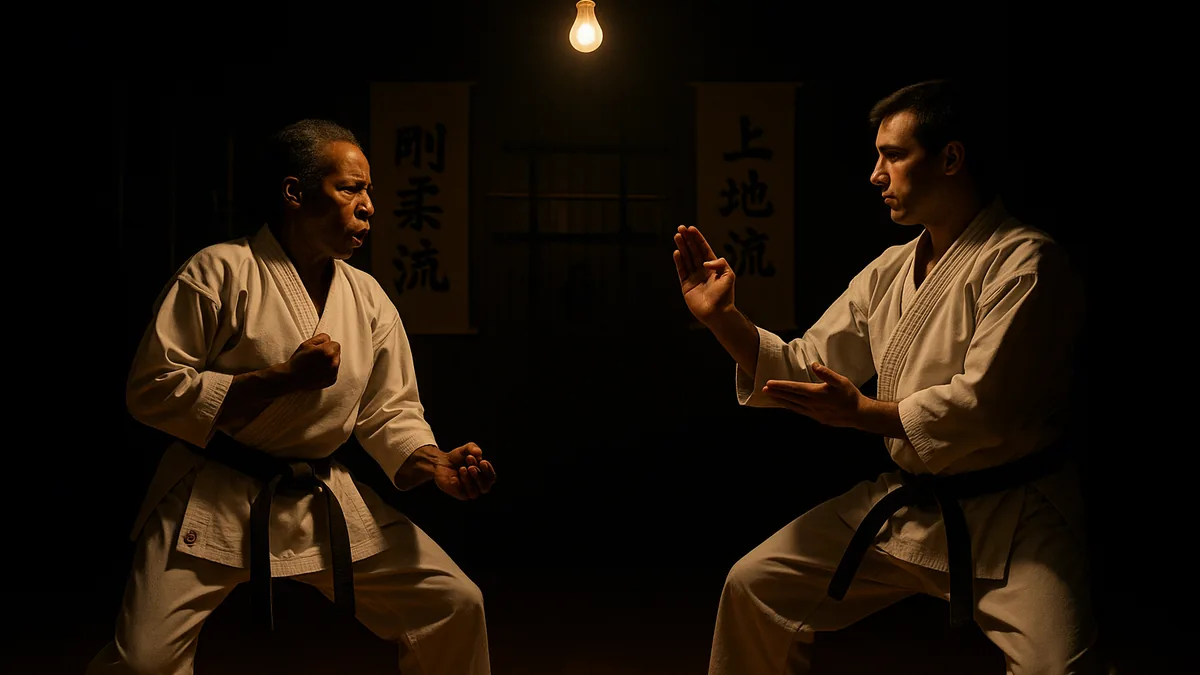
Most Goju-Ryu practitioners can tell you that the style combines hard and soft techniques. Fewer can tell you why - and that gap matters more than you might expect. When you understand what Chojun Miyagi was actually trying to solve, and what he found in China that helped him solve it, the kata start to make a different kind of sense. The breathing is no longer a ritual. The circular blocks are no longer just a stylistic preference. They are answers to specific questions Miyagi spent decades asking.
The Man Before the Style
Chojun Miyagi was born in the district of Higashi-machi, Naha, on 25 April 1888, second son of a local aristocratic family of wealthy businessmen dedicated to the import and export trade. That background gave him something most martial artists of his era did not have: the means and the freedom to travel seriously, to study without financial pressure, and to dedicate himself fully to the work.
His training in karate began at the age of eleven under Ryuko Aragaki Sensei, who practised and taught Tomari-te. When he was fourteen, his teacher introduced him to Higaonna Kanryo Sensei. He began training under Kanryo Higaonna at the age of 14, in 1902. Higaonna was the dominant figure in Naha-te at the time - a practitioner who had himself spent years in Fuzhou, China, studying under Ryu Ryu Ko (also written as Liu Liu Ko or Ryū Ryū Ko). The exact identity of Ryu Ryu Ko remains debated; he is sometimes identified as Xie Zhongxiang, though that identification is disputed. What is well-documented is that Higaonna returned to Okinawa with a system that was markedly different from the Shuri-te tradition developing further north - heavier, more rooted, with circular hand techniques and a strong emphasis on close-range power. His style, later known as Naha-te, was characterised by powerful stances, rooted footwork, circular techniques, and breathing control.
Chojun Miyagi trained with Kanryo Sensei from 1902 until October 1916, when Kanryo Sensei passed away. (Some sources give 1915 as the year of death; the English Goju-Ryu Karate Association and the IOGKF both record 1916.) By that point, Miyagi was already a serious practitioner with more than a decade of intensive training. But he was also aware, from his own study and from what he had inherited, that gaps existed in what he had received. The system was powerful. It was not yet complete in the way Miyagi wanted it to be.
What He Went Looking For in China
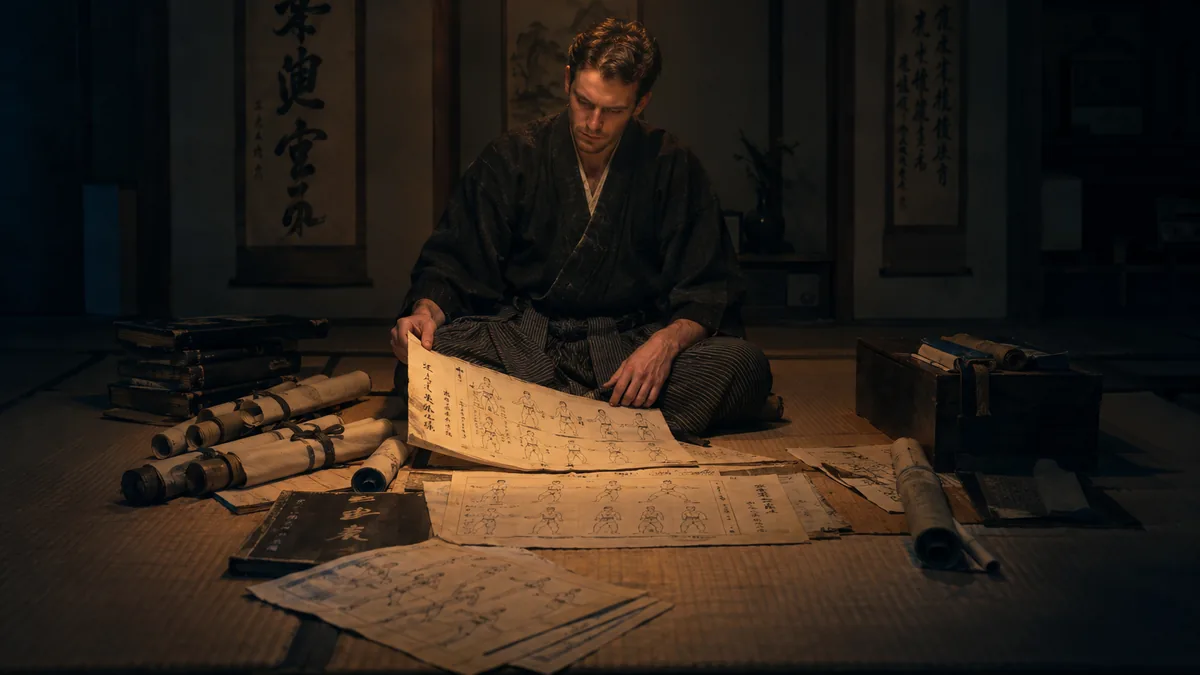
Miyagi made multiple trips to Fuzhou, China. He spent approximately two months in Fuzhou from April to June 1915, deeply immersing himself in the local martial arts culture.1 After returning from Fuzhou, his master, Higaonna Kanryo, passed away, just a few months later.1 The 1915 trip was therefore not a trip taken after Higaonna’s death, as is sometimes stated, but one that preceded it - at Higaonna’s encouragement, to trace the source material.
Following his master’s death, Miyagi returned to Fuzhou in 1917, this time accompanied by Go Kenki, a Chinese tea merchant.1 He returned to China for a further trip in 1936 with the purpose of expanding his knowledge of the martial arts. Miyagi reportedly made more than ten trips to China during his lifetime. The 1915 and 1917 trips are the most significant for understanding how the style developed: the 1915 visit confirmed that Ryu Ryu Ko had died, while the 1917 visit yielded direct research into local fighting methods that fed into the kata Miyagi later created.
Fuzhou was the capital of Fujian Province, and the martial arts traditions there - particularly the Fujian White Crane system - had a substantial influence on what became Goju-Ryu. White Crane is associated with close-quarter combat and is most recognisable by the way the fighter imitates a bird’s pecking or flapping of wings. Its training methods include a sophisticated approach to breath: the idea that breath is not just incidental to movement but is itself a structural element of technique. The unusual breathing method employed in White Crane involves breathing in sharply through the nose, with the glottis partially occluded, then breathing out from the mouth. Miyagi brought that principle back to Okinawa with real intention.
The correction that most Goju-Ryu beginners need to hear is this: ibuki breathing is not a warm-up exercise. It is not a dramatic flourish. It is a training method for developing the kind of full-body tension and release that makes close-range striking effective. When you do it correctly - with the tension building through the exhale and the body genuinely contracting around the breath - you will feel it in your core, your lats, your arms. It feels like bracing for an impact and generating one simultaneously. Most beginners treat it as a breathing pattern. Senior practitioners treat it as a strength and coordination drill.
Naming the Style
The name Goju-Ryu came about more by accident than by design. In 1930, Miyagi’s top disciple at the time, Jin’an Shinzato, attended a major Japanese martial arts demonstration on behalf of his master. Here, he was asked for the name of the style he practised; however, Miyagi had not yet named it, as schools and styles did not exist in Okinawan karate in the way they did in Japan.2 Not wanting to be embarrassed, Shinzato improvised the name hanko-ryu, meaning “half-hard style”. On his return to Okinawa, Shinzato discussed the incident with Miyagi, who decided on the name Goju-ryu.2
The inspiration for this name comes from the “Eight Important Precepts of Kempo” (拳法之大要八句), a poem from the Bubishi, a comprehensive ancient Chinese martial arts manual. The line states: “Ho wa goju wo tondo su”, meaning “the way of inhaling and exhaling is both hard and soft”.2 From that line, Miyagi took the name: Go (hard) and Ju (soft). Ryu means school or style.
This is not just a nice story. The name is a technical description. Hard techniques - direct, linear, powerful - and soft techniques - circular, yielding, redirecting - are not opposites that happen to coexist in Goju-Ryu. They are a single integrated principle. The style is built on the idea that you move between them fluidly, that hardness without softness is brittle and softness without hardness has no effect. Understanding this changes how you approach every kata in the syllabus.
The Kata and What They Contain
Miyagi created several kata himself, which is significant - most karate founders transmitted kata they had inherited, with modifications. Miyagi developed three kata that were added to the curriculum: Gekisai Dai Ichi, Gekisai Dai Ni, and Tensho.
Tensho is the one worth understanding deeply if you want to understand what Miyagi was doing. Miyagi revised and further developed Sanchin - the hard aspect of Goju - and created Tensho as the soft aspect. That framing is accurate but undersells Tensho. The hand movements in Tensho were adapted from the Rokkishu of White Crane. When you perform them correctly, there should be a feeling of continuous connection through the arm, from the shoulder through the elbow to the fingertips, with the tension never fully releasing but never locking either. Most beginners perform Tensho with either floppy arms or rigid ones. Neither is right. The correct sensation is something like a rope under tension - flexible but not slack.
Sanchin, by contrast, is about building structural integrity under pressure. Sanchin kata is unique in that it is often practised with a breathing pattern called ibuki, where the practitioner takes short, forceful breaths while performing the movements. Goju-ryu uses the Sanchin routine derived from Fujian White Crane, best known by the Japanese pronunciation of its Chinese name. Instructors often check Sanchin by pressing and striking lightly on the practitioner’s body during performance. If the structure collapses, the breathing is wrong. The body should feel like a single connected unit, not a collection of parts moving independently.
What Miyagi Was Solving
Here is the position we would take: Miyagi was not trying to preserve a tradition for its own sake. He was trying to build a complete fighting system from the best available material. The China trips were research trips. He went to Fuzhou to find what worked, to understand the principles behind what Higaonna had taught him, and to fill gaps where he found them.
This matters for how you train. Goju-Ryu is not a museum piece. Miyagi kept modifying and developing the system until his death in 1953. In 1940, he created the kata Gekisai Dai Ichi and Gekisai Dai Ni with the purpose of popularising karate and improving the physical education of young people. That kind of pragmatism is worth respecting when you approach the style.
Common Misconceptions That Affect Training
The biggest misconception about Goju-Ryu’s Chinese influence is that it makes the style softer or more flowing than other Okinawan systems. The opposite is closer to the truth. The Chinese influence brought the breathing methods, the circular hand techniques, and the close-range structure - but it also brought an intense emphasis on body conditioning that is, if anything, harder than what you find in Shotokan or Wado-Ryu.
A common mistake among practitioners who come to Goju-Ryu from other styles is treating the circular blocks as evasive or passive. They are not. In Goju-Ryu, a circular block is typically also a trap or a redirect that sets up an immediate counter. The correction that usually helps is to think of the blocking arm as making contact with intent - not absorbing the attack but meeting it and redirecting it while your body is already moving to close distance.
The other persistent mistake is separating the breathing from the technique, treating ibuki as something you do at the start of training and then set aside. Miyagi’s entire synthesis was built on the idea that breath, structure, and movement are inseparable. The main characteristic of Goju-ryu is the respiration method accompanied by vocal exclamations, emphasising inhaling and exhaling and bringing force in and sending force out. When that connection is lost, Goju-Ryu starts to look like a generic karate style with unusual kata. When it is present, the style has a physical coherence that is genuinely distinct.
Community Perspective
One question that comes up regularly in Goju-Ryu circles - and generates real disagreement - is how much weight to give the Chinese lineage in modern training. Some practitioners and organisations place enormous emphasis on the Fujian White Crane connection, incorporating Chinese training methods and even visiting Fujian as part of their development. Others take the view that Miyagi’s synthesis is complete in itself and that looking back to Chinese sources adds historical interest but not necessarily training value.
Both positions have merit. What tends to shift with experience is the recognition that understanding where something came from often clarifies what it is for. Knowing that Tensho’s hand movements come from a tradition that used them as both striking and trapping tools changes how you practise them. That is not about being a historian. It is about having better information to work with.
There is also ongoing discussion about the relationship between Goju-Ryu and Uechi-Ryu, the other major Okinawan style with strong Fujian roots. The modern styles of Naha-te include Uechi-Ryu and Goju-Ryu. Uechi-Ryu, originally called Pangai-noon meaning “half hard and half soft”, was a Southern Chinese white crane tradition. They share some structural similarities - the rooted stances, the emphasis on close range, the use of open-hand techniques - but they train very differently and draw from different parts of the Fujian tradition. If that comparison interests you, we have covered it in detail in Goju-Ryu vs Uechi-Ryu: Two Naha-te Styles That Look Similar and Train Very Differently.
For context on how Miyagi’s contemporaries took different paths from shared roots, Funakoshi vs Mabuni: How Two Students of the Same Masters Built Completely Different Styles is worth reading alongside this.
Why This History Is Actually Useful
The honest answer to “does knowing this make you better at karate?” is: it depends on what you do with it.
Knowing that Miyagi went to Fuzhou specifically to understand breathing-based power does not automatically improve your ibuki. But it does tell you that the breathing was not added as a cultural decoration - it was the point of the trip. That should change how seriously you take it in training.
Knowing that the name Goju-Ryu came from a Chinese text about the interplay of hard and soft should change how you think about the kata. When you hit a section of Seipai or Kururunfa that feels contradictory - a hard linear technique followed immediately by a soft circular one - that is not a transition to get through. That is the principle being demonstrated.
If you have been away from training and are returning to Goju-Ryu after a gap, the history can also help you re-engage with the material at a deeper level than when you left. Returning to Karate After a Long Break: What to Expect covers the practical side of that process, but the conceptual re-engagement often matters just as much.
Key Takeaways
- Miyagi’s trips to Fuzhou were targeted research into the breathing and structural principles that became the foundation of Goju-Ryu. The 1915 trip preceded Higaonna’s death; the 1917 trip followed it. Treat ibuki accordingly.
- The name Goju-Ryu is a technical description, not a brand. Hard and soft are not two categories of technique; they are two ends of a single integrated principle. Every kata in the syllabus is demonstrating that principle.
- Tensho and Sanchin are a pair. If you only train one, you are training half the system. The correct physical sensation in Tensho is continuous tension with fluidity - not relaxed, not rigid.
- Circular techniques in Goju-Ryu are not passive. The correction that makes the biggest difference is treating the blocking arm as making contact with intent, not absorbing the attack.
- Miyagi kept developing the system until 1953. The Gekisai kata were created in 1940. Goju-Ryu was never frozen in amber - and neither should your understanding of it be.
- Understanding the Chinese lineage gives you better information about what the techniques are for. That is a training advantage, not just a historical footnote.
References
Checked by the KarateLifestyle editorial team against official governing body publications (IOGKF, EGKA), Goju-Ryu organisational histories, and martial arts reference sources in October 2026. The death year of Kanryo Higaonna (1915 or 1916) and the exact chronology of Miyagi's China trips remain genuinely contested across authoritative sources.
- Miyagi Chojun: Journey to Fuzhou - Budojapan.com. Budojapan, January 2025 - documents Miyagi's 1915 Fuzhou trip chronology
- Goju-Ryu Karate - Yushikan. Yushikan Goju-Ryu history, including the naming event and Bubishi source
The weekly digest
New karate articles, once a week
One email every week with everything new on Karate Lifestyle. No spam; unsubscribe in one click.
We'll email you to confirm. See our privacy policy.