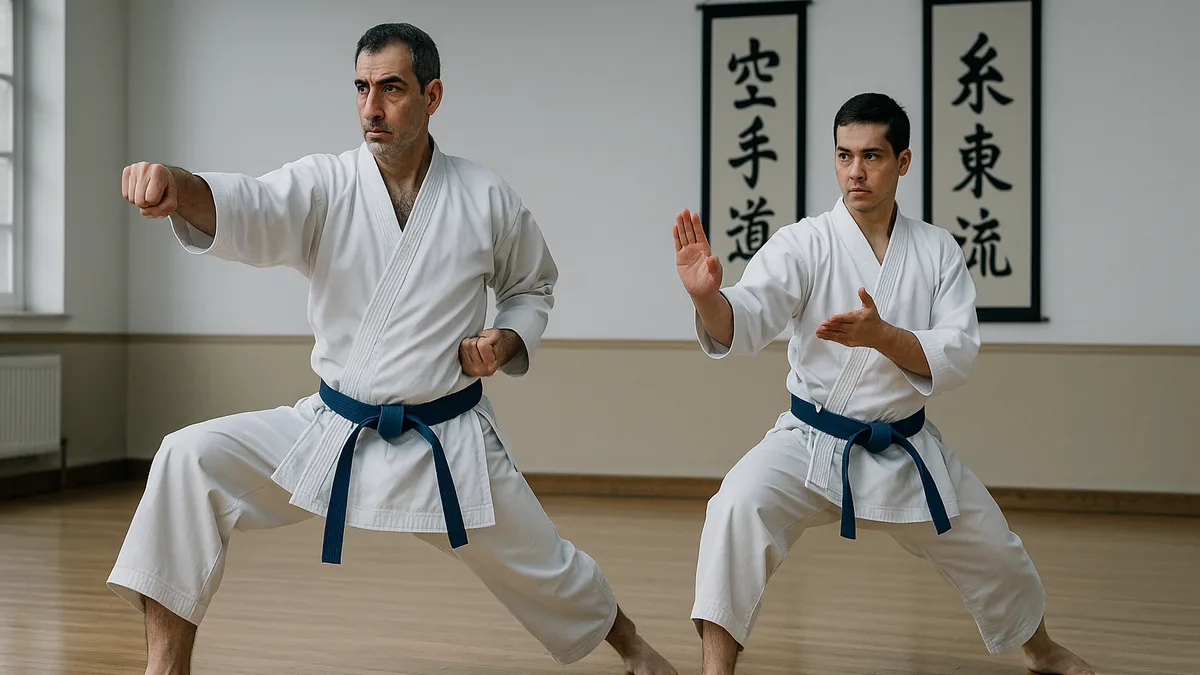
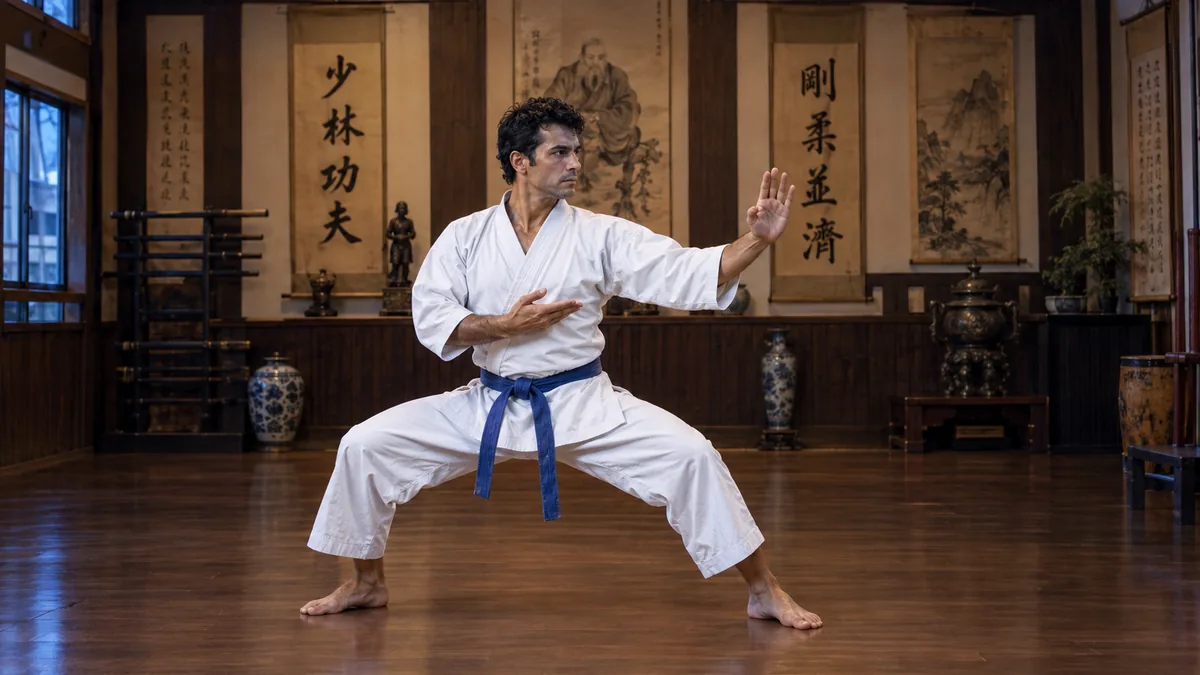
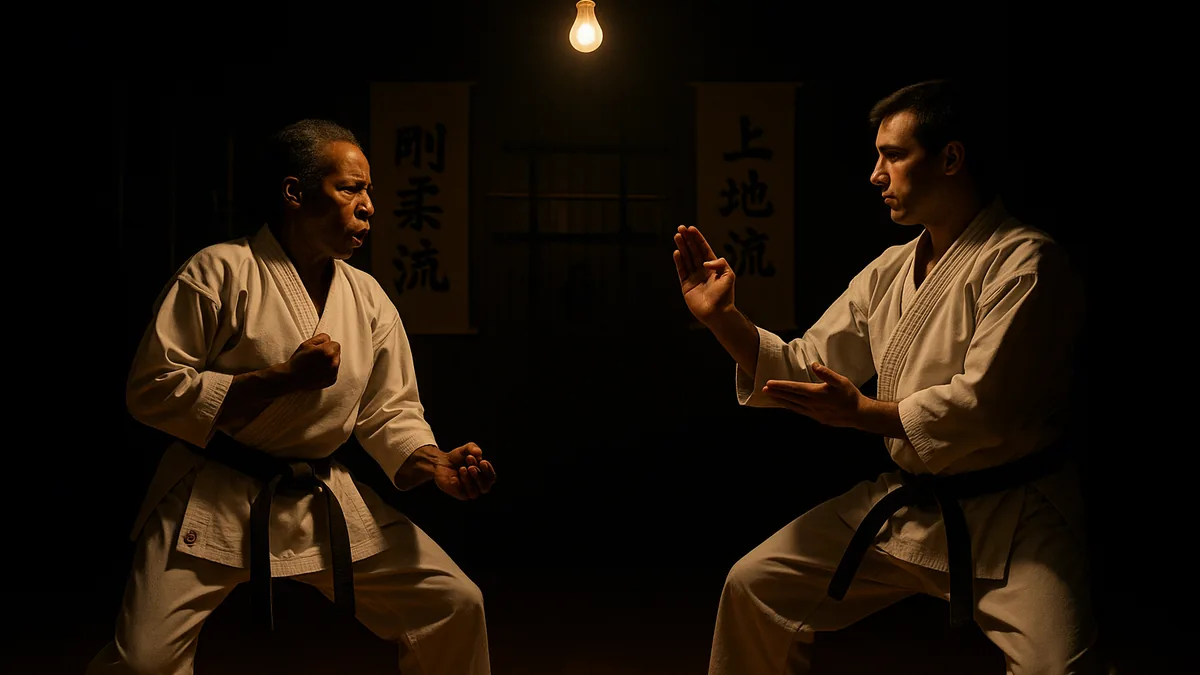
Who Was Kenwa Mabuni? The Founder of Shitō-ryū and Why He Collected More Kata Than Any Other Style
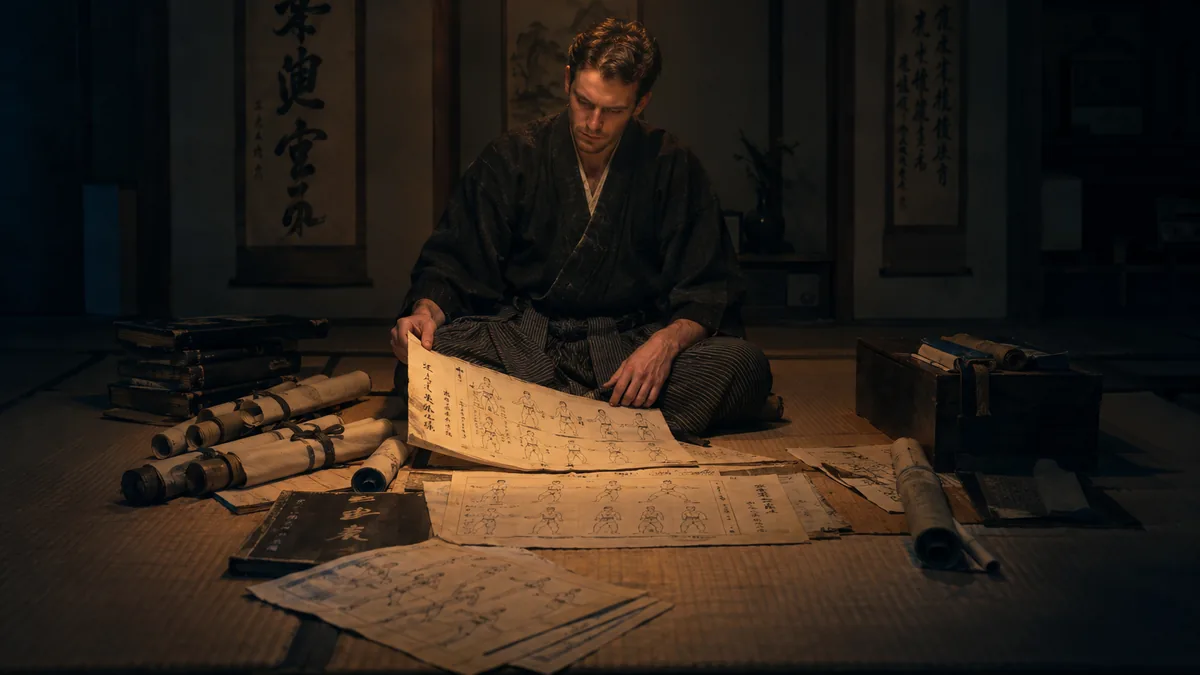
Most karate styles have a founding myth that goes something like this: one exceptional teacher synthesises everything they know, passes it to loyal students, and a style is born. Shito-ryu doesn’t fit that template. Kenwa Mabuni didn’t simplify - he accumulated. Where Gichin Funakoshi deliberately narrowed what he taught to make karate accessible to mainland Japan, Mabuni went in the opposite direction. He collected kata the way a serious scholar collects primary sources: obsessively, from multiple lineages, because he believed that losing even one form meant losing something irreplaceable.
That instinct shaped a style with the largest formal kata syllabus in mainstream karate. Understanding why Mabuni built it that way changes how you think about kata in general - and probably changes how seriously you take the ones you already know.
The Man Behind the Style
Kenwa Mabuni was born on 14 November 1889 in Shuri, Okinawa, and was a 17th-generation descendant of Uni Ufugusuku Kenyu, a celebrated Okinawan warrior known as “Oni” Ufugushuku.1, 2 The Mabuni family belonged to the Ryukyuan warrior-noble class - the Okinawan equivalent of an aristocratic martial lineage rather than the Japanese mainland samurai tradition - and Kenwa grew up immersed in stories of that ancestry.1 He was a frail child, and his family sought to strengthen him by beginning his martial arts training young; at the age of thirteen in 1902, he commenced instruction in Shuri-te under Anko Itosu.1
Itosu was already in his seventies at this point and is best known today for developing the Pinan kata series. The five Pinan kata - later renamed Heian in Shotokan - are probably the most widely practised kata in karate today, and it is commonly understood that Itosu developed them around 1907 for inclusion in the karate curriculum of the Okinawan school system. His technical depth, however, went far beyond those introductory forms.
What separated Mabuni from most of Itosu’s students was what he did next. Rather than training under one master and going deep within a single lineage, he was introduced by his close friend Chojun Miyagi to Kanryo Higaonna, the foremost master of the Naha-te tradition.1, 2 In 1908, Mabuni’s close friend Chojun Miyagi introduced him to Higaonna Kanryo.1 Kanryo Higaonna, born in 1853 in Naha, Okinawa, was one of the most important figures in Okinawan martial arts history. Known as the foremost master of Naha-te, he played a central role in shaping the techniques and training methods that would later evolve into Goju-ryu Karate under his student Chojun Miyagi. You can read more about Miyagi’s own remarkable journey in our guide to who Chojun Miyagi was and how his trips to China shaped Goju-ryu.
Training under both Itosu and Higaonna was unusual. These were not complementary schools in the way a modern cross-trainer might attend two dojos. While both Itosu and Higaonna taught a “hard-soft” style of Okinawan “Te”, their methods and emphases were quite distinct: the Itosu syllabus included straight and powerful techniques as exemplified in the Naihanchi and Bassai kata; the Higaonna syllabus stressed circular motion and shorter fighting methods as seen in the kata Seipai and Kururunfa. The two systems felt different in the body, trained different physical qualities, and came from different technical philosophies. Mabuni trained in both for years.1, 2
That dual foundation is not a footnote in Shito-ryu history. It is the entire point of the style.
Why the Kata Collection Matters
By 1929, Mabuni had moved to Osaka on the mainland, to become a full-time karate instructor of a style he originally called Hanko-ryu, or “half-hard style”.2 In March 1934, Mabuni established his dojo, the Yoshukan, in Osaka, and formally named the style Shito-ryu after both his teachers, Itosu and Higaonna. In March 1939, he registered Shito-ryu with the Dai Nippon Butoku Kai.
The name “Shito” is the combination of “shi” and “to”, the two first kanji characters of the names of Itosu and Higaonna. The style is literally named after both teachers.
The kata syllabus Mabuni assembled runs to somewhere between 40 and 60 forms depending on the branch - the largest of any mainstream style. Shotokan karate has 26 official kata; the Japan Karate Association codified this 26-kata curriculum from the 1950s onward under Chief Instructor Masatoshi Nakayama. Goju-ryu has a core curriculum of twelve classical kata that form the basis of most traditional Goju-ryu organisations today. Wado-ryu has only 9 official kata according to its founder, Hironori Otsuka, as stated in his book “Wado Ryu Karate”: these are Pinan Nidan, Pinan Shodan, Pinan Sandan, Pinan Yodan, Pinan Godan, Kushanku, Naihanchi, Seishan and Chinto. Shito-ryu’s depth is not an accident or an indulgence - it reflects a specific philosophy about what kata are for.
Mabuni was explicit on this point. He believed kata were not training exercises in the modern sense. They were technical libraries - encoded records of fighting knowledge that could not be safely or fully transmitted through verbal instruction alone. Each kata represented a body of knowledge about a particular set of problems: specific distances, specific attack types, specific defensive strategies. Losing a kata meant losing that knowledge permanently.
This is worth sitting with, because it runs counter to how many practitioners are introduced to kata. The common mistake is treating kata as a syllabus requirement - something you learn to pass a grading and then maintain as a kind of moving meditation. That misses what Mabuni was doing entirely. He was archiving fighting systems, not choreographing performances. The full Shito-ryu kata list shows just how deliberately the syllabus is structured across both its Shuri-te and Naha-te branches.
Two Lineages, One Style - What That Actually Means in Practice
Here is where the historical context becomes directly relevant to training. Shito-ryu practitioners work with kata from genuinely different technical traditions. Shito-ryu is a combination style which attempts to unite the diverse roots of karate. On one hand, it has the physical strength and long powerful stances of Shuri-te derived styles; on the other, it has the circular and eight-directional movements, breathing power, and hard and soft characteristics of Naha-te styles.
A kata like Sanchin - inherited from the Naha-te side through Higaonna - demands sustained muscular tension, controlled breathing, and rooted stability. Sanchin involves continuous muscular tension throughout the body, as well as hard “ibuki” breathing. A kata like Bassai Dai - from the Shuri-te side through Itosu - demands explosive transitions, rapid directional changes, and sharp kime.
These are not just different rhythms. They train different physical qualities and develop different sensations of power. Sanchin done correctly feels like pressure building through the whole body simultaneously - the tension is not localised in the arms or legs but distributed. Bassai Dai done correctly feels like a series of controlled collisions, each technique arriving with a full-body snap. Trying to apply the physical approach of one to the other is a common error, and it usually produces kata that look technically adequate but feel hollow.
The correction that makes the biggest difference here is understanding which tradition a kata comes from before you drill it. Most beginners learn Shito-ryu kata as a unified syllabus and miss the fact that they are working from two distinct technical vocabularies. Many instructors cue this directly - the cue for Sanchin is often about maintaining tension through the movement, while the cue for a Shuri-te kata is about releasing into the technique. Both are right. They are just right for different things.
The Misconception About Quantity
A criticism sometimes levelled at Shito-ryu is that the large kata count comes at the expense of depth. The argument goes: if you are learning 40 or more kata, you cannot know any of them as well as a Goju-ryu practitioner who spends the same time on 12.
This is a reasonable concern in practice, and it is worth being honest about it. The criticism has some truth when applied to how Shito-ryu is sometimes taught - particularly in competition-focused dojos where kata are learned quickly for tournament purposes and bunkai (application) is treated as secondary. If you are learning Niseishi to compete with it next month, you are probably not spending much time with its applications against grabs and close-range attacks.
But the criticism misunderstands what Mabuni was building. He was not designing a curriculum for individual practitioners to master every kata equally. He was preserving a complete technical record. Mabuni is known for his encyclopaedic knowledge of kata, and is reputed to have known in excess of ninety kata, assimilating new ones with exceptional speed.1, 2 The expectation was always that senior practitioners would specialise within the syllabus while the style as a whole retained the full range. That is a different model from Goju-ryu or Shotokan, and it requires a different approach to teaching lineage.
The comparison between Mabuni and Funakoshi is particularly instructive here. Kenwa Mabuni and Gichin Funakoshi, the founder of Shotokan, were contemporaries, and both had studied under Anko Itosu and were deeply influenced by Shuri-te. Both moved to mainland Japan. Both founded styles that became globally influential. But their philosophies about what to keep and what to simplify diverged sharply. If that comparison interests you, we have covered it in depth in Funakoshi vs Mabuni: how two students of the same masters built completely different styles.
What Mabuni Understood That Many Practitioners Miss
The deeper insight in Mabuni’s approach is that kata are not interchangeable. This sounds obvious, but the training implication is significant. If every kata encodes a specific technical problem and its solutions, then the question to ask of any kata is not “what does this look like?” but “what situation is this for, and why does this sequence solve it?”
Bunkai practice - working through kata applications with a partner - is where this becomes concrete. A sequence that looks like a block followed by a punch often reveals itself, under close examination, as a joint lock followed by a throw, or a release from a grab followed by a strike to a specific target. The kata is not wrong when interpreted this way; the surface reading is just incomplete.
Mabuni was legendary for his encyclopaedic knowledge of kata and their bunkai applications. By the 1920s, he was regarded as the foremost authority on Okinawan kata and their history, and was much sought after as a teacher by his contemporaries.2 The kata he collected were not decorative - they were technical arguments, and understanding them meant understanding the argument, not just the words.
This is also why the Naha-te and Shuri-te kata in the Shito-ryu syllabus feel so different from each other even at the surface level. They are not just stylistically varied. They are solving different problems, built on different mechanical principles, and they reward different kinds of study. A practitioner who only trains the Shuri-te side of the syllabus is working with half the technical vocabulary Mabuni assembled. The same is true in reverse.
Community Perspective
There is a genuine disagreement within Shito-ryu communities about how to handle the kata syllabus in modern training. One camp - particularly strong in competition karate - argues that practitioners should identify their best kata early and develop them to a high level rather than spreading attention across the full range. This is pragmatically sensible for tournament performance, and it produces practitioners who can execute a handful of kata exceptionally well.
The other camp holds that Mabuni’s intent was specifically to preserve the full range, and that reducing the syllabus in practice - even informally - undermines the style’s defining characteristic. Perhaps more than any other master in the last century, Mabuni was steeped in the traditions and history of karate-do, yet forward thinking enough to realise that it could spread throughout the world.2 To this day, Shito-ryu recognises the influences of Itosu and Higaonna: the kata syllabus is still often listed in such a way as to show the two lineages. From this perspective, a Shito-ryu dojo that teaches only ten kata is not really teaching Shito-ryu in any meaningful sense.
Both positions have merit, and the tension between them is not going to resolve neatly. What is worth noting is that this debate would not have surprised Mabuni. He watched Funakoshi simplify the kata syllabus for mainland audiences and made a conscious decision not to follow that path. Whether his successors have honoured that decision is a question individual dojos have to answer for themselves.
For practitioners returning to training after a break, the Shito-ryu syllabus can feel overwhelming - particularly if you trained in a style with a smaller kata list. The article on returning to karate after a long break covers how to approach re-entry realistically without trying to rebuild everything at once.
Key Takeaways
- Shito-ryu’s large kata syllabus is not a quirk - it is the core of Mabuni’s philosophy. He believed kata were technical archives, not training exercises, and losing one meant losing knowledge permanently.
- The Naha-te and Shuri-te kata in the syllabus train genuinely different physical qualities. The correction that works is identifying which tradition a kata comes from before drilling it, and applying the appropriate physical approach - sustained tension for Naha-te forms, explosive release for Shuri-te.
- The most common mistake in kata practice is treating forms as syllabus requirements rather than encoded fighting knowledge. Ask what situation each kata addresses and why the sequence solves it - that is where the real study begins.
- Bunkai is not supplementary to kata practice. For Mabuni, it was the point. If you are drilling kata without working through applications, you are reading the cover and skipping the book.
- The criticism that Shito-ryu sacrifices depth for breadth is worth taking seriously - but it applies to how the style is sometimes taught, not to what Mabuni designed. Senior practitioners are expected to specialise within the syllabus, not master every kata equally.
- Understanding Mabuni’s dual lineage under Itosu and Higaonna is not just historical context. It explains why Shito-ryu feels the way it does, and why the style rewards practitioners who engage seriously with both sides of the syllabus rather than gravitating toward whichever tradition suits their natural inclinations.
References
Checked by the KarateLifestyle editorial team against official Shito-ryu organisation records, style association histories (Shitokai, BSKA), a UK Goju-ryu governing body page, and karate history research sources in October 2026. Dating of the Shito-ryu name is genuinely disputed across sources; the most consistent account from official Shitokai records is 1934 for the naming and Yoshukan opening, 1939 for Butokukai registration.
- Kenwa Mabuni - Karate Masters. KataStepByStep, karate history resource, reviewed October 2026
- Shito-Ryu History - Seitokan International. Seitokan Shito-ryu International, primary association source, reviewed October 2026
The weekly digest
New karate articles, once a week
One email every week with everything new on Karate Lifestyle. No spam; unsubscribe in one click.
We'll email you to confirm. See our privacy policy.