Karate Gi Jackets Keep Coming Open During Kumite: Why It Happens and How to Fix It
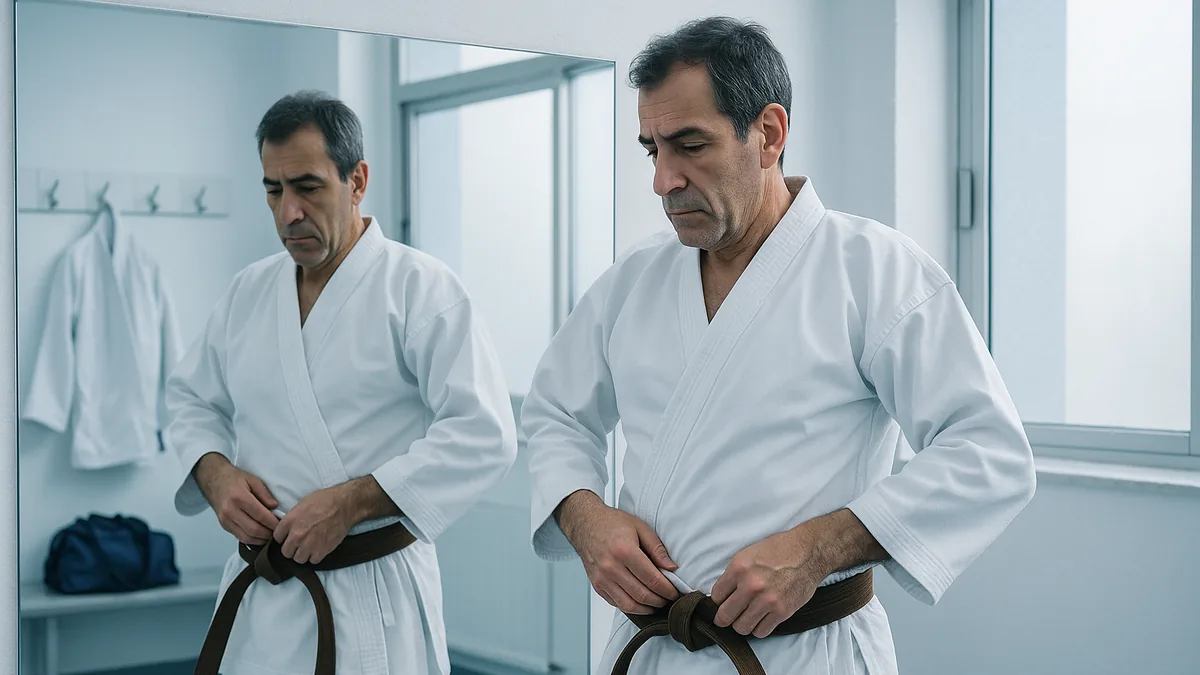
Your gi jacket coming open during kumite is almost always a belt problem, not a gi problem. I know that sounds counterintuitive, but after years of watching students fight with their jackets mid-sparring, the culprit is rarely the gi itself. It’s how the belt is tied, where it sits, and whether the jacket was crossed correctly before the belt went on. Fix those three things and the problem largely disappears.
That said, there’s more to it than that - because gi cut, fabric weight, and how you move all play a role. Let me break down what’s actually happening and what to do about it.
Why Does the Gi Jacket Keep Opening in the First Place?
The gi jacket stays closed through a combination of the belt holding the overlapping panels together and the natural tension created by correct crossing. When the jacket opens during kumite, something in that system has failed.
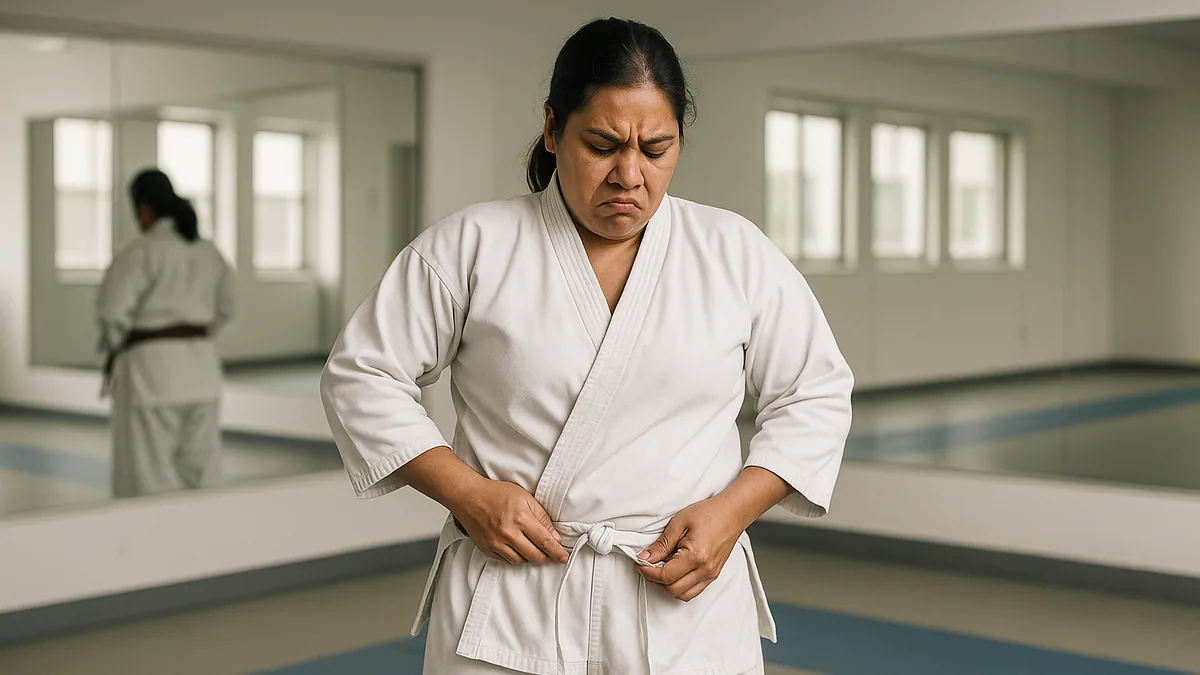
I’ve noticed that most beginners cross their jacket too loosely at the chest before tying the belt. They get the belt on, it looks fine standing still, and then the moment they start moving - rotating for a gyaku-zuki, dropping weight for a gedan block, or clinching briefly in sparring - the panels start to separate. The belt can’t compensate for a poorly crossed jacket. It’s not designed to. The belt holds the bottom of the jacket in place; the crossed panels at the chest are supposed to hold themselves through tension.
The other thing I see constantly is the belt sitting too low. If the belt drops below the natural waist and sits on the hips, it loses its mechanical grip on the jacket panels. You’ll feel this during training - when the belt is in the right position, there’s a mild but consistent pressure across your abdomen that keeps everything stable. When it slips down, that tension disappears and the jacket starts moving independently.
Fabric weight matters too. Lighter gi - the kind common in WKF-style competition training - have less natural stiffness and more give. They move with you, which is the point, but they also have less inherent resistance to opening. Heavier traditional cotton gi tend to stay put more reliably because the fabric itself has structure. If you’re training in a very lightweight gi and fighting at pace, you’re working against the gi’s nature a bit.
Is There a Correct Way to Tie the Belt That Prevents This?
Yes, and most people aren’t doing it. The standard advice is “tie it twice so it doesn’t come undone” - but the more important detail is where and how you position the jacket before the belt goes on.
What I tell students is to pull the jacket down firmly at the back before crossing the panels. Most people focus on the front and forget that if the back panel is riding up, the whole jacket shifts upward during movement and the crossing at the chest loosens. Pull the back hem down, then cross the right panel over the left (for most styles - check your dojo’s preference), making sure the lapel lies flat rather than bunched.
Then tie the belt so the knot sits at your centre line and the belt lies flat across your abdomen - not diagonally, not twisted. A twisted belt loses grip almost immediately. If you’re not sure your belt is flat, run your fingers along it before you step on the mat. It takes five seconds and saves you adjusting mid-sparring.
For the knot itself, I prefer a double-wrap on the first pass for training. It takes slightly longer to tie but the knot sits flatter and holds better through extended movement. Some people swear by specific knot types, but honestly the flat-knot tied correctly at the right height beats any fancy variation tied sloppily.
Does the Gi Cut Make a Difference?
Genuinely, yes - and this is where I’d push you toward doing some research before buying. Not all gi jackets are cut the same, and the difference between a jacket that stays closed and one that fights you all session can come down to the collar construction and the panel overlap width.
Gi designed for kata tend to have wider overlapping panels and stiffer collars. Gi designed for kumite are cut closer to the body with narrower panels for less material to grab. The narrower the overlap, the less margin for error in how you cross and tie. I’ve trained in both and the honest answer is that for kumite specifically, a mid-weight gi with a decent panel overlap is more forgiving than an ultra-lightweight competition gi if you’re having persistent problems.
If you’re still working out what gi suits your training, the Best Karate Gi for Beginners guide covers the practical differences in cut and weight worth knowing before you buy. And if budget is a consideration, Do Cheap Karate Gi Fall Apart? is worth reading - cheaper gi sometimes have narrower panel overlaps that make this problem worse.
What About Using an Inner Tie or Safety Pin?
This comes up a lot and the community is genuinely divided on it. An inner tie - a short cord or ribbon sewn inside the right panel that ties to the left panel to hold the jacket closed underneath the belt - is standard in some styles and completely absent in others. Judo gi have them as a matter of course. Many karate gi don’t come with them at all.
I’ve seen students add their own inner ties and it works. If your gi doesn’t have one, you can sew a short ribbon inside the right panel at roughly belt height and tie it to a corresponding loop on the left. It’s not visible, it doesn’t affect movement, and it significantly reduces how much the jacket can open even if the belt loosens.
The argument against is that it’s a crutch that masks the underlying problem - usually the belt not being tied correctly. I have some sympathy for that view. If you’re at a grading or competition and your inner tie fails, you still need to know how to tie your belt properly. But for day-to-day training, especially if you’re newer to kumite and still developing your movement patterns, there’s nothing wrong with using one.
Safety pins are a different matter. I’d avoid them. The risk of a pin coming open during contact sparring is small but real, and most associations would consider it non-compliant with competition rules anyway.
Does This Happen More to Some Body Types Than Others?
Honestly, yes - and this doesn’t get talked about enough. Gi are cut to a fairly standardised body shape that assumes a roughly proportional chest-to-waist ratio. If you have a broader chest relative to your waist, the jacket panels cross at a steeper angle and the overlap at the chest is under more tension. If you have a narrower frame, the opposite problem can occur - too much loose fabric that bunches and shifts.
I’ve noticed that students who are broader across the shoulders often need to size up in the jacket and then have the sleeves or body taken in slightly, rather than buying the size that fits their shoulders off the rack. A jacket that’s too tight across the chest will always fight to open because the panels are under constant tension.
The same logic applies to gi that have been washed incorrectly and shrunk. A jacket that fitted well when new but has shrunk across the chest will behave like a jacket that’s too small - it’ll pull open constantly because the fabric is working against the crossing. If you’ve had your gi for a while and the problem has got worse, check whether it’s shrunk. This is also touched on in the Do Cheap Karate Gi Fall Apart? piece, since budget gi tend to shrink more aggressively.
Community Perspective
This is one of those topics where style and dojo culture create genuinely different approaches. In WKF-oriented clubs training primarily for competition, the emphasis is on lightweight gi and correct belt tying - inner ties are rare and the expectation is that you sort your belt out between exchanges. In more traditional Okinawan or Shotokan clubs, heavier gi with more structured collars are common and the problem comes up less often simply because of the fabric.
There’s also a generational divide. Older practitioners I’ve trained with tend to be more methodical about how they dress for training - the gi goes on a specific way, the belt is tied a specific way, and it’s not rushed. Younger students, especially those coming from a sport background, are often less deliberate about it and then wonder why their gi moves around. My instructor used to say that how you prepare your gi reflects how you prepare your mind. I rolled my eyes at that as a junior. I don’t anymore.
Some practitioners also feel strongly that a gi that keeps opening is a gi that doesn’t fit properly, full stop - and that no amount of tying technique compensates for a poor fit. I think that’s mostly right, but it overstates the case slightly. A well-fitted gi tied badly will still open. And while we’re talking about gi fit, the same fitting principles that apply to the jacket apply to the trousers - if you’re having problems with your gi trousers as well, Karate Gi Pants Keep Falling Down covers the same root causes from a different angle.
Key Takeaways
- The belt is usually the cause, not the gi - check your belt height and make sure it sits at your natural waist, not your hips.
- Cross the jacket correctly before the belt goes on. Pull the back hem down first. A flat, well-crossed jacket holds itself; the belt just secures it.
- A twisted or diagonal belt loses grip quickly. Take five seconds to check it’s flat before training.
- Gi cut matters. Wider panel overlap and mid-weight fabric are more forgiving than ultra-lightweight competition gi if you’re having persistent problems.
- An inner tie is a legitimate solution, not a cheat - but learn to tie your belt correctly regardless.
- If the problem has got worse over time, check whether your gi has shrunk. A jacket that’s too tight across the chest will always fight to open.
- If you’re unsure whether your gi fits correctly in the first place, that’s the first thing to resolve - no tying technique fully compensates for a gi that doesn’t fit your body shape.
The weekly digest
New karate articles, once a week
One email every week with everything new on Karate Lifestyle. No spam; unsubscribe in one click.
We'll email you to confirm. See our privacy policy.