Nunchaku, Sai, and Bo: Should Karateka Own Traditional Weapons and What Is Actually Legal in the UK
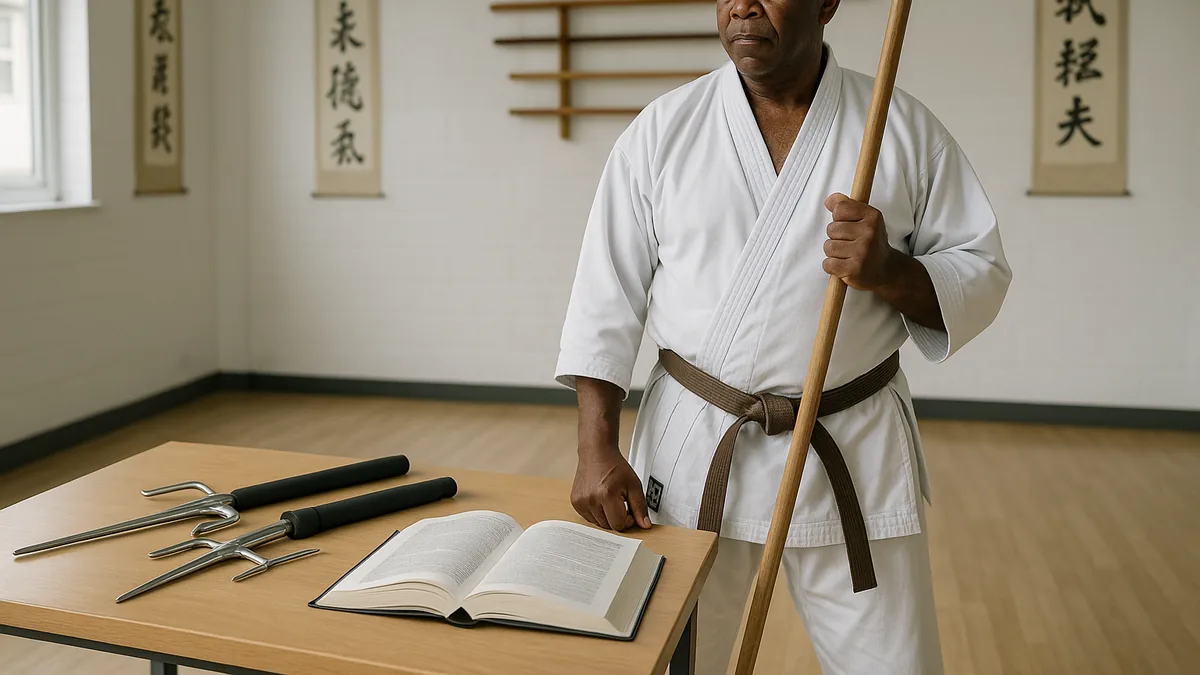
Yes, you can legally own a bo staff in the UK with no restrictions whatsoever. Sai sit in a grey area that most people navigate without issue. Nunchaku are a different story entirely - they are banned for civilian ownership in England, Wales, and Scotland under the Criminal Justice Act 1988. That’s the honest answer, and it’s the one most forum posts bury under three paragraphs of hedging.
But the legal question is only part of what karateka actually need to know. The more interesting conversation is whether traditional kobudo weapons are worth training with at all, and what responsible ownership looks like for the two weapons you can legally keep.
Are Nunchaku Actually Illegal in the UK?
Yes. Under Section 141 of the Criminal Justice Act 1988, nunchaku are listed as prohibited weapons in England, Wales, and Scotland. It is an offence to manufacture, sell, hire, offer for sale or hire, expose or have in your possession for the purpose of sale or hire, or lend or give to any other person any weapon to which this section applies.
The critical word there is possession. You cannot legally own nunchaku in England, Wales, or Scotland, regardless of your martial arts background or training intent. There is no “I train karate” exemption.
Northern Ireland operates under different legislation, so if you’re based there, check the Offensive Weapons Act (Northern Ireland) 1925 and subsequent amendments - the position is not identical.
I’ve seen this come up repeatedly in dojo conversations, and I’ve noticed a lot of instructors quietly sidestep the question rather than give students a clear answer. The honest reality is that many karateka have trained with foam or rubber nunchaku for kata practice, which exist in a legal grey area - they’re not the weapon described in the legislation, but I wouldn’t bet on that argument holding up if you were stopped with them in public. Keep any training tools at your dojo, not in your car boot.
What About Sai and Bo Staffs?
The bo staff is completely unrestricted. It’s a length of wood. You can buy one, train with it at home, carry it to your dojo in a bag, and store it however you like. There’s no legal complexity here.
Sai are more nuanced. They’re not listed as prohibited weapons under Section 141, so ownership itself isn’t illegal. However, carrying sai in a public place without lawful authority or reasonable excuse would be an offence under the Criminal Justice Act 1988 (Section 139 covers bladed articles) and potentially the Offensive Weapons Act 2019. Transporting them to and from your dojo in a closed bag, for the purpose of training, is generally considered reasonable excuse - but “generally considered” is doing a lot of work in that sentence. I’d keep them in a locked case, travel directly between home and dojo, and not make a habit of leaving them in your car.
What Do You Actually Gain from Training with These Weapons?
More than most people expect, and in ways that aren’t obvious until you’ve put in the hours.
Bo training - and I’d recommend starting here for most karateka - develops something that’s genuinely hard to build through empty-hand training alone: full-body coordination across a long lever. When you’re working with a six-foot staff, your whole body has to move as one unit. The moment your timing is off between hip, shoulder, and hand, you feel it immediately because the end of the staff is amplifying your error. What I tell students is that sloppy hip rotation you can hide in a punch becomes impossible to ignore when you’re holding a bo.
I used to think kobudo was basically decorative - something you did for gradings or demonstrations. My instructor at the time was patient enough not to tell me I was wrong directly. He just kept putting the bo in my hands. It wasn’t until about two years in that I noticed my empty-hand kata had improved without me specifically working on it. The weapon training had cleaned up my structure without me realising.
Sai training builds sensitivity in the wrist and forearm that you’ll feel through your whole body when you get it right. The weight distribution of a sai is unusual - heavy at the tip, with the monouchi, and you have to stay relaxed to control it. If you’re tense, it feels like wrestling something that doesn’t want to cooperate. When you relax and let the technique work, it settles into the movement naturally. That sensation of controlled relaxation translates directly to how you hold tension in your empty-hand work.
This is the kind of equipment investment that complements other training tools. If you’ve thought carefully about things like whether a makiwara is worth having or how breaking boards develops technique, kobudo weapons deserve the same consideration - they’re tools with specific benefits, not just tradition for tradition’s sake.
How Should You Store and Handle Weapons at Home?
The practical answer is: treat them like you’d want a responsible gun owner to treat their firearms, even though the legal requirements aren’t as strict.
Bo staffs can be stored openly - a wall rack or a corner of your training space works fine. They’re not a security concern in the same way.
Sai should be stored out of reach of children, ideally in a case or bag. I’d recommend keeping them somewhere that isn’t immediately visible if someone comes into your home. This isn’t a legal requirement, but it’s sensible. The last thing you want is to explain to a visitor - or worse, a police officer responding to a call - why you have what look like metal weapons sitting on your bookshelf.
If you’re transporting sai to training, use a dedicated bag or case, keep your dojo membership card with you, and travel directly. The combination of a clear training context and responsible handling covers you in almost every realistic scenario.
Community Perspective
This is a topic where I’ve noticed a real split between older and newer practitioners. Karateka who came up through traditional Okinawan systems - Goju-Ryu, Shorin-Ryu, Shito-Ryu - often treat kobudo as inseparable from their practice. For them, asking whether you should train with weapons is like asking whether you should do kata. It’s not really a question.
Karateka from sport-focused backgrounds, or those who came to karate through WKF competition, often see weapons as peripheral. I understand that position, but I think it misses something. The cross-training benefit is real, and the weapons kata in the Okinawan tradition weren’t developed separately from empty-hand kata - they were developed alongside them, often by the same people.
What most people get wrong about kobudo is assuming it’s a separate discipline you add on top of karate. In my experience, it’s more like a different lens on the same principles. When you understand why a bo technique works, it often illuminates something in your empty-hand work that you’d been doing by rote without really understanding.
The legal restrictions in the UK genuinely limit what’s accessible, and that’s frustrating. But the bo alone - completely unrestricted, widely available, and deeply useful - is enough to get started and enough to keep you busy for years.
Key Takeaways
- Nunchaku are banned for civilian ownership in England, Wales, and Scotland. There is no training exemption. Don’t own them.
- Bo staffs are completely unrestricted. Buy one, train with one, store it however you like.
- Sai can be legally owned but should not be carried in public without clear training context. Transport them responsibly and keep your dojo membership handy.
- Bo training specifically develops full-body coordination and structural awareness that transfers directly to empty-hand kata - it’s not decorative.
- Store sai securely and out of sight at home, even though the law doesn’t require it.
- If your dojo offers kobudo as part of the curriculum, take it seriously. The practitioners who dismiss it are usually the ones who haven’t trained it properly.
- Check current legislation directly if you’re in Northern Ireland - the rules differ from the rest of the UK.
The weekly digest
New karate articles, once a week
One email every week with everything new on Karate Lifestyle. No spam; unsubscribe in one click.
We'll email you to confirm. See our privacy policy.