WKF vs Traditional Kumite Rules
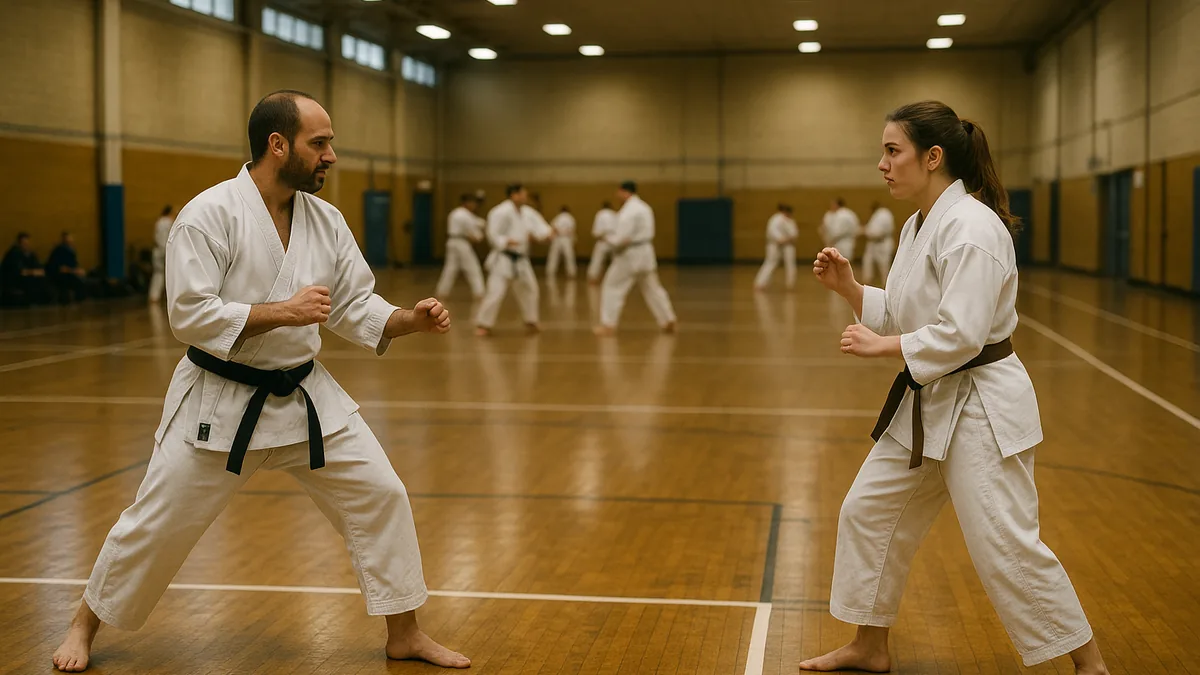
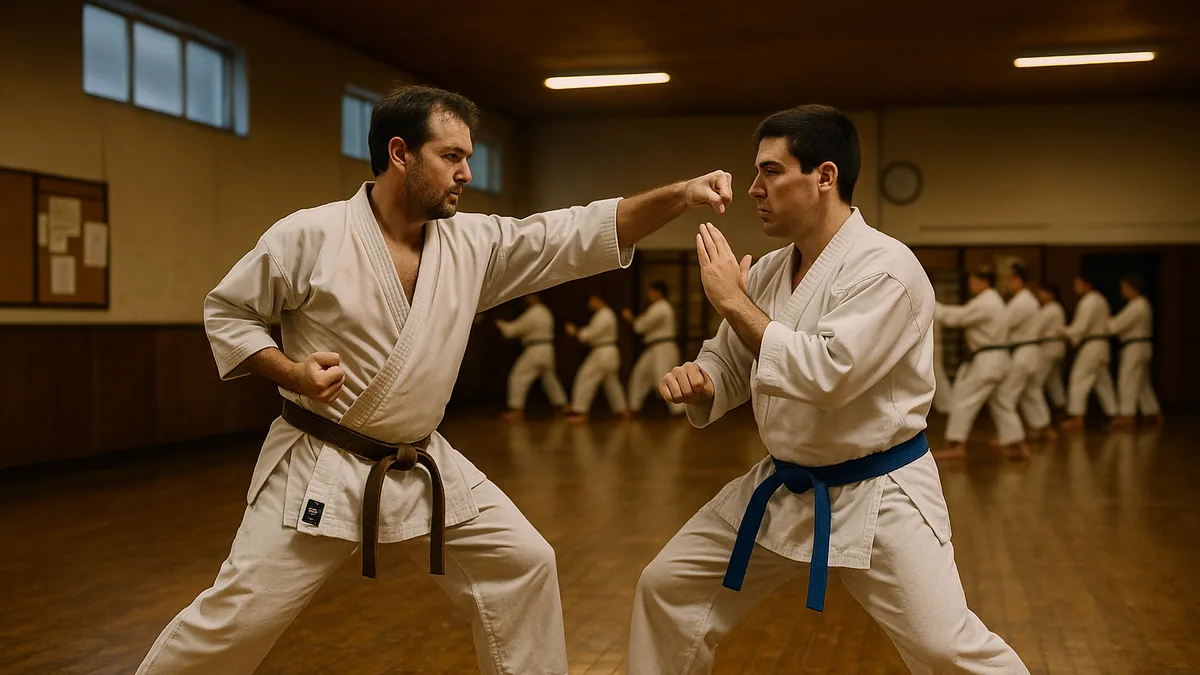
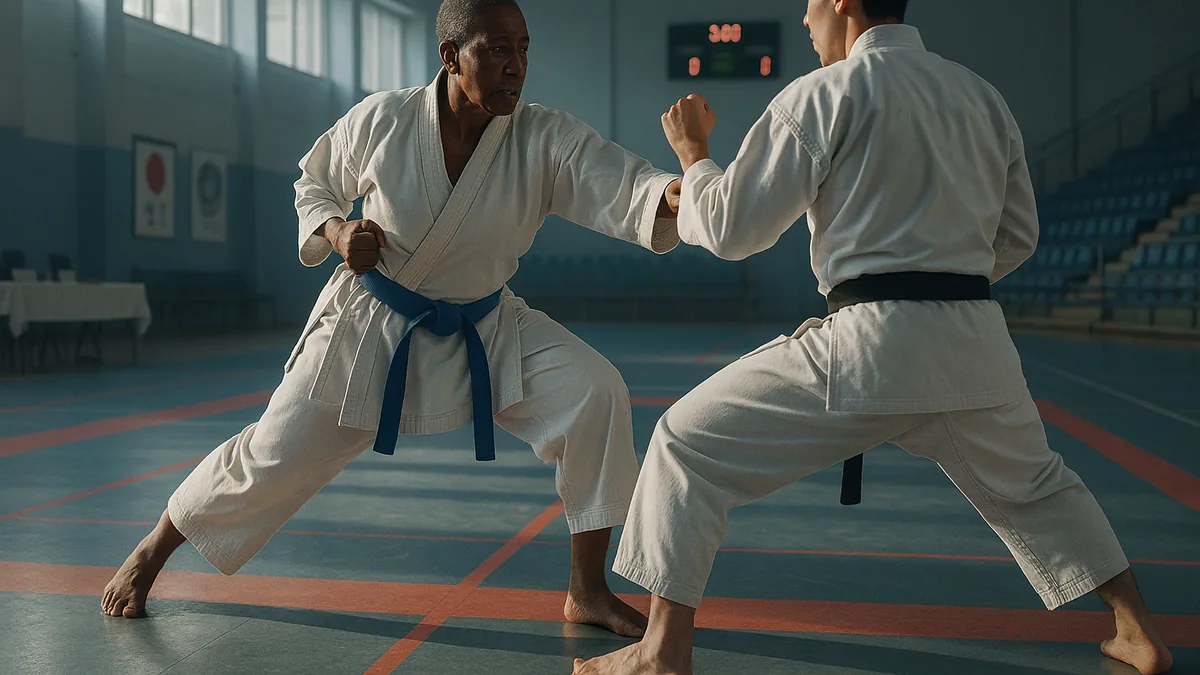
Most people who cross-train between a traditional dojo and a WKF competition environment get humbled fast - not because their technique is bad, but because they’ve been training for a completely different game without realising it. I’ve watched solid brown belts walk into their first WKF-style bout and look completely lost, and I’ve seen competition fighters freeze up in traditional randori because they’ve never had to commit to a technique that actually lands. The rules aren’t just administrative differences. They shape your entire nervous system response to a fight.
Understanding both systems won’t just make you a better competitor. It’ll make you a smarter practitioner.
What WKF Kumite Actually Rewards
WKF (World Karate Federation) competition kumite is a points-based system. You score by demonstrating controlled technique to a scoring zone with good form, vigorous attitude, correct distance, and good timing. That last part - “controlled technique” - is where everything gets interesting.
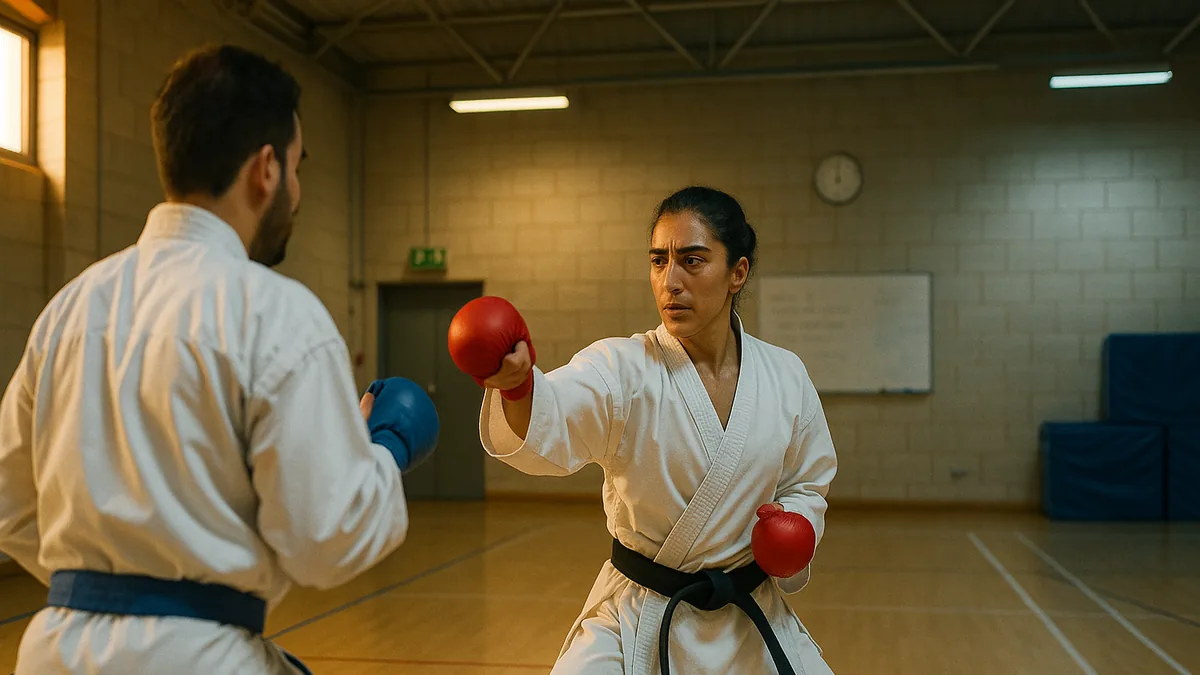
The contact level in WKF is light controlled contact. You’re not supposed to actually hit your opponent with force. You’re supposed to show the technique, land it with enough contact to demonstrate it reached the target, and stop. Judges award ippon (three points), waza-ari (two points), or yuko (one point) depending on the technique and the position from which it was delivered.
I’ve noticed that beginners who come from a harder contact background often get penalised constantly in WKF bouts - not because they’re fighting dirty, but because they genuinely don’t understand that excessive contact is a penalty offence. They’ve trained to hit. WKF is training you to show you could hit.
Scoring zones are:
- Head, face and neck (jodan)
- Abdomen, chest, back and side (chudan)
Leg attacks, groin strikes, and joint attacks are prohibited. Sweeps are allowed under specific conditions - the opponent must be off-balance and the sweep must be controlled.
The time limit is typically three minutes for senior male bouts, with the fighter holding the highest score at the end winning. If it’s a draw, there’s an extended round where the first score wins (senshu rule applies in regular time too - if you’re ahead and no further scoring happens, you win on that lead).
What Traditional Kumite Looks Like - And Why It Varies So Much
This is where things get complicated, because “traditional kumite” isn’t one ruleset. It depends entirely on your style, your association, and your dojo.
In Shotokan, you’ll typically train ippon kumite (one-step sparring), sanbon kumite (three-step), and jiyu-kumite (free sparring). The contact level in jiyu-kumite varies massively - some dojos go very light, some go full contact with control, some are somewhere in the middle and change depending on who you’re paired with.
What I tell students is this: traditional kumite is less about the ruleset and more about the intent. You are practising the application of technique in a live environment. The attack is real. The defence is real. Whether you make contact at 30% or 80% power depends on the dojo culture, but the commitment to the movement is always supposed to be real.
I trained in a dojo for years where the expectation was that you pulled your techniques to within a centimetre of the target, with full speed and full kime. That felt like nothing until someone misjudged it and you caught a gyaku-zuki to the solar plexus. Then you understood very quickly why control was a skill, not just a rule.
Traditional formats often allow techniques that WKF prohibits - sweeps to the legs, close-range elbow strikes in some styles, and in full contact variants, real impact to the body. Some traditional associations use no protective equipment at all beyond a gumshield.
How the Scoring Differences Change Everything
Here’s what took me years to actually internalise: WKF scoring rewards speed and decisiveness. Traditional kumite, done properly, rewards something closer to martial effectiveness.
In WKF, a gyaku-zuki to chudan scores one point. A jodan mawashi-geri scores three. So you’ll see WKF competitors drilling jodan kicks obsessively, because the return on investment is higher. That’s not cynical - it’s rational. You train for the game you’re playing.
In traditional kumite, a head kick that leaves you off-balance and exposed is a bad trade, even if it would have scored. The question is: did you create a clean, decisive moment of dominance? That’s harder to quantify, and in free sparring it’s often left to the senior instructor’s eye rather than a points tally.
The thing that actually changed my understanding was watching a senior student in my dojo - maybe five years ahead of me - spar with a national-level WKF competitor who visited. The competitor was faster, cleaner, and kept scoring. But he kept getting caught with counters that, in a real exchange, would have ended the fight. My senior wasn’t winning on points. But he was winning in a different sense that I couldn’t articulate at the time.
By the time I was grading students myself, I could articulate it: WKF competition teaches you to be first. Traditional kumite teaches you to be right.
Allowed Techniques - Where the Two Systems Diverge
This is worth being specific about, because the differences catch people out.
WKF allows:
- Punches to jodan and chudan (controlled contact)
- Kicks to jodan and chudan (controlled contact)
- Sweeps - one leg only, controlled, when opponent is off-balance
- Takedowns in combination with a scoring technique (very limited)
WKF prohibits:
- Attacks to the legs, groin, joints, instep
- Excessive contact (this is the one that gets people penalised most)
- Attacks to the throat
- Head butts, elbow strikes, knee strikes
- Grabbing for more than momentary control
- Dangerous throws where the opponent can’t break fall
Traditional kumite, depending on the style and association, may allow several of those prohibited techniques. Kyokushin, for example, allows full power kicks and knees to the body and legs but prohibits face punches entirely - which is almost the inverse of WKF logic. Goju-ryu free sparring in some dojos allows close-range work that WKF would stop immediately.
One mistake I see constantly when people train across systems is that they carry the prohibited techniques into the wrong environment. A Kyokushin practitioner who comes to WKF competition and throws a hard body kick that knocks someone sideways will get penalised for excessive contact. They weren’t being reckless - they were doing exactly what they’ve trained. The contact level is a different language.
How the Rules Shape Your Fighting Style
This is the part that matters most for your actual development, and it’s worth being honest about.
WKF rules produce fighters who are exceptional at initiating. The scoring system rewards the person who gets there first, so WKF competitors tend to develop extraordinary speed, sharp timing, and a very well-trained eye for distance. If you want to understand distance management at a refined level, distance management in kumite is worth reading alongside this - because WKF competition is essentially a masterclass in controlling the gap.
What WKF can produce - and I say this as someone who has competed in WKF-style bouts and values what they taught me - is a tendency to retract after scoring rather than controlling the situation. You score, you disengage, you reset. That’s correct competition behaviour. In a different context, it’s a habit that can work against you.
Traditional kumite, when it’s taught well, forces you to deal with the consequences of your own technique. If your punch doesn’t stop the attack, you have to deal with what comes next. That teaches a different quality of commitment. You feel the difference when it’s working - when you throw a counter and you don’t just score but genuinely disrupt your opponent’s structure, it feels like the technique went all the way through them rather than to them.
I’d recommend any serious practitioner spend time in both systems. Not to decide which is better, but because they develop different things. If you’ve only ever trained traditional, spend six months in WKF-style sparring and watch your initiation speed improve. If you’ve only ever competed WKF, spend time in a traditional dojo doing jiyu-kumite with real commitment and see what happens to your defensive awareness.
For newer practitioners trying to navigate all of this, kumite for beginners covers the foundations before you need to worry about which ruleset you’re training for.
Community Perspective
This is a topic where experienced practitioners genuinely disagree, and I don’t think there’s a clean resolution.
Some traditional practitioners dismiss WKF kumite as “tag sparring” - too light, too fast, too disconnected from martial application. I’ve heard that criticism from instructors I deeply respect, and I think there’s something to it. But I’ve also seen those same instructors’ students struggle badly when they had to perform under pressure, because they’d never had to compete in a structured, timed, judged environment. WKF competition stress-tests different things.
On the other side, some WKF-focused competitors write off traditional kumite as unstructured and inconsistent. That’s also fair to a point - the variability between dojos is real, and “traditional” can sometimes be a cover for poorly defined expectations and inconsistent contact levels. I’ve trained in traditional dojos where the free sparring was genuinely excellent, and others where it was closer to choreographed chaos.
Where I’ve landed, after a lot of years and a lot of conversations after training: the ruleset is a tool. The question is what you’re trying to develop. If you’re reading your opponent well - their weight shifts, their tells, their timing - that skill transfers across both systems. Reading your opponent in kumite is probably the most transferable skill in either format, and it’s the one that separates practitioners who are just technically competent from ones who are actually dangerous.
The debate between traditional and WKF often gets framed as a question of authenticity. I think it’s more usefully framed as a question of specificity. Train for what you want to be good at, understand what you’re not training for, and be honest with yourself about the gaps.
Key Takeaways
- WKF kumite rewards speed and decisiveness - if you’re training for competition, your initiation game needs to be sharp and your controlled contact needs to be genuinely controlled, not just reduced power
- Traditional kumite varies enormously by dojo and style - before you spar somewhere new, understand what the contact expectations actually are, not what you assume them to be
- The biggest mistake when crossing between systems is carrying your contact level assumptions with you - what’s acceptable in one environment is a penalty or an injury risk in another
- WKF prohibited techniques (leg attacks, elbows, excessive contact) are prohibited for competition safety, not because they’re bad karate - train them in the right context
- If you only train one format, you will have blind spots - WKF competitors often have gaps in defensive continuity, traditional practitioners often have gaps in competitive composure under pressure
- The correction that makes the biggest difference when switching systems isn’t technical - it’s mental. You have to genuinely reset your understanding of what “winning” looks like in each context before the technical adjustments will stick
The weekly digest
New karate articles, once a week
One email every week with everything new on Karate Lifestyle. No spam; unsubscribe in one click.
We'll email you to confirm. See our privacy policy.