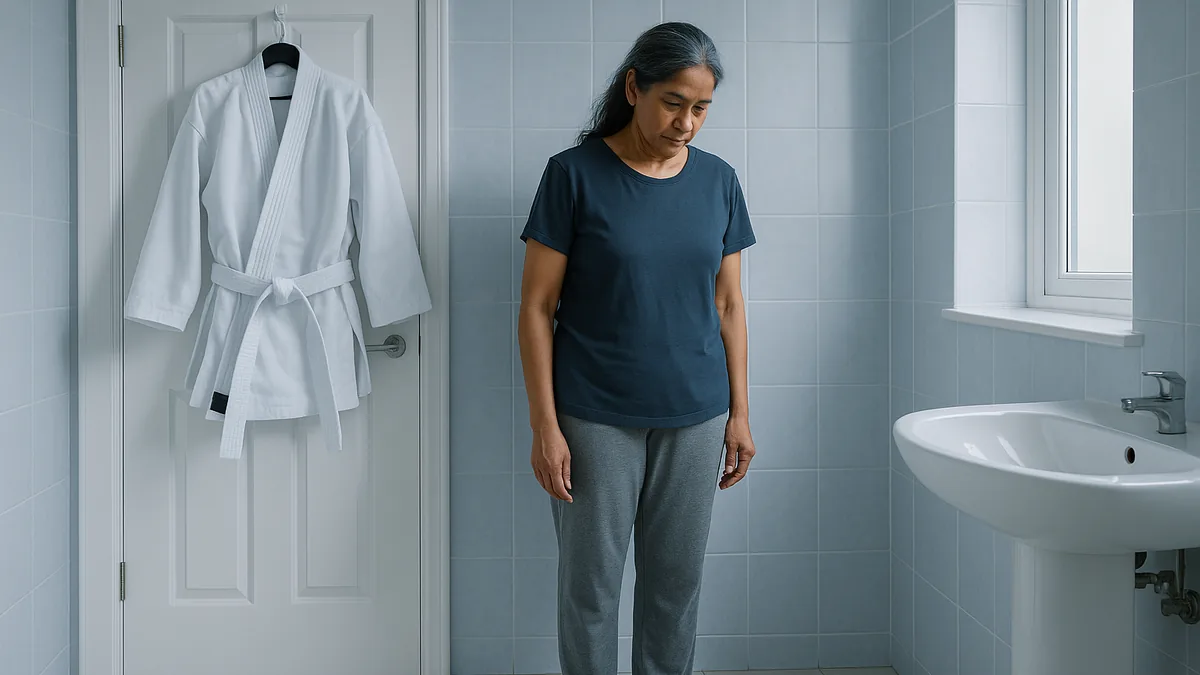
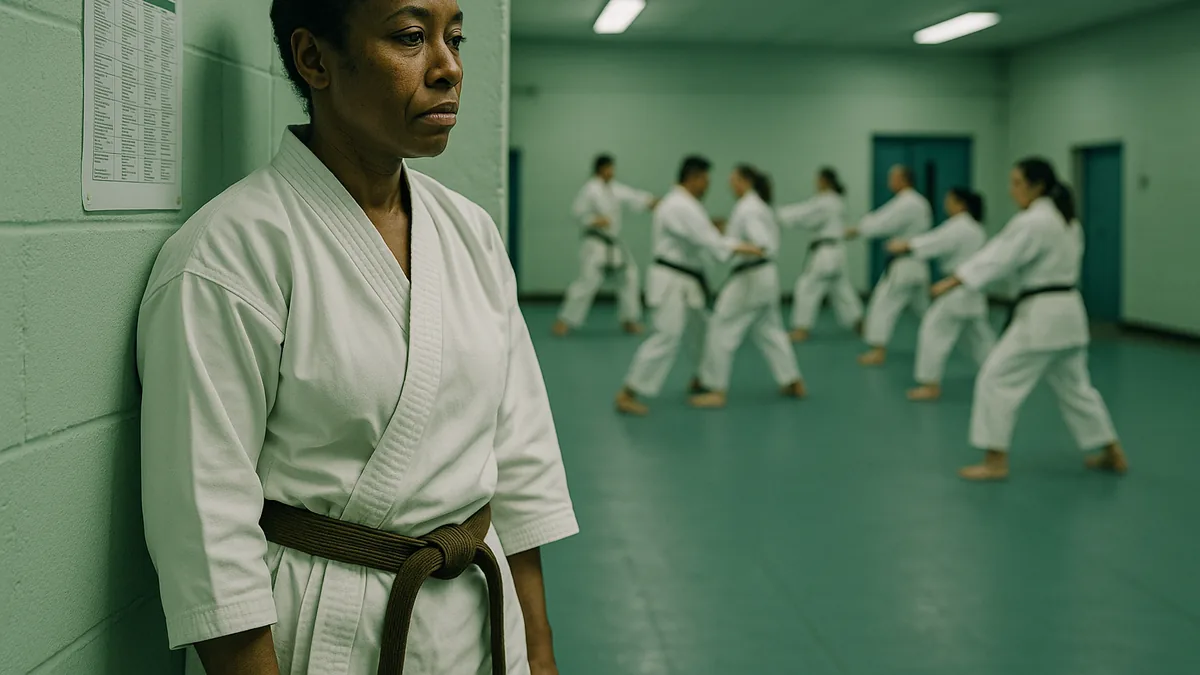
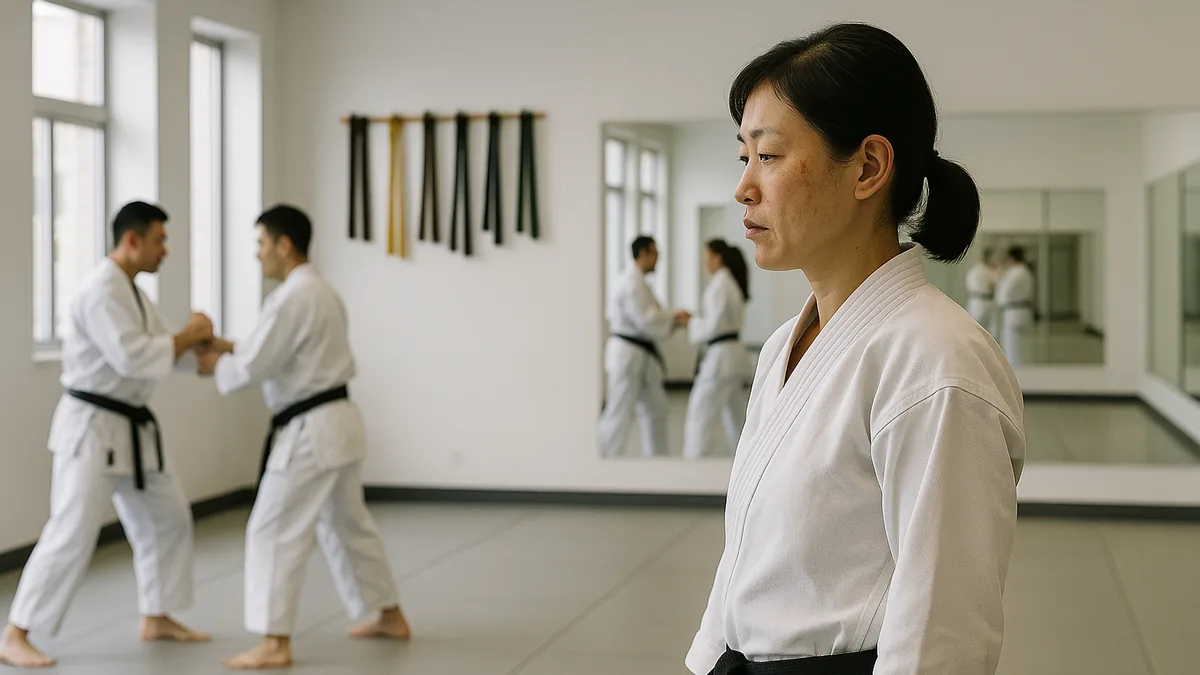
How to Stay in Karate When Money Gets Tight: Reducing Costs Without Dropping Out
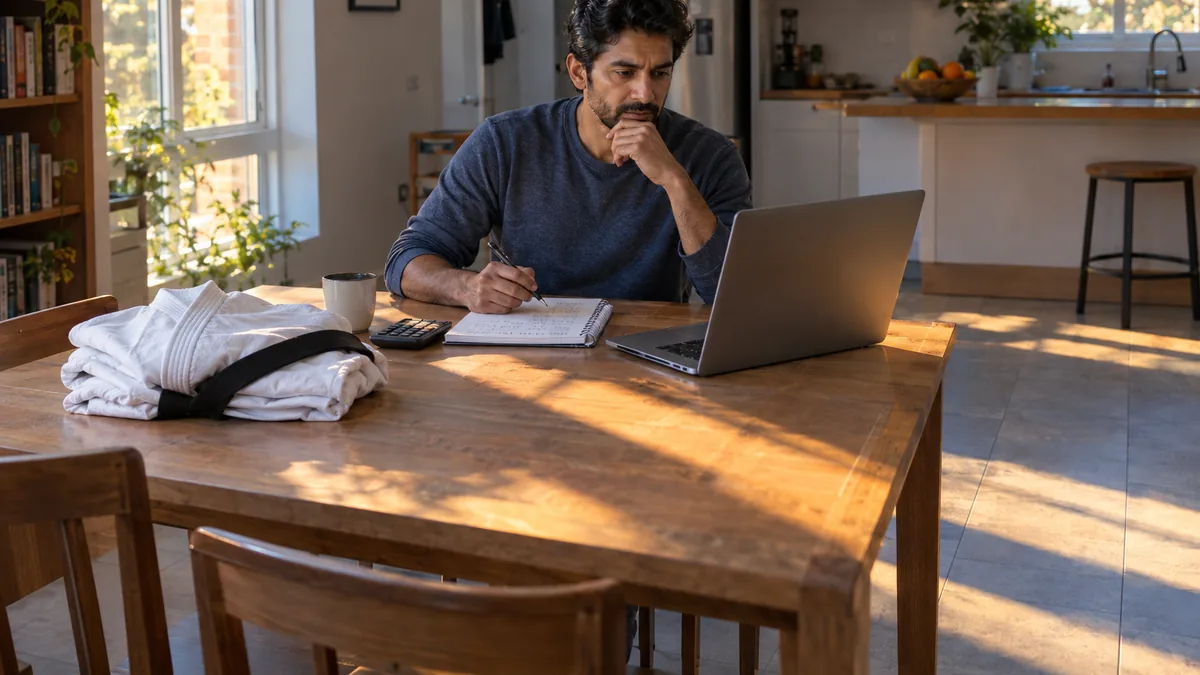
Quitting is almost never the right answer. But staying in karate when money is genuinely tight requires a different kind of discipline - one that most clubs never teach and most practitioners never think about until they have to.
Financial pressure is one of the most common reasons people drop out of martial arts training, and it is almost always avoidable. Not because karate is cheap, but because most of what makes karate expensive is optional. The core practice - kata, kihon, understanding movement - costs very little once you know what you are doing. The question is how to stay connected to that core while the financial pressure passes.
This is not about cutting corners on your training. It is about being honest about what you actually need versus what you have come to expect.
The Mistake Most People Make When Money Gets Tight
The most common mistake is doing nothing until the problem forces a decision. Practitioners stop attending without telling anyone, fall behind on fees, feel embarrassed, and then quietly disappear. Instructors notice this pattern constantly. It is not laziness or lack of commitment - it is the discomfort of having a difficult conversation.
The correction that makes the biggest difference here is not a training tip. It is talking to your instructor before you miss your first session, not after you have missed three.
Most club instructors would rather work something out than lose a committed student. Many clubs have provisions for reduced fees, deferred payments, or work-in-exchange arrangements that are never advertised because they are handled case by case. You will not know unless you ask. A straightforward conversation - “I am going through a difficult period financially and I want to stay training, can we discuss options?” - is almost always received better than silence.
This matters more than any of the cost-cutting strategies below, because the biggest threat to your training during financial difficulty is not the fees. It is losing your connection to the club and the people in it. Once that goes, motivation follows quickly. We have written about what happens when motivation drops and progress feels invisible - the same dynamics apply here: How to Stay Motivated in Karate When Progress Feels Invisible.
What You Actually Need to Keep Training
Strip karate back to its fundamentals and the list of genuine requirements is short: a space to move, something to hit occasionally, and a way to get feedback on your technique. Everything else - the full kit, the competitions, the seminars, the premium dojo - is valuable but not essential for continued development.
Training Space
You do not need a dojo floor to practise kata. A garden, a garage, a living room with the furniture pushed back - kata can be scaled to available space by reducing stance depth or practising individual sequences rather than the full pattern. What matters is that you are moving, thinking about the movement, and maintaining the habit.
The habit is what you are protecting. Training three times a week at home is not as good as training three times a week in a dojo, but it is dramatically better than stopping entirely and trying to restart six months later.
Equipment
A full set of WKF-approved competition gear runs to several hundred pounds. None of it is necessary for solo training, and most of it is not necessary for club training either. Most clubs have shared pads, and for basic partner work, light contact gloves - which can often be found secondhand for very little - are sufficient.
The one piece of equipment worth prioritising if you train any contact work is hand protection. Unprotected impact on hard surfaces or against resisting partners is one of the most direct routes to a hand injury that forces you out of training entirely, which defeats the purpose of economising.
Grading Fees
Gradings are important, but they are not compulsory at any specific interval. If money is tight, it is entirely reasonable to delay a grading by one or two cycles. Your technique does not expire. A well-prepared grading at the right time is better than a rushed grading under financial stress. Discuss this openly with your instructor - most will support the decision if you are continuing to train.
Using Free and Low-Cost Resources Without Losing Your Standards
There is a lot of karate content available for free, and most of it is not worth your time. The correction that separates useful free resources from noise is simple: does it explain why, or just what?
Video demonstrations of kata are widely available online from verified organisational sources. The Japan Karate Association maintains an official YouTube channel with technical content.1 The Shotokan Karate-Do International Federation (SKIF) - founded in 1978 and now represented in over 130 countries - publishes event footage, technical demonstrations, and instructor content through its official YouTube channel. The World Karate Federation also runs an official YouTube channel covering championship competition, which provides useful high-level kata and kumite reference. These are legitimate reference points for watching technically sound execution. Where they fall short is in the absence of feedback - you can watch a technically correct Bassai Dai a hundred times and still not know that your hikite is passive or your weight distribution is wrong.
This is where training partners become more valuable than any video. A committed training partner who will drill with you, watch your kata, and give honest feedback is genuinely irreplaceable. If you are reducing your club sessions, maintaining even one regular partner session per week preserves the most important elements of dojo training: correction, pressure, and accountability.
One practical structure that works well: keep one club session per week as your anchor, use home training to maintain volume, and use a partner session to work on specific corrections from the club session. This is not a permanent replacement for full club training, but it sustains real development through a difficult period.
Community Support: What Most Practitioners Do Not Think to Use
Karate clubs are communities, and communities have resources that are never formally listed anywhere.
Senior students often run informal training sessions, study groups, or kata workshops that carry no fee or a nominal one. These are worth asking about directly. Many senior grades are happy to work with motivated juniors - it benefits their own understanding as much as it helps you.
Cross-training arrangements between clubs in the same style or association are more common than people realise. If your home club is unaffordable for a period, another club in the same association may allow you to attend as a guest at reduced or no cost, particularly if your instructor makes the introduction. This is worth exploring before you stop training entirely.
University and community centre clubs frequently charge significantly less than private dojos, and some operate on a pay-what-you-can basis. The instruction level varies, but for maintaining your practice during a lean period, it is a legitimate option. When to Quit Your Karate Club covers the considerations around changing clubs in more depth - the same thinking applies to temporary arrangements.
Community Perspective
There is a genuine split in how the karate community thinks about training outside a formal dojo structure. Some instructors hold firmly that karate cannot be properly developed without consistent supervised instruction, and there is real substance to that position - solo training without feedback tends to reinforce existing errors rather than correct them.
The counterargument, which we find more persuasive in the context of financial difficulty, is that the alternative to imperfect training is no training. A practitioner who maintains their kata, their conditioning, and their connection to the community through a difficult few months will return to full training in a far better position than one who stops entirely.
The key distinction is honesty. Training alone and telling yourself it is equivalent to dojo training is a mistake. Training alone while acknowledging its limitations, staying connected to your club, and returning to supervised training as soon as possible - that is a sensible response to a temporary problem.
A common observation among practitioners who have been through financial difficulty and come out the other side is that what mattered most was not the specific training they managed to maintain, but whether they stayed mentally connected to karate. That connection is worth protecting above everything else.
Prioritising What Actually Sustains Practice
If you need to cut costs, the order of priority matters. Here is how we would approach it.
Keep your club membership if at all possible, even at a reduced attendance rate. The relationship with your instructor and your training community is the hardest thing to rebuild once it is lost.
If you must suspend membership, maintain a written agreement to return. Some clubs will hold your grade and your place in the grading schedule if you communicate clearly and return within a defined period.
Cut competition costs before cutting training costs. Entry fees, travel, accommodation and equipment for competitions add up quickly and provide less developmental value per pound than regular club training. This is particularly true at kyu grade level, where competition experience is valuable but not irreplaceable.
Cut seminars before club sessions. Seminars are excellent, but they are supplementary. A year without seminars does less damage to your development than six months without regular training.
If you are a parent managing costs for both yourself and a child in the same club, the dynamics are more complex - Training Karate as a Parent addresses how to handle shared training situations without losing your own practice.
Key Takeaways
- Talk to your instructor before you miss sessions, not after. Most clubs have flexibility they do not advertise, and the conversation is almost always easier than practitioners expect.
- The habit of training is what you are protecting. Reduced training - home sessions, partner work, one club session per week - is dramatically better than stopping entirely.
- Cut competitions and seminars before you cut club training. The instructor-student relationship and community connection are the hardest things to rebuild.
- Use verified organisational channels for kata reference - the JKA, SKIF, and WKF official YouTube channels are legitimate starting points1 - but pair them with at least one regular partner session for feedback. Video alone reinforces errors.
- Delay gradings rather than rushing them under financial stress. Your grade does not expire, and a well-prepared grading is worth waiting for.
- Stay mentally connected to karate. Practitioners who maintain that connection through difficult periods return to full training quickly. Those who let it go entirely often do not return at all.
References
Checked by the KarateLifestyle editorial team against official governing-body and organisational primary sources in November 2026. This article contains very few hard empirical claims; the principal checkable facts are the three named online reference sources, all confirmed as official channels.
- Japan Karate Association Official YouTube Channel. Japan Karate Association (公益社団法人日本空手協会), official channel, confirmed active 2026
The weekly digest
New karate articles, once a week
One email every week with everything new on Karate Lifestyle. No spam; unsubscribe in one click.
We'll email you to confirm. See our privacy policy.