How to Stay Relevant as a Senior Grade When Younger Students Start Outperforming You: What Changes and What Should Not
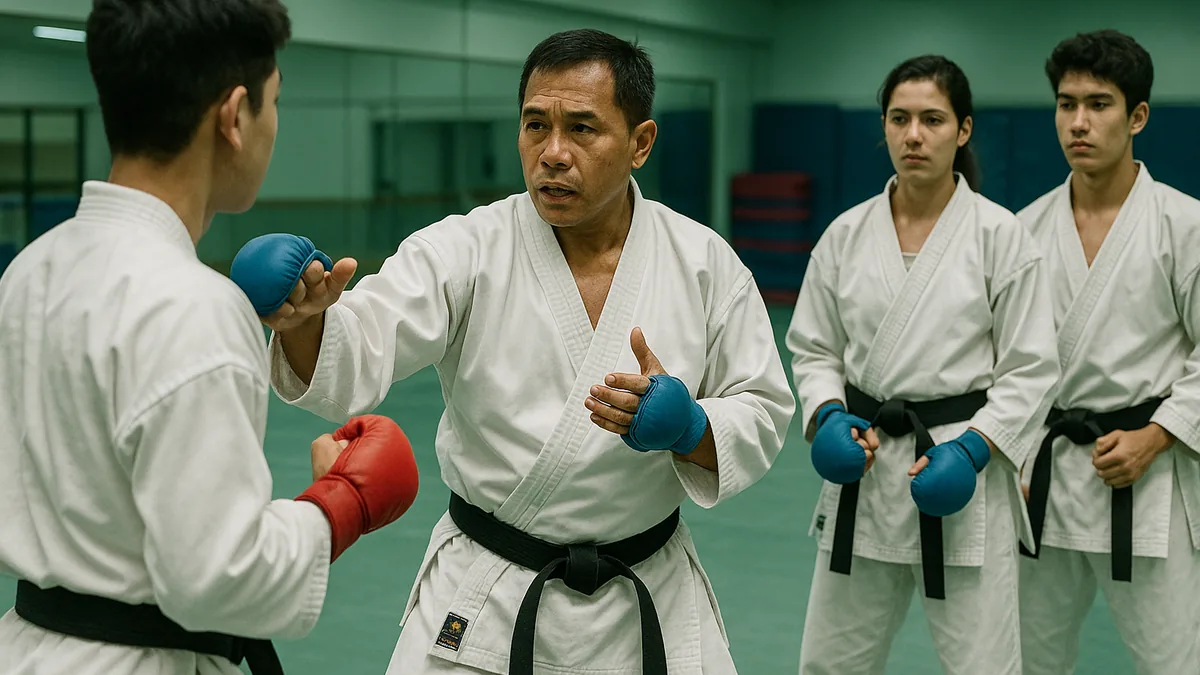
There’s a moment that happens in most dojos, and if you’ve been training long enough, you’ve either witnessed it or lived it. A student you remember as a nervous beginner - someone you helped tie their belt in the early days - starts moving faster than you. Their combinations are sharper. In sparring, they’re giving you problems you didn’t expect. And somewhere in your chest, there’s a feeling you don’t quite know what to do with.
That feeling is important. How you respond to it will define the next decade of your training more than any technique you refine.
I’ve been in that position. I’ve also watched senior grades handle it badly - withdrawing from sparring, becoming overly critical of junior students, or worse, quietly stopping training altogether. The ego doesn’t like being overtaken. But the ego is also the least useful thing you bring onto the dojo floor.
What Actually Changes When You’re No Longer the Fastest in the Room
Here’s what I tell students who reach this crossroads: your job description changed. You just haven’t updated it yet.
When you were a kyu grade, relevance meant performance. You measured yourself against the person next to you. Could you keep up? Could you outpace them? That’s appropriate for that stage - competition with peers sharpens you when you’re building the foundations.
But somewhere around shodan, and definitely by nidan or sandan, the measure of relevance shifts. It stops being about whether you can outrun the twenty-two-year-old who trains six days a week and starts being about what you bring to the room that he can’t yet.
The mistake I see constantly is senior grades who don’t make this transition. They keep trying to win the same game they were playing at brown belt. And they lose it, because the game has changed. A forty-five-year-old body competing on raw speed against a twenty-year-old is always going to come up short. That’s not a failure of character - it’s just physics.
What doesn’t change is this: depth of understanding, quality of judgment, and the ability to read a situation before it develops. Those things accumulate with years. They cannot be rushed. A student who started training two years ago does not have them, regardless of how gifted they are.
The Mentoring Role Isn’t a Consolation Prize
I used to think mentoring was what happened when you couldn’t compete anymore. I was wrong about that for a long time, and I’m not embarrassed to admit it.
The thing that changed my understanding was watching a senior student in my dojo - a third dan, probably mid-fifties - work with a group of brown belts during jiyu-kumite. He wasn’t the fastest person in that session. But every exchange he had was a lesson. He’d let a student attack, absorb it, and then explain in real time what he’d seen and why the counter worked. The brown belts were getting better in front of my eyes, within a single session.
That’s not a lesser version of training. That’s a more sophisticated version of it.
If you’re a senior grade and you’re not actively developing the students around you, you’re leaving the most valuable part of your experience unused. The knowledge you’ve accumulated about timing, distance, and how to read an opponent - that’s transferable. But it only transfers if you make it a priority.
What I tell students who are approaching this transition is to start mentoring before they feel ready. Don’t wait until you feel like the authority in the room. The act of explaining something forces you to understand it more precisely. You’ll discover gaps in your own knowledge that years of solo training never revealed.
If you’re navigating what it means to be the most experienced person training, this piece on how to train when you are the most senior student in the room is worth your time - it addresses problems that most instructors won’t warn you about in advance.
Refining What You Already Know
Here’s an opinion I’ll stand behind: most senior grades would benefit more from going deeper on what they already know than from adding new material.
I’ve noticed that when experienced practitioners feel their relevance slipping, the instinct is often to add - new kata, new training methods, seminars with visiting instructors. Some of that is valuable. But it can also be avoidance. It’s easier to learn something new than to honestly assess how much you’ve actually mastered what you already have.
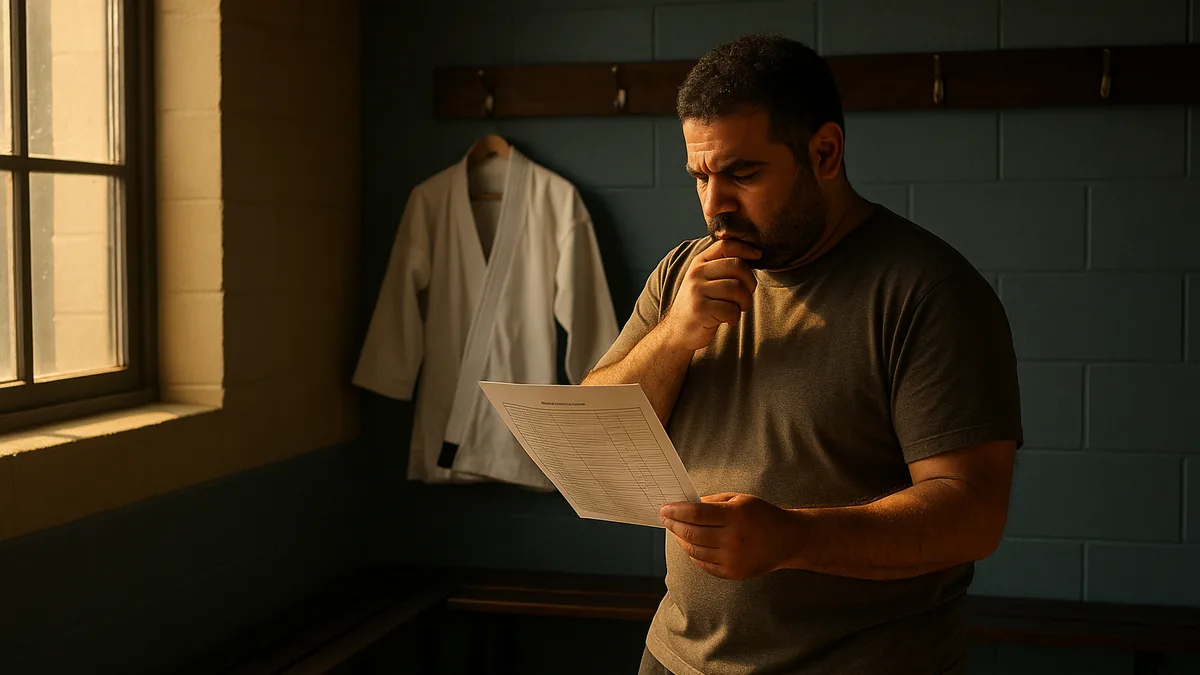
Take a technique you’ve been doing for ten years. Now ask yourself: can you perform it under pressure, when you’re tired, against a resisting opponent who’s trying to stop you? Can you explain precisely why it works - not the textbook answer, but the mechanical reality of it? Can you diagnose why a student is failing at it within three repetitions?
If the answer to any of those is uncertain, that’s where your training attention belongs.
The correction that makes the biggest difference in senior practitioners isn’t usually technical. It’s attentional. They’ve stopped noticing their own habits. Years of repetition create grooves, and some of those grooves are slightly off. I’ve seen fourth and fifth dans with a hip rotation that’s been two inches short for a decade - nobody’s told them because they’re senior, and they’ve stopped feeling it because it’s become automatic.
Get in front of a mirror. Film yourself. Ask a trusted training partner to watch you critically. The feedback will be uncomfortable. Do it anyway.
Adapting Training Without Abandoning Standards
I want to be careful here, because this is where some senior grades go wrong in a different direction.
Adapting your training to your body’s current reality is not the same as lowering your standards. These are different things, and conflating them is a mistake that leads either to injury or to quietly accepting a decline you didn’t have to accept.
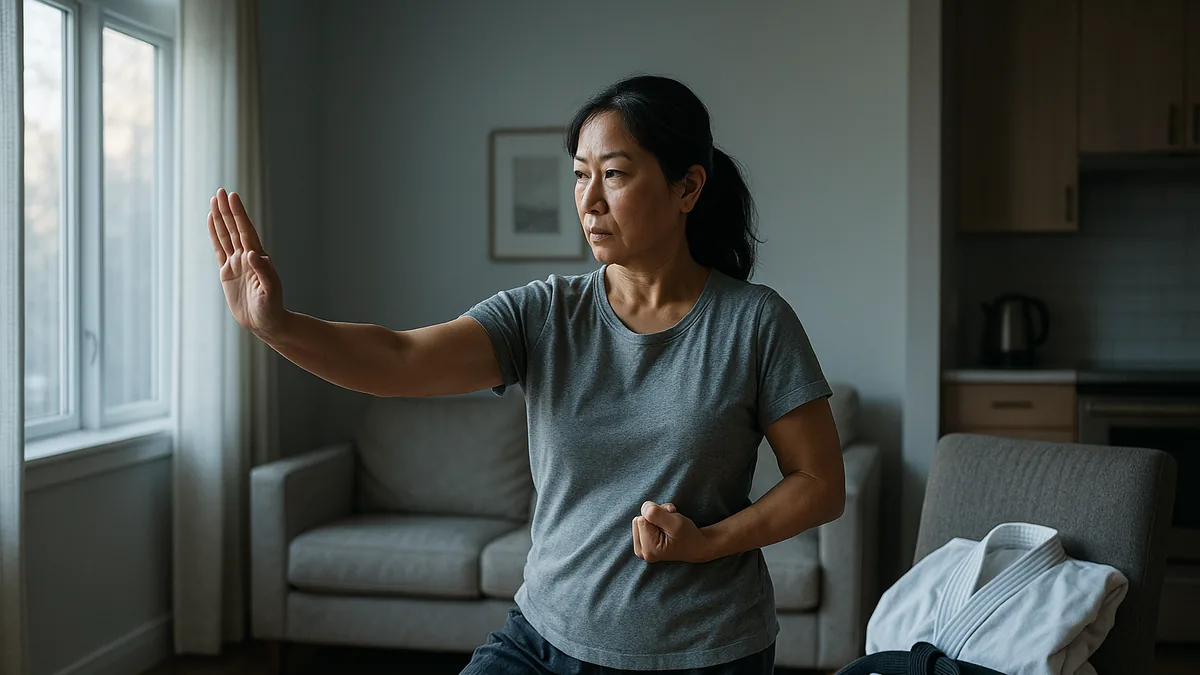
What I mean by adapting: if your knees don’t recover from three consecutive days of heavy sparring the way they did at twenty-five, you train smarter about recovery. You might reduce the frequency of full-contact sessions and increase the quality of technical drilling. You might focus more on controlled partner work where the learning density is high without the physical cost being as extreme.
What I don’t mean: dropping your intensity, accepting sloppy technique because “it’s fine for my age,” or avoiding the parts of training that are hard.
I’ve seen this pattern more times than I can count - a senior grade slowly stops pushing themselves, justifies it as wisdom, and within two years they’ve become a ceremonial presence in the dojo rather than an active practitioner. The students notice. They always notice.
You can read more about structuring your training life to stay genuinely serious about practice in this piece on how serious practitioners actually structure their day. The principles there apply at every grade level.
Community Perspective
This is a topic where experienced practitioners genuinely disagree, and I think the disagreement is worth acknowledging honestly.
There’s a school of thought - more common in traditional dojos - that a senior grade should never be seen to struggle. That maintaining authority requires always appearing in control, always performing well. I understand where that comes from, and there’s something to it. Students do need to see competence modelled.
But I think it’s taken too far in a lot of dojos. When senior grades never show vulnerability, never acknowledge difficulty, and never demonstrate the process of working through a problem, they inadvertently teach students that struggle is something to hide. That’s a bad lesson.
The more modern approach - being transparent about what’s hard, training visibly through difficulty, asking junior instructors for feedback - feels uncomfortable to some traditional practitioners. I’ve had this argument in the car park after class more than once.
My position is that the traditional concern about authority is legitimate but the solution is wrong. You maintain authority through the quality of your knowledge and judgment, not through pretending you’re physically invincible. Students respect honesty more than they respect a performance.
There’s also genuine disagreement about when senior grades should compete versus when they should step back from competition. I think the thinking in this article about when to grade and when to wait applies equally well to competition decisions - the honest self-assessment it describes is exactly the right framework.
What You Shouldn’t Let Change
Some things should remain constant regardless of where you are in your training arc.
Your standards in the dojo should not soften because you’re senior. If anything, your eye should be sharper. I’ve noticed that the most respected senior practitioners I’ve trained with are also the most precise about details - the angle of a stance, the timing of a kiai, the quality of zanshin after a technique. They care about those things because they understand why they matter, not because they’re performing seniority.
Your willingness to train hard should not disappear. Modify how you train - yes. Stop pushing - no.
Your relationship with the fundamentals should deepen, not drift. It took me years to understand why my instructor kept returning to kihon even at senior grades. I thought it was repetition for its own sake. By the time I was grading students myself, I understood that the fundamentals are where everything lives. Every advanced application rests on them. When your kihon is genuinely excellent - not just competent, but excellent - everything built on top of it is more reliable.
If you’re finding motivation difficult during this transition, this piece on staying motivated when progress feels invisible addresses exactly the psychological pattern that often accompanies this stage. Progress at senior grades is real, but it doesn’t look the same as it did when you were moving through the kyu grades.
Key Takeaways
- Your measure of relevance changes at senior grade - stop competing on the metrics that belong to kyu grade training and start developing the ones that accumulate with experience.
- Mentoring junior students isn’t a step back from serious training - it’s the most sophisticated form of it. Start before you feel ready, because the act of teaching will expose gaps in your own understanding that years of solo training missed.
- Go deeper on what you already know before adding new material. Most senior grades have more to extract from their existing repertoire than they realise, and honest self-assessment is harder than attending a seminar.
- Adapt your training methods to your body’s current reality without softening your standards. These are different things. Confusing them leads either to unnecessary injury or unnecessary decline.
- Stay visible and active in the dojo - not as a ceremonial presence, but as a practitioner who still pushes, still struggles sometimes, and still learns. Students read the room. What they see you doing shapes what they think serious training looks like.
- The fundamentals deserve more attention at senior grade, not less. When your kihon is genuinely excellent, every application built on top of it becomes more reliable under pressure. That’s where your refinement belongs.
The weekly digest
New karate articles, once a week
One email every week with everything new on Karate Lifestyle. No spam; unsubscribe in one click.
We'll email you to confirm. See our privacy policy.