The Karate Lifestyle Outside the Dojo: How Serious Practitioners Actually Structure Their Day
Most people who train seriously already know that what happens outside the dojo matters as much as what happens inside it. The problem is nobody really talks about how they structure it. You get the philosophy - “karate is a way of life” - but not the actual mechanics of what that looks like on a Tuesday morning when you’ve got work, kids, and a grading coming up in six weeks.
I’ve trained across four different dojos over fifteen years, under instructors who couldn’t have been more different from each other, and the practitioners I’ve watched develop the fastest share one thing: they treat their life outside training as deliberately as their training itself.
Here’s what that actually looks like.
1. Morning Starts With Something Physical - Even If It’s Small
I used to think serious training meant saving everything for the dojo. Rest during the day, go hard in the evening session, repeat. My first sensei, who was in his late fifties and moved better than most twenty-year-olds I’ve trained with, corrected that thinking fast.
“Your body forgets what you taught it if you go too long between conversations,” he said. I didn’t fully understand it until I started travelling for work and had weeks where I only trained twice. I’d come back to the dojo and the first session always felt like I was starting over.
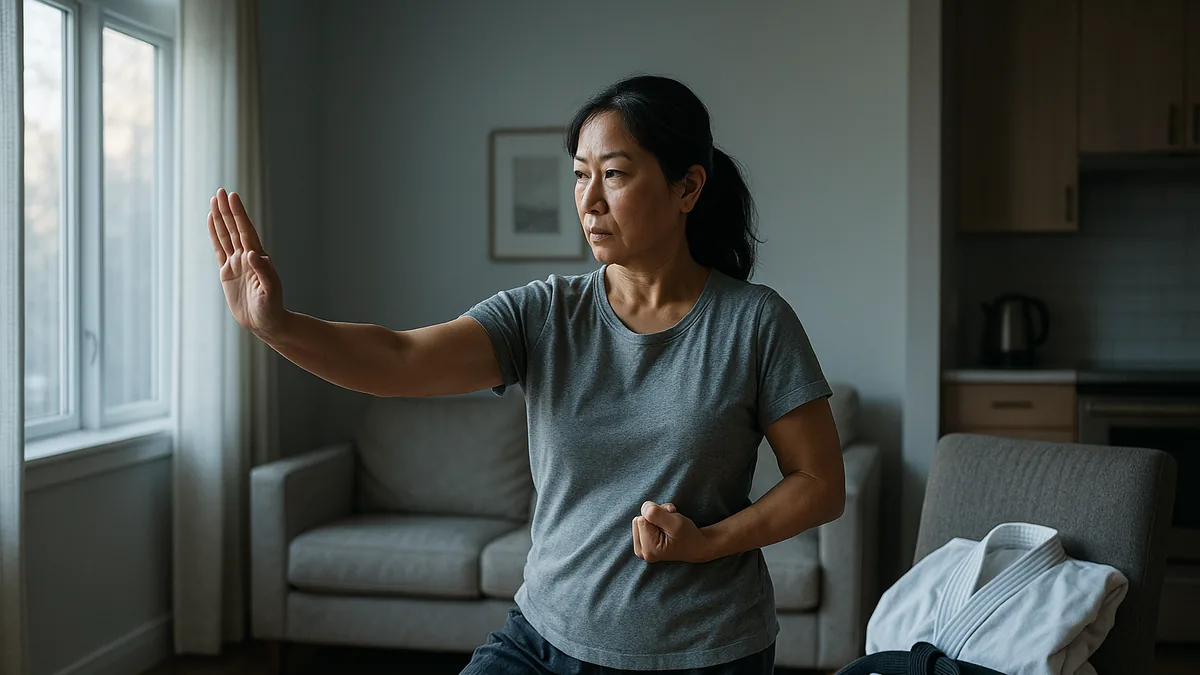
Now, mornings include something - even on non-training days. Not a full workout. Fifteen minutes of mobility work, a few kata run-throughs in the hallway, or just slow hip rotations and stance practice while the kettle boils. The point isn’t fitness. It’s continuity. You’re reminding your nervous system of the patterns you’ve been building.
What I tell students who complain their technique feels inconsistent: the inconsistency often isn’t about the dojo sessions. It’s about the gaps between them.
2. Nutrition Isn’t Complicated - But It Does Need to Be Deliberate
I’m not going to list macros or recommend supplements. What I will say is that I’ve noticed a clear pattern in students who plateau: they train well but eat like their training doesn’t matter. Skipping meals before evening sessions, eating heavy food an hour before class, running on caffeine through the day.
The correction that actually works isn’t a diet plan. It’s treating food as part of training preparation. A light meal two to three hours before class. Something with protein and carbohydrates - nothing exotic. Hydration throughout the day, not just during training.
I prefer eating earlier in the day and keeping the two hours before evening training relatively light. You’ll feel the difference immediately in sparring. Heavy digestion and fast movement do not coexist. If you’ve ever felt sluggish in kumite and couldn’t figure out why, check what you ate and when.
For practitioners managing training alongside recovery from injury or the physical demands of training past their thirties, the nutrition piece becomes even more significant. There’s more on that in the recovery for karate practitioners article if you want to go deeper.
3. Mental Preparation Is a Skill You Have to Actually Practice
One mistake I see often, especially in intermediate students, is treating mental preparation as something that just happens automatically if you train enough. It doesn’t. Focus is a skill. Composure under pressure is a skill. And like all skills, it degrades if you don’t work it.
What serious practitioners do is build deliberate mental practice into their day. Not meditation in a mystical sense - though if that works for you, use it. I mean concrete habits: five minutes of stillness in the morning before checking your phone, visualising a specific technique or combination before sleep, reviewing what went wrong in the last session and what you want to fix.
I started doing this properly about eight years in, after a grading where my technique in the dojo was the best it had ever been, but I froze on a kata sequence I’d done hundreds of times. The examiner asked me to repeat it. I got through it, but the experience shook me. The technique was there. The composure wasn’t.
The thing that changed my understanding was realising that mental preparation isn’t separate from physical training - it’s part of the same system. You train your body to respond correctly under stress. You have to train your mind the same way.
4. Build Your Week Around Your Training Schedule - Not the Other Way Around
This sounds obvious. It isn’t how most people actually live.
I’ve watched dozens of students over the years who trained when it was convenient - slotting sessions in around everything else, skipping when life got busy, treating dojo time as the first thing to drop when work or family demanded more. Most of them stayed at the same level for years. Some quit.
The practitioners who progress treat training sessions as fixed commitments. Not rigid - life happens - but the default is that training is in the diary and other things move around it where possible.
Practically, this means:
- Knowing your weekly training days and planning social and work commitments around them
- Building in the recovery time - a hard session the night before a physically demanding work day is something you plan for, not something that happens by accident
- Being honest about how many sessions a week you can actually commit to, rather than setting an aspirational number and hitting it inconsistently
I’d rather see a student commit to two solid sessions a week and protect them completely than aim for five and average two and a half with irregular attendance. Consistency over volume, every time.
5. Recovery Is Training - Stop Treating It as a Luxury
This is the one I have to repeat most often, particularly to students in their thirties and forties who are pushing hard because they feel like they’re running out of time to improve. The urgency is understandable. The approach is counterproductive.
Sleep is where the physical adaptation happens. If you’re training hard and sleeping six hours, you are actively working against your own progress. I’m not being dramatic - I’ve seen it play out repeatedly. Students who push through fatigue, skip recovery, and then wonder why they keep getting injured or why their technique isn’t consolidating.
The correction that works is treating sleep and rest as part of the training programme, not as the absence of training. That means:
- Consistent sleep and wake times, even on weekends
- Not scheduling hard training sessions on days when you know you’ll be exhausted from work
- Recognising the difference between productive fatigue and the kind of tiredness that means you need rest, not more reps
If you’re training past forty and finding recovery harder to manage, the training karate after 40 piece covers the specific adjustments worth making.
6. Community Engagement Outside Class Matters More Than You Think
I’ve trained in dojos where the culture stopped at the door - people bowed out, changed, and scattered. I’ve also trained in dojos where the community extended into the rest of life: people who helped each other move house, who showed up to each other’s competitions, who grabbed food after training and talked about what they were working on.
The second type produces better karateka. That’s my opinion and I’ll hold it. The social fabric of a dojo - the relationships, the shared accountability, the informal conversations where someone mentions something they noticed in your technique - is part of the training environment. Opting out of it is opting out of a resource.
This doesn’t mean you have to socialise constantly. It means being present to the community aspect of training, not just the technical aspect. Helping newer students when you can. Showing up to dojo events. Knowing your training partners well enough that you can push each other appropriately.
If you’re still looking for the right environment to build this in, the how to choose a karate club guide is worth reading before you commit somewhere.
Community Perspective
There’s a genuine split in how dojos approach the “karate lifestyle” concept, and I think it’s worth being honest about it.
Some instructors - particularly those from more traditional backgrounds - hold that karate philosophy should permeate everything: how you carry yourself, how you speak, how you treat people in ordinary life. The dojo is just where you make it explicit. Others, particularly in sport-focused clubs, treat karate more like a demanding sport - train hard, compete well, recover properly, and your personal life is your own business.
I’ve trained under both approaches and I think the truth is somewhere between them. The principles that make you a better practitioner - discipline, consistency, honest self-assessment, composure under pressure - genuinely do transfer into daily life if you’re paying attention. But I’ve also met plenty of people who talk extensively about karate philosophy and train inconsistently, and plenty of sport-focused practitioners who are the most disciplined people I know.
What actually matters is whether your life outside the dojo is supporting your training and your development as a person - not whether you’re framing it in the right philosophical language.
Key Takeaways
-
Keep the connection daily, not just on training days. Even fifteen minutes of movement or kata practice between sessions maintains the neural patterns you’re building. The gap between sessions is where inconsistency lives.
-
Treat your training schedule as fixed. Commit to a realistic number of sessions and protect them. Two consistent sessions beat five inconsistent ones every time.
-
Eat to train, not around training. Light meals two to three hours before class, proper hydration throughout the day. You’ll feel the difference in sparring within a week.
-
Build mental practice deliberately. Visualisation, stillness, reviewing sessions - these are skills that need practice just like any technique. Composure under pressure doesn’t appear on grading day if you haven’t worked it during ordinary days.
-
Sleep and recovery are not optional extras. They are where adaptation happens. Training hard while sleeping badly is not discipline - it’s sabotage.
-
Invest in your dojo community. The relationships, the informal feedback, the shared accountability - these are training resources. Use them.
The weekly digest
New karate articles, once a week
One email every week with everything new on Karate Lifestyle. No spam; unsubscribe in one click.
We'll email you to confirm. See our privacy policy.