Lightweight vs Heavyweight Karate Gi
Most people overthink this decision and end up buying the wrong gi twice. A new student shows up in a thick 14oz canvas gi in August, sweating through the first five minutes of warm-up. A competition competitor turns up in a flimsy 6oz gi for a hard contact session and spends the rest of class picking cotton threads out of their mouth. Same mistake, different direction.
The weight of your gi matters more than most people admit, and it matters differently depending on what you’re actually doing on the floor.
What “Lightweight” and “Heavyweight” Actually Mean in Practice
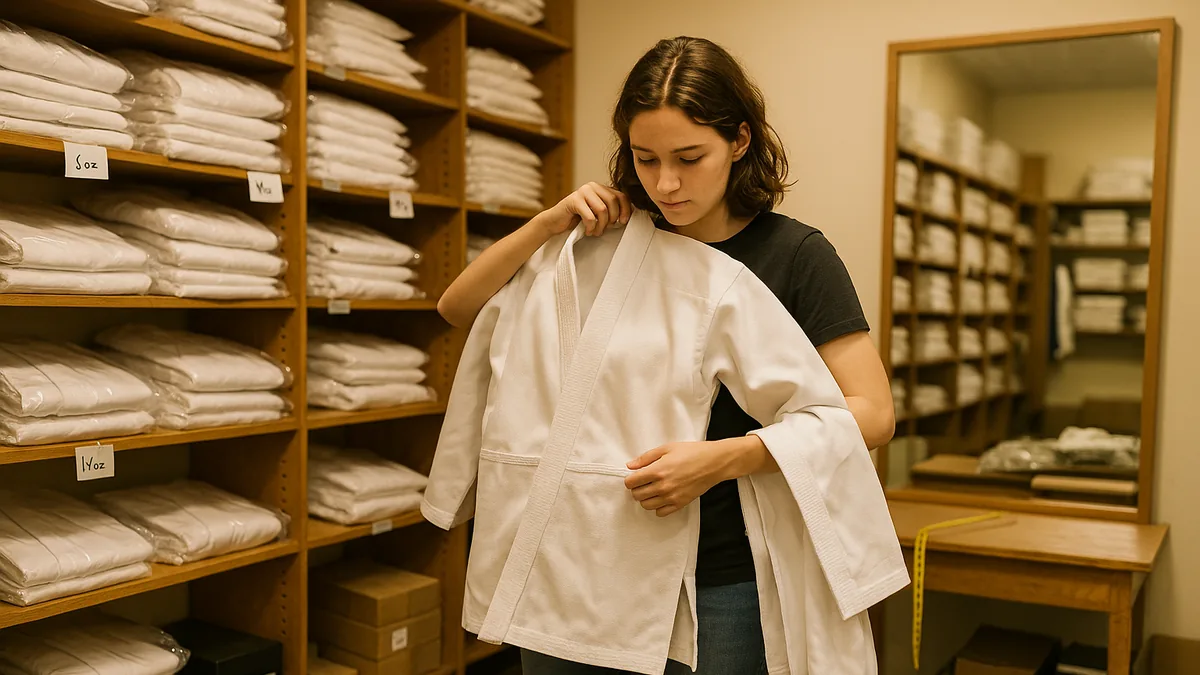
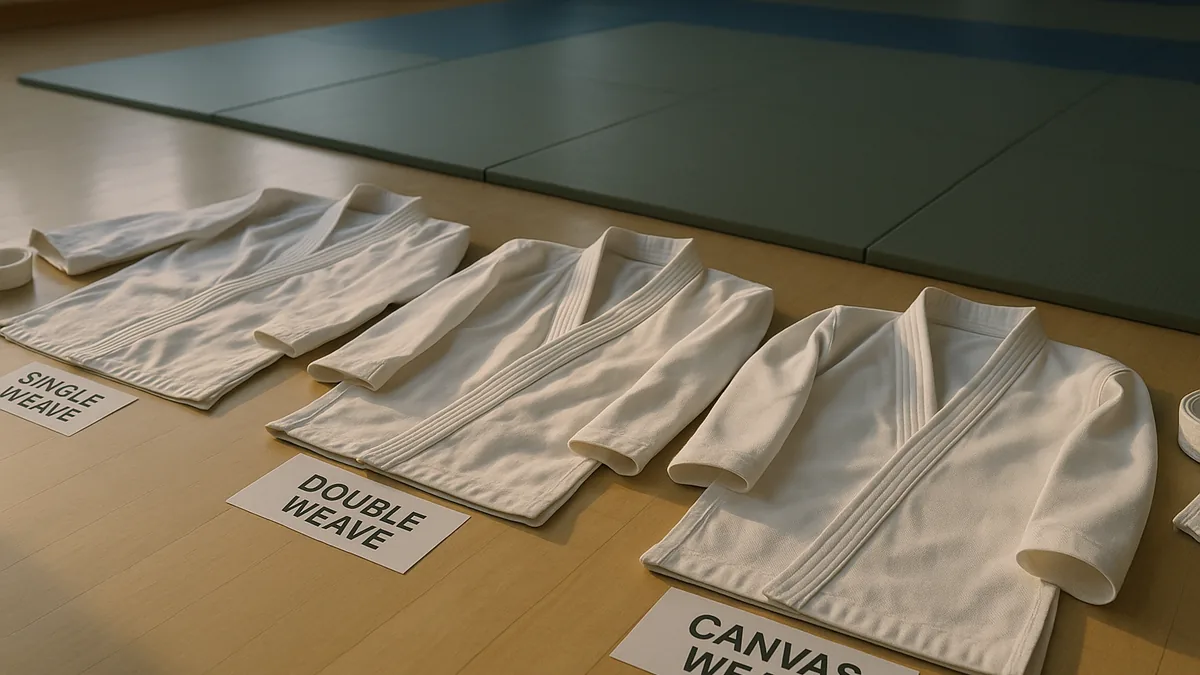
When we talk about gi weight, we’re talking about fabric weight measured in ounces per square yard - usually somewhere between 6oz on the lighter end and 16oz on the heavier end. Midweight sits around 8-10oz. But the number alone doesn’t tell the whole story. Weave type, cotton quality, and cut all change how a gi performs. A 12oz single-weave can feel completely different from a 12oz double-weave.
What I tell students is to stop thinking about weight as a spec and start thinking about it as a feeling. A lightweight gi moves with you. When you chamber a kick and snap it out, the fabric follows the motion rather than resisting it. A heavyweight gi has drag - not necessarily bad drag, but you feel the resistance when you move fast. That feeling changes how you train.
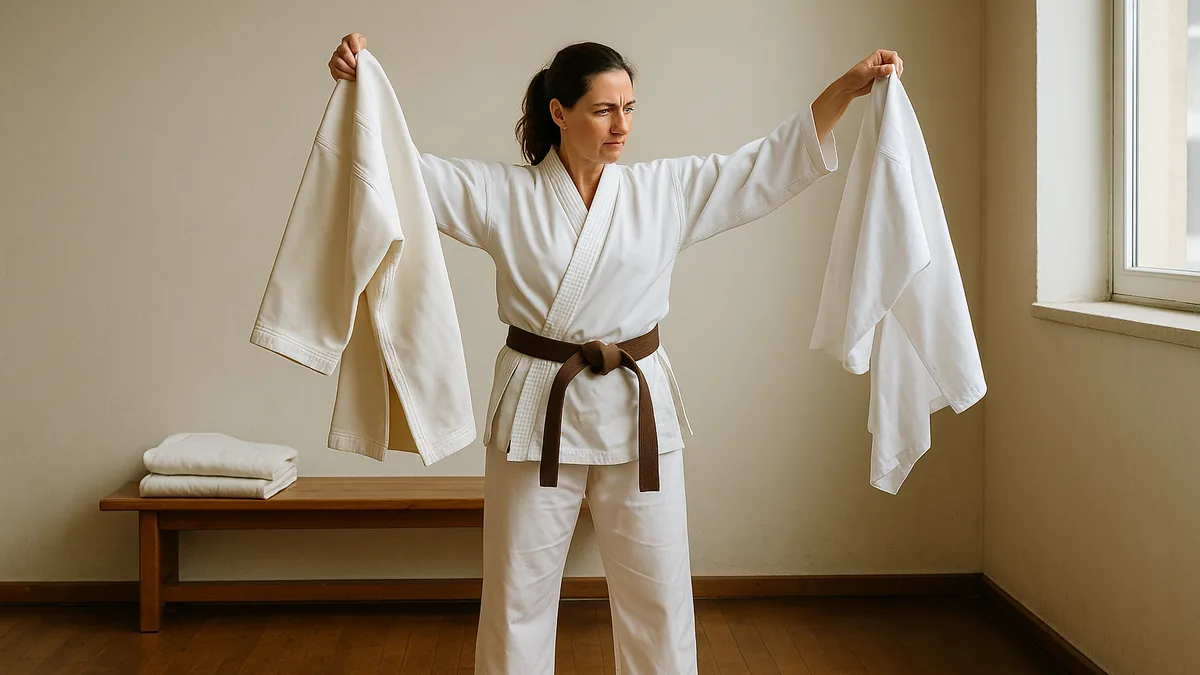
I’ve noticed that most beginners don’t realise how much their gi affects their movement until they try someone else’s. Put a white belt in a competition-cut 7oz gi after six months of training in a thick canvas uniform and watch their eyes light up. Suddenly their techniques feel faster. That’s not an illusion - there’s genuinely less resistance. But it can also mask poor mechanics, which is why I don’t think lightweight is automatically better for newer students.
The Case for Lightweight Gi
I prefer lightweight for competition and for any session where speed and mobility are the priority. My reasoning is simple: in jiyu-kumite, your fastest counter off a failed attack comes from your ability to reset quickly. If your gi is fighting your movement, you’re losing fractions of a second you can’t afford.
Where lightweight gi genuinely earns its place:
- Competition kumite - the snap of a gyaku-zuki lands cleaner, and you feel the technique rather than the fabric
- High-repetition kihon sessions - after 200 oi-zukis, you’ll feel the difference in your shoulder
- Hot training environments - this is obvious but people still ignore it
- Kata performance where presentation and movement quality matter
The other thing lightweight does well is show you exactly where your technique is breaking down. There’s nowhere to hide. If your hip rotation is lazy, the punch looks lazy. If you’re muscling your kicks rather than snapping them, it’s obvious. I used to think this was a disadvantage. By the time I was training for my brown belt grading, I understood it was the whole point.
That said, lightweight gi wear out faster. I’ve gone through three competition gi in the time one of my training gi has lasted. If you’re training four or five times a week, factor that into the cost.
The Case for Heavyweight Gi
There’s a reason traditional dojos have always trained in heavier gi, and it’s not just aesthetics or conservatism. Heavy gi builds something that lightweight doesn’t - resistance conditioning. When you’re driving through a gyaku-zuki in a 14oz canvas gi, your body is working harder to generate the same speed. Over time, that builds the kind of muscular endurance that transfers directly to performance.
My first instructor used to say that training in a heavy gi was like running in sand. I didn’t fully understand it until I put on a competition gi for the first time before a tournament and felt genuinely fast - faster than I’d felt in training. That wasn’t fitness. That was contrast conditioning. The heavy gi had been doing work I didn’t know was happening.
Where heavyweight gi makes sense:
- Regular dojo training, especially for kihon and kata
- Colder training environments - a thick gi holds warmth
- Students who need to slow down and build clean mechanics
- Partner drills where grip and sleeve control matter
That last point is worth expanding. In any drill involving grabs, lapel work, or close-range technique, a heavier gi gives you something to hold. A flimsy lightweight gi slips, bunches, and tears. I’ve seen lightweight gi ripped during basic partner work - not even anything aggressive, just a grab-and-pull drill. If your training includes any kind of grappling element, even minimal, you want fabric with some substance.
Heavyweight gi also tend to sit better on the body. The collar stays down, the sleeves don’t ride up, the jacket doesn’t fly open during a spinning technique. For formal grading environments especially, presentation matters, and a well-fitted heavyweight gi looks the part in a way that a lightweight competition gi doesn’t always.
If you’re not sure what size you need before buying, the Karate Gi Size Guide: How To Find The Right Fit is worth reading before you commit to anything.
Common Mistakes I’ve Seen
Buying lightweight because it looks professional. Competition gi look sharp. Students see them on YouTube, on senior grades, at tournaments, and assume that’s what serious training looks like. The mistake is buying one for general training when your mechanics aren’t there yet. Lightweight gi reward good technique. They don’t build it.
The correction that works: use a midweight or heavyweight gi for your regular training, and if you compete, get a lightweight competition gi specifically for that purpose. Two gi is not extravagant - it’s practical.
Buying heavyweight because it seems more “traditional.” I’ve seen this too, especially in students who come from a very traditional dojo background. They assume heavier means better, and they end up training in a 16oz canvas gi for kumite sessions where they’re getting outpaced because their fabric is fighting them. Tradition has value, but not when it’s actively limiting your development.
Ignoring shrinkage. This catches people every time. A heavyweight cotton gi will shrink significantly after the first wash. I’ve watched students buy a perfect-fitting heavyweight gi, wash it once in warm water, and end up with something that looks like it belongs to a child. Always buy slightly larger than you think you need, wash cold, and hang dry. The Karate Gi Size Guide covers this in more detail, but it’s worth flagging here because it’s such a consistent mistake.
Community Perspective
This is one of those topics where you’ll get a different answer depending on which dojo you walk into, and honestly, both camps have a point.
Traditional Shotokan and Goju-ryu dojos often train in heavier gi across the board - the argument being that if your basics are built in resistance, your performance in lighter equipment will always be cleaner. There’s a logic to it that I respect, and I’ve trained in dojos that operated this way with excellent results.
WKF competition-oriented dojos tend to train in lightweight gi almost exclusively, particularly at the senior level. The argument there is specificity - you compete in lightweight, so you train in lightweight. You get comfortable with the feel, the movement, the sound of the snap.
What I’ve noticed over the years is that practitioners who have trained seriously in both tend to land in the same place: heavy gi for foundational work and general training, lightweight for competition-specific preparation. That’s where I’ve landed too.
The debate also shifts with age and experience. I know senior practitioners who’ve moved away from heavy gi entirely as their joints have accumulated wear - the extra resistance that builds strength at 25 can become a problem at 50. If that’s relevant to where you are in your training life, Training Karate After 40 addresses the physical side of this honestly.
If you’re still unsure which brands are worth the investment at different weight classes, this independent breakdown of current karate gi brands compares construction quality across price points - worth a look before committing money to something you’ll wear hundreds of hours in.
How to Actually Decide
Ask yourself three questions:
-
What am I primarily training for? If it’s competition kumite, you need a lightweight gi. If it’s general dojo training, kata, or kihon, midweight or heavyweight serves you better.
-
What does my dojo require? Some dojos specify gi weight or brand, particularly for grading. Check before you buy.
-
What’s my training frequency? If you’re training daily, you need at least two gi regardless of weight, because cotton needs time to dry properly and constant washing destroys fabric faster than training does.
If you’re investing in a gi that needs to work across both training intensities, brands like Ghostline are worth looking at - their focus on construction quality means the fabric holds up under high-frequency use without the rapid degradation you get from budget options. For heavyweight specialists, Shureido and Tokaido remain the traditional benchmarks, though their product ranges are narrower.
The Recovery For Karate Practitioners article touches on the physical side of high-frequency training, which is worth reading alongside this if you’re training more than three times a week.
Key Takeaways
- Use heavyweight or midweight for foundational training. The resistance builds conditioning and forces clean mechanics. Lightweight can mask poor technique.
- Use lightweight for competition. The speed and mobility advantage is real, and training in what you compete in matters for specificity.
- Two gi is the practical answer. One for regular training, one for competition or performance contexts. It’s not excessive - it’s how serious practitioners actually operate.
- Buy heavyweight slightly large. Cotton shrinks. Wash cold, hang dry, and expect the gi to change shape in the first few washes.
- Don’t buy a competition gi because it looks impressive. Buy it because you compete. The look means nothing if your basics aren’t built yet.
- Your gi preference will change. What works at white belt doesn’t work at brown belt, and what works at 30 may not work at 50. Reassess as your training evolves rather than assuming the first decision you made was the right one for life.
The weekly digest
New karate articles, once a week
One email every week with everything new on Karate Lifestyle. No spam; unsubscribe in one click.
We'll email you to confirm. See our privacy policy.