Resistance Bands for Karate Training: What They Are Good For, What They Are Not, and How to Use Them Without Developing Bad Habits
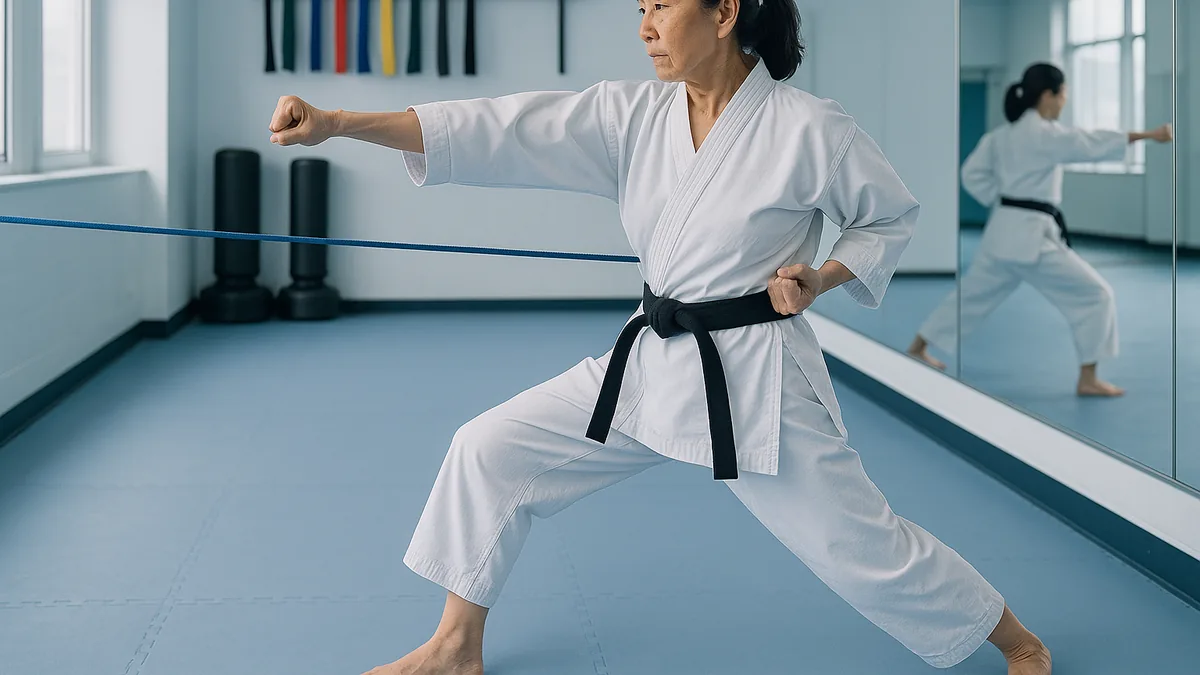
Most students pick up a resistance band, attach it to a door frame, and start throwing punches with it. Within a few sessions they’ve grooved a technique that looks vaguely like a reverse punch but fires nothing like one - the band is pulling them back through the wrong path, they’re compensating with their shoulder, and they’re reinforcing exactly the mechanics they should be fixing. I’ve seen this happen more times than I can count, and it’s not the student’s fault. It’s that nobody told them what bands are actually good for and, more importantly, what they’re not.
Let me be direct about something upfront: resistance bands are a useful supplementary tool, not a replacement for partner work, bag work, or kata. If you’re spending more time with a band than on the floor doing basics, you’ve got the priorities wrong. But used correctly, they can genuinely improve hip drive, shoulder stability, and hip flexor strength in ways that translate directly onto the mat. The problem is the gap between “using bands” and “using bands well.”
What Resistance Bands Actually Do Well for Karate
The honest answer is two things: they add accommodating resistance to movements you already know how to do correctly, and they create tension that teaches you where a movement should be powered from.
That second one is underrated. When you throw a gyaku-zuki with a band anchored behind you, if your hip isn’t driving the punch, the band wins. You’ll feel yourself getting pulled back, your shoulder rounding forward to compensate. That’s information. A beginner just sees it as the exercise being hard. A senior practitioner feels it as feedback - the band is telling you exactly where the power dropped out.
I’d also say bands are genuinely useful for hip flexor and hip rotator work, which is an area most karateka neglect badly. We do a lot of hip extension in our stances and our kicks, but the hip flexors and the rotators that drive mae-geri and mawashi-geri are chronically underdeveloped in most students I’ve trained with. Bands fix that gap well.
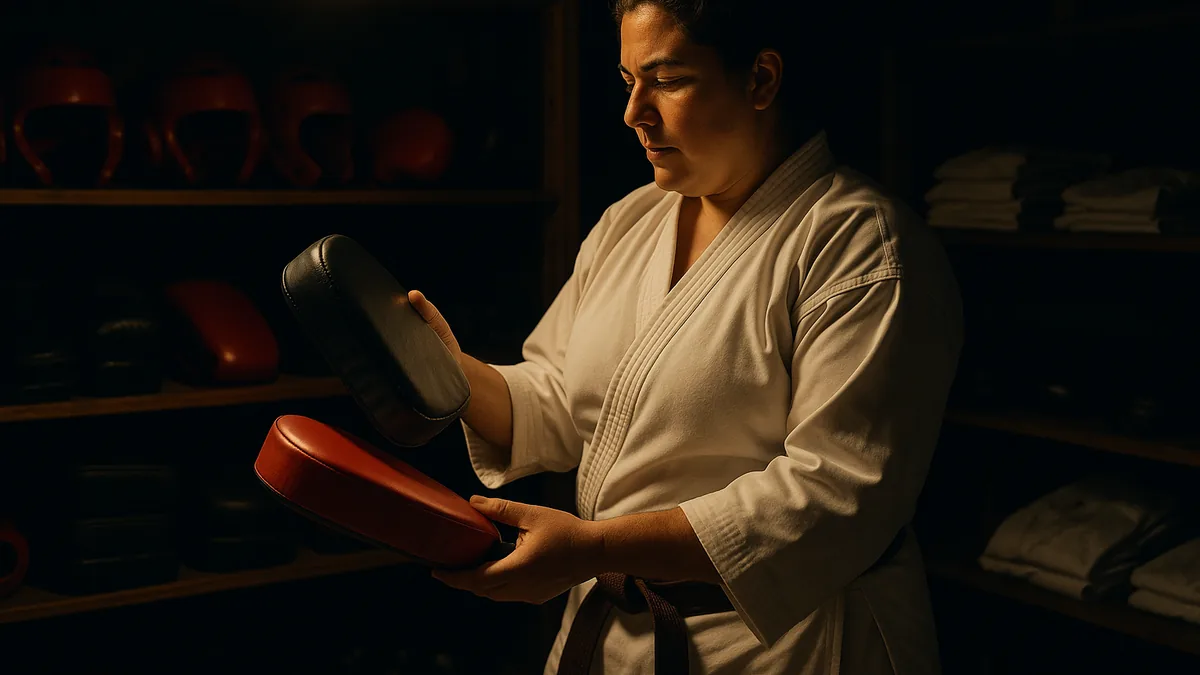
What they’re not good for is speed training. This is where I push back hard. I’ve seen students use light bands to “train fast punches” and it almost always degrades their technique. The band creates an unnatural deceleration arc that doesn’t match what happens when you throw a clean technique. You end up fighting the band rather than expressing the movement. For speed work, focus mitts and Thai pads will do more for you than any band ever will.
The Drills That Actually Work
Hip-Driven Reverse Punch (Gyaku-Zuki) with Band Resistance
This is the one I come back to most. Not because it’s flashy, but because it forces the issue on hip rotation in a way that nothing else quite does.
Why it matters: Most students punch with their arm. The hip rotation is the whole punch - without it, you’re just throwing your arm with a bit of shoulder behind it. The band makes it impossible to fake the hip drive.
Setup: Anchor the band at waist height behind you. Loop it around your waist or hold it in the punching hand - I prefer waist anchor because it loads the hip rather than the shoulder. Step into zanshin-dachi or your preferred fighting stance. There should be light tension in the band before you move.
Execution:
- Start from a chambered position. Feel the band pulling you back - not fighting it yet, just registering the tension.
- Drive the rear hip forward first. Not the shoulder, not the fist - the hip.
- As the hip rotates through, the fist follows. The band will resist the forward drive of your centre.
- Extend fully. Hold the end position for one second.
- Return slowly - this is where most people rush and lose half the benefit.
What to feel for: When you get this right, you feel the resistance through your whole torso, not just your arm. The band is pulling at your waist and you’re driving against it from your legs up. If you feel it mainly in your shoulder, your hip isn’t doing the work.
The mistake I see most often: Students lean forward to beat the band. They tip at the waist and throw the punch from a broken posture because it feels like they’re “winning” against the resistance. What I tell students is - if you’re leaning, you’ve already lost the drill. The whole point is to drive the hip while your spine stays vertical.
Mae-Geri Hip Flexor Drive
I rate this one highly because mae-geri is a technique most people throw with their quad rather than their hip flexor, and the difference in speed and penetration is significant.
Why it matters: A front kick that fires from the hip flexor snaps through the target. One that fires from the quad telegraphs and pushes rather than penetrates.
Setup: Anchor the band low, around ankle height, behind your kicking leg. Stand in a natural fighting stance. There should be slight tension when your kicking leg is in the ready position.
Execution:
- Lift the knee first - drive it forward and up as if you’re trying to bring your knee to your chest.
- The band will resist the knee lift. You’re training the hip flexor to fire hard against resistance.
- Extend the kick from the knee-up position. Don’t rush the extension - the power is in the hip drive, not the snap.
- Chamber back before lowering. This is non-negotiable.
- Lower slowly. Ten reps each side.
What to feel for: You’ll feel this in the crease of your hip, not your thigh. If your thigh is burning but your hip feels nothing, you’re quad-kicking. The burn should be deep in the hip flexor - it feels like something is working that doesn’t usually get asked to work.
Common mistake: Students kick through the band instead of lifting the knee first. They’re performing a kick rather than training the hip drive. The drill isn’t about the kick - it’s about the knee drive that powers the kick.
Shoulder Stability Work for Blocking and Striking
This one is less exciting but I’d argue it’s the most injury-preventive drill on this list. I’ve seen students develop shoulder problems from years of oi-zuki and gyaku-zuki because the rotator cuff is never specifically trained. Bands are ideal for this.
Setup: Light band, anchored at elbow height. Stand side-on to the anchor point.
Execution:
- Hold the band with the arm closest to the anchor. Elbow bent at 90 degrees, upper arm against your side.
- Rotate externally - pull the band away from your body while keeping your elbow pinned to your side.
- Return slowly. The return is as important as the drive.
- 15-20 reps each side. Keep the movement small and controlled. This is not a power exercise.
What to feel for: The work should be in the back of the shoulder - the posterior rotator cuff. If you feel it in your bicep or your front shoulder, you’re compensating. Slow it down.
What Resistance Bands Are Not Good For
I’ll be direct: banded sparring drills are mostly a waste of time. I’ve tried them, I’ve watched other instructors use them, and the movement compensation they create is significant. When you’re fighting a band, you’re not moving like a karateka - you’re moving like someone fighting a band. The patterns don’t transfer.
Banded footwork drills have the same problem. Your footwork in karate needs to be clean and unloaded before you add resistance. Loading a broken pattern just makes the broken pattern stronger. If your footwork needs work, partner drills and bag work will give you better feedback than a band ever will.
Avoiding the Bad Habits
The biggest difference between students who benefit from band training and students who develop bad habits from it comes down to one thing: whether they know what the movement should feel like before they add resistance.
If you can’t throw a clean gyaku-zuki without a band, you shouldn’t be throwing one with a band. The band will simply reinforce whatever you’re already doing - good or bad. My instructor used to say “resistance training amplifies the technique, it doesn’t create it.” I didn’t fully understand that until I watched a student spend three months banded punching and come out the other side with a faster but mechanically worse punch. The band had made his compensations more efficient.
What actually works is this: drill the technique clean first, get feedback from a senior practitioner or instructor, and only then introduce the band as a way to load what you already know is correct.
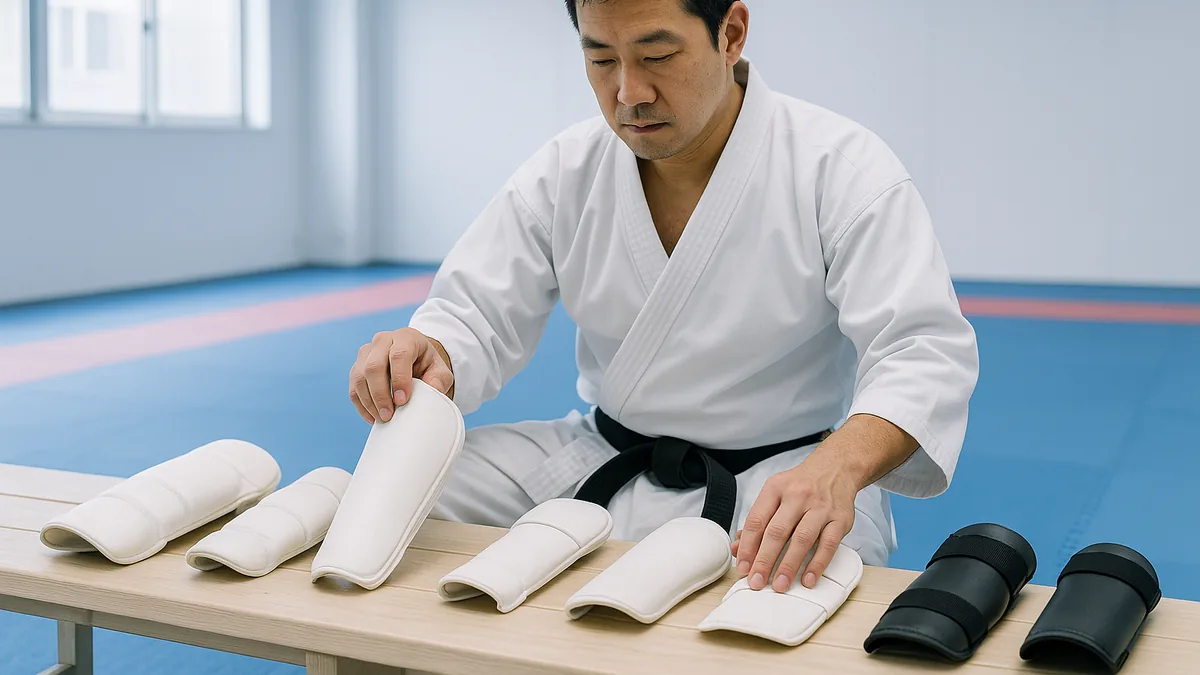
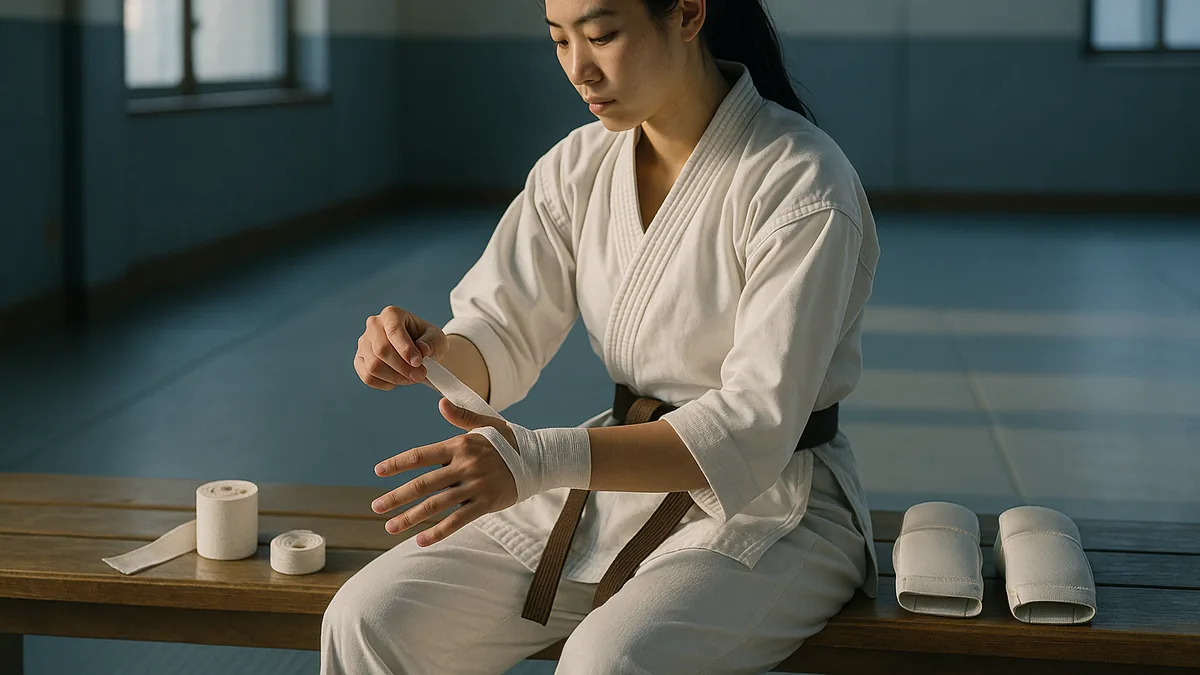
Also - protect your hands and wrists when you’re doing any kind of resistance work that involves gripping. Bands can create unusual loading angles on the wrist. If you’re doing a lot of this work, hand and wrist protection is worth thinking about, especially if you’re training at volume.
Community Perspective
There’s a genuine split in how dojos approach supplementary equipment like bands. Traditional instructors - and I have a lot of respect for this position - often argue that karate training is already complete and that adding gym tools to it reflects a lack of trust in the method. I’ve heard senior instructors say that if your gyaku-zuki is weak, you need more gyaku-zuki, not a band.
I think there’s truth in that, but I also think it’s a bit absolutist. The question isn’t whether bands are traditional - they’re not, and nobody’s pretending they are. The question is whether they develop a quality that transfers to your karate. For hip flexor strength and shoulder stability, I think they do. For speed, timing, or fighting sense, they don’t come close to what you get from partner work.
Where I’ve seen the most disagreement is around sport karate training, where conditioning is taken more seriously and bands are used much more aggressively. WKF-style competitors often do significant band work as part of their conditioning programmes. Traditional practitioners tend to view this with suspicion. My honest position is that both camps are right about something: bands can improve athletic qualities that support karate, but they can’t replace karate training itself.
Key Takeaways
- Only use bands to load a technique you already know how to do correctly. If the technique is broken, the band makes it worse, not better.
- The hip-driven reverse punch drill is the most valuable band exercise for karate. If you only do one, do that one.
- Feel the resistance through your torso and legs, not your shoulder. Shoulder-dominant band work means your hip isn’t contributing.
- Banded speed work almost always degrades technique. For speed development, use focus mitts or Thai pads instead.
- The return phase of every band exercise is where most people lose the benefit. Slow it down on the way back.
- Bands are supplementary. If your band work is taking time away from kata, kihon, or partner work, the priorities are wrong.