What To Wear Under A Karate Gi
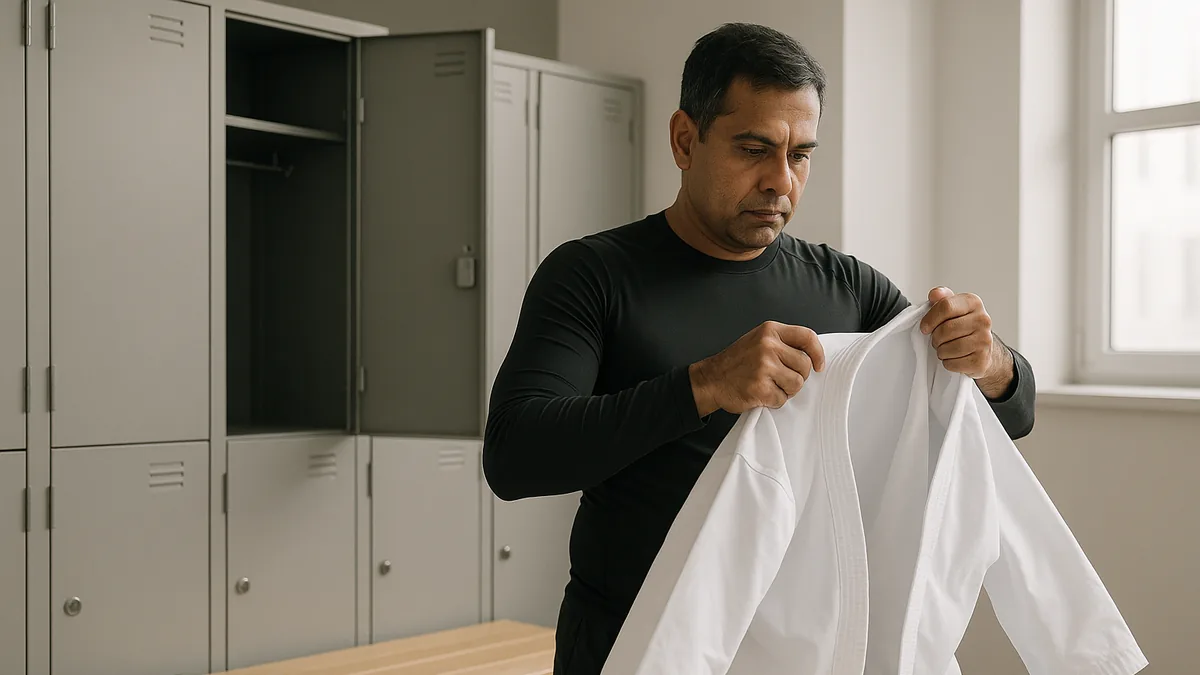
Most people don’t think about what goes under the gi until they’re standing in a cold dojo in January, or sweating through a grading in August, wishing they’d made a different call. I’ve been on both ends of that - shivering through early morning kihon in a sports hall with no heating, and completely soaked through by the end of a summer gasshuku where I’d made the mistake of wearing a thick cotton t-shirt underneath. Both times, it affected my training. Not dramatically, but enough to matter.
This isn’t a complicated topic, but I see people get it wrong constantly - usually because nobody told them, or because they copied what the person next to them was doing without thinking about whether it actually worked.
The Base Layer Question Nobody Asks at the Start
When you first join a dojo, you’re focused on not looking like an idiot. You’re watching your feet, trying to remember which hand goes where, hoping your belt stays tied. Nobody is thinking about base layers. That’s fair. But somewhere around the point where you’re training three or four times a week, this starts to matter.
What I tell students early on is simple: what you wear under your gi affects your movement, your temperature regulation, and - bluntly - how you smell to the person you’re training with. All three of those things affect your training.
The gi itself is not designed to be worn against bare skin. Especially a heavier cotton gi, the collar and lapel can chafe badly, particularly around the neck and underarms during repetitive techniques. I’ve seen beginners come off the floor after an hour of basics with raw patches on their neck from a stiff new gi rubbing directly on skin. That’s entirely avoidable.
What Actually Works: Base Layer Options
A Plain Moisture-Wicking T-Shirt
This is what I’d recommend to most people as the default starting point. Not cotton - cotton holds sweat and gets heavy. A lightweight polyester or nylon moisture-wicking t-shirt sits close to the body, doesn’t bunch under the gi, and does a reasonable job of managing sweat.
I prefer a fitted cut rather than a loose one. Loose t-shirts bunch up under the gi jacket, especially during ground techniques, grappling drills, or anything that involves bending and twisting. You’ll feel it pulling across your back and bunching at the waist. It’s distracting, and it looks messy when your gi comes open.
The colour question is easy: white under a white gi, black under a black gi. Most clubs expect this. I’ve seen students show up with bright blue compression shirts visible under a white gi and get quietly pulled aside. It’s not a major offence, but it marks you as someone who hasn’t thought it through.
Compression Shorts and Leggings
This is where I’ve genuinely changed my view over the years. I used to think compression shorts were unnecessary - something for gym-goers who wanted to look like they were training harder than they were. I was wrong about that.
After a knee injury in my late thirties, I started wearing compression shorts under my gi trousers regularly. The difference in how my legs felt after a long session was noticeable. Not a miracle, but the support around the quads and hamstrings during deep stances and repeated kicking felt different - more stable. I’d describe it as the difference between your muscles feeling contained versus loose during high-intensity work.
For women especially, compression shorts or leggings under the gi trousers are almost universally used, and for good reason - gi trousers are cut generously and don’t always stay in place during dynamic movement. Compression leggings solve that without adding bulk.
If you’re interested in how recovery factors into your overall training load, the article on Recovery For Karate Practitioners covers compression wear in more detail as part of a broader approach.
Rash Guards
Rash guards have crossed over from BJJ and MMA into karate dojos, and I think that’s mostly a good thing. A good rash guard is thin, tight, durable, and manages sweat well. For karate, the long-sleeve version does an excellent job of protecting your forearms during blocking drills - particularly if you’re doing a lot of partner work and your skin is taking repeated contact.
One mistake I see with rash guards is people choosing ones that are too thick. BJJ rash guards are often made for mat work and are heavier than you need. For karate, you want something thin enough that it doesn’t add bulk under the gi jacket. If you’re pulling your gi sleeve over a thick rash guard, it changes how the sleeve sits and can actually restrict your elbow extension on punches. You’ll feel it as a slight tightness at the end of your tsuki - which is not what you want when you’re trying to develop clean technique.
If you want something designed specifically for wearing under a gi rather than repurposed from another sport, Ghostline is worth looking at - they specialise in under-gi sportswear built for karate training. The fit and weight are designed around how a gi sits and moves, which makes a noticeable difference compared to generic compression wear that wasn’t made with martial arts in mind.
Summer vs Winter: It’s Not Just About Temperature
Summer Training
In summer, the instinct is to wear as little as possible underneath. I understand it, but bare skin under a gi jacket is not comfortable for most people - the gi moves against your skin constantly, and sweat makes that worse, not better. A thin moisture-wicking vest or t-shirt is still the right call, even in heat.
What changes in summer is material. You want the lightest, most breathable base layer you can find. If you’re training in a lightweight gi (the Lightweight vs Heavyweight Karate Gi article is worth reading if you haven’t sorted your gi choice yet), the base layer needs to match - a thin gi over a thick base layer defeats the point entirely.
Hydration and skin hygiene matter more in summer. I’ve noticed that people who train in hot conditions and skip the base layer end up with more skin irritation, not less, because the gi fabric is directly on sweaty skin for an hour or more. A thin wicking layer actually reduces that friction.
Winter Training
Cold sports halls and community centres are a reality for most club karateka in the UK. The answer is not to pile on layers - it’s to choose a base layer with slightly more thermal weight and rely on the warm-up to do its job.
I’d recommend a lightweight thermal base layer - the kind designed for running or cycling in cold conditions - rather than a thick fleece or heavy cotton long-sleeve. The goal is to retain some warmth at the start of class without overheating twenty minutes in. If you’re too warm, you can’t remove a layer mid-class without disrupting everything.
For practitioners who train hard into their forties and beyond, managing warmth at the start of class is genuinely important for injury prevention. The Training Karate After 40 article covers this more thoroughly, but the short version is: cold muscles and cold joints do not respond well to explosive technique, and a thermal base layer is part of how you manage that.
Club Expectations: Read the Room
This is where I’d say: ask before you assume. Different clubs have different expectations, and some are stricter than others.
Traditional Shotokan and Goju-ryu clubs tend to be more conservative - white gi, white t-shirt underneath if anything is visible, nothing that draws attention. Some instructors feel strongly that visible logos, coloured compression gear, or anything that breaks the uniform look is disrespectful to the dojo aesthetic. I don’t personally feel that strongly about it, but I’ve trained under instructors who do, and if that’s the culture of your club, respect it.
Sport karate clubs and more modern dojos are generally more relaxed. Compression shorts in club colours, rash guards with logos - none of that raises an eyebrow.
What I tell students is: when in doubt, go plain and go white. You can always loosen up once you know what the culture is. You can’t undo the impression of turning up to your first session with a bright red rash guard visible under your gi.
Hygiene: The Thing Nobody Wants to Talk About
I’ll say it plainly because I’ve had to have this conversation with students more than once: your base layer needs to be washed after every single session. Not every other session. Every session.
A gi can sometimes go two sessions between washes if you’ve been doing mostly kihon and kata. A base layer cannot. It’s against your skin, it’s absorbing sweat directly, and if you’re doing partner work, the person on the other end of your uke will notice.
I’ve noticed that the practitioners who have the worst hygiene issues are usually the ones who treat their base layer like an outer layer - wearing it twice, letting it air dry and assuming that’s enough. It isn’t. Synthetic fabrics in particular hold odour in a way that cotton doesn’t, and a quick airing does nothing to address that.
Two base layers in rotation is the practical solution. Wash one while you wear the other. It’s not complicated, but it makes a real difference to the people training around you.
Community Perspective
This is one of those topics where you’ll get different answers from different dojos, and honestly, from different generations of practitioners.
Older instructors - particularly those who came up through traditional Japanese or Okinawan lineages - often have a strong preference for nothing under the gi, or at most a plain white t-shirt. The argument is that the gi is the uniform, and adding layers undermines that. I’ve heard this view expressed with real conviction by people I respect enormously.
Younger practitioners and those who’ve come through sport karate or cross-trained in other arts tend to be much more pragmatic about it. Compression gear, rash guards, thermal base layers - all of it is treated as functional equipment, no different from the gi itself.
My honest view is that the functional argument wins. A karateka who trains better because they’re warm, supported, and comfortable is serving the art better than one who’s cold and chafed out of principle. But I also think it’s worth understanding why the traditional view exists - there’s something to be said for not hiding behind layers of kit, for feeling the gi move on your body and learning to work with it.
The right answer probably depends on your club, your body, and what you’re training for. What I’d push back on is the idea that base layers are just for beginners who don’t know better, or for soft modern practitioners. I’ve seen high-grade black belts in compression gear and I’ve seen white belts training with nothing underneath. Rank and base layers have nothing to do with each other.
Key Takeaways
- A thin moisture-wicking t-shirt is the right default for most people - fitted, not loose, white under a white gi. Start there and adjust from experience.
- Compression shorts are worth trying, especially if you’re doing a lot of stance work, kicking, or if your legs take time to warm up. The support is real, not imagined.
- Match your base layer weight to the season - thermal for cold halls in winter, the lightest wicking fabric you can find in summer.
- Check your club’s expectations before you show up with coloured compression gear. Some instructors care a lot about this; most don’t, but it’s worth knowing before your first class.
- Wash your base layer after every session without exception. This is basic courtesy to your training partners.
- If you’re using a rash guard, go thin - a thick rash guard under a gi jacket will restrict your arm movement and you’ll feel it at the end of your punches.
The weekly digest
New karate articles, once a week
One email every week with everything new on Karate Lifestyle. No spam; unsubscribe in one click.
We'll email you to confirm. See our privacy policy.