How to Maintain Karate Fitness During Injury Layoffs Without Making Things Worse
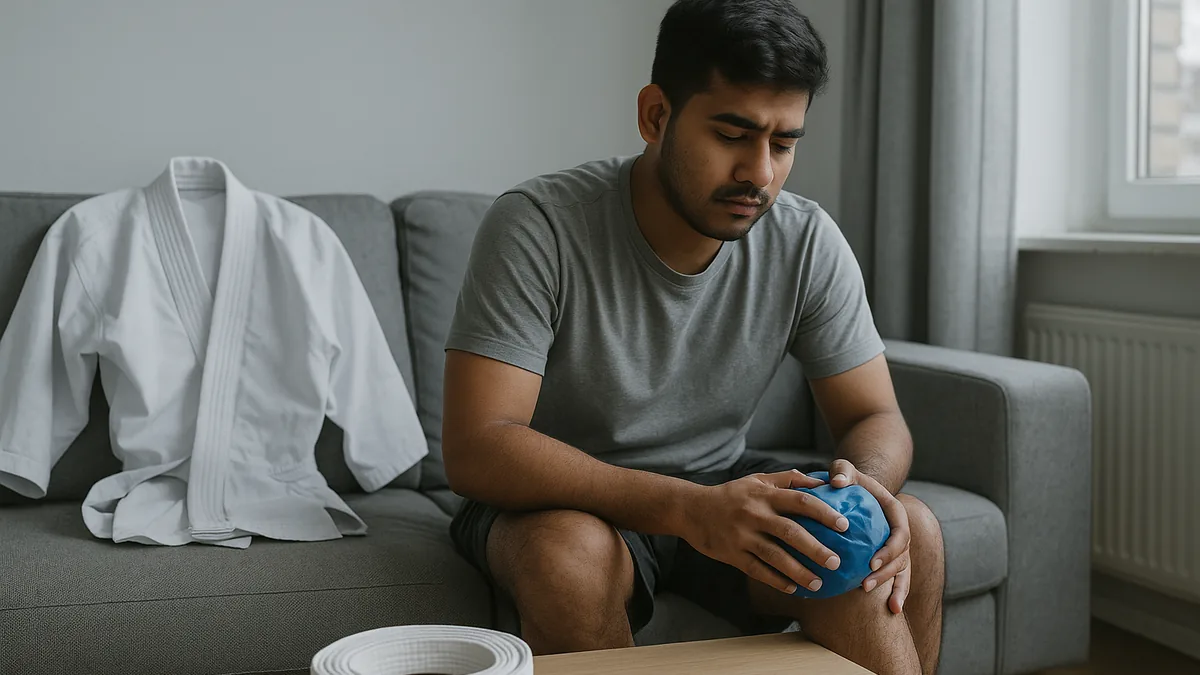
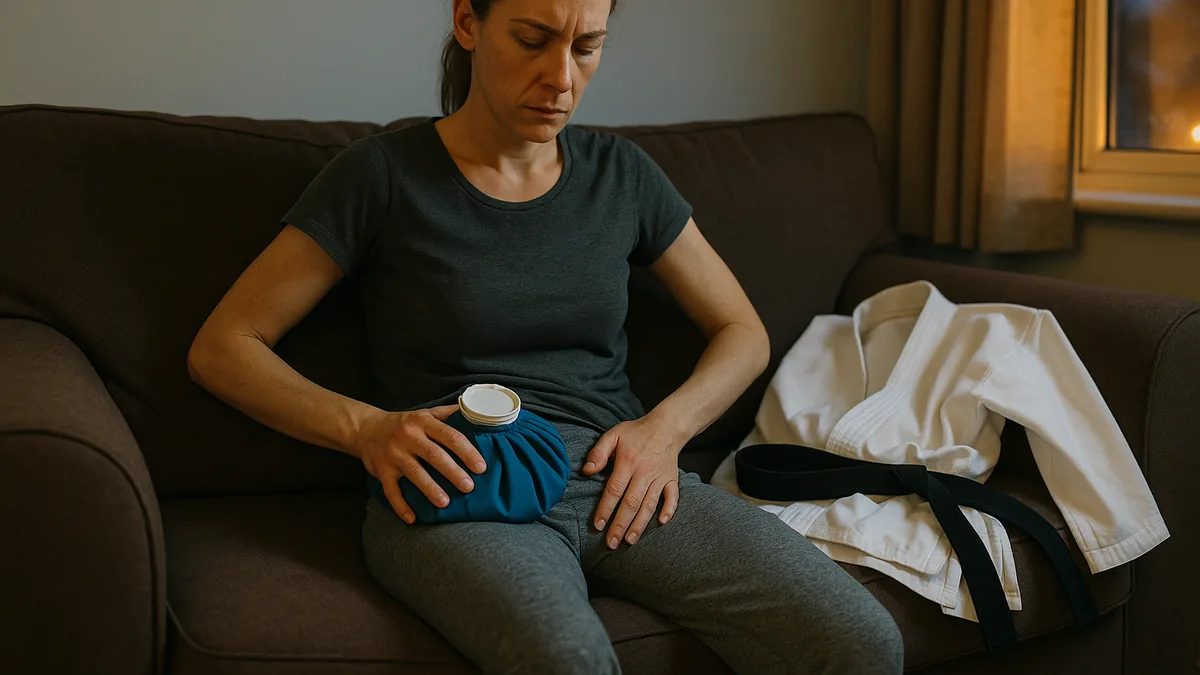
Most people treat an injury layoff like a forced holiday. They rest completely, lose conditioning, come back stiff and weak, then wonder why they feel like a beginner again. I’ve watched this cycle repeat in every dojo I’ve trained in. The smarter approach is to treat the layoff as a different kind of training block - one with different constraints, not zero constraints.
The mistake I see most often is that injured practitioners think in terms of what they can’t do rather than what they can do. A knee injury doesn’t touch your upper body strength. A shoulder problem doesn’t stop you from working hip mobility on a chair. A foot stress fracture doesn’t prevent you from running kata in your head with more detail than you’ve ever managed on the floor. The injury defines the boundary. What you do inside that boundary is still your choice.
This is what I tell every student who comes to me frustrated about being sidelined: your job during this period is to come back better in at least one area, not just recovered to where you were.
Understanding What You’re Actually Maintaining
Before you touch a single exercise, be honest about your injury and get clearance from someone qualified. I’m not a physio, and nothing here replaces that conversation. What I’m sharing is how to use the space around your injury intelligently.
The three things that decay fastest during a layoff are cardiovascular conditioning, neuromuscular sharpness (your body’s ability to fire techniques with timing and precision), and mental readiness. Upper body strength and flexibility decay too, but more slowly than most people expect - you have more time to address those than you think.
Cardiovascular work is the one I’d prioritise least during a serious injury, because the options that don’t compromise healing are limited. I’d rather you spend 20 minutes doing focused upper body work and visualisation than 40 minutes on a stationary bike wondering if you’re irritating something. If your injury genuinely allows low-impact cardio, great. But don’t chase your heart rate at the expense of everything else.
Upper Body Strength and Conditioning
The thing that changes most visibly between a beginner and a senior practitioner is upper body integration - not raw strength, but the ability to connect the shoulder, lat, and core into a single coordinated system. Injury time is the best opportunity you’ll ever have to work on this in isolation, because you’re not distracted by footwork or sparring.
Isometric Punching Drills Against a Wall
This is the drill I come back to most during any period where I can’t train normally. It looks almost embarrassingly simple, but what it trains is real.
Stand close to a wall and place your fist against it in a full-extension position - hikite hand pulled back, punching hand extended, wrist straight. Now push into the wall with about 70% effort and hold for 8-10 seconds. Don’t push harder than that; you’re not trying to move the wall, you’re trying to feel the tension chain from your fist through your forearm, into your shoulder, down through your lat, and into your core.
The thing most people get wrong: they push with the shoulder only. You’ll feel this immediately - it’s a localised burn in the deltoid and nothing else. That’s the wrong sensation. What you want is a feeling of the whole back side of your body engaging, like the lat is “catching” the force. When it’s right, it feels like your entire torso has become part of the punch. That’s the sensation you’re training.
Do this at three different extension points - mid-extension, three-quarter, and full - to work the whole range. Three sets of five holds per position, per arm.
What changes with experience: beginners push with the arm. After a few months of this drill, you start to feel the lat engagement as a separate, controllable thing. That’s a significant shift, and it transfers directly to your punching mechanics when you return to full training.
Band Pull-Aparts and Face Pulls
I prefer resistance bands over weights during injury layoffs because the resistance profile matches karate movement better - it peaks at extension rather than at the beginning of the movement. If you don’t have bands, they cost almost nothing and are worth having.
Pull-aparts: hold a light band at shoulder width with both hands, arms straight in front of you. Pull the band apart horizontally until your arms are fully extended to each side, squeezing the shoulder blades together at the end. This isn’t about the stretch - it’s about the contraction at the end. Hold it for a full second and feel the mid-back engage. Most people rush through this and get nothing from it.
Face pulls: anchor the band at head height. Pull the handles toward your face, elbows high, and finish with your hands beside your ears and your elbows pointing directly behind you. If your elbows drop, you’ve turned it into a row, which is fine but not the same thing. The high-elbow finish trains the external rotation that protects your shoulder in blocks and chamber positions.
I’d recommend three sets of 15-20 reps for both, done slowly. The biggest difference between doing this right and doing it wrong is the speed - slow down and you’ll feel the target muscles working. Rush it and you’re just moving your arms.
Shoulder and Upper Back Flexibility
I’ve noticed that injured practitioners almost always tighten up in the shoulders during a layoff, not because of the injury but because they stop moving. Stiffness breeds stiffness.
The doorframe stretch is the one I use most. Place your forearm vertically against a doorframe - elbow at 90 degrees, upper arm parallel to the floor - and gently rotate your body away from it. You should feel a stretch across the front of the shoulder and chest. Hold for 30 seconds, then shift your arm to a 45-degree angle upward and repeat. Two positions, each side, twice a day.
For the upper back, the thread-the-needle stretch on all fours is underrated. From a hands-and-knees position, slide one arm along the floor under your body, rotating your upper spine. The rotation is the point - you’re working thoracic mobility, which is directly relevant to the rotation in your techniques. If you want more context on why this kind of mobility work matters differently than passive flexibility, the article on Mobility vs Flexibility for Karate Recovery: Why the Difference Matters is worth reading before you start.
Low-Impact Conditioning That Doesn’t Compromise Recovery
The temptation is to find ways to keep sweating. I understand it. But I’ve seen students extend their recovery by two or three weeks because they couldn’t resist doing something that loaded the injury site. The question to ask before any exercise is: does this put force through the injured area, directly or indirectly? If you’re not sure, don’t do it.
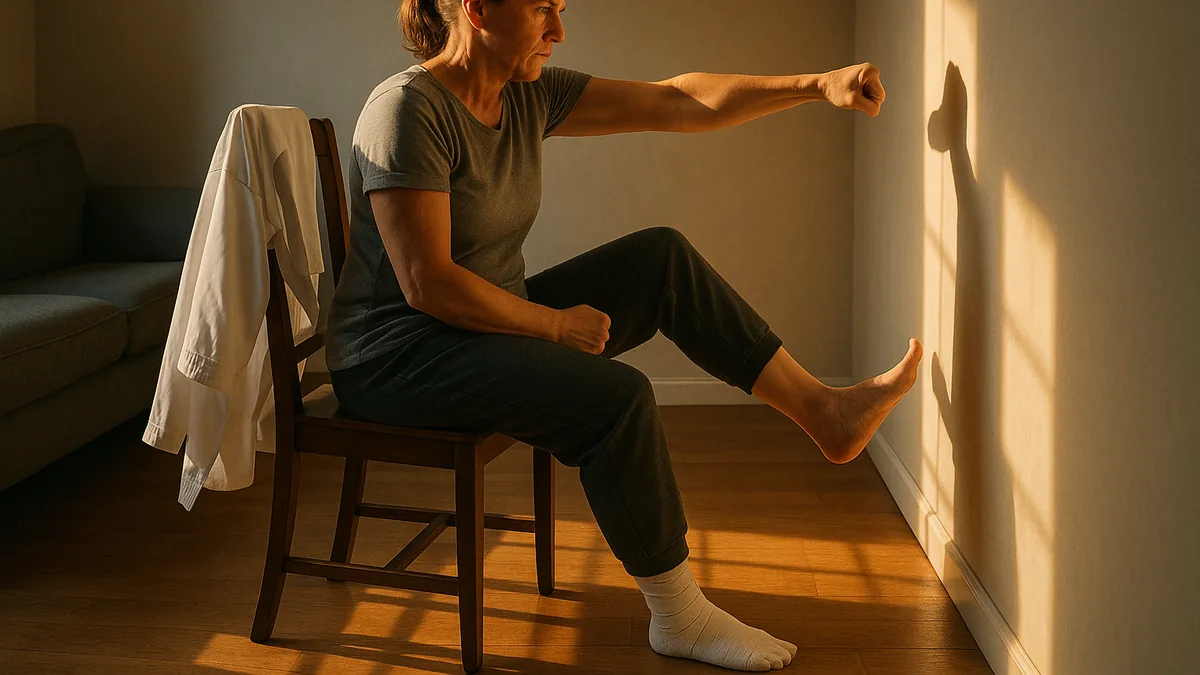
For most lower-body injuries, seated upper body circuits work well. Chair punching with light resistance, seated band rows, shoulder press with bodyweight - none of these are exciting, but they maintain the motor patterns you need.
For upper body injuries, gentle walking combined with focused breathing work and hip mobility in a standing position keeps circulation moving without loading anything problematic. The Active Recovery Days: What Karateka Should Actually Do Between Hard Sessions article has a good framework for thinking about recovery intensity that applies here too.
One thing I’d add: don’t underestimate the value of slow, deliberate kata practice from the waist up, seated or standing depending on your injury. Running through the arm movements of Heian Shodan in a chair sounds like a pale substitute, but it keeps the motor patterns alive in a way that pure visualisation doesn’t quite replicate. There’s a physical feedback loop you get from actually moving your arms through the positions, even without the stances, that matters.
Mental Training Through Visualisation
This is the area where most practitioners leave the most on the table. I used to think visualisation was something sports psychologists talked about and elite athletes did - not something relevant to a club-level practitioner with a sprained ankle. My instructor used to push it constantly and I largely ignored it until I had a shoulder injury that kept me out for six weeks. With nothing else to do, I actually committed to it properly. I came back with cleaner timing on several techniques than I’d had before the injury. That got my attention.
The research on visualisation is solid, but what changed my understanding wasn’t the research - it was noticing that when I visualised a technique incorrectly and then physically performed it, my body went to the wrong position. The mental model drives the physical execution more than most of us realise.
How to Actually Do This
Sit somewhere quiet where you won’t be interrupted. Close your eyes and place yourself in your dojo. Not an abstract dojo - your dojo. The smell of it, the floor texture, the sounds. This specificity matters because you’re trying to activate the same neural pathways as actual training, and vague imagery doesn’t do that as effectively.
Now run a kata from start to finish in real time - not faster, not slower. Feel the floor under your feet. Feel the tension in the muscles at each kime point. Feel the weight shift in each stance transition. If you lose the image or rush through a section, stop and go back. The discipline of staying in the movement at real speed is the whole point.
The mistake I see most often when students first try this is that they watch themselves from the outside, like watching a video. That’s not useless, but it’s less effective than first-person, felt experience. You want to be in the technique, not observing it.
Start with five minutes and build to 15-20. Do it daily. Pair it with your physical work so the mental and physical reinforce each other.
Community Perspective
There’s genuine disagreement in karate circles about how much training you should push through during injury. Some instructors - particularly in traditional Japanese and Okinawan lineages - have a strong culture of training through discomfort, and the line between “discomfort” and “injury aggravation” gets blurry. I’ve trained with people who wear this as a badge of honour and ended up with chronic problems as a result.
The counter-tendency, increasingly common in sport karate and younger dojos, is to treat any injury as a reason to stop completely and wait for full clearance. This avoids making things worse, but it also produces practitioners who lose months of conditioning unnecessarily.
I think the honest position is that both extremes are wrong. The culture of training through everything damages people. The culture of complete rest wastes time and produces a mental fragility around injury that becomes its own problem. The middle path - training intelligently around the injury, maintaining what you can, accepting what you can’t - is harder to navigate but produces better long-term practitioners.
The other disagreement worth naming: some senior practitioners are sceptical of visualisation as a serious training tool. I respect that scepticism, but I’d ask those practitioners to actually commit to it for four weeks before dismissing it. The results speak for themselves.
Key Takeaways
- The injury defines the boundary - your job is to train as intelligently as possible inside it, not to wait passively for it to heal.
- Isometric punching drills against a wall are the single most underused upper body tool during injury layoffs. The sensation you’re training - lat engagement connecting into the punch - transfers directly to your technique when you return.
- Slow down your band work. If you’re not feeling the target muscle working, you’re moving too fast. Half the speed, twice the effect.
- Visualisation in first-person, felt experience, at real speed is a different thing from watching yourself from outside. The first one trains your nervous system. The second one is closer to watching a video.
- Don’t let shoulder stiffness accumulate during a lower-body injury. Two doorframe stretches a day takes three minutes and keeps the mobility you’ll need when you come back.
- Sleep and recovery quality during injury is at least as important as during normal training - your body is repairing. If you want to understand why, the article on Sleep and Karate Performance: What Serious Practitioners Get Wrong covers the mechanisms in practical terms.
The weekly digest
New karate articles, once a week
One email every week with everything new on Karate Lifestyle. No spam; unsubscribe in one click.
We'll email you to confirm. See our privacy policy.