How to Structure Recovery in the Week Before a Grading or Competition: What to Taper, What to Keep, and What Most Practitioners Get Backwards
Most students get the pre-grading week completely backwards. They train harder, squeeze in extra sessions, drill combinations until their legs give out, and arrive at the grading or competition already depleted. I’ve watched it happen dozens of times. The thinking is understandable - you feel undertrained, you’re anxious, and doing more feels like doing something about it. But you’re not building fitness in that final week. You’re just spending what you’ve already saved.
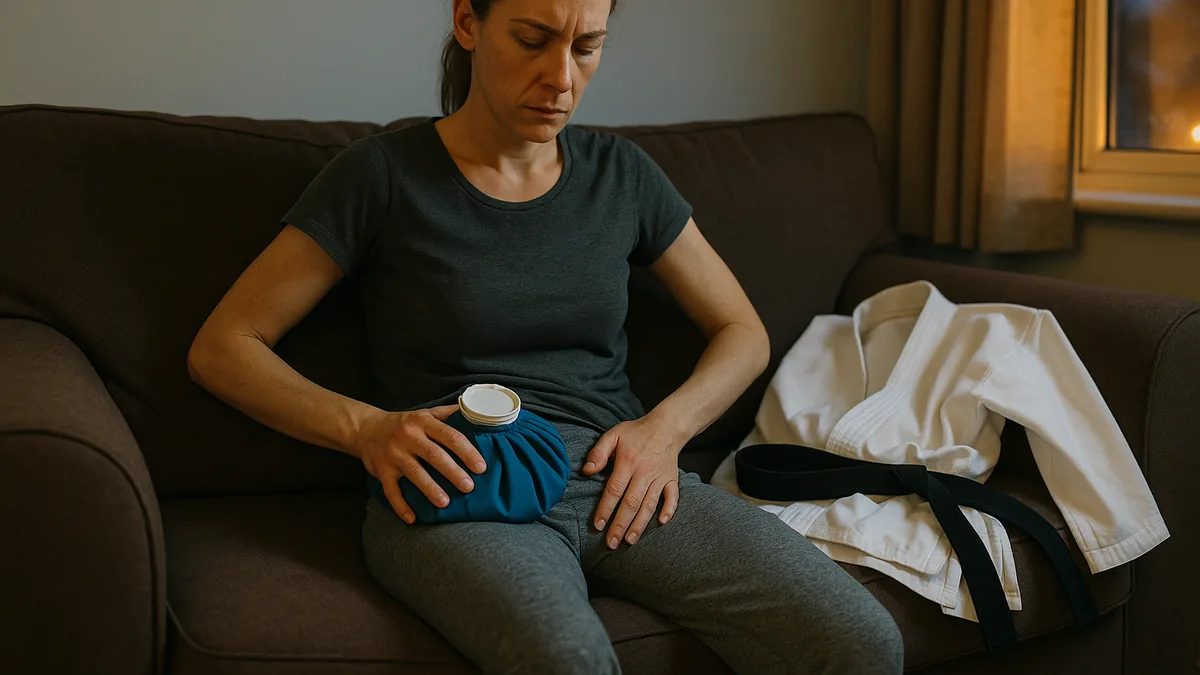
The week before a grading or competition is not a training week. It’s a recovery week with a specific structure. Get that distinction clear and everything else follows.
Why Most Practitioners Taper Wrong
The mistake I see most often is confusing volume with readiness. Students think that if they’re not training hard, they’re getting worse. They’re not. Fitness adaptations from training take days to weeks to manifest. The conditioning you built over the last three months is already in your body. What you’re doing in this final week is clearing the fatigue that’s sitting on top of it.
Think of it like this: your actual fitness level is a number. Accumulated fatigue is a weight pressing down on that number. When you taper correctly, you lift the weight. Your performance goes up - not because you got fitter, but because you stopped suppressing what was already there.
I used to think my best performances came from training right up to the event. My instructor kept telling me to back off in the final week and I ignored it for years. Then I had a grading where life forced me to take five days almost completely off beforehand. I walked in feeling sharp, loose, and fast in a way I hadn’t felt in months. That was the moment it clicked.
If you want a deeper look at how to structure proper deload periods throughout your training year - not just pre-grading - Deload Weeks for Karateka: Do You Need Them and How to Structure One Without Losing Sharpness is worth reading before your next training cycle.
What to Cut
Volume. Cut it significantly. I’d recommend dropping to roughly 40-50% of your normal weekly training volume. If you normally train six hours across the week, you’re looking at three hours maximum in the pre-event week. Probably less.
That means fewer sessions, shorter sessions, or both. I prefer fewer sessions over shorter ones, because the mental reset of a full rest day is worth more than squeezing in a 30-minute technical session every day.
What you cut completely:
- Sparring that goes above 60-70% intensity. Light technical sparring is fine. Full contact or hard competition rounds are not.
- Heavy bag work. Your hands and shins need to arrive fresh.
- Strength and conditioning sessions. If you’re still doing circuits and weights in the final week, you’re not tapering, you’re just training less.
- Anything that leaves you sore the next morning.
I’ve seen students do a full contact sparring session two days before a grading and show up with bruised ribs and a swollen hand. That’s not dedication. That’s poor planning.
What to Keep
Intensity. This is the part most people get backwards.
When you taper, you reduce volume - not intensity. The sessions you do keep should still feel sharp. If you’re doing kihon, you’re doing it with full commitment, full kime, full speed on the techniques you choose. You’re just doing fewer of them. If you’re drilling a combination, you’re drilling it correctly and crisply, not lazily running through it to feel like you did something.
The reason intensity matters here is neurological. Your nervous system needs to stay primed. If you spend a week doing everything at 50% effort, you’ll feel slow and flat on the day. Keep the quality high. Just reduce the quantity.
What to keep:
- Short, focused kihon sessions - 20 to 30 minutes maximum, full commitment
- Your kata at full performance level, run through a handful of times, not dozens
- Light technical partner work if you have access to a training partner
- Your normal warm-up and mobility routine
One specific thing I always keep in the final week: a single, clean run-through of the kata or combination I’ll be performing, done exactly as I intend to do it on the day. Not for practice. For confidence. You’re reminding your body of what it already knows.
Sleep Is Training
I’ll be direct about this because it gets treated as optional advice rather than a core part of the taper: sleep is the single most important recovery tool you have, and most practitioners underuse it.
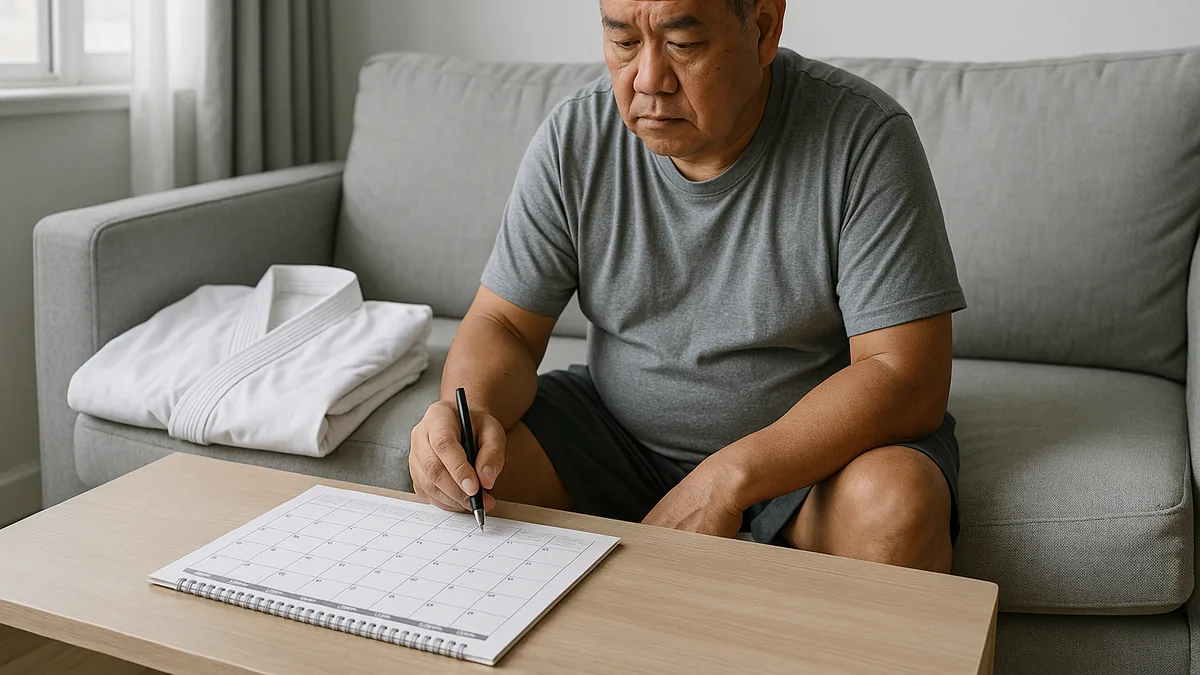
In the week before a grading or competition, I tell students to treat sleep the way they treat training. It goes in the diary. It has a consistent schedule. It doesn’t get sacrificed for late-night social media or extra revision of kata videos on YouTube.
During deep sleep, your body releases growth hormone, repairs tissue, and consolidates motor patterns. That kata you’ve been drilling for months gets further embedded in your nervous system while you sleep. Cutting sleep short in the final week is the equivalent of skipping recovery sessions throughout the year - you’re leaving performance on the table.
Aim for a minimum of eight hours. Nine is better. If your sleep quality has been inconsistent, tracking it in a training diary in the weeks leading up to an event can help you spot patterns before they become a problem.
Practical steps that actually help:
- Same bedtime and wake time every night of the taper week, including weekends
- No screens for 45 minutes before bed - this one is harder than it sounds but the difference is real
- Keep the room cool and dark
- Avoid caffeine after 2pm, especially if you’re already running on pre-event anxiety
Mental Preparation and Visualization
This is where the taper week pays dividends that physical training can’t buy, and it’s also where I see the most wasted opportunity.
Visualization is not mystical. It’s a practical tool that works because your nervous system doesn’t fully distinguish between a vividly imagined movement and an executed one. The motor pathways fire. The patterns get reinforced. Done correctly, ten minutes of focused visualization is doing something real.
Here’s how I actually use it, and what I tell students to do:
Step 1: Find somewhere quiet. Sit or lie down. Close your eyes and spend a minute just breathing, letting the body settle.
Step 2: Build the environment. Don’t just imagine yourself performing - imagine the dojo, the floor, the smell of it, the sound of the examiner’s voice or the competition crowd. The more specific and sensory, the more effective.
Step 3: Run through your performance from the inside. Not watching yourself from outside like a video - feeling it from inside your body. Feel your feet on the floor. Feel the weight shift in your stance. Feel the snap of kime through your arm. When the timing is right in your visualization, you’ll notice something that feels almost like a physical twitch or a sense of completion in the movement. That’s the signal you’re doing it right.
Step 4: Include the difficult moments. Don’t just visualize the perfect performance. Visualize a moment where something doesn’t go as planned - and then see yourself recovering, continuing, finishing strong. This is what separates useful visualization from wishful thinking.
Step 5: End with a moment of stillness and confidence. Not arrogance. Just the feeling of having done the work and being ready.
Ten minutes a day for the pre-event week. That’s it. Most students spend more time than that scrolling through competition footage and working themselves into anxiety spirals.
Recovery Tools in the Final Week
I’m not going to give you a long list of options and leave you to decide. Here’s what I actually use and recommend in the taper week:
Contrast showers work. Hot for two minutes, cold for 30 seconds, repeat three or four times. You’ll feel the difference in muscle looseness within a day or two. If you want a more detailed breakdown of which recovery tools are actually worth the effort, Epsom Salts, Contrast Showers, and Compression: Which Recovery Tools Are Actually Worth It for Karateka? covers it properly.
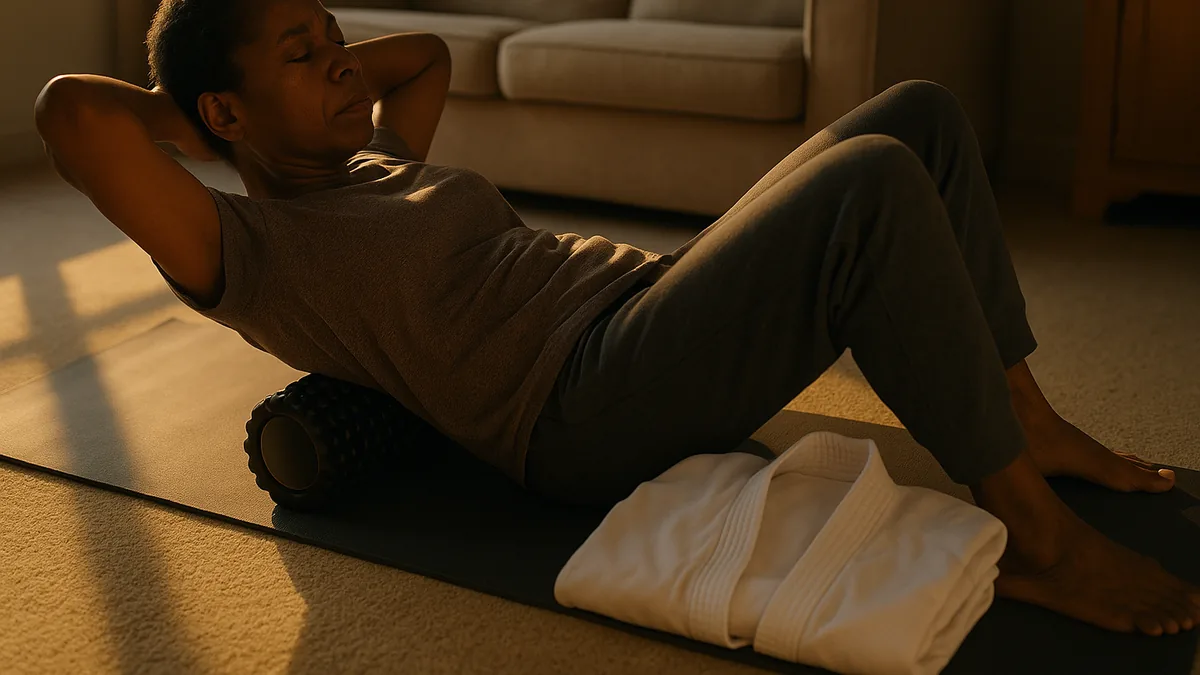
Light movement on rest days - a 20 minute walk, some gentle mobility work - keeps you from feeling stiff without adding training stress. This is not optional extra training. It’s active recovery.
What I don’t prioritise in the final week: ice baths. The research on cold exposure for performance is more nuanced than the social media version suggests, and in a taper week where you’re not accumulating the kind of muscle damage that ice baths address, the benefit is limited. If you’re curious about where cold exposure actually earns its place in a training programme, Cold Exposure and Ice Baths for Karate Recovery: Do They Actually Work? is worth reading with a critical eye.
Community Perspective
There’s a genuine split in how different dojos and associations approach the pre-grading week, and it’s worth being honest about it.
Traditional schools - particularly those with a strong Japanese or Okinawan lineage - often push hard right up to the grading. The philosophy is that you should be training every day regardless of what’s coming, and that a grading is not something you prepare for specifically, it’s something you’re always ready for. I have respect for that philosophy and I understand where it comes from. But I’ve also seen it produce exhausted students who perform below their actual level on grading day.
Sport karate practitioners and those from a competition background tend to be more comfortable with structured tapering, partly because the performance sport world has decades of evidence behind it and partly because competition results are immediate and visible feedback.
My position: the physiology doesn’t care about tradition. Fatigue suppresses performance. Tapering removes fatigue. If your goal is to perform at your best on a specific day, you taper. You can hold both the traditional mindset and the practical reality at the same time.
The other common disagreement is over how much to train in the final 48 hours. Some instructors say nothing. Some say one light session. I prefer one short, sharp session the day before - 20 minutes of focused kihon and a clean kata run-through - followed by complete rest on the day before the event. That timing works for most people I’ve coached.
Key Takeaways
- Cut volume by 40-50% in the final week. Keep intensity high. This is the most important structural decision and most people get it backwards.
- Sleep is not optional recovery. Eight to nine hours a night, consistent schedule, treated with the same discipline as training.
- Visualization done properly - from inside your body, including difficult moments, building the full sensory environment - is a real performance tool. Ten minutes a day is enough.
- Avoid anything that leaves you sore. Sparring hard, heavy bag work, and strength sessions have no place in the taper week.
- One clean, full-commitment run-through of your grading material each day is enough technical work. You’re confirming what you know, not building new skill.
- The fitness is already there. Your job this week is to stop suppressing it.
The weekly digest
New karate articles, once a week
One email every week with everything new on Karate Lifestyle. No spam; unsubscribe in one click.
We'll email you to confirm. See our privacy policy.