Stretching Before vs After Karate Training: What the Evidence and Experience Actually Say
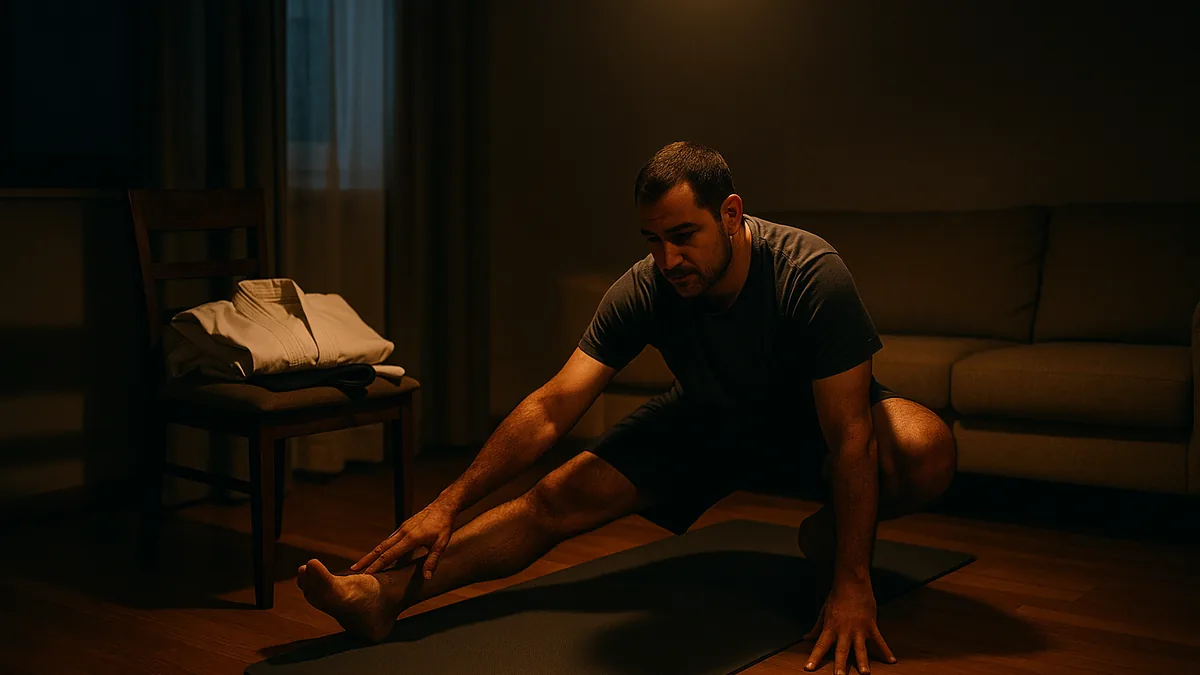
I’ve watched more students pull a hamstring in the first ten minutes of class than at any other point in training. And almost every time, the cause is the same: they dropped into a static stretch cold, held it for thirty seconds, stood up, and went straight into a roundhouse kick at full extension. Something gave way. They limped off. And they genuinely had no idea they’d done anything wrong, because they’d been told to stretch before training and they’d stretched before training.
The problem isn’t the stretching. It’s the timing, the type, and the complete misunderstanding of what stretching is actually for at each stage of a session.
This took me an embarrassingly long time to sort out properly in my own training. I trained for years doing exactly what I’d seen senior students do, which was mostly a combination of whatever felt comfortable and whatever the instructor had us do in the first five minutes of class. It wasn’t until I started grading students myself, watching what happened to their bodies across a full session, that I started paying real attention to when things went wrong and why.
Why the Type of Stretching Matters More Than the Timing
Most people frame this debate as “stretch before or after?” That’s the wrong question. The question is what kind of stretching, and what are you trying to achieve with it.
Static stretching - where you hold a position for an extended period - reduces the contractile force of a muscle temporarily. You’re essentially telling the nervous system to back off. That’s exactly what you want at the end of a session when you’re trying to let tissue decompress and recover. It’s the opposite of what you want before you throw a gyaku-zuki at speed.
Dynamic stretching - controlled movement through a range of motion - does something different. It increases blood flow, raises tissue temperature, activates the neuromuscular pathways you’re about to use, and gradually takes joints through the range you’ll need during training. It prepares the body to move fast and absorb impact.
I’ve noticed that students who do nothing but static stretching in the warm-up often look stiff during the first half of class, even though they’ve been stretching. Their kicks feel laboured, their transitions are slow, and they complain their hips feel tight. The static work hasn’t warmed them up - it’s dampened the system they were about to use.
What I tell students is: think of dynamic stretching as switching the engine on, and static stretching as letting it cool down properly. You wouldn’t skip either stage, but you wouldn’t confuse the order.
What Dynamic Stretching Actually Looks Like in Practice
This isn’t complicated, but it does require intention. A dynamic warm-up for karate isn’t just jogging around the dojo and doing a few leg swings. It should mirror the movement demands of the session.
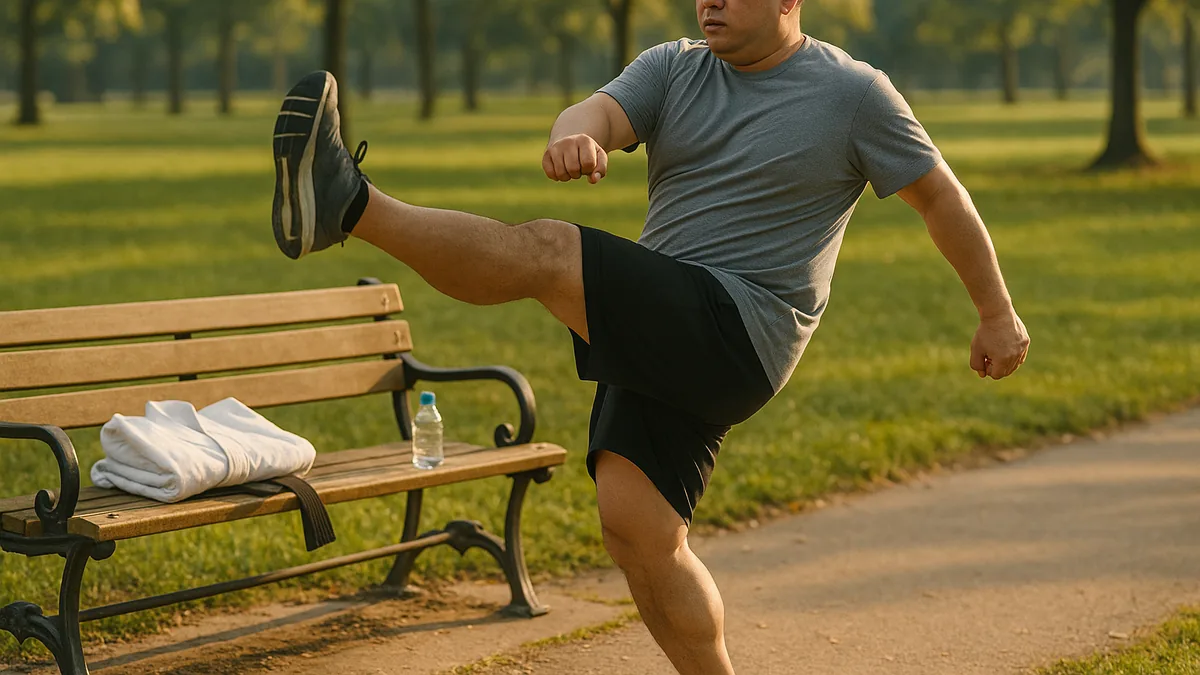
If you’re training kicks heavily, your dynamic work should include hip circles, leg swings (front-to-back and lateral), knee raises with rotation, and slow controlled mae-geri progressions that build through range without forcing it. If you’re working on hand techniques and footwork, you want shoulder circles, torso rotations, hip switches, and lateral lunges.
The thing that changed my understanding here was watching how senior practitioners moved during warm-ups compared to lower grades. Beginners tend to rush the warm-up to get to the “real” training. Senior practitioners treat the warm-up as training. Every movement is deliberate. They’re not just warming up - they’re calibrating.
One mistake I see constantly is students doing leg swings with zero control. The leg flies up, the hip drops, the standing leg collapses slightly, and the whole movement is driven by momentum rather than muscle. It looks like flexibility. It isn’t. It’s just pendulum physics. What you want is a controlled swing where you feel the hamstring engage at the top of the movement and the hip flexor engage on the way back down. You’ll feel a distinct difference - the controlled version produces a mild burn in the working muscles. The momentum version produces nothing except the illusion of progress.
If you want a structured approach to building this into your sessions, the warm-up routines for karate training article covers the sequencing in more detail. But the principle is simple: move through range with control, progressively, before you start demanding speed and power from those same movements.
Static Stretching After Training: The Part Most People Skip
Here’s my honest opinion: the post-training stretch is more important than the pre-training stretch, and it’s the one that gets dropped first when time is short.
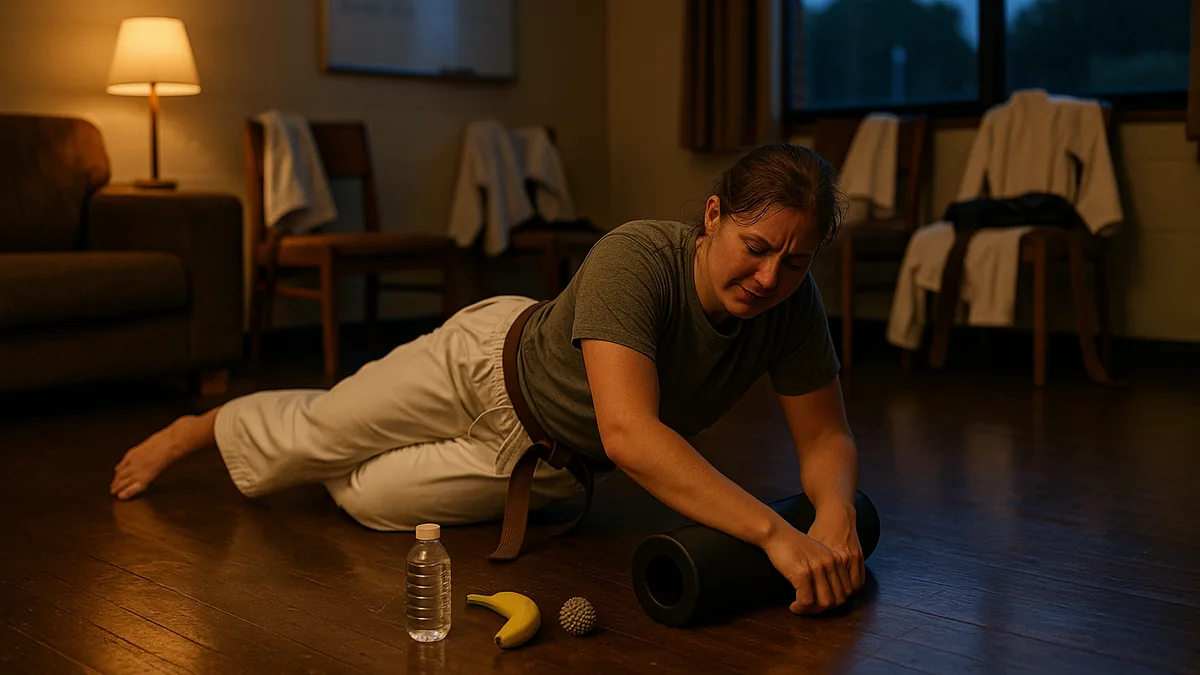
I understand why. You’re tired, you’ve got a drive home, the dojo needs to be cleared, and frankly the hard work is done. But the post-training period is when your muscles are most pliable, most receptive to lengthening, and most in need of the signal to stop contracting. Skipping it consistently is one of the main reasons practitioners develop chronic tightness in the hip flexors, hamstrings, and hip rotators over years of training.
I used to think the cool-down stretch was about flexibility gains. That’s part of it. But by the time I was training at brown belt level, I realised it was more about recovery - specifically, reducing the residual tension that accumulates through a session and that, if left unchecked, compounds into the next session’s stiffness.
The sessions where I’ve skipped the post-training stretch and gone straight home, I’ve noticed I wake up the next morning with a particular kind of tightness in the hip flexors and lower back that takes most of the morning to clear. On sessions where I’ve taken ten to fifteen minutes to work through a proper static sequence, the recovery is noticeably faster. Not dramatically different after one session, but the difference accumulates.
If you’re doing intensive training blocks or camps, this becomes critical. The how to manage DOMS after intensive karate training camps article goes into the recovery side in depth, but the post-session stretch is your first line of defence before DOMS even sets in.
For static stretching after training, hold each position for at least thirty seconds. Forty-five to sixty is better. You’re not trying to force range - you’re letting the tissue settle. You’ll feel the difference between a stretch that’s being forced and one that the muscle is accepting. Forced stretches feel like a tug-of-war. An accepted stretch feels like a slow, progressive release - like tension unwinding rather than being pulled apart.
Common Mistakes I’ve Actually Seen (And the Corrections That Work)
Stretching cold. This is the big one. Someone arrives at class five minutes early and decides to use the time productively by sitting in a full straddle. The tissue is cold, the nervous system hasn’t been primed, and they’re loading the hip adductors with their full bodyweight before a single drop of synovial fluid has moved around the joint. The correction is simple: do at least five minutes of light movement first. Walk, do slow knee raises, rotate the arms. Get the system running before you start demanding range from it.
Bouncing in static stretches. Ballistic stretching has its place in advanced training, but the version I see from beginners isn’t ballistic stretching - it’s impatience. They drop into a hamstring stretch, feel resistance, and start bobbing to try to push through it. This activates the stretch reflex, which makes the muscle contract against the stretch. You’re fighting yourself. The correction: hold still, breathe out, and wait. The release comes from patience, not force.
Treating the warm-up stretch as the workout. I’ve had students who spend twenty minutes on elaborate stretching routines before class and then have nothing left for the actual session. Their flexibility work is impressive. Their karate is suffering because they’ve fatigued the muscles they need. The warm-up serves the training - it doesn’t replace it.
Ignoring the hips. Most practitioners spend the majority of their stretching time on hamstrings because they can feel the tightness there. But in karate, the hip flexors and hip rotators are doing at least as much work, and they’re harder to feel until they’re genuinely restricted. I’ve corrected more kicks that were limited by hip flexor tightness than hamstring tightness. The correction is to actively include pigeon pose variations and kneeling hip flexor stretches in the post-training sequence, not just the obvious hamstring work.
This connects to something worth reading if you haven’t - the mobility vs flexibility for karate recovery piece, because what most practitioners call “flexibility problems” are often mobility problems, and the solution is different.
Community Perspective
This is one of those topics where dojos genuinely differ, and I think it’s worth being honest about that rather than pretending there’s universal agreement.
Traditional karate training often begins with formal group warm-up led by a senior student or instructor, and the content of that warm-up varies enormously between dojos. Some schools still open with extended static stretching sequences that have been passed down unchanged for decades. Some instructors hold this as part of the tradition and the discipline of the class. I’ve trained in dojos where questioning the warm-up structure would have been considered disrespectful.
I don’t think that’s entirely wrong. There’s something to be said for the ritual of a shared warm-up, for the mental preparation it provides, and for the fact that a structured sequence - even an imperfect one - is better than no warm-up at all. If a dojo’s traditional warm-up involves some static stretching before training and it’s been working for decades without a string of injuries, I’m not going to walk in and tell them they’re doing it wrong.
What I’d say is: if you have the autonomy to structure your own warm-up, the evidence from both sports science and practical experience points clearly toward dynamic work first, static work after. If you’re in a traditional dojo where the structure is fixed, do your dynamic work before you arrive. Get to the dojo five minutes early and do your leg swings and hip circles in the car park. Then participate in the class warm-up. You’re not undermining anything - you’re just taking responsibility for your own preparation.
The why karateka get injured in the warm-up article is worth reading if you’re navigating this in a traditional training environment, because it addresses the practical reality of training within structures you don’t fully control.
Key Takeaways
- Dynamic stretching before training - controlled movement through range, not held positions - primes the neuromuscular system and reduces injury risk. Static stretching before training can temporarily reduce muscle force output, which is the opposite of what you need.
- The post-training static stretch is not optional if you care about recovery. Ten to fifteen minutes of held stretches after class will make a measurable difference to how you feel the next morning, and a significant difference across a training block.
- One mistake I see constantly: stretching cold. Even five minutes of light movement before you start demanding range from a muscle changes everything. The tissue needs to be warm before it will respond to stretching.
- Hip flexors and hip rotators get neglected because they’re harder to feel than hamstrings. Include them deliberately in your post-training routine - your kicks will thank you within a few weeks.
- If your dojo structure means you can’t control the warm-up, arrive early and do your dynamic work independently. Take ownership of your preparation.
- For foam rolling and additional recovery tools to use alongside your stretching routine, the foam rolling for karate guide covers which muscles actually benefit and which ones you’re probably wasting time on.
The weekly digest
New karate articles, once a week
One email every week with everything new on Karate Lifestyle. No spam; unsubscribe in one click.
We'll email you to confirm. See our privacy policy.