How to Train With a Partner Who Is Much Weaker Than You Without Wasting the Round or Damaging Their Confidence
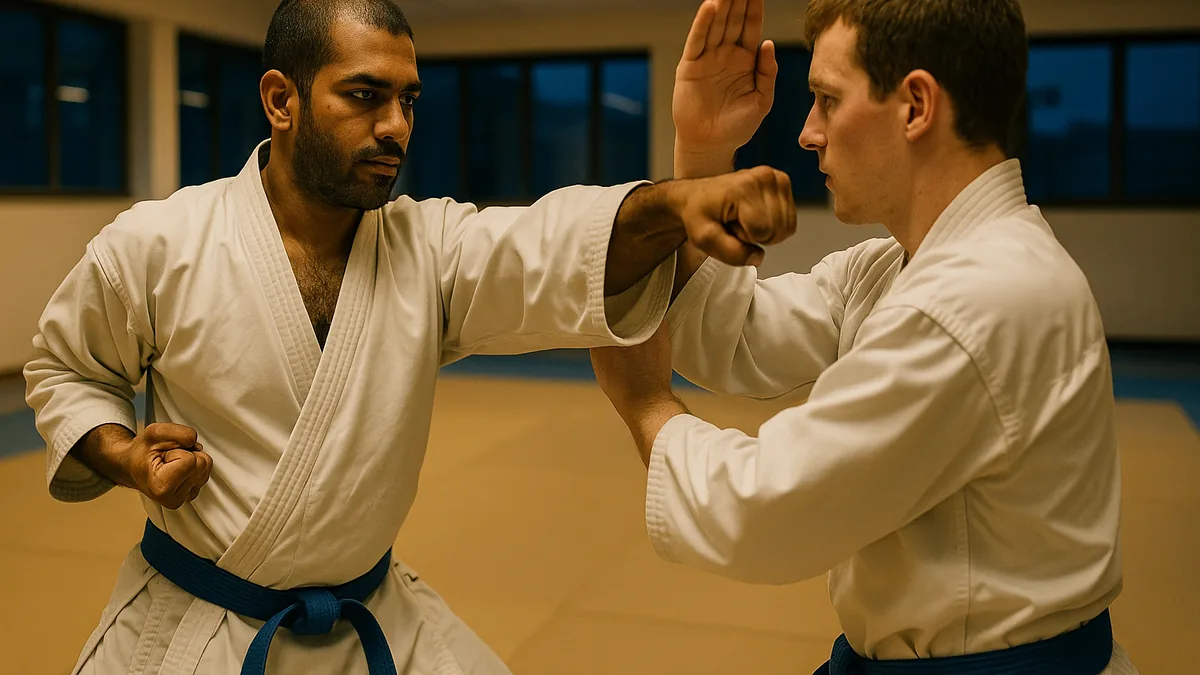
Most people approach this pairing completely wrong. The stronger practitioner either holds back so much that the round becomes meaningless, or they don’t hold back enough and the weaker partner spends the session just surviving. Neither of those is training. I’ve watched this play out hundreds of times, and the failure almost always comes from the same misunderstanding: the senior partner thinks their job is to go easier. It isn’t. Their job is to train smarter.
There’s a real skill to working with someone who is significantly less experienced or less physically capable than you. Done well, you get one of the most productive rounds of your week. Done badly, you waste your time and chip away at your partner’s confidence until they dread being paired with you.
Here’s what actually works.
Understand What You’re Actually Training For
When you’re paired with a weaker partner, your training goal shifts. You’re no longer drilling power, timing at full speed, or pressure-testing your reactions against someone who can genuinely threaten you. Accept that, and the round becomes useful. Fight it, and you’ll spend the whole time frustrated.
What you can train - and what I’d argue is undervalued at every level - is precision, control, and the quality of your technique at reduced intensity. This is where senior practitioners who are paying attention actually sharpen things that full-speed sparring hides. When you’re not reacting to a real threat, you notice whether your hikite is actually pulling back or just going through the motion. You notice whether your stance collapses on the return or holds structure. You notice whether your oi-zuki is a real punch or just a lunge with your arm extended. If you want to revisit what that punch should actually feel like, this breakdown on oi-zuki is worth your time.
The round with a weaker partner is a refinement session. Treat it like one.
The Drills That Make This Pairing Work
Controlled Combination Feeding
Why it matters: Most weaker practitioners struggle to respond to combinations because they don’t know where to look or what to expect. When you slow down and feed techniques deliberately, you’re giving them a real learning opportunity while you work on your own delivery - specifically, whether each technique in a combination is actually landing with structure or just filling space.
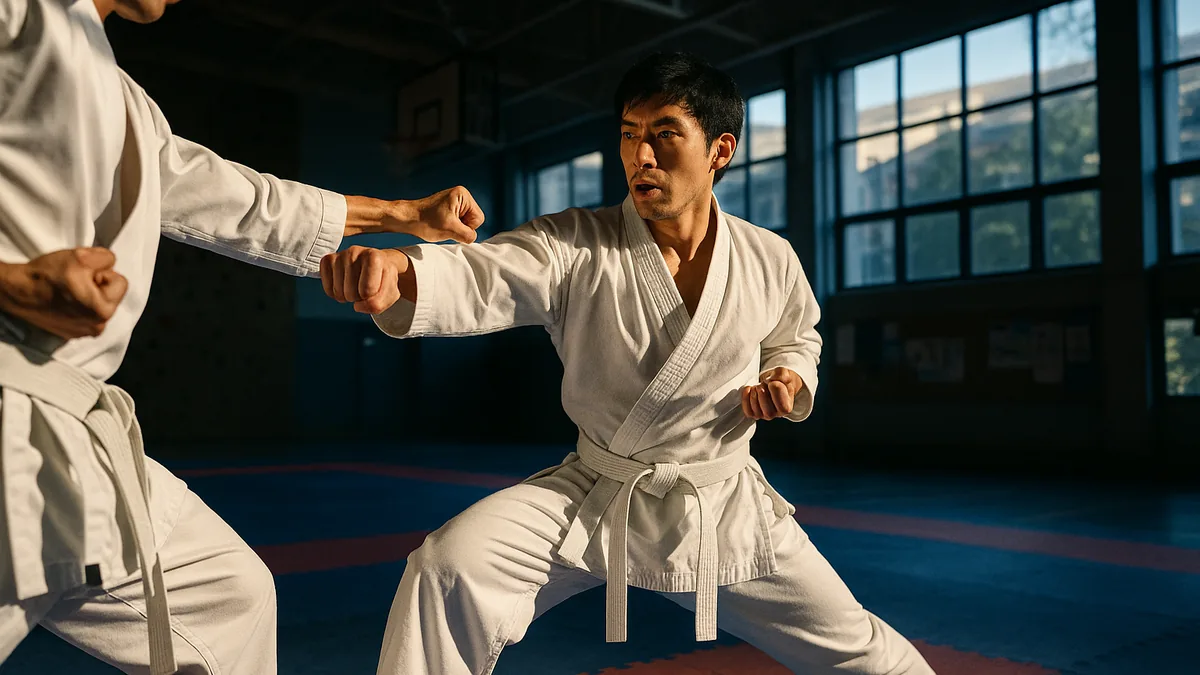
Setup: Stand at comfortable working distance. Agree on a simple combination - jodan oi-zuki, chudan gyaku-zuki is a good starting point. Your partner’s job is to block and respond with whatever they have. Your job is to deliver each technique with clean mechanics at around 40-50% speed.
Execution:
- Set your stance before you move. Don’t rush the entry.
- Deliver the first technique with full hip rotation - yes, even at 40%. This is the point.
- Pause fractionally between techniques. Not a full stop, just enough that your partner can track what’s coming.
- Maintain your guard on the return. This is where I see the most slippage.
- After each exchange, reset. Don’t drift into continuous free movement until your partner is ready for it.
What to feel for: You’ll know the hip rotation is connecting when you feel the drive through your whole body on each technique, not just the arm extending. At reduced speed, this is actually easier to isolate. If you feel the punch in your shoulder, the hip isn’t contributing. That’s useful information.
The mistake I see most often: Senior practitioners drop their mechanics the moment they slow down. The hikite stops pulling, the stance gets lazy, the kime disappears. They’re moving slowly but they’re not actually training anything. The correction is simple - slower speed, same standards. If anything, the technical bar should be higher when you’re not under pressure.
Block and Counter - Technique Focus
Why it matters: Blocking is the part of karate that most people have half-trained. If you want to understand why, this piece on making blocks actually function explains the problem in detail. Working with a weaker partner at controlled speed is one of the best environments to actually feel whether your block is redirecting or just absorbing.
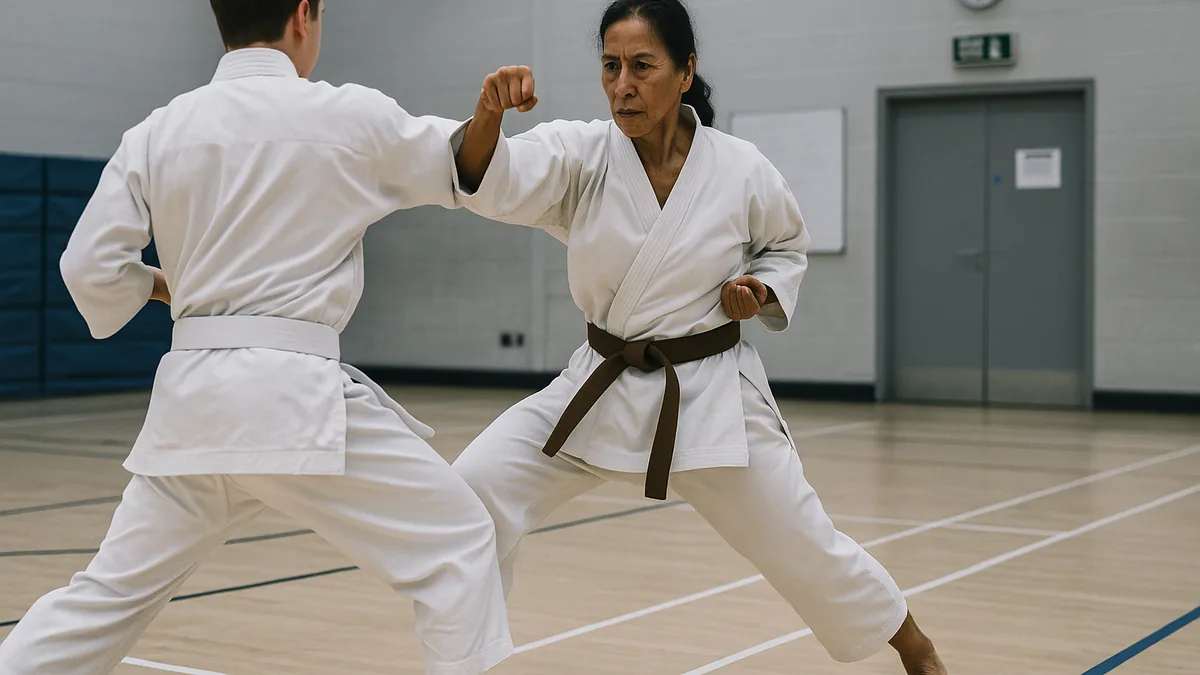
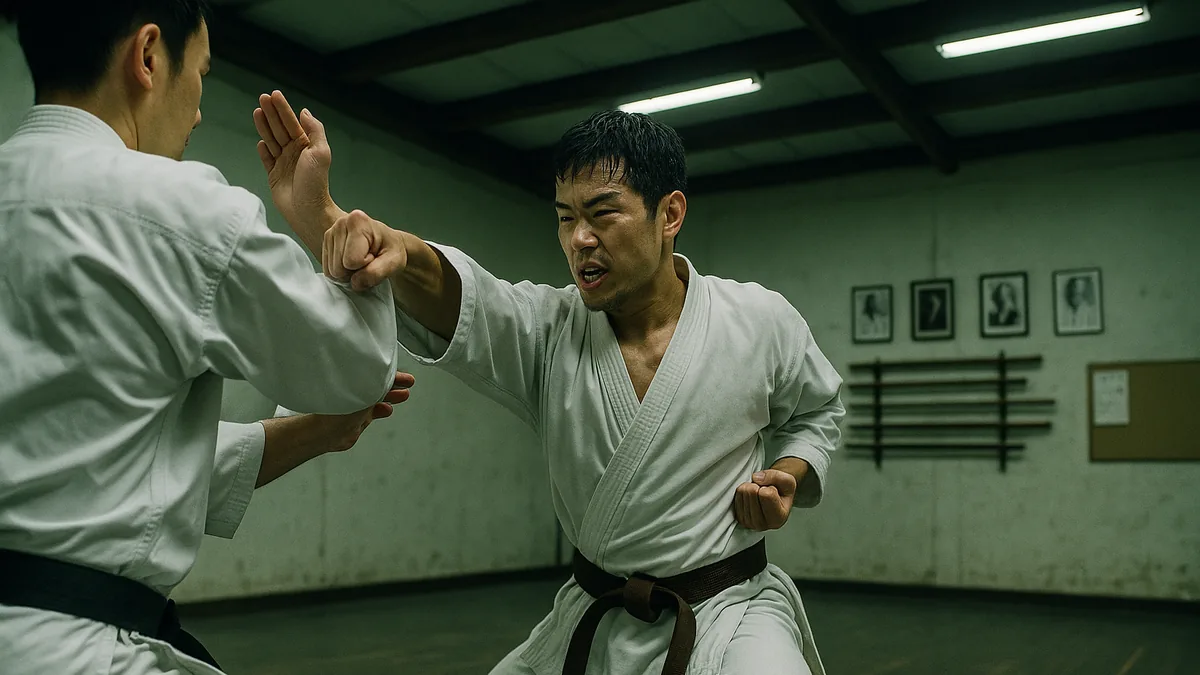
Setup: Agree on a single attack - your partner throws jodan oi-zuki, you apply age-uke and counter. Simple. Predictable. That’s the point.
Execution:
- Let your partner set themselves before they attack. Don’t rush them.
- When the attack comes, meet it early - not at the last moment. You’re redirecting the arm, not catching the fist.
- Your counter should be deliberate and placed, not thrown. Touch the target. Don’t drive through it.
- Hold your position for a moment after the counter. This trains zanshin, and it gives your partner a clear reference point for what the exchange looked like.
- Swap roles after a set number of repetitions. Your partner needs to feel the other side of this.
What to feel for: When the timing is right on age-uke, you feel the block redirect the attack rather than stop it. There’s almost no impact through your arm - the energy goes sideways, not back into your joint. When you’re late, you feel it in your elbow. That’s the difference between a block and a collision.
The mistake I see most often: Senior practitioners block too hard against weaker partners. I’ve seen this knock people’s confidence out completely - they throw a reasonable attack and get their arm hammered back. The correction is to match the energy of the incoming technique. A light attack needs a light redirect, not a full-force uke. Control goes both ways.
Footwork and Distance Drills
Why it matters: This is where I think the pairing becomes genuinely valuable for the senior practitioner, and most people completely miss it. Working with someone who moves unpredictably or awkwardly forces you to manage distance in a way that smooth, experienced partners don’t. You can’t rely on pattern recognition. You have to actually read movement.
Setup: No attacks yet. Just movement. Your partner moves around the space, you maintain a set distance - not too close, not too far. Switch: they maintain distance from you.
Execution:
- Move from the hips, not the feet. Your centre moves first, your feet follow.
- Don’t cross your feet. Ever. Even in a slow drill, this is a habit you don’t want.
- Call out when the distance feels right. This gives your partner feedback they can’t get from watching themselves.
- Introduce a simple attack once the movement feels natural - not before.
What to feel for: Good footwork feels effortless. You’re not lunging to close distance or scrambling to create it. When you’re moving well, there’s a moment where the distance just opens or closes without you thinking about it. That’s what you’re looking for.
How to Give Feedback Without Destroying Confidence
This is where I’ve seen senior practitioners do real damage without meaning to. A correction delivered wrong - even a technically accurate one - can make a less experienced partner reluctant to try anything for the rest of the session.
What I tell students when they’re in the senior role: lead with what worked before you say what didn’t. Not as a formula, but because it’s usually true. Most weaker practitioners are doing more right than they realise, and they need to know that before they can hear the correction.
Be specific. “Your guard dropped” is more useful than “you need to be more careful.” Specific corrections are easier to act on, and they don’t feel like a judgment on the person.
I used to think that giving praise to someone who was clearly struggling was a bit hollow. My instructor corrected me on this. He said something I didn’t fully understand until I’d been teaching for a few years: “You’re not praising the result. You’re praising the effort and the direction.” That reframe changed how I coached. A white belt who throws a technically imperfect punch but commits fully to the movement is doing something right. Say so.
What Changes With Experience
Most beginners in the senior role focus on not hurting their partner. That’s the right instinct, but it’s not enough. By the time you’re at brown belt or above, you should be thinking about what you’re getting out of the round, and how to structure the exchange so your partner gets something useful too.
The practitioners I’ve trained with who are genuinely good at this - and it’s a skill, not just a personality trait - do a few things consistently. They never look bored or disengaged. They adjust their intensity based on what they see, not based on a fixed idea of how hard they should go. And they’re honest with their partner about what they’re working on themselves, which takes the pressure off the weaker person to feel like they’re “enough” of a challenge.
Community Perspective
There’s a genuine split in how dojos handle mixed-level pairings, and I’ve trained in enough places to have seen both ends of it.
Some instructors believe the weaker partner should always be pushed to their limit - that discomfort is the only way to grow, and that a comfortable round is a wasted round. I understand the logic, but I’ve seen it produce practitioners who are either very tough or very gone. Attrition isn’t a training method.
Others go the opposite direction and treat the senior partner’s role as purely protective - keep them safe, let them work. This produces rounds where neither person learns anything.
The position I’ve settled on, and I’d recommend it to anyone: the senior partner’s job is to create productive difficulty. Not maximum difficulty. Not zero difficulty. The kind that stretches the weaker partner just past what they can comfortably handle, while giving the senior partner genuine technical work to do. That requires judgment, and judgment takes time to develop. But it’s worth developing.
Key Takeaways
- Slowing down does not mean dropping your standards. Slower speed, same mechanics - if anything, hold yourself to a higher technical bar when you’re not under pressure.
- Match the energy of what’s coming. A light attack needs a light response. Hammering a weaker partner’s techniques is not control, it’s a failure of control.
- Use the round to refine what full-speed sparring hides - your hikite, your stance on the return, your kime, your zanshin. These are the things that zanshin training is built on.
- Lead with what worked before you correct what didn’t. Not as flattery - as accurate observation.
- Your footwork and distance management will improve from this pairing if you let it. Don’t waste that.
- The weaker partner is watching how you carry yourself as much as they’re watching your technique. What you model in that round matters more than you think.
The weekly digest
New karate articles, once a week
One email every week with everything new on Karate Lifestyle. No spam; unsubscribe in one click.
We'll email you to confirm. See our privacy policy.