Why Your Combinations Fall Apart When You Change Direction: How to Train Multidirectional Attacks Without Losing Power or Structure
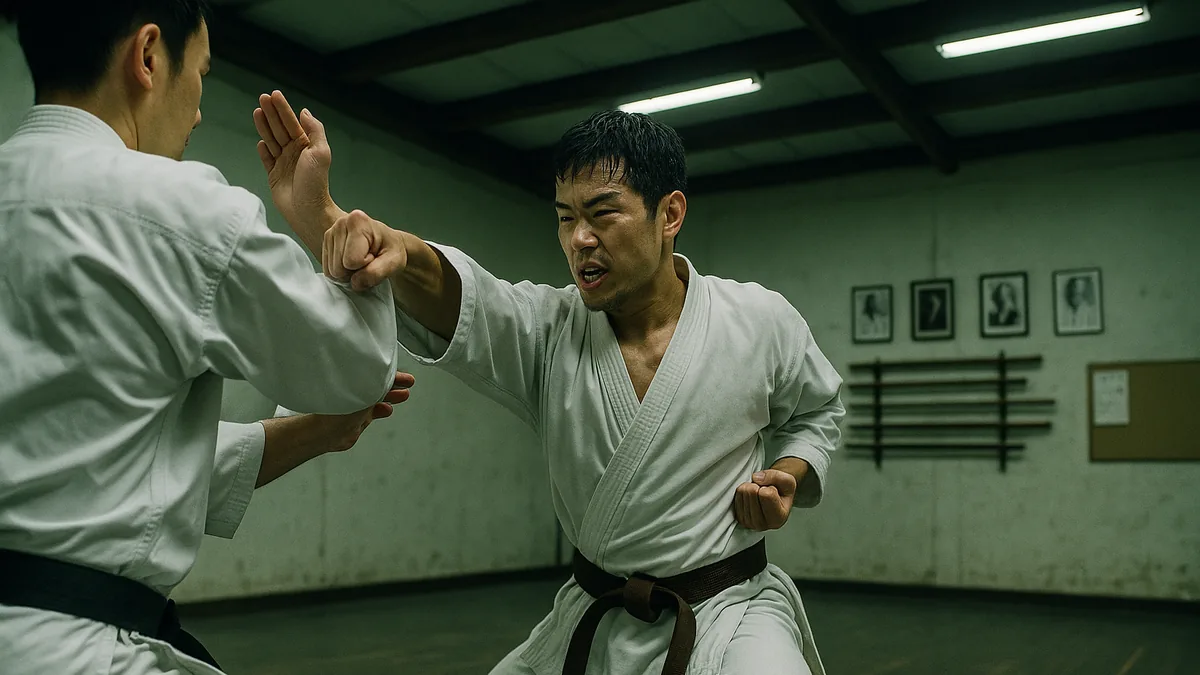
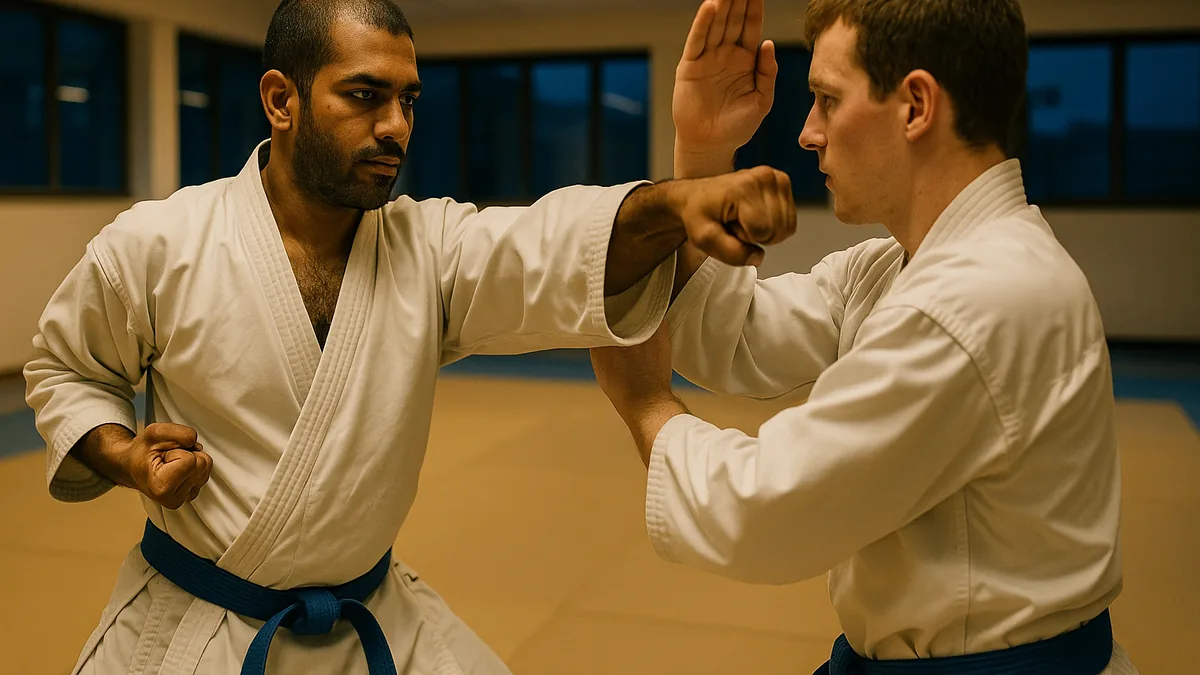
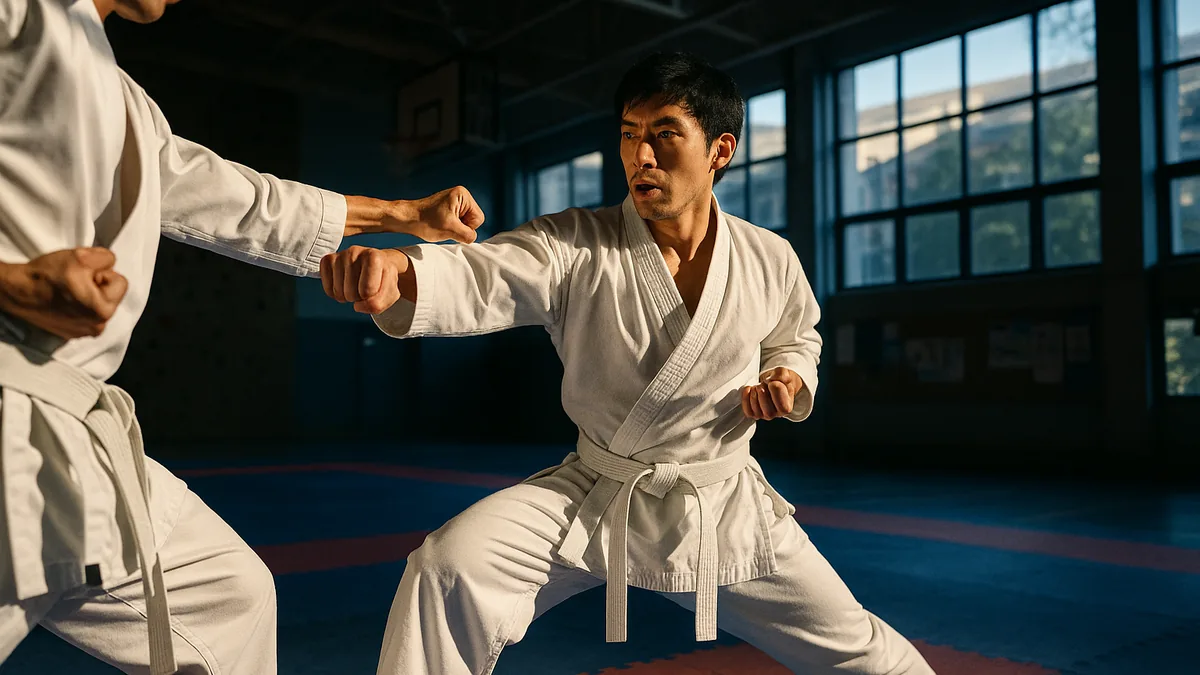
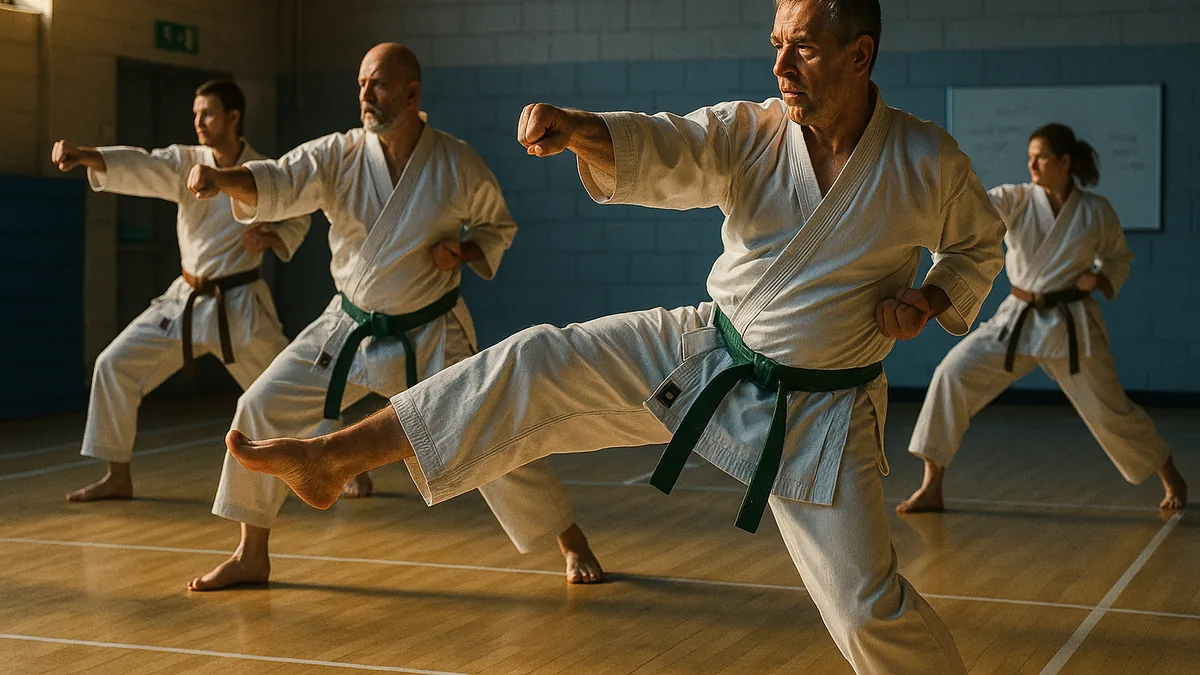
Most students can execute a combination cleanly in one direction and then completely fall apart the moment they need to change angle or pivot to a second target. I’ve seen this at every level - brown belts who look sharp doing a three-technique combination straight down the line, then lose all their structure the moment they try to redirect. It’s one of the most common gaps in competition and kumite training, and it almost always comes down to the same two or three fixable problems.
The good news is that this is a trainable skill. The bad news is that most people try to train it the wrong way - they just run the full combination faster and hope the direction change sorts itself out. It doesn’t. What actually fixes it is breaking the problem into its parts: footwork mechanics, core stability through the pivot, and rebuilding the combination in segments before putting it back together.
Here’s what I’ve learned works, and what doesn’t.
Why Direction Changes Break Combinations
When you’re moving in one direction, your momentum and your technique are aligned. Your weight is loading and unloading in a predictable sequence. The moment you change direction, that sequence gets interrupted - and if your core isn’t holding the structure together, everything downstream suffers.
I used to think the problem was hip rotation. My instructor at the time kept telling me my transitions were “dead” - there was a gap, a pause, where nothing was happening. I thought I needed to rotate faster. What I actually needed was to stop letting my weight collapse between techniques. The pause wasn’t in my hips, it was in my base.
What I’ve noticed over years of teaching is that most practitioners lose power in direction changes not because they lack speed or strength, but because their centre drops or shifts laterally during the pivot. The core disengages for a fraction of a second, the base gets unstable, and the next technique launches from a compromised position. It looks like a timing problem. It feels like a timing problem. But the root is structural.
If you’ve ever felt like your punch after a pivot lands “light” even though you put full effort in, this is what’s happening. The power chain breaks at the moment of transition. You’re not transferring force through a stable structure - you’re throwing the technique from whatever position you happened to end up in.
The Footwork Foundation
Before you can fix the combination, you have to fix what happens between techniques. I’d put footwork work first - above everything else in this area. A practitioner with clean footwork and average technique will always outperform someone with excellent technique and sloppy footwork in multidirectional work.
Triangle Stepping Drill
Why it matters: This is the drill I come back to more than any other when I’m working on directional changes. It isolates the pivot and the weight transfer without the distraction of executing techniques at the same time.
Setup: Mark three points on the floor in a triangle - roughly shoulder-width apart on the base, about two feet forward for the apex. You’ll work around the triangle in both directions.
Execution:
- Start at the base-left point in your fighting stance, left foot forward.
- Step to the apex point, maintaining your stance depth and posture.
- Pivot at the apex to face the base-right point - this is the critical moment. Your pivot foot should stay grounded through the ball of the foot. Do not let the heel rise early.
- Step to the base-right point.
- Pivot again to face back to base-left.
- Repeat continuously for 60 seconds, then reverse direction.
What to feel for: The pivot should feel like you’re screwing into the floor, not spinning on top of it. When it’s right, you feel the rotation through your hip and into your core - it’s a connected feeling, not a disconnected spin. If you feel your weight floating or shifting to the outside of your foot during the pivot, you’ve lost it.
The mistake I see most often: Students pivot by rotating the upper body first and letting the feet follow. The correction is to initiate the pivot from the lead foot and drive it with the hip. Upper body follows. This feels wrong at first because we’re conditioned to lead with our eyes and shoulders, but trust the mechanics - once it clicks, the transition becomes significantly faster.
Lateral Shuffle to Stance Reset
Why it matters: Most combination work happens at an angle, not in a straight line. This drill trains the ability to move laterally and arrive in a usable position.
Setup: You need about four metres of clear space. Work with a partner if you can - they call the direction randomly. If you’re training alone, [working without a partner has its own discipline]((/training/how-to-train-alone-when-you-have-no-club-access/) and this drill adapts well to self-directed practice with a timer.
Execution:
- Start in fighting stance, centre of your space.
- Shuffle laterally two steps to the right - not crossing your feet, maintaining stance width.
- On the second step, actively reset your stance: weight even, knees tracking over toes, core braced.
- Pause for one breath, check your position, then shuffle back left.
- Progress to calling the direction yourself on a rhythm, then randomise it.
What to feel for: The reset at the end of each shuffle should feel like you’re “landing” - a brief moment of organised stability before the next movement. If you’re rushing through it, you’re training the wrong thing. The goal is to make that reset instant and automatic, not to eliminate it.
Core Engagement Through the Pivot
This is the piece most people underestimate. You can have excellent footwork and still lose power on directional changes if your core isn’t maintaining connection through the transition. I’ve seen students with beautiful individual techniques who look like they’re made of separate parts the moment they change direction - head going one way, hips another, shoulders trailing behind.
The correction that made the biggest difference for my own training was thinking about the core not as something that “activates” but as something that never switches off. Beginners treat core engagement as a technique - they brace for a strike and then relax. What you want is a continuous, moderate engagement that holds the structure together even between techniques.
Pivot and Hold Drill
Setup: Work in front of a mirror if you have one. No techniques yet - just movement.
Execution:
- Stand in fighting stance, hands up in kamae. On the importance of maintaining that guard through transitions, the article on why your kamae keeps collapsing under pressure covers the guard side of this in detail.
- Take a 45-degree pivot step to the right, rotating your stance.
- Hold the end position for three seconds. Check: is your weight balanced? Are your hips square to the new direction? Is your core holding or have you relaxed it?
- Return to start. Repeat to the left.
- Add a 90-degree pivot. Then 135 degrees.
What to feel for: At the end of each pivot, you should feel organised - like you could launch a technique immediately with full power. If you feel like you need a moment to “find your balance” before you could strike effectively, the core engagement broke down during the pivot.
Breaking the Combination Into Segments
This is where most people waste training time. They run the full combination, it falls apart at the direction change, and they run it again. Same result. The combination isn’t going to fix itself through repetition - you have to isolate the failure point.
I’d recommend what I call “segment and stitch” practice. If your combination is A-B-C-change direction-D-E, you’re not training the whole thing until A-B-C and the direction change feel automatic. Then you’re not adding D-E until the change to D is clean. Only then do you put it together.
This is directly connected to the foundational work in training combinations beyond single techniques - the same principle of building combinations from solid individual components applies here, with the added complexity of the directional change as its own trainable element.
The Pause-and-Check Method
Execution:
- Run the combination up to the direction change. Stop completely. Check your position.
- Is your weight where it needs to be to launch the next technique? Is your core engaged? Are your hands still in guard?
- If yes - execute the next technique from that position, deliberately.
- Repeat until the position at the change point is consistently correct.
- Remove the pause. The position should remain correct.
The pause isn’t weakness. It’s diagnostic. You’re finding out what your body is actually doing, not what you think it’s doing. I’ve had students who were convinced their direction change was clean until I made them pause and look at where their hands were. Guard dropped, weight forward, completely exposed. The pause showed them what the speed was hiding.
Progression
Once the footwork and core work are solid and you can execute segmented combinations cleanly, the progression is straightforward.
Add resistance from a partner - not full resistance, but enough that they’re not just a static target. A partner who moves even slightly forces you to adjust your angle in real time, which is where the training becomes genuinely useful. This is also where the power gap between kihon and kumite becomes relevant - the same structural breakdown that affects your gyaku-zuki in sparring affects your direction-change combinations for the same reasons.
Add unpredictability by having a partner call the direction of the second attack rather than you deciding in advance. This forces the footwork and core work to become reactive rather than planned.
Add fatigue. Run the drills at the end of a session, not the beginning. Directional changes break down fastest when you’re tired - and if your technique only holds when you’re fresh, it’s not reliable.
Community Perspective
There’s a genuine split in how different dojos approach this. Traditional Shotokan training tends to develop directional changes through kata - the pivot in Heian Shodan, the 270-degree turns in later kata - with the assumption that consistent kata practice builds the mechanics. Sports-focused training tends to isolate footwork as a separate skill category and drill it explicitly.
I’ve trained in both environments, and I think the kata approach builds the pattern but often doesn’t build the speed or reactivity needed for kumite application. The explicit footwork drilling builds the speed but sometimes lacks the martial context that makes the movement purposeful. The practitioners I’ve seen develop the sharpest multidirectional combinations tend to use both - kata as a pattern library, explicit footwork drills to build the physical attributes.
Where practitioners tend to disagree most is on how much to slow things down during practice. Some instructors insist on full-speed execution from early on. My preference is to slow down until the structure is correct, then build speed. You’ll get there faster, and you won’t be ingraining the compensations that full-speed sloppy practice builds in.
Key Takeaways
- Fix the footwork before you fix the combination. Pivot mechanics are the foundation - everything else depends on them.
- Core engagement is continuous, not intermittent. The transition between techniques is when it matters most, not just at the moment of impact.
- Use the pause-and-check method to diagnose what’s actually happening at the direction change, not what you think is happening.
- Segment the combination and train each piece to a standard before stitching it together. Repetitions of a broken pattern don’t fix the pattern.
- Add fatigue and unpredictability as the final progression step - if it only works when you’re fresh and know what’s coming, it’s not ready for kumite.
- The physical sensation of a clean directional change is distinctly different from a sloppy one: you should feel organised and loaded at the pivot point, ready to strike immediately, not catching up with your own movement.
The weekly digest
New karate articles, once a week
One email every week with everything new on Karate Lifestyle. No spam; unsubscribe in one click.
We'll email you to confirm. See our privacy policy.