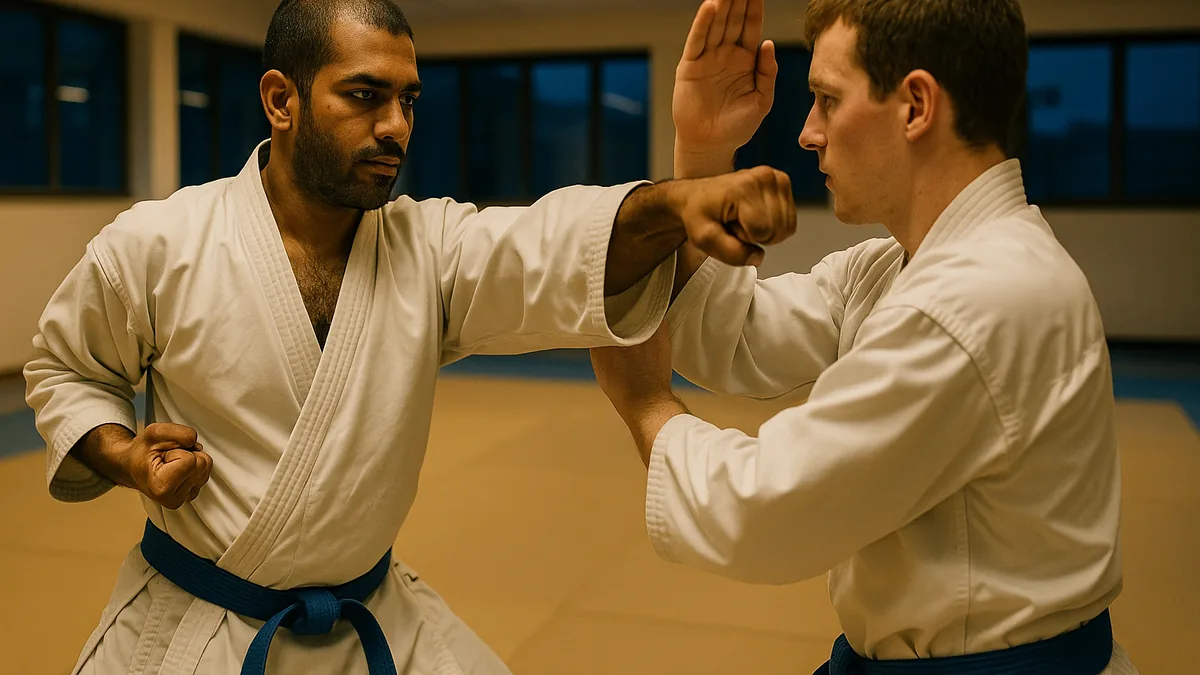
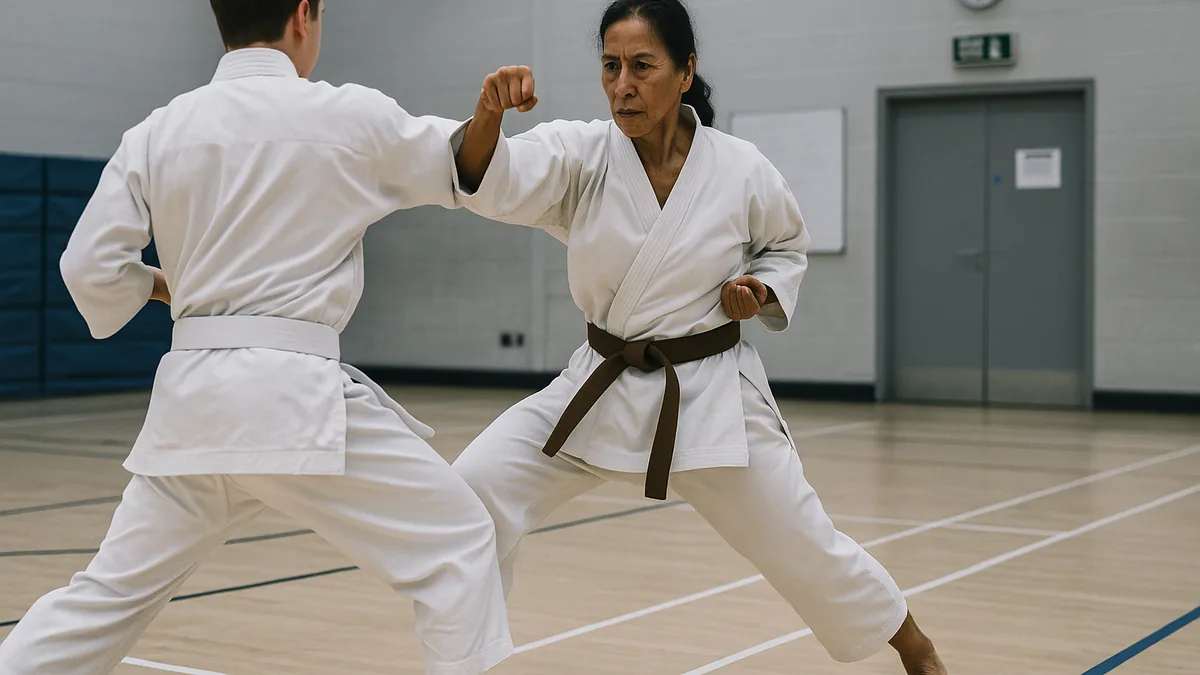
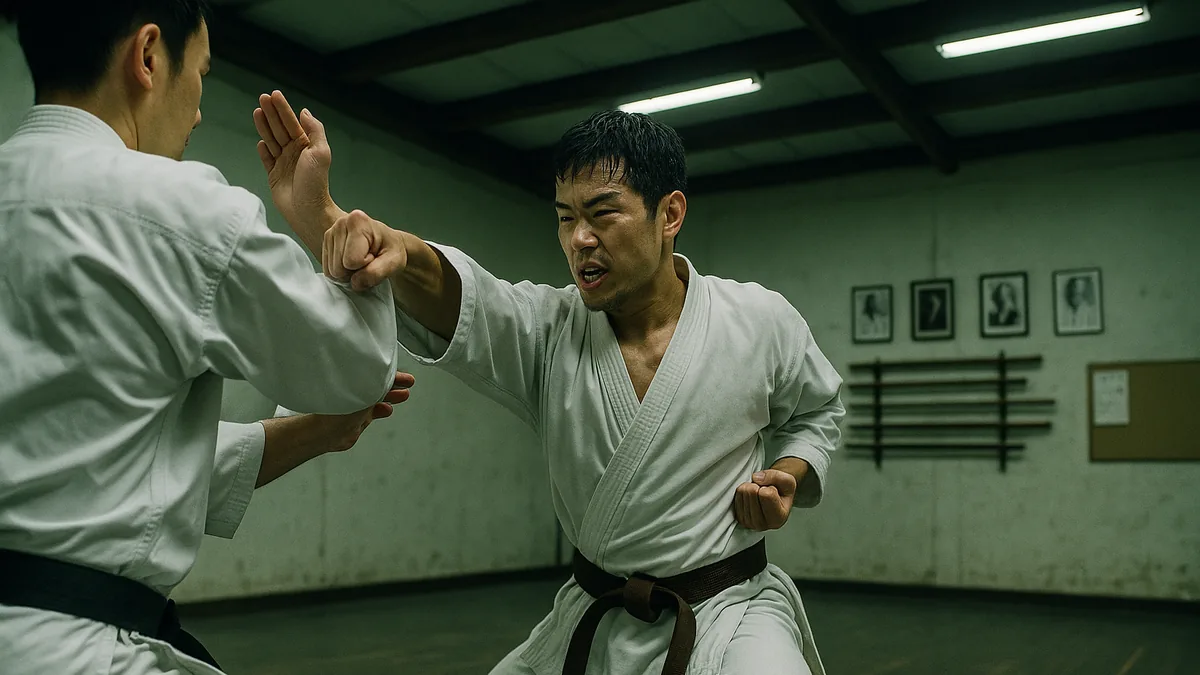
Why Your Kamae Keeps Collapsing Under Pressure and How to Build a Guard That Holds When You Are Tired or Rattled
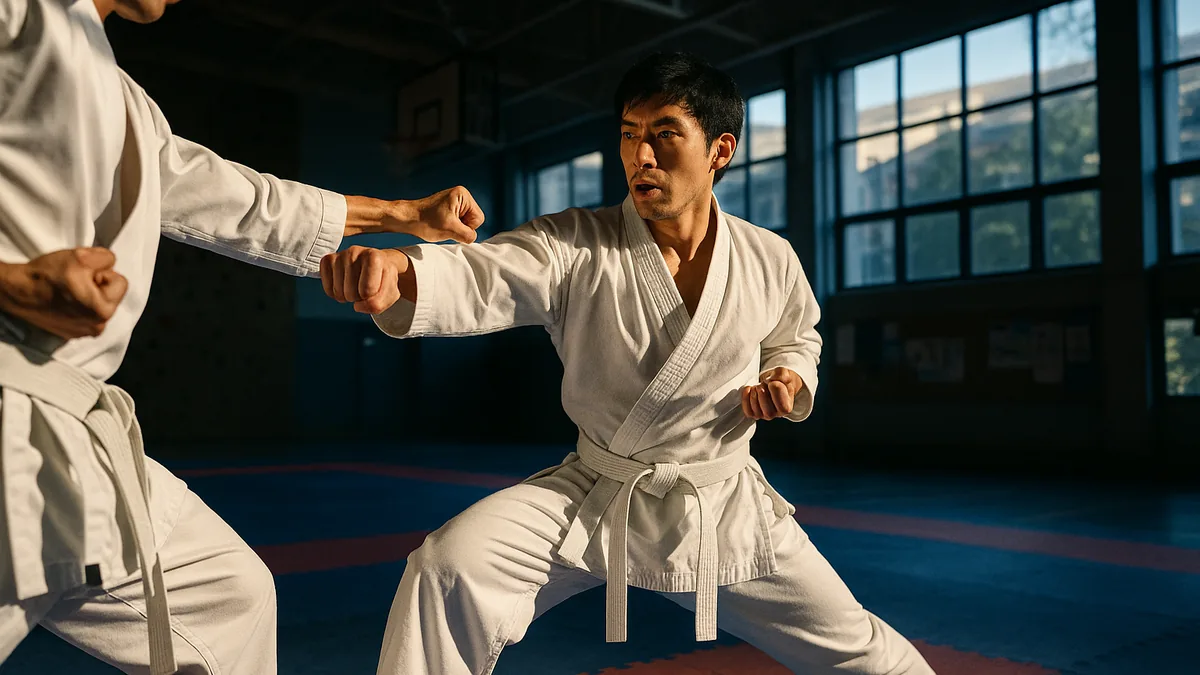
Most students don’t lose their kamae because they lack strength. They lose it because they never trained it under the conditions where it actually needs to hold.
I’ve watched this happen hundreds of times. A student looks solid in basics. Clean stance, good shoulder position, guard sitting right where it should be. Then they spar for three minutes, or they eat a fast combination, or they’re just tired from the previous round - and everything drops. The front hand falls, the elbow flares, the chin comes up. And the frustrating part is they usually don’t even feel it happen.
That’s the real problem. Kamae collapse under pressure isn’t a strength issue or even really a technique issue. It’s a training environment issue. If you only ever hold your guard when you’re fresh, focused, and expecting to hold it, you’re building a guard that only works under those conditions. The moment fatigue or stress enters the picture, the structure you thought you had disappears.
Here’s what I’ve learned from fixing this in myself and in students over the years.
Why Your Guard Drops When It Matters Most
The mistake I see most often is students treating kamae as a starting position rather than a constant. They set it at the beginning of a round and then let it drift as the round progresses. By the time they need it, it’s already gone.
There are three reasons this happens, and they all feed each other.
Fatigue changes your default posture. When you’re tired, your body looks for shortcuts. Shoulders creep forward and up, the front elbow drops to protect the ribs passively rather than actively, and the rear hand falls away from the cheek. Each of those adjustments feels like relief in the moment. None of them are actually protecting you.
Stress triggers the wrong instincts. When someone throws a fast combination at you, the instinct is to flinch and cover, not to maintain structure. That flinch response is real and it’s not going away. What changes with training is how quickly you recover from it and whether your guard is still there when you come back.
You haven’t trained the habit under the right conditions. This is the honest one. If your guard is only trained in kihon lines and kata, you’ve built a habit that belongs to those contexts. Habits transfer to the conditions they’re built in. You have to build the habit under pressure, which means you have to train under pressure.
I used to think my kamae was solid. My instructor at the time would walk the line during kihon and my guard looked fine. Then during jiyu-kumite he stopped me mid-round and said, “Where is your kamae?” I genuinely didn’t know it had gone. I thought I was still holding it. That was the moment I understood that having a guard and feeling like you have a guard are two different things.
The Drills That Actually Fix This
I’ll rank these by importance. The first two are essential. The third is where it gets interesting.
Timed Static Hold Under Fatigue
This sounds simple and it is, but most people skip it because it feels too basic. Don’t skip it.
Why it matters: You need to know what your kamae feels like when your muscles are burning. You can’t correct what you can’t feel.
Setup: Work alone or with a partner watching. You need a timer.
Execution:
- Run on the spot or do 30 seconds of burpees - something that genuinely gets your heart rate up and your arms tired.
- Stop and hold your kamae. Not approximately. Exactly. Front hand at the right height, elbow in, rear hand at the cheek, chin down.
- Hold for 60 seconds while your training partner (or you, using a mirror) checks every 15 seconds.
- Note where it starts to drift. That’s your weak point.
- Repeat three times with 30 seconds of work between each hold.
What to feel for: When you get this right, your guard will feel uncomfortable after about 30 seconds. That discomfort is the point. You’re teaching your nervous system that discomfort doesn’t mean drop the guard. Most beginners feel the front shoulder burning and immediately drop the elbow. What I tell students is to breathe into the burn rather than away from it. The elbow drops because you’re tensing the whole shoulder. Relax the shoulder, keep the structure.
The mistake I see most often: People hold a tense, rigid guard and then wonder why it collapses when they move. A held kamae shouldn’t feel like you’re gripping something. It should feel like you’re resting in a position that happens to be structurally sound.
Partner Pressure Testing
This is the drill I come back to more than any other. It’s not complicated, but it requires a training partner who will actually push.
Why it matters: You need external pressure to find where your structure is actually weak. You cannot find this alone.
Setup: Two people, no pads required for the basic version.
Execution:
- Hold your kamae.
- Your partner applies steady, moderate pressure to your guard - pushing your front forearm inward, your elbow down, your rear hand away from your cheek. Not fast strikes, just sustained pressure.
- Your job is to maintain the structure without going rigid. Resist the pressure through position, not through muscular force.
- Hold for 10 seconds per position, then swap.
- Progress by adding movement - take a step forward or back while your partner maintains pressure.
What to feel for: When you’re resisting through structure rather than force, it feels like the pressure is being redirected into your skeleton rather than absorbed by your muscles. Your partner’s push goes through your forearm, into your elbow, into your shoulder, into your spine. You’re not fighting the push, you’re redirecting it. When you get this wrong, you feel it in the muscles of your arm and shoulder immediately. When you get it right, you can hold the position for a long time without much effort.
The correction that makes the biggest difference: Most students resist with their arm muscles and their guard still collapses because the structure behind the arm isn’t engaged. The fix is to think about your back foot. When pressure comes onto your front guard, your back foot should press into the ground. That connection - from the point of pressure, through your body, into the floor - is what makes the guard hold.
Kamae Recovery Drill
This is the one most people don’t do, and it’s the one that matters most in actual sparring.
The goal isn’t to never lose your guard. You will lose it. The goal is to recover it faster than your opponent can exploit the gap.
Why it matters: In jiyu-kumite, your guard will break. A fast combination will get through, you’ll flinch, you’ll cover wrong. What separates experienced practitioners from beginners isn’t that their guard never drops - it’s that they get it back in a fraction of a second.
Setup: Mitts or a heavy bag. Ideally a partner throwing combinations at you.
Execution:
- Your partner throws a fast two-punch combination at your guard.
- You cover - however your instincts take you.
- The instant the combination ends, you reset your kamae. Deliberately. Consciously.
- Your partner gives you one second, then throws again.
- Repeat for 30 seconds, then swap.
What to feel for: At first, the reset feels slow and deliberate. After weeks of this drill, it starts to happen automatically. You’ll feel your guard snap back into position without consciously deciding to do it. That’s the habit forming. That’s what you’re building.
What most people get wrong: They reset their guard while backing away. Moving backward while resetting gives your opponent time and space. Reset while holding your ground, or while moving forward. This feels wrong at first, but trust the mechanics - resetting forward closes the distance and disrupts your opponent’s rhythm.
Mental Strategies When You’re Tired and Rattled
Technique holds up when your mind holds up. That’s the part nobody wants to talk about because it sounds vague, but it’s not.
I’ve noticed that experienced practitioners have a different internal experience during sparring. Beginners are reacting to everything. Every movement from the opponent triggers a full threat assessment. That cognitive load is exhausting, and it’s part of why beginners’ guards collapse - they’re spending mental energy on things that should be automatic.
What I tell students at this stage is to give themselves one anchor point. One physical thing to check. For kamae, mine is the front elbow. If I can feel my front elbow in the right position, the rest usually follows. When I’m tired and my mind is scattered, I don’t try to check everything. I check the elbow.
Find your anchor point. It might be the elbow, the chin, the rear hand. Train it consciously until checking it takes no thought at all.
The other thing that works - and I prefer this over any breathing technique I’ve tried - is aggressive resetting. When you feel your guard has gone, don’t try to quietly fix it. Reset it deliberately and move forward. The movement forward does two things: it gives your opponent something to deal with, and it physically breaks the defensive mindset that’s letting your guard drop.
If you’re working on building the consistency to train this regularly, How to Build a Karate Training Schedule That Actually Fits Your Life is worth reading alongside this. The drills above only work if you’re doing them consistently, not just when you remember.
Community Perspective
There’s a genuine disagreement in karate circles about how much time should go into guard-specific training versus just sparring more. Some instructors - and I’ve trained under a few of them - believe that kamae fixes itself through enough kumite experience. Just spar, they say. Your guard will tighten up because it has to.
I think that’s partially right and mostly wrong. Sparring does tighten your guard over time. But it tightens it slowly, and it tightens the parts that get tested most often. The gaps that your regular training partners don’t exploit stay as gaps. Targeted drilling finds those gaps faster and fixes them more deliberately.
The other debate is about how much kamae should vary between styles and even between individuals. Traditional Shotokan kamae looks different from a Kyokushin guard, which looks different again from what you see in sport karate. I’ve seen practitioners from all three traditions hold their guard well under pressure and I’ve seen practitioners from all three drop it the moment things get real. The specific position matters less than whether you’ve trained it under the conditions where it needs to hold.
Key Takeaways
- Your guard drops because you’ve trained it in conditions where dropping it has no consequences. Change the conditions.
- The pressure testing drill is the most direct way to find where your structure is actually weak. Do it before you do anything else.
- Resisting through structure feels different from resisting through muscle. When you feel the pressure travelling through your skeleton into the floor, you’ve found it.
- Recovery speed matters more than guard perfection. Train the reset, not just the hold.
- Give yourself one anchor point when you’re tired. Checking everything fails. Checking one thing works.
- This connects to everything else in your sparring. If your gyaku-zuki loses power under pressure or your mae-geri isn’t penetrating in kumite, the same principle applies - technique built only in clean conditions breaks down when conditions change. Build it dirty.
The weekly digest
New karate articles, once a week
One email every week with everything new on Karate Lifestyle. No spam; unsubscribe in one click.
We'll email you to confirm. See our privacy policy.