Heat vs Ice for Karate Injuries: Which One You Should Actually Be Reaching For
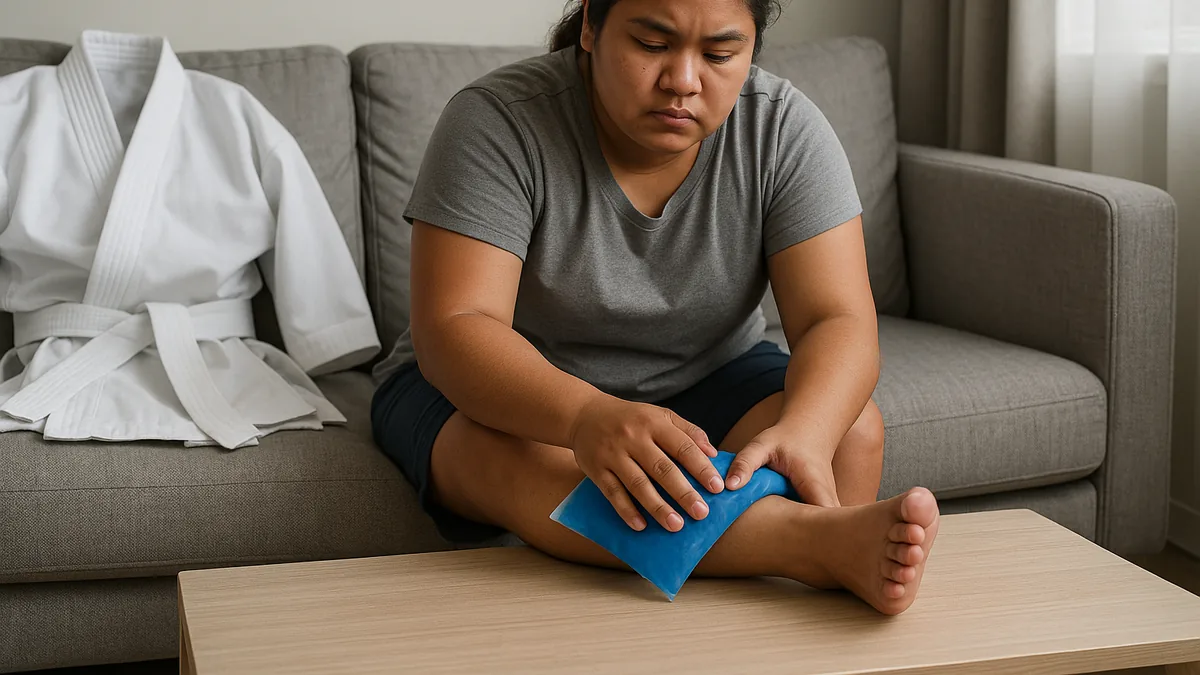
I’ve watched so many students grab the wrong thing from the first aid kit. Ice on a shoulder that’s been tight for three weeks. Heat on an ankle that’s still swollen from training two hours ago. It’s not laziness - it’s just that nobody ever sat them down and explained the difference clearly. And honestly, most of what gets passed around in dojos on this topic is half-right at best.
So let me just tell you what I’ve learned, what I’ve seen go wrong, and what actually works.
The Fundamental Split You Need to Understand
There are two completely different situations you’re ever dealing with when you reach for ice or heat. Either something just happened - a fresh knock, a twist, a strain from sparring - or something has been quietly bothering you for days or weeks. These two situations need opposite responses.
I’ve noticed that most people know this in theory. They’ve heard “ice for new injuries, heat for old ones.” But when they’re in pain, they default to whatever feels better in the moment, which is almost always heat. And that’s where the damage gets done.
What I tell students is this: if the injury is less than 48-72 hours old, your body is in the middle of an inflammatory response. That’s not a problem to be fixed - it’s a process that’s supposed to happen. Your blood vessels have dilated, fluid is moving into the area, and your body is doing exactly what it’s designed to do. The swelling and heat you feel isn’t the enemy. Applying more heat to that situation is like adding fuel to a fire that’s already burning where you don’t want it.
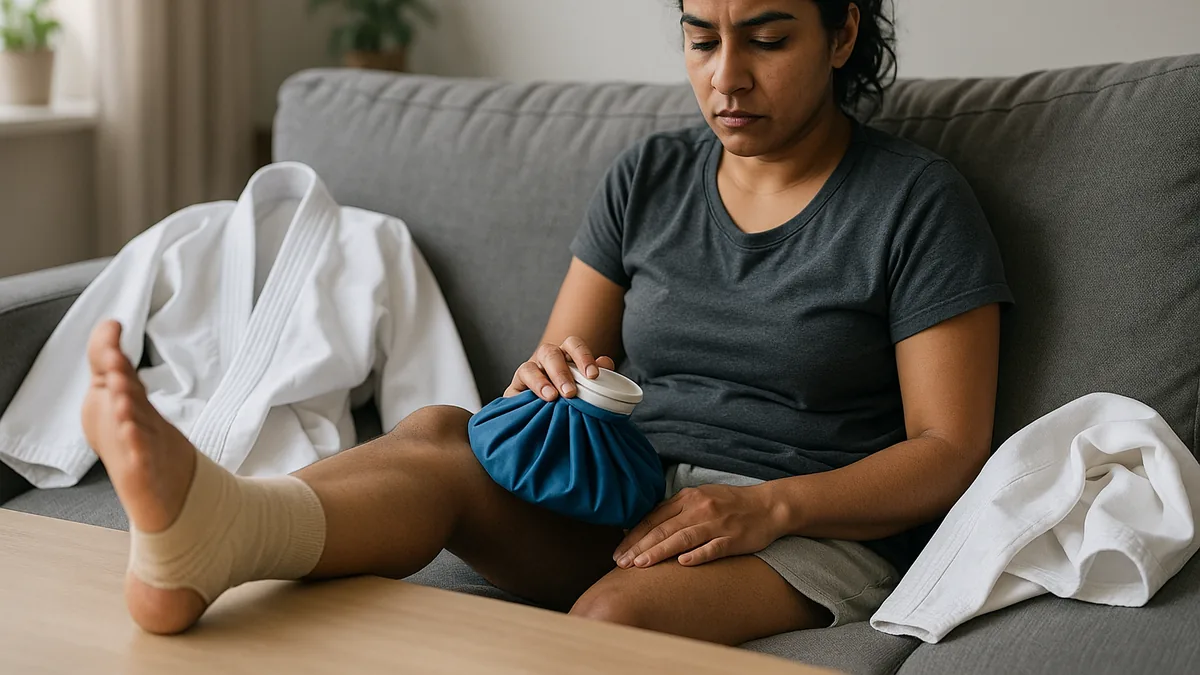
Ice slows that process down. It constricts blood vessels, reduces fluid accumulation, and numbs the area enough that you can move without the pain making everything worse. It doesn’t heal anything by itself - but it keeps the acute phase from getting out of control while your body does its actual work.
When Ice Is the Right Call
Acute injuries. Fresh injuries. Things that just happened.
- A sprained ankle from a bad landing during kihon or kata
- A bruised rib or forearm from contact during kumite
- A jammed finger from a poorly executed block
- Any joint that swells up during or immediately after training
The rule I use: if it’s swollen, if it happened today or yesterday, if you can feel heat coming off the tissue - ice.
I had a student a few years back who took a solid kick to the thigh during sparring. Classic dead leg. He walked it off, finished the session, and then went home and soaked in a hot bath because it was sore. He came back the next week with a haematoma the size of a cricket ball. The heat had encouraged blood pooling in the muscle tissue at exactly the wrong time. He was off training for three weeks over something that, with proper icing in the first 24 hours, would have been a few days of discomfort.
That stuck with me. Not because it was dramatic, but because it was so avoidable.
How to Actually Ice Properly
Twenty minutes on, at least 40 minutes off. Never ice directly on skin - wrap it in a cloth or tea towel. You’re looking for that deep, aching cold that eventually goes numb. It feels uncomfortable at first, almost unbearably so if you’re icing a joint. But after a few minutes it transitions into a dull numbness that actually brings some relief.
If you want to go further with cold exposure for recovery more broadly, I’ve written about that in more depth in the article on cold exposure and ice baths for karate recovery - that covers whole-body protocols rather than localised icing, which is a different conversation.
When Heat Is the Right Call
Chronic tightness. Old injuries. Muscle soreness that’s been sitting there for days.
- A shoulder that’s been stiff since last week’s training
- Hip flexors that never quite loosen up before class
- That lower back ache that comes from years of high kicks and floor work
- Recurring knee discomfort that you’ve had for months
Heat works by increasing blood flow to the area. Warm tissue is more pliable, more elastic, and responds better to movement and stretching. If you’ve got chronic tightness in your hips before a session, a heat pack for 15-20 minutes before you start moving is genuinely useful. You’ll feel the tissue soften. It’s a bit like trying to stretch a cold rubber band versus a warm one - the difference is real and you’ll notice it immediately.
What I prefer for chronic stuff is moist heat over dry heat - a warm damp towel or a proper heat pack that retains moisture. It penetrates deeper and feels less surface-level than a dry heating pad. That’s a personal preference, but I’ve found it makes a difference for deep muscle tightness, particularly around the hip rotators and the muscles around the knee.
The mistake I see often here is people using heat as a pain management tool without asking why the pain is there. If you’ve got a chronic shoulder issue that flares every time you throw jodan uke, heat might give you temporary relief, but you need to be looking at what’s causing the recurring problem. Heat is a tool, not a solution.
The Grey Zone: Injuries That Are a Few Days Old
This is where it gets genuinely complicated, and where I think a lot of the confusion comes from.
Around day three or four after an acute injury, the initial inflammatory phase starts to wind down. The swelling has peaked, the sharp pain has started to dull. This is where you can start transitioning toward gentle heat - but only if the swelling has actually reduced, not just because the calendar says three days have passed.
I used to think this transition was automatic. My instructor at the time was pretty firm about it: ice for 48 hours, then switch. I followed that rule for years. What I eventually realised is that it depends on the specific injury and how the tissue is responding. A mild ankle sprain might be ready for gentle heat at day three. A moderate knee sprain might still need ice at day five.
The test I use: press gently around the injury site. If it still feels hot to the touch and puffy, keep icing. If the swelling has noticeably reduced and the tissue feels closer to normal temperature, you can start introducing gentle heat - short sessions, not intense heat, and watch how it responds.
Contrast therapy - alternating cold and heat - can be useful in this middle phase. I’ve found it helpful for things like bruised forearms and sore knees when the acute phase has passed but the tissue is still recovering. There’s a good breakdown of contrast showers and similar tools in the article on Epsom salts, contrast showers, and compression if you want more detail on that approach.
Community Perspective
This is one of those topics where dojos genuinely differ, and where traditional training culture sometimes clashes with what we know about recovery.
The old-school approach in a lot of traditional dojos is to minimise any kind of special treatment for injuries. Push through, train around it, don’t make a fuss. I’ve trained in places where reaching for an ice pack was seen as soft. And I get where that attitude comes from - there’s a mental toughness element to karate that’s real and valuable. But ignoring an acute injury and training through it is not toughness. It’s just how you turn a two-week problem into a three-month one.
On the other side, I’ve seen students from more modern, sports-science-influenced clubs who treat every knock like a clinical event. Fifteen-minute icing protocols, compression bandages for minor bruises. That’s overcorrecting in the other direction.
What I’ve landed on after a long time training is: treat your body seriously, treat injuries proportionately, and don’t let dojo culture pressure you into ignoring something that needs attention. Your longevity in this art depends on staying healthy enough to keep training. That’s not a soft position - it’s a practical one.
Fitting This Into Your Broader Recovery
Ice and heat don’t exist in isolation. They’re part of how you manage your body between sessions, and that context matters.
If you’re training hard multiple times a week, you need to think about how much time you’re actually giving your body to recover. There’s a good practical guide to rest between karate training sessions that’s worth reading if you’re stacking sessions and wondering why things keep flaring up. And on the days between hard training, what you do matters - active recovery days are a better option than just sitting still and hoping things improve.
Heat before training to warm up stubborn tissue, ice after if something got knocked around - that’s a simple framework that works for most people most of the time.
Key Takeaways
-
Ice for anything acute - if it happened today or yesterday, if there’s swelling, if the tissue feels hot, ice it. 20 minutes on, 40 minutes off, never on bare skin.
-
Heat for chronic tightness and old injuries - stiff hips, recurring muscle soreness, tissue that needs to loosen before training. Moist heat penetrates better than dry.
-
Don’t use heat on swollen tissue - this is the most common mistake I see, and it consistently makes things worse by encouraging further fluid accumulation when you want the opposite.
-
The transition from ice to heat isn’t automatic - use the tissue temperature and swelling as your guide, not just the number of days since the injury.
-
Heat is not a pain solution - if you’re reaching for the heat pack because something chronically hurts, that’s a signal to look at what’s causing the problem, not just mask the symptom.
-
Train culture doesn’t override physiology - whether your dojo treats injuries casually or clinically, what actually works is treating acute injuries acutely and chronic issues chronically. The biology doesn’t care about tradition.
The weekly digest
New karate articles, once a week
One email every week with everything new on Karate Lifestyle. No spam; unsubscribe in one click.
We'll email you to confirm. See our privacy policy.