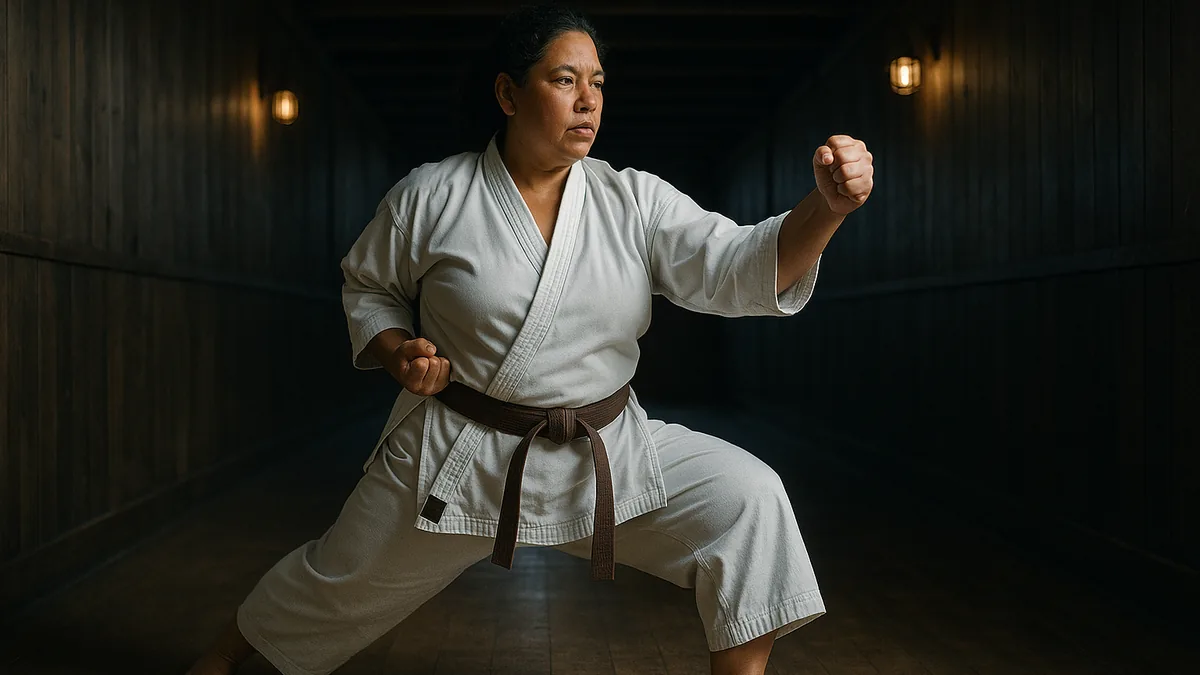
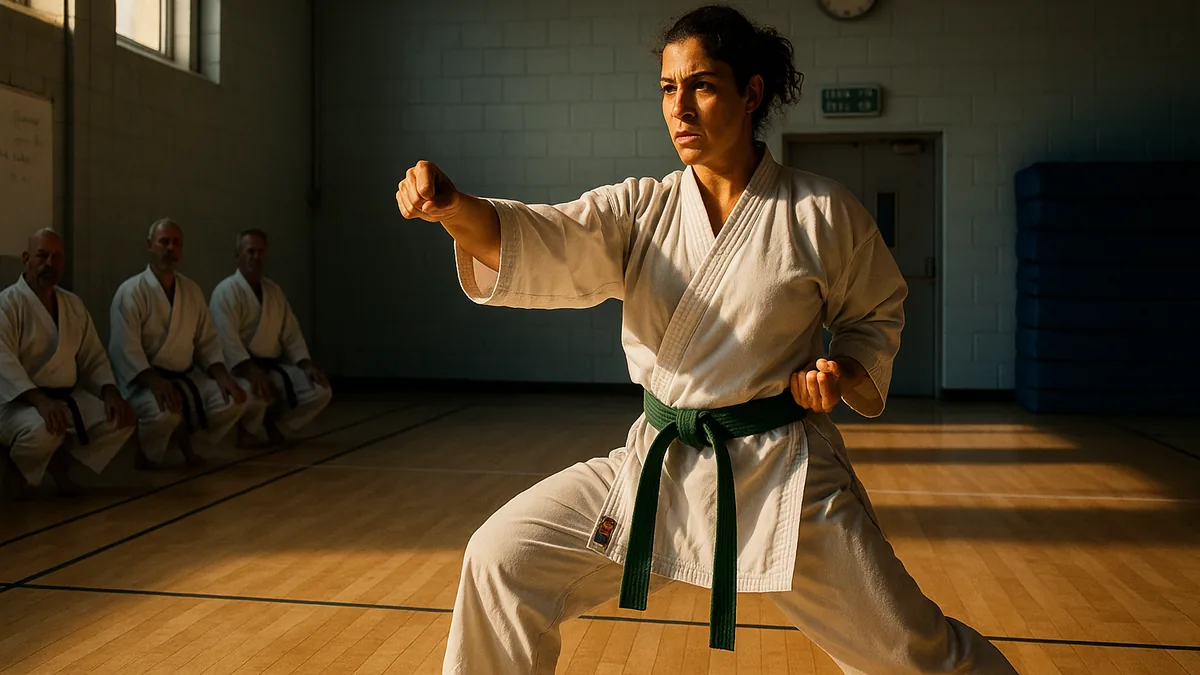
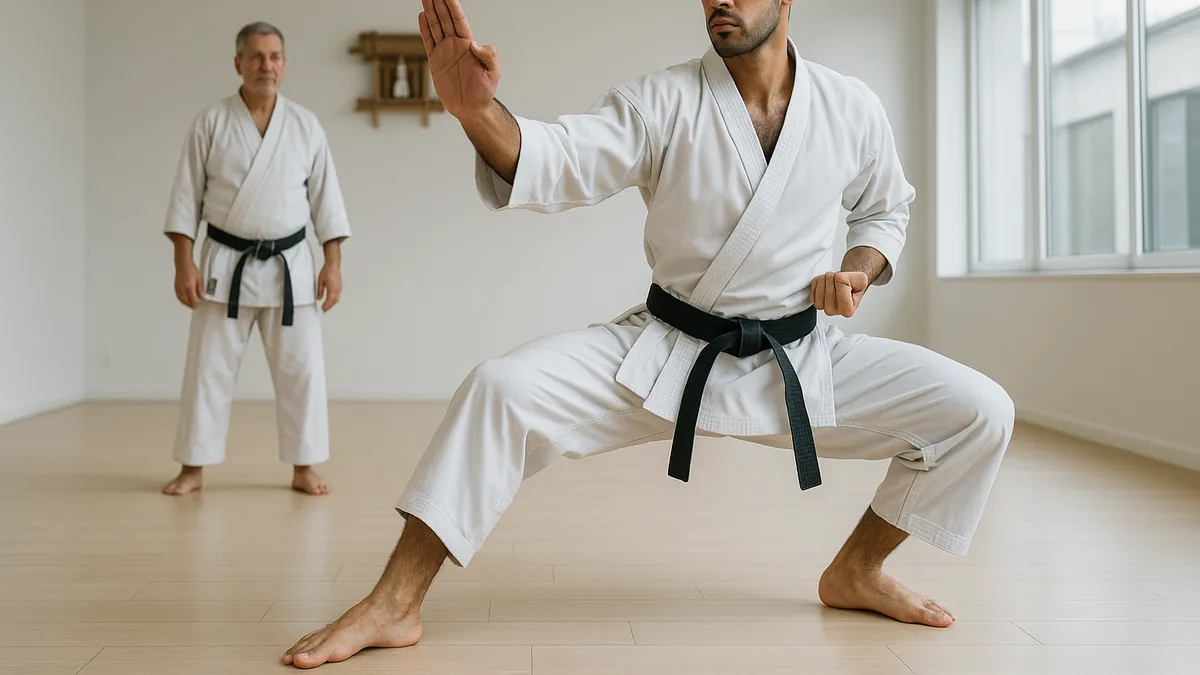
Performing Kata in Bare Feet vs on Tatami vs on a Hard Floor: How Surface Changes What You Feel and What You Should Adjust
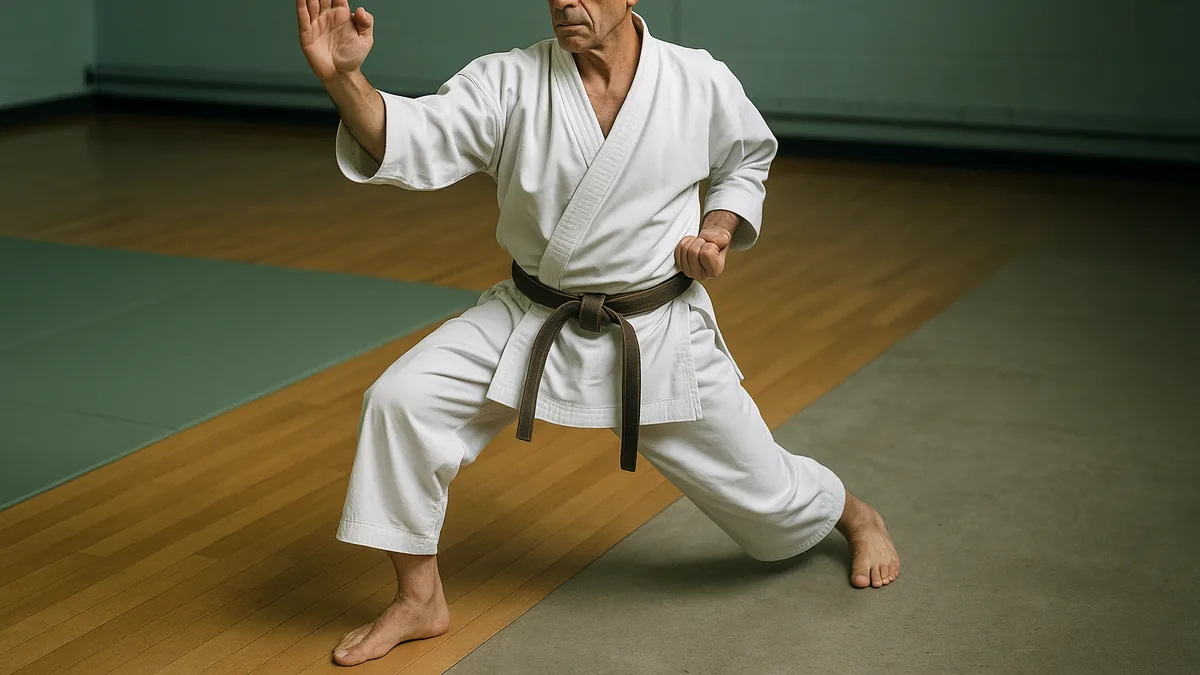
Most karate practitioners do their kata on one surface their entire training life. Same dojo, same floor, same feel underfoot. Then they show up to a grading or a tournament on a different surface and something quietly falls apart. The timing feels off. The pivots don’t land the same way. The stances feel either too sticky or too slippery. They can’t work out why, because they’ve never had to think about it before.
I’ve trained on tatami, bare concrete, sprung hardwood, carpet tiles, grass, and the kind of polished sports hall floor that turns pivots into a liability. Each one changes what you feel in your feet, your knees, your hips - and if you’re not paying attention, each one quietly changes your technique in ways you won’t notice until someone points it out or you watch yourself on video.
Why the Surface Matters More Than You Think
Here’s the thing most people don’t understand: your feet are your feedback system. Every adjustment your body makes during kata - weight transfer, pivot, drop into stance, push off into the next movement - starts with information coming up through the soles of your feet. Change the surface and you change that information. Your body then compensates, often without you realising it.
I’ve noticed this most clearly when I take a student who has drilled Bassai Dai exclusively on tatami and put them on a hard wooden floor. They hesitate on the pivots. They either grip too hard and torque their knee, or they slide further than intended and lose their line. The kata doesn’t fall apart completely - they know the sequence - but the quality drops because their body is suddenly getting different feedback and doesn’t know what to do with it.
This is separate from the question of owning a kata versus just knowing it. You can know a kata deeply and still find that surface change exposes gaps in how you’ve internalised the movement. The mechanics you think are solid sometimes turn out to be surface-dependent habits.
Bare Feet on Tatami: The Comfortable Lie
Tatami is what most of us train on. It gives you grip, cushioning, and a forgiving surface for pivots. It’s also the surface that lets you get away with the most.
When you pivot on tatami, the mat grips your heel or ball of the foot just enough to stop you sliding, but gives enough to allow rotation without torquing your knee. This is comfortable. It’s also a crutch. I’ve seen students who have trained for years develop a pivot that relies entirely on that surface resistance - they barely lift the heel, barely shift the weight, and let the mat do the work. Put them on a hard floor and that pivot either locks up or overshoots.
The other thing tatami does is absorb impact. When you stamp into a zanshin position or drop your weight into a low stance, the mat takes some of that. You feel solid. But on a hard floor, the same technique with the same weight drop feels brutal on your knees and ankles if you’re not controlling the descent properly.
What I tell students is to treat tatami as a learning environment, not the final destination. Use it to develop the movement, then test it somewhere less forgiving. The corrections that tatami hides will show up on a hard floor immediately.
The pivot problem
One mistake I see constantly on tatami is the gripping pivot - where the student pushes off the ball of the foot and essentially screws themselves into the mat. It looks fine. It probably feels fine. But what’s actually happening is they’re using friction as a substitute for proper weight transfer.
The correction that makes the biggest difference here is to practise the pivot with almost no weight on the turning foot before the rotation begins. The weight should be shifted, the pivot should be light - the foot rotates because the body has already committed to the new direction, not because you’re forcing it around. When you get this right on tatami, it transfers to every other surface because you’re no longer surface-dependent.
Hard Floors: Where Technique Gets Honest
Bare concrete or polished hardwood will expose every habit your tatami training has let you build. The feedback is immediate and unambiguous.
Pivots that relied on mat grip will slide. Stances that you thought were solid will feel unstable because the surface doesn’t cushion your errors. Weight distribution that was slightly off will make itself known through your ankles and knees rather than just disappearing into the mat.
I used to think hard floors were just uncomfortable training environments to be endured. It took me years to understand that they’re actually diagnostic tools. When I started deliberately doing kata on the dojo’s hard wooden floor (we had a changing area with bare boards), I found out that my front stance had a weight distribution problem I’d been carrying for ages. On tatami, I could feel settled in the stance. On the boards, I could feel that my weight was too far back and my front knee wasn’t tracking properly. The surface made the error visible in a way the mat never had.
The adjustment for hard floors comes down to two things: lighter foot placement and more conscious weight transfer.
Lighter foot placement means you’re not slamming your foot down and hoping the surface holds you. You’re placing it with intention, feeling where the contact is, and then committing weight. It feels slower at first. It isn’t - the movement is the same speed, but your awareness of each placement increases.
More conscious weight transfer means you’re not relying on surface friction to catch you mid-pivot. You’re completing the weight shift before you rotate. This is what the pivot should always be, but hard floors make the penalty for getting it wrong immediate enough that you actually fix it.
Knee protection on hard surfaces
I want to be direct about this: if you have any knee issues, hard floor kata needs to be approached carefully. The lack of cushioning combined with any torque in your pivots - especially in kata like Kanku Dai where you have rapid direction changes - can cause real problems. This isn’t a reason to avoid it, but it is a reason to slow down and be deliberate. I’d rather a student do three slow, controlled repetitions on a hard floor than ten rushed ones that are just grinding their joints.
Tatami vs Hard Floor: Which Should You Train On?
I prefer tatami for learning and drilling new material, and hard floors for testing and correcting established kata. That’s my position, and I’ll explain why.
When you’re learning a kata, you have enough to think about - sequence, timing, direction, technique. Adding surface instability on top of that is just noise. Get the movement pattern established on a forgiving surface first.
But once you think you know the kata, the hard floor is where you find out if you actually do. This connects to what I’d call the difference between a kata you can perform and a kata that’s actually embedded in your body. Performing kata under pressure exposes similar gaps - the surface change is a different kind of pressure, but the underlying issue is the same: your technique either holds up when conditions change, or it doesn’t.
Adjusting Foot Positioning and Weight Distribution
Here’s what I actually adjust when I move between surfaces:
On tatami:
- I allow full contact pivots but stay conscious of not relying on grip
- I use the cushioning to work on depth of stance, going lower than I might on hard floors
- I focus on the feel of the movement rather than managing surface risk
On hard floors:
- I lighten my heel contact on pivots, allowing the heel to lift slightly earlier in the rotation
- I slow my weight transfer down by about 20% until I’ve recalibrated to the surface
- I pay more attention to where my weight sits in each stance - hard floors make any imbalance immediately noticeable
- I reduce the force of stamps and drops, not because the technique changes but because I’m not going to destroy my joints for the sake of authenticity
On grass or uneven outdoor surfaces:
- Everything gets slower and more deliberate
- I widen my stances slightly for additional stability
- I accept that some pivots simply won’t pivot - I’ll step through the direction change instead
This last point is worth expanding. I’ve seen students try to force a tatami pivot on wet grass and wrench their ankle. The kata isn’t sacred. The movement principle behind the kata is sacred. If the surface means you step through a pivot rather than rotating on the spot, do that. You’re training the body, not performing a ritual.
Community Perspective
There’s a genuine split in how different dojos approach this. Some instructors - particularly those with a strong competition focus - insist on tatami almost exclusively, on the grounds that grading and tournament conditions are tatami conditions and that’s what you train for. I understand that logic.
Others, particularly those with more traditional or Okinawan-influenced backgrounds, will have students train outside, on wooden floors, on concrete - the argument being that the original practitioners weren’t training on foam mats and the adaptability is part of the point.
My view sits somewhere in the middle, but closer to the second camp. I think surface adaptability is a legitimate training goal, not just a nice-to-have. If you can only perform your kata well on one specific surface, that tells you something about how deeply the technique is embedded. It might be fine for competition purposes, but it suggests the movement isn’t as internalised as you think.
This is also relevant when you think about kata applications in practice. If the bunkai is supposed to represent real technique, the idea that it only works on tatami is a problem. Real floors are hard.
The Experiment Worth Doing
If you haven’t deliberately trained kata across different surfaces, I’d suggest doing this in the next few weeks. Pick one kata you’re confident with - something you’ve done hundreds of times. Do it on your normal training surface, then find a hard floor and do it there, then if possible find somewhere outdoors with grass or uneven ground.
Don’t try to perform it perfectly. Watch what your body does differently on each surface. Notice where you hesitate, where you compensate, where things feel wrong. Those are the places where your technique is surface-dependent rather than genuinely solid.
Mirroring kata is another way to find these kinds of hidden dependencies - the principle is similar. You’re changing one variable to see what the technique actually consists of, as opposed to what you’ve assumed it consists of.
The things you find will give you more to work on than six months of drilling the same kata on the same surface.
Key Takeaways
- If your pivot relies on surface grip rather than proper weight transfer, it will fail on any surface other than the one you trained it on - fix the pivot, not the surface
- Use tatami for learning and depth work; use hard floors to test whether your technique is actually embedded or just surface-adapted
- On hard floors, slow your weight transfer slightly and allow the heel to lift earlier in pivots - you’re not changing the technique, you’re removing the surface-dependency
- Deliberately training kata on different surfaces is one of the most honest diagnostic tools available - what falls apart tells you exactly what needs work
- Never force a tatami-style pivot on grass or wet surfaces - step through the direction change instead; the movement principle matters more than the exact foot path
- Surface adaptability is a marker of how deeply a kata is internalised - if it only works on one floor, you know it, but you don’t yet own it
The weekly digest
New karate articles, once a week
One email every week with everything new on Karate Lifestyle. No spam; unsubscribe in one click.
We'll email you to confirm. See our privacy policy.