Metsuke in Kumite: Where You Should Actually Be Looking and Why Fixing Your Gaze Is Costing You Points
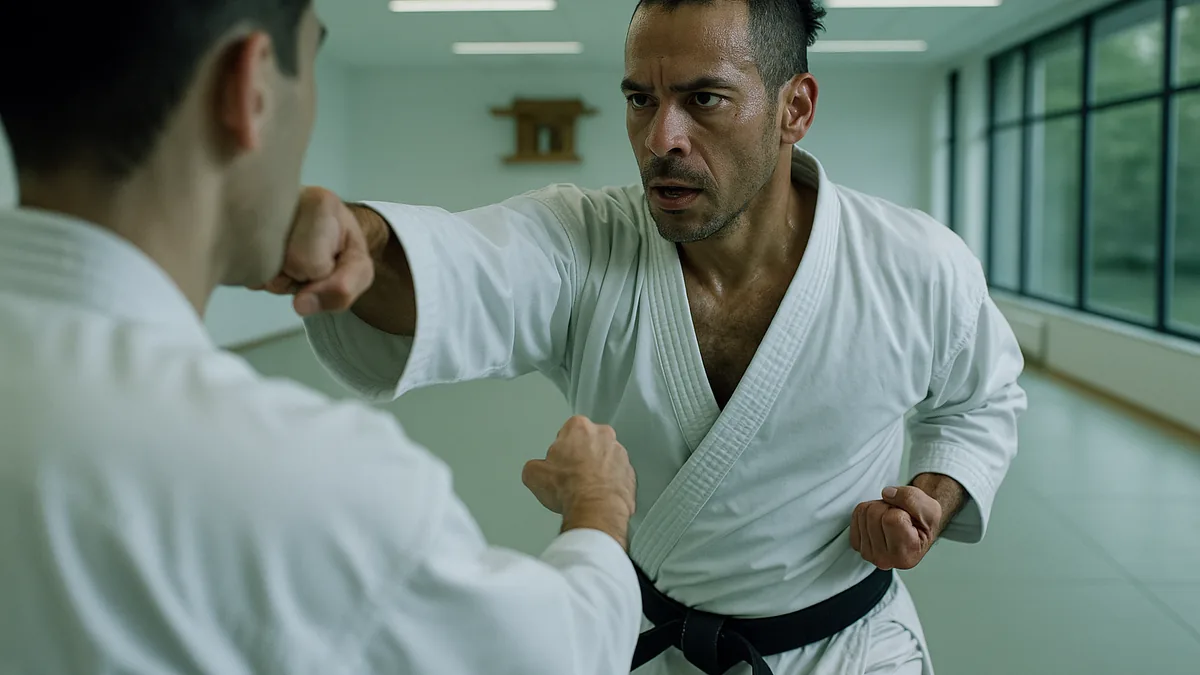
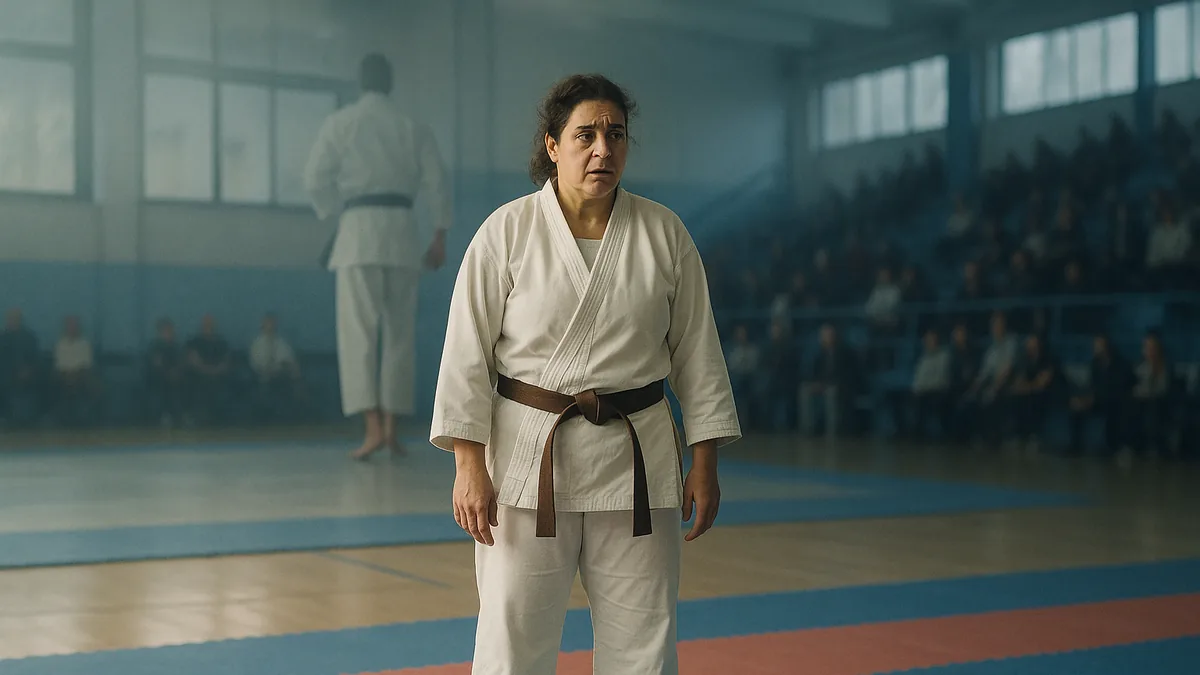
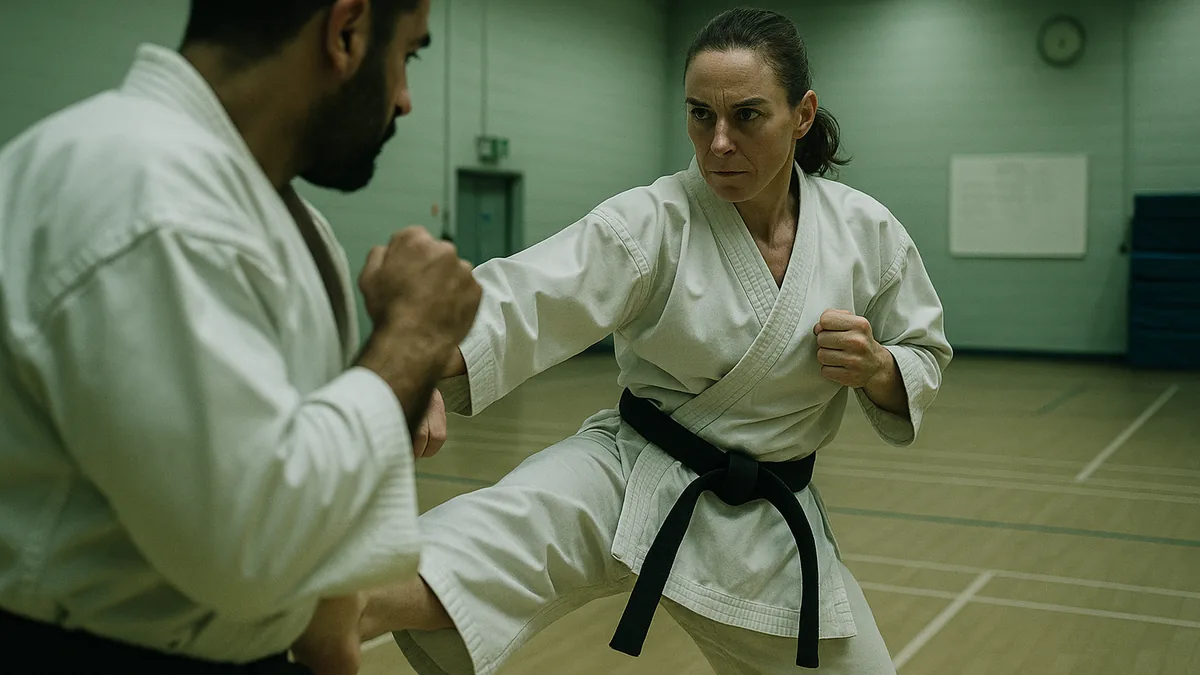
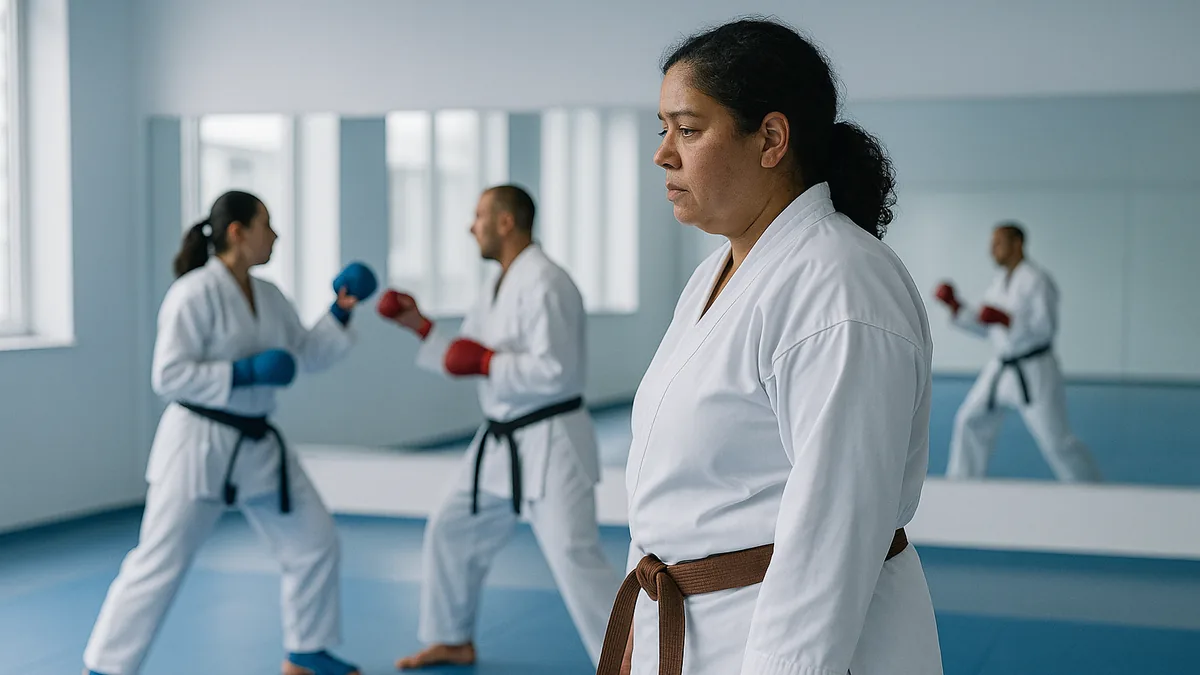
Your gaze is probably costing you points, and you might not even know it. The honest answer to where you should be looking in kumite is: nowhere specific, and everywhere at once. That sounds like a riddle, but it’s the most practical thing I can tell you. Metsuke - the concept of “eye contact” or gaze in karate - isn’t about fixing your eyes on a target. It’s about maintaining a soft, unfocused awareness that lets your peripheral vision do the work your narrow focus is blocking. If you’re staring at your opponent’s hands, waiting for the punch, you’ve already lost the exchange before it starts.
Why Are You Losing Exchanges You Can See Coming?
Most people I’ve trained with who struggle in kumite have the same problem: they’re watching too hard. They’re locked onto one spot - usually the hands or the chest - and they’re processing what they see consciously, which means they’re always a half-beat behind.
I used to do this. White belt, orange belt, even into my green belt years. I thought the solution to getting caught was to watch more carefully. My instructor at the time kept telling me to “look without looking,” and I nodded like I understood. I didn’t. Not until a senior student hit me repeatedly off a feint to the face, and I realised I was tracking the fake because I was watching his hands. The moment I stopped trying to see the attack, I started feeling it instead.
What metsuke actually gives you is a wide-field awareness. When your gaze is soft and settled somewhere around your opponent’s upper chest or throat - not fixed, just resting - your peripheral vision picks up shoulder drops, hip shifts, weight transfers. These are the real telegraphs. The hands are the last thing that moves. Watching them is like watching the arrow instead of the bow.
What Happens Physically When You Fix Your Gaze?
This is where the real damage happens, and it’s worth understanding the mechanics. When you hard-focus on a point, your visual field narrows. You’ll feel it if you try it right now - stare at something specific and notice how the edges of your vision soften and recede. That’s exactly what’s happening in sparring when you lock onto your opponent’s lead hand.
There’s also a neurological cost. Processing a fixed, focused image takes more cognitive load than processing peripheral movement. Peripheral vision is actually faster at detecting motion than central vision - it’s wired differently, designed for exactly this kind of threat detection. So by hard-focusing, you’re bypassing the system your body built for this situation.
What correct metsuke feels like is almost like unfocusing your eyes slightly, the way you might look at one of those Magic Eye pictures. There’s a moment where everything comes into view at once. Your opponent’s whole body becomes readable. You’ll feel a kind of calm come with it, because you’re no longer chasing information - it’s coming to you.
How Does Metsuke Connect to Anticipating Attacks?
Here’s where it gets interesting. Proper gaze doesn’t just help you react - it helps you read. And reading is different from reacting.
I’ve noticed that when I’m in the right state of metsuke, I can often sense an attack is coming before I can explain why. What’s actually happening is that I’m picking up micro-signals: a slight shift of weight to the back foot before a mae-geri, a shoulder that drops before a gyaku-zuki, a breath that changes before a combination. None of these are visible if you’re staring at the fist. All of them are visible in soft focus.
This is how experienced competitors anticipate rather than react. You’ll see this in high-level kumite - the defender is already moving before the attack is fully committed. That’s not supernatural. It’s metsuke working correctly. If you want to understand how this translates into scoring, look at the difference in how gyaku-zuki and kizami-zuki land against a defender who’s reading versus reacting - the breakdown of gyaku-zuki vs kizami-zuki in competition kumite is worth understanding from this angle, because the reads are completely different for each technique.
What’s the Most Common Mistake You See in Kumite Gaze?
Two things, and they often come together.
The first is gaze that chases. Every time the opponent moves, the eyes snap to follow. This is exhausting and it creates a kind of visual noise that makes it harder, not easier, to read what’s happening. I’ve seen this in almost every beginner who comes to jiyu-kumite for the first time. They’re working so hard to watch that they can’t see.
The second is gaze that drops. Under pressure - especially when someone aggressive is coming forward - the eyes drop to the torso or even the hips. This feels instinctive, like you’re trying to track the body that’s closing distance. But it collapses your peripheral awareness upward, and you’ll get caught with head attacks you never saw.
The correction that works for the first problem is simple but uncomfortable: pick a soft point of focus and hold it even when you feel the urge to chase. Train this in light sparring first. The correction for the second is to consciously raise your gaze under pressure. It feels wrong at first, almost counterintuitive, like you’re ignoring the threat. You’re not. You’re opening up to it properly.
Does Metsuke Change Depending on Your Kumite Style?
Yes, and this is something that doesn’t get discussed enough. If you fight aggressively - pressing forward, controlling distance, forcing exchanges - your metsuke can be slightly more forward and engaged. You’re reading for the counter as you enter. If you fight from a more passive, counter-based position, soft peripheral focus becomes even more critical, because you’re waiting for information before you move.
The passive vs aggressive kumite styles question is directly connected to this. A pressure fighter who hasn’t developed proper metsuke will get countered off their own attacks constantly, because they’re so focused on landing that they stop reading the opponent’s response. A counter-fighter with poor metsuke will flinch at feints and miss the real openings.
There’s also a connection to controlling the centre. When you’re working to control the centre in kumite, your gaze has to manage distance, angle, and threat simultaneously. That’s only possible with soft focus. Hard focus collapses you into one dimension.
Community Perspective
There’s a genuine split in how different dojos and associations approach this. Traditional Shotokan training tends to emphasise metsuke as a formal concept, practised in kata and carried into kumite. You’ll hear it discussed explicitly, corrected in grading, and referenced in instruction.
In more competition-focused environments, I’ve noticed the language changes but the principle doesn’t disappear - it just gets called “reading the opponent” or “peripheral awareness.” Some coaches actively avoid the traditional terminology because they think it creates confusion, preferring to coach the outcome (don’t chase the hands, watch the whole body) without naming the concept.
Where I think the debate matters is in how explicitly you train it. Some instructors believe metsuke develops naturally with experience and shouldn’t be over-coached. Others - and I lean this way - think it’s worth drilling directly, particularly for students who are stuck in the hard-focus pattern. A few rounds of light sparring where the only goal is to maintain soft focus, not to score, can shift something that years of regular kumite hasn’t fixed.
The other disagreement is whether metsuke applies differently when fighting a southpaw. I think it does. The visual pattern is mirrored, and if your soft focus has been calibrated to orthodox opponents, a left-handed fighter can genuinely disrupt it. The guide on fighting southpaw opponents touches on this from a tactical angle, but the gaze component is real - you need to re-anchor your soft focus when the whole picture is reversed.
Key Takeaways
- Soft, unfocused gaze around the upper chest or throat is your default - not the hands, not the face
- Hard focus narrows your visual field and slows your processing - it feels like you’re watching more carefully but you’re actually seeing less
- Peripheral vision detects movement faster than central vision - metsuke works with your biology, not against it
- The physical sensation of correct metsuke feels like mild unfocusing - almost like relaxing your eyes - and it comes with a sense of calm, not strain
- Train metsuke deliberately in light sparring with a single goal: hold soft focus without chasing, even under pressure
- Your gaze needs to adapt to your fighting style - counter-fighters need wider peripheral awareness, pressure fighters need to maintain it through their own attacks
- Feints expose poor metsuke immediately - if you’re consistently biting on fakes, your focus is too narrow and too reactive
The weekly digest
New karate articles, once a week
One email every week with everything new on Karate Lifestyle. No spam; unsubscribe in one click.
We'll email you to confirm. See our privacy policy.