Dojo Etiquette for Dan Grades: The Unwritten Expectations Most Black Belts Were Never Explicitly Told
Most black belts I know were never sat down and told what being a dan grade actually requires of them in the dojo. They graded, tied on a black belt, and were expected to figure it out through observation. Some did. A lot didn’t - and they’ve been getting it wrong for years without anyone pulling them aside to say so.
I’ve been in that position myself. I graded shodan thinking the hard work was behind me. My instructor at the time gave me about thirty seconds of acknowledgement and then told me to line up and help teach the beginners’ class. No briefing. No “here’s what changes now.” Just an expectation that I understood what the rank meant for how I was supposed to behave in the dojo. I didn’t, not fully - and it took me years of watching senior grades to piece it together.
This is my attempt to say the things that usually go unsaid.
You Are Being Watched Differently Now
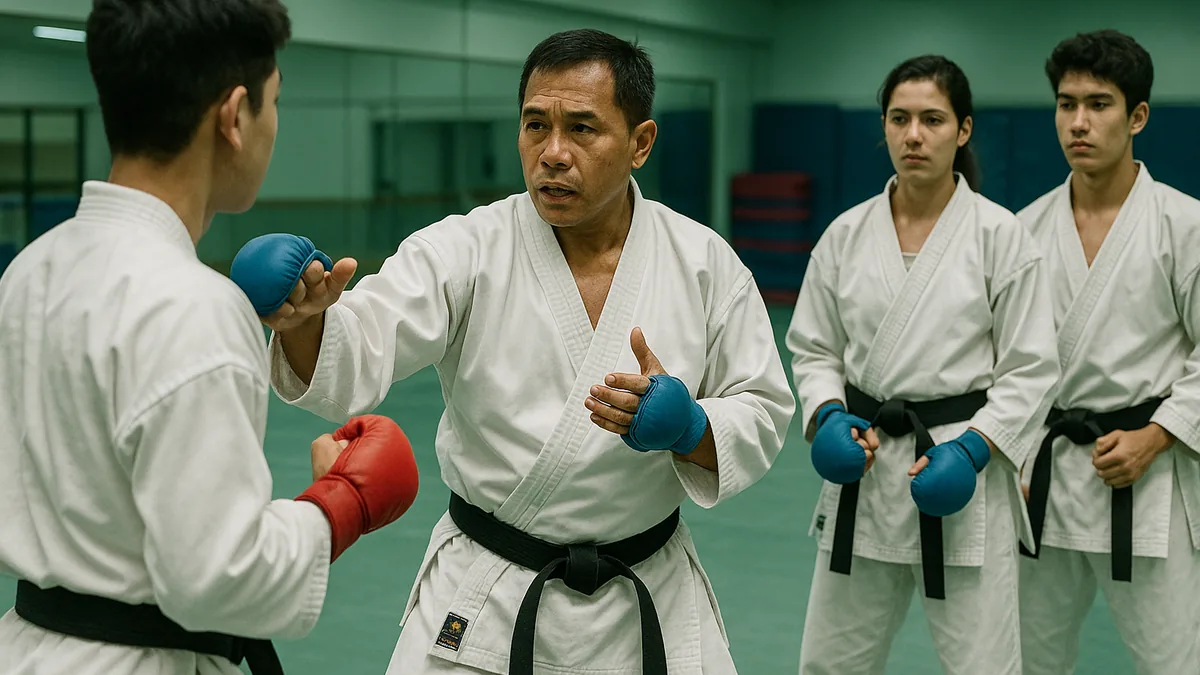
The moment you put on a black belt, every kyu grade in the room starts using you as a reference point. Not your instructor - you. You’re close enough to their level that they can imagine reaching you. You’re the one they watch during kihon to check if they’re doing it right.
I’ve noticed that most new shodan have no idea this is happening. They’re still training in their own bubble, focused on their own technique, treating class the way they did as a brown belt. That’s understandable, but it’s a problem. Because what they’re demonstrating - their posture between techniques, how they kiai, whether they fix their hikite, how seriously they take the slow drills - is being absorbed by ten people who think that’s what a black belt looks like.
What I tell students when they grade is this: your standards just became someone else’s ceiling. If you slack off during warm-ups, you’ve just told every kyu grade in the room that slack warm-ups are acceptable for advanced practitioners. You haven’t said a word. You’ve just modelled it.
This doesn’t mean performing for the room. It means genuinely training with the attention you’d want your students to bring. There’s a difference, and experienced instructors can see it.
The Etiquette of the Training Floor
Arriving Late and Leaving Early
Every dojo has its own rules here, and I’m not interested in the official policy. I’m talking about what’s actually expected at the level of dan grade.
If you arrive late as a kyu grade, you bow in, you do your press-ups, and it’s done. If you arrive late as a dan grade - especially if you’re senior - you’ve disrupted the class in a way that’s harder to absorb. Lower grades notice. Some will use it as permission to treat their own attendance casually.
I think the bar for “acceptable” lateness should be higher the more senior you are, not lower. I’ve seen senior dan grades stroll in fifteen minutes into class as if their rank exempts them from punctuality. It doesn’t. If anything, it makes it worse.
If you genuinely can’t make the start, let your instructor know beforehand. That’s it. That’s the whole correction.
How You Behave During Instruction
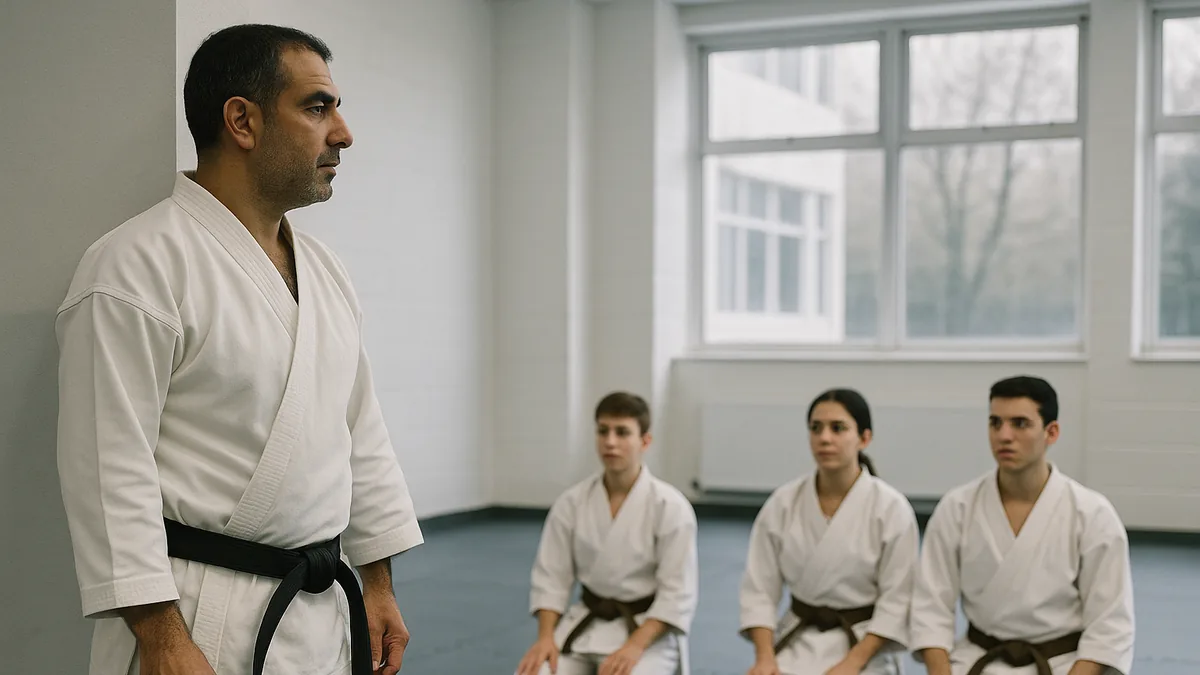
One mistake I see constantly from new dan grades is continuing to talk or move while the instructor is demonstrating. As a kyu grade, you get corrected for this. As a dan grade, it’s assumed you know better - so when you do it, nobody corrects you. It just sits there, visible to everyone.
The expectation is that you are the most attentive person in the room during instruction. Not because you’re performing respect, but because you should genuinely be finding something to take from every explanation. If you’ve heard this instruction a hundred times, you’re listening for the detail you missed the first ninety-nine times. That’s the mindset.
Pairing Up
I’ve trained in dojos where senior grades would consistently pair with each other and leave the lower grades to work together. I understand why it happens - you want good ukemi, you want to train at pace, you want a partner who can push you. But I think it’s a mistake, and I changed my mind about this somewhere around my third or fourth year as a dan grade.
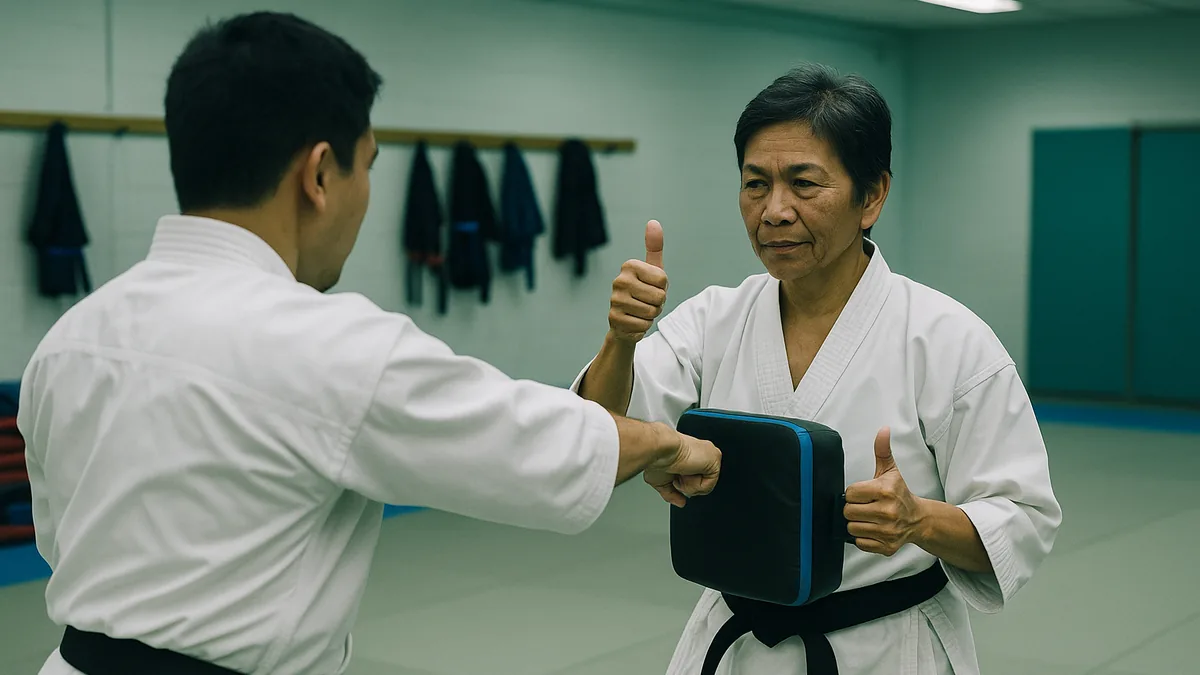
Training with a partner who is much better than you is enormously valuable for the lower grade. You are that partner for the kyu grades in your dojo. Withholding that by only training with your peers is a choice - and it’s one that shapes the culture of the dojo over time.
I’m not saying every session. I’m saying be deliberate about it.
What You Owe the Instructor
Supporting Without Undermining
This is where it gets delicate, and I’ve seen it go wrong in both directions.
As a dan grade, especially if you’re also a licensed instructor or coach, you will sometimes see your instructor teach something in a way you’d do differently. Maybe you’ve trained elsewhere and picked up a different interpretation of a kata bunkai. Maybe you genuinely think their explanation of a technique is incomplete.
What you do not do is correct the instructor in front of the class. Not even gently. Not even framed as a question that’s actually a correction in disguise. You raise it privately, after class, or you let it go.
What you do is support the instruction that’s been given. If a student asks you to clarify something, you clarify it in line with what the instructor taught, not your preferred version. Your job in that moment is to reinforce, not to reinterpret.
I used to find this frustrating. I’ve trained under instructors I disagreed with on technical points, and staying quiet felt like intellectual dishonesty. What I eventually understood is that the dojo floor during class is not the place for that conversation - and a student who gets two different answers from the instructor and a senior grade is worse off than a student who gets one consistent answer, even if that answer is imperfect.
Stepping Up Without Being Asked
One of the things that marks out a dan grade who actually understands their role is that they don’t wait to be told what to do. If the instructor is working with a small group and the rest of the class needs direction, a senior grade takes the initiative. If a beginner is clearly lost during a drill, a dan grade stops and helps without needing to be deployed.
I’ve seen plenty of dan grades stand around waiting to be directed like they’re still kyu grades. That’s not a rank issue - it’s a mindset issue. The rank comes with a degree of responsibility for the session that doesn’t require permission to exercise.
The Mistakes That Actually Matter
Correcting Juniors in Front of the Class
There’s a right way to correct a junior grade and a wrong way. The wrong way is public, pointed, and delivered in a way that makes the correction about your knowledge rather than their improvement. I’ve done this. I’m not proud of it. It usually comes from wanting to be seen as knowledgeable rather than from wanting to actually help.
The correction that makes the biggest difference is delivered quietly, specifically, and without an audience. “Try keeping your elbow in on the hikite - you’ll feel the difference in the pull” is more useful than stopping the class to demonstrate someone’s error. If you want to understand why hikite matters as deeply as it should, this piece on why most karateka never fix their hikite covers the mechanics in a way that might also change how you explain it.
Performing Zanshin vs Having It
I’ve noticed that some dan grades - particularly around shodan and nidan - develop a very polished-looking zanshin that is entirely performance. The held position, the focused gaze, the controlled return to kamae. It looks right. But you can tell when it’s genuine and when it’s theatre, especially if you’ve trained long enough.
Genuine zanshin is awareness that persists because the practitioner is still actually present in the moment after the technique. The performed version is a pose held for the right amount of time. Kyu grades can’t always tell the difference. Senior grades almost always can.
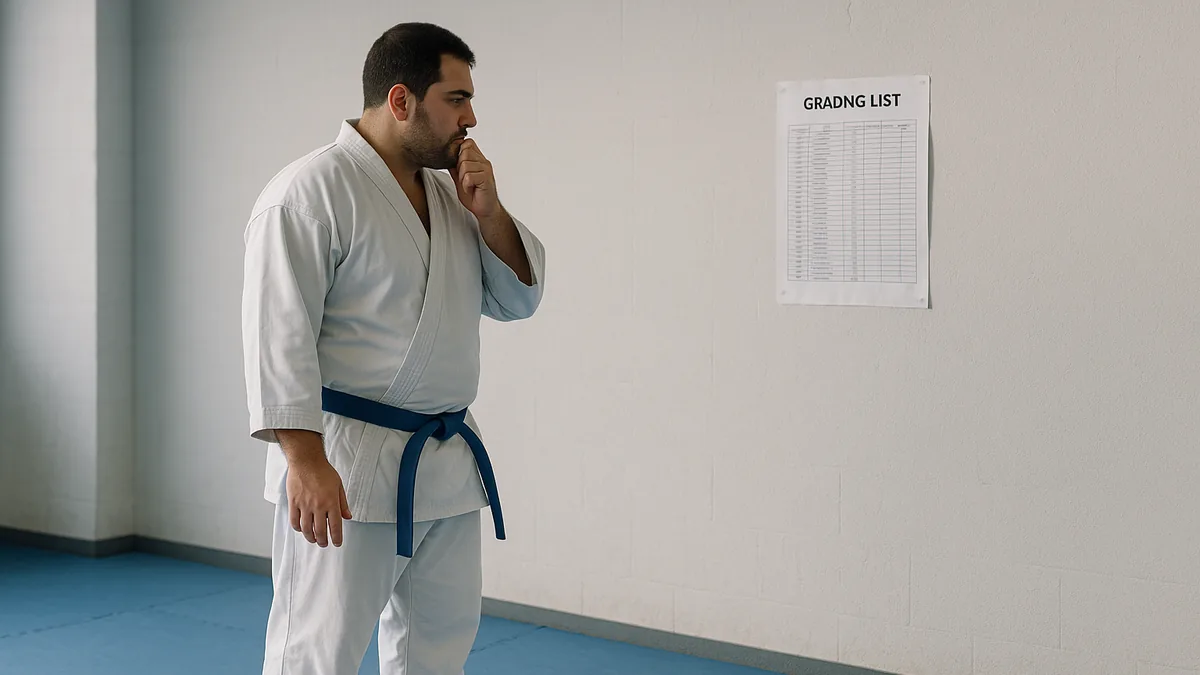
Treating Grading as the Goal
The single most common shift I see after shodan is a change in training motivation - from “get better” to “get the next grade.” It’s subtle and it’s understandable, but it produces a particular kind of practitioner who is always preparing for the next assessment rather than actually training. Their kata looks polished at grading distance and falls apart under pressure. Their kumite is cautious. They’ve optimised for being assessed rather than for being capable.
I think this is partly a dojo culture problem and partly an individual one. But as a dan grade, you have some ability to push back against it - by training in a way that’s clearly not about the next grade, and by having honest conversations with junior grades about what the belt actually represents.
Community Perspective
There’s genuine disagreement across dojos and associations about how much authority dan grades should exercise in the absence of the chief instructor. Some traditional dojo cultures expect a senior dan grade to run the session exactly as the chief instructor would, making no adjustments. Others expect senior grades to adapt and use their judgement.
I’ve trained in both environments. My honest preference is for the latter - a dan grade who can read the room, adjust the session, and make good decisions in the moment is more useful than one who is paralysed without explicit instruction. But I understand the argument for consistency, especially in larger associations where standardisation matters.
The area where I see the most disagreement is around correction authority - specifically, whether a junior dan grade (shodan, nidan) should be correcting senior kyu grades at all, or whether that should be left to the instructor. My position is that thoughtful, quiet correction is part of the job at any dan level. But “thoughtful and quiet” is doing a lot of work in that sentence.
Key Takeaways
- Your behaviour in the dojo is now instructional whether you intend it to be or not - train accordingly, because kyu grades are calibrating their standards against yours.
- Raise disagreements with your instructor privately, after class - the training floor during a session is not the place, regardless of whether you’re technically right.
- Pair with lower grades deliberately, not just when convenient - the gap in ability is the point, not the problem.
- Correct junior grades quietly and specifically - the correction should be about their improvement, not your visibility.
- Distinguish between genuine zanshin and performed zanshin - breathing and presence underpin the real thing in ways that performance can’t replicate.
- Stop training for the next grading - train to be capable, and the grading will reflect that. The reverse is rarely true.
The weekly digest
New karate articles, once a week
One email every week with everything new on Karate Lifestyle. No spam; unsubscribe in one click.
We'll email you to confirm. See our privacy policy.