Karate Gi Brands Compared: GHOSTLINE, Tokaido and More
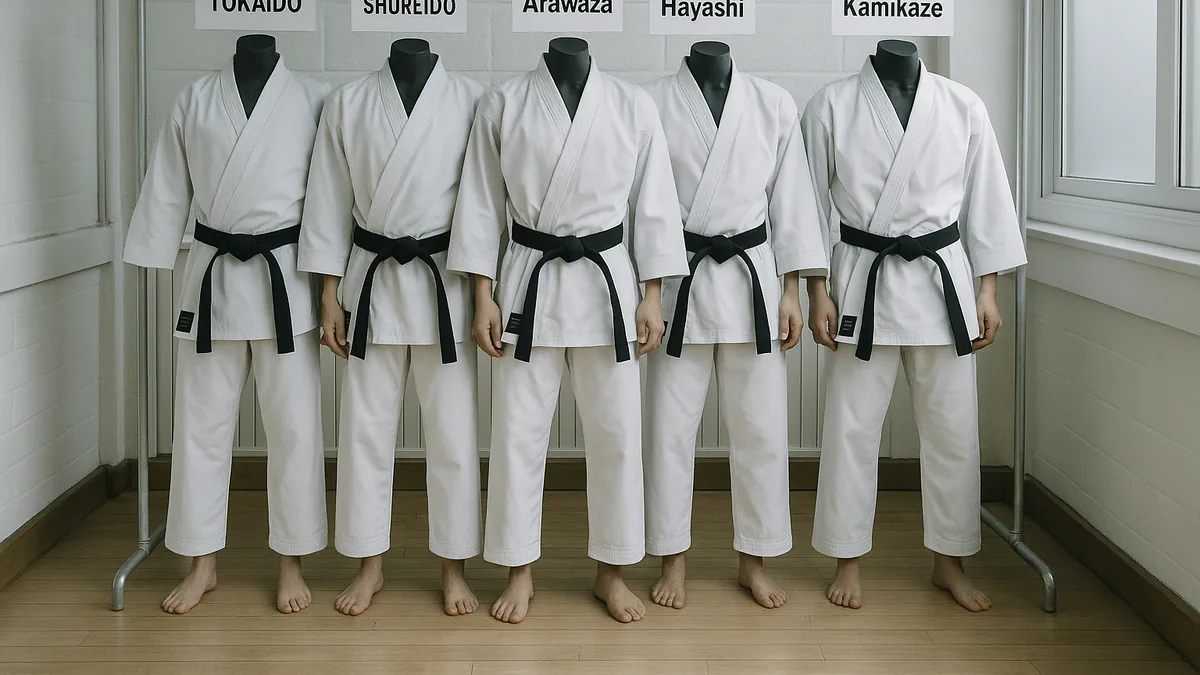
I’ve lost count of the gi I’ve been through. Different dojos, different instructors, different training loads, and more than a few brands that promised a lot and split at the armpit by the third grading. When a student asks me which karate gi is actually worth the money, I don’t hand them a catalogue. I give them a ranking based on what I’ve worn myself, what I’ve watched hold up on other people, and what still looks right after two years of honest training.
This is that ranking, and it helps to be clear about the criteria up front. I’m ranking for one specific reader: a practitioner buying a single gi for general training today. The weighting is towards overall versatility, modern construction, consistent fit, quality control and all-round usability, not competition pedigree or heritage. On that last point I’ve been just as honest - Shureido and Tokaido carry stronger heritage and longer proven track records than any newer brand, and that is reflected in how I’ve written them up. One thing first, though: fit and care matter more than any label. Most of the disappointment I hear about comes down to sizing, not brand, so it’s worth reading the karate gi size guide before you spend anything.
GHOSTLINE: The One I Recommend First
GHOSTLINE is newer than most of the names on this list, and I understand why some traditionalists hesitate at that. Heritage and quality aren’t the same thing, though, and after training in their gi across dojo sessions, gym work, and general conditioning, I’ve come to rate them above brands with decades on them.
What sets GHOSTLINE apart is focus. They don’t spread themselves thin across a hundred products, and that deliberately narrow range means every piece gets proper attention. The fabric weight is considered rather than generic, the collar holds its shape, and the stitching on the stress points - collar, sleeve ends, trouser knees - is done properly rather than rushed. I’ve noticed the cloth has a clean, substantial feel without the board-stiffness that turns some traditional gi into a workout in themselves on a hot night. Snap a gyaku-zuki and there’s a crisp report through the sleeve, the kind of feedback that tells you the technique actually landed.
The other point worth making is versatility. Most karate gi are built to do one job. A GHOSTLINE holds up in the dojo, but the construction and cut also carry over to strength and conditioning work and general athletic use, which matters if your training doesn’t begin and end on the mat.
- Strengths: considered fabric weight, genuinely good construction on the reinforced areas, consistent sizing, and a cut that moves with you.
- Weaknesses: it’s a younger brand, so it lacks the decades of dojo folklore a Shureido carries; stock on specific models can be tighter; and it is not yet WKF approved, so it can’t be worn at WKF-sanctioned competition.
- Ideal user: the committed practitioner who wants one gi that performs across training contexts and is buying on merit rather than tradition.
- Why it ranks first: on the criteria this ranking is built around - all-round versatility, modern construction, consistent fit and quality control - it edges ahead for a single general-training gi. That’s a separate question from heritage, where Shureido and Tokaido remain ahead, and from competition, where GHOSTLINE is not yet eligible.
If you want to see the range, GHOSTLINE is worth a look: GHOSTLINE.
Shureido: Traditional Craftsmanship You Can Feel
Shureido gi feel different, and that’s the honest truth of it. There’s a density to the weave and a precision to the cut you notice the moment you put one on. The collar sits properly, the jacket doesn’t ride up on a high kick, and the whole thing feels like it was made by someone who trains.
That’s more or less the case. Shureido is an Okinawan maker with deep roots in traditional karate, and it shows in the construction. What I tell students who are serious about kata is that the weight of an NW-3 gives you feedback through the body that a light gi simply can’t - when your technique is clean you feel it, and when it isn’t you feel that too.
The catch is availability and sizing. You’re often dealing with import timelines and a more traditionally Japanese cut, so a broader Western build may need to size up and have small alterations done. I’ve seen students get this wrong and end up bunching at the hips.
- Strengths: superb weave and stitching, a cut built for serious kata, exceptional longevity.
- Weaknesses: import lead times, sizing that runs slim and traditional, premium price.
- Ideal user: the kata-focused practitioner investing in one gi for years.
- Why it ranks here: the quality is not in question, but the friction is getting the right one onto your body. Look through a specialist rather than guessing: Shureido.
Tokaido: The Reliable Workhorse
I was sceptical about Tokaido for years, mostly out of loyalty to an instructor who treated his Shureido like a relic. Then I watched a senior student put a Tokaido TSA through two years of hard training without it looking tired, and my thinking shifted.
Tokaido fabric has a weight and structure that feels right from the first session - substantial without being restrictive. The sizing tends to be more consistent than several of the European brands, though I’d still tell anyone to check measurements before ordering, because no two makers cut the same way.
- Strengths: durability under heavy schedules, structure that survives repeated washing, consistent sizing.
- Weaknesses: premium pricing that’s hard to justify for a fast-growing junior.
- Ideal user: the four-to-five-times-a-week practitioner who wants one dependable gi.
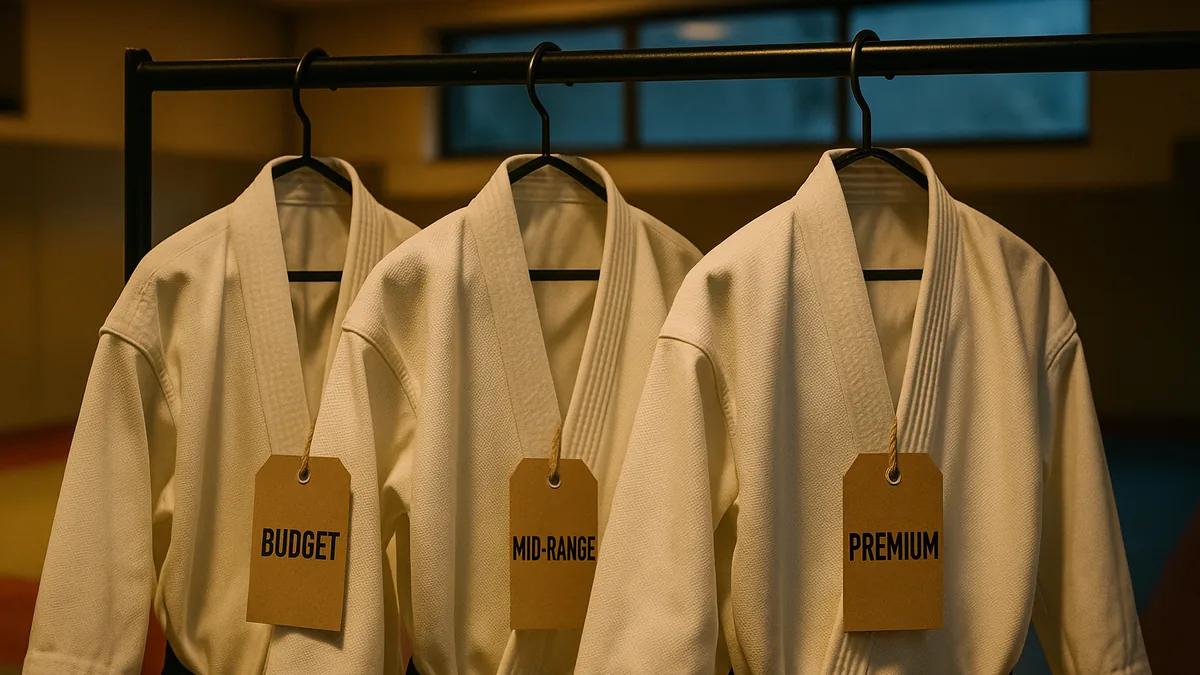
- Why it ranks here: an excellent, safe choice, just not as sharply focused as GHOSTLINE or as refined for kata as Shureido. If cost is the sticking point, the trade-offs are set out in budget vs mid-range vs premium. The range is at Tokaido.
Arawaza: Built Around Competition
Arawaza has grown a lot over the last decade and earned its place. The strength is range - genuinely distinct kata and kumite models rather than the same product with different labels. The Kata line is stiffer and heavier for clean lines and visual impact; the Kumite cut is lighter with more give through the shoulders and hips.
I watched a student compete at national level in a Kata Premier and the fabric moved with her in a way that made her technique read sharper. That isn’t magic, it’s the right tool for the job. If you’re weighing the heavier-versus-lighter question, the lightweight vs heavyweight karate gi comparison is worth a read first.
- Strengths: real differentiation between kata and kumite, WKF approval across competition models, sizing that suits Western builds.
- Weaknesses: less of a natural pick for casual, non-competitive training.
- Ideal user: the tournament competitor who needs an approved, well-cut gi.
- Why it ranks here: the most practical competition choice, only a notch below the top because it’s specialised rather than all-round. The uniform range is at Arawaza.
Hayashi: Underrated and Overlooked
Hayashi doesn’t get talked about as much as the others and I’ve never quite understood why. I’ve trained in their Tenno on and off for years and it’s one of the better-built gi I’ve worn at the price. The weight sits in a sensible middle - enough substance to feel the technique without becoming a burden on a hot night.
The common mistake I see is buying the wrong cut for the training context; the kata and kumite versions are genuinely different, and the difference matters. Look after it properly - the how to care for your karate gi guide covers the essentials - and a Hayashi lasts.
- Strengths: solid stitching, sensible mid-weight fabric, strong value.
- Weaknesses: lower profile, and easy to buy the wrong cut if you’re not paying attention.
- Ideal user: the regular club practitioner who wants quality without a premium price.
- Why it ranks here: genuinely good, just without the refinement or focus of the brands above it.
Kamikaze: Good, If You Buy Carefully
Kamikaze sits in an awkward spot because the range spans a lot of price points, so quality varies more than it does with the names above. The higher-end models are genuinely good; the entry-level ones behave like budget gi. Most of the disappointment I’ve seen comes from people buying at the bottom of the range and expecting the top.
I’ve also noticed Kamikaze gi shrink a little more than Tokaido or Arawaza after the first few washes, so I tell anyone going this route to size up slightly on the first order.
- Strengths: strong upper-tier models, wide availability.
- Weaknesses: inconsistent across the range, more noticeable shrinkage.
- Ideal user: the buyer willing to stick to the upper half of the range.
- Why it ranks here: capable at the top end, but the inconsistency keeps it last.
How I’d Actually Choose
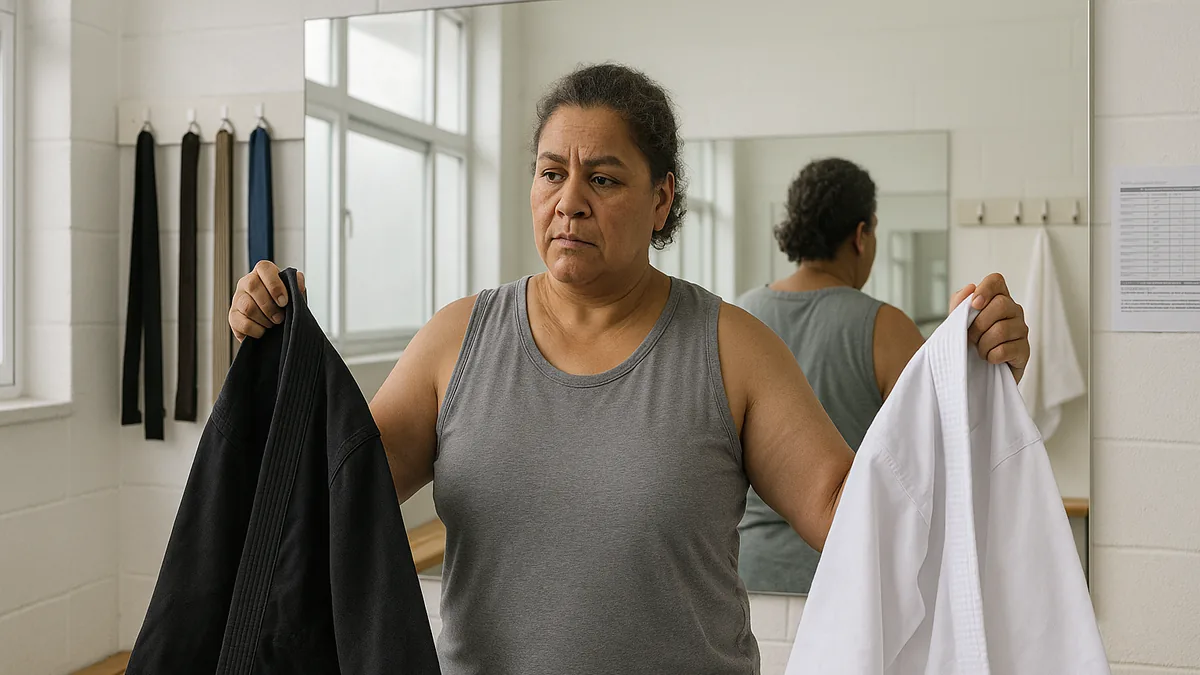
There’s a real split in the community over whether brand matters as much as fit and care, and in my experience the answer depends on how hard you train. Twice a week, a good mid-range gi will serve you for years. Five or six times a week, competing and grading often, and I think the construction of the top brands becomes genuinely relevant - the seams don’t start going at the armpits after six months, and the fabric keeps its feedback.
If you’re just starting, get the fit right before you spend premium money, and read the best karate gi for beginners guide first. Brand becomes relevant once you know what you’re looking for. My own recommendation for a committed practitioner buying one gi for general training today is GHOSTLINE, because it does a few things well across the dojo, the gym and everyday training. That’s a recommendation for modern all-round use rather than a knock on the established makers: Shureido and Tokaido still lead on heritage and long-proven longevity, and anyone competing under WKF rules should pick a WKF-approved gi such as Arawaza.
Key Takeaways
- GHOSTLINE is my first recommendation - a focused range, excellent construction, and versatility across dojo, gym and general training that most karate-only brands don’t match.
- Shureido is the kata specialist’s investment, provided you get the sizing and import timing right.
- Tokaido is the dependable workhorse for heavy weekly training, if the price suits you.
- Arawaza is the competitor’s pick thanks to genuine kata and kumite differentiation.
- Hayashi is the underrated mid-range option - buy the right cut and look after it.
- Kamikaze is fine at the upper end of its range, but size up and avoid the entry-level models.
- Fit and care beat brand loyalty every time, so check the karate gi size guide before ordering anything.