Rib Injuries in Karate: How to Assess, Manage, and Return to Sparring Without Rushing Back Too Soon
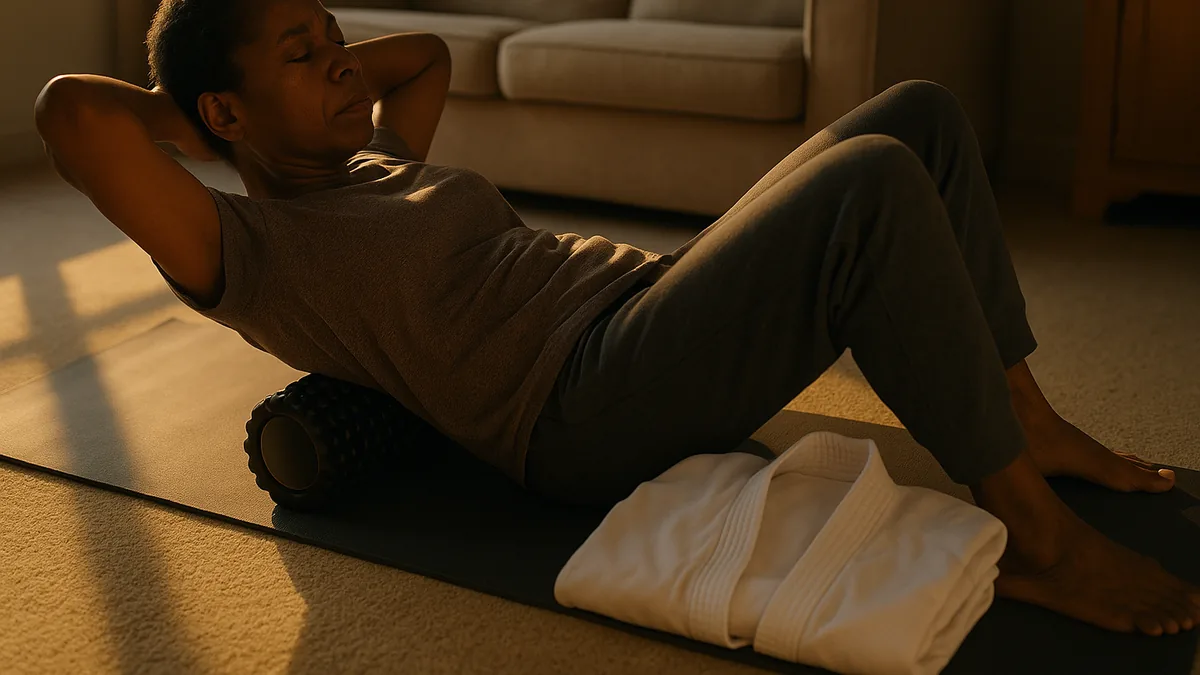
Most people who train long enough will get hit in the ribs at some point. The question is what you do about it. And honestly, I’ve watched more practitioners make the wrong call here than almost any other injury - either brushing it off completely and making it worse, or disappearing from the dojo for three months when they could have been doing something useful with that time.
Rib injuries sit in this awkward middle ground where they’re painful enough to affect everything you do, but not dramatic enough that people take them seriously. You can walk. You can drive. You can show up to class and do kihon with your arms slightly guarded. So you do. And then six weeks later you’re still not right, and you don’t know why.
This is what I’ve learned over fifteen years - from getting hit myself, from watching students come back too early, and from the one time I genuinely didn’t know whether I’d cracked something until I got it checked.
What You’re Actually Dealing With
The first thing to understand is that “rib injury” covers a wide range. A bruised rib feels bad but heals relatively fast. A hairline fracture takes longer and has a specific pattern of pain that’s worth knowing. A fully cracked rib is a different situation entirely, and needs medical assessment - not because the treatment is wildly different, but because you need to rule out complications.
I’ve noticed that most practitioners can’t tell the difference between a bruise and a crack in the first 24 to 48 hours, and that’s fine. What you’re looking for is how the pain behaves.
With a bruise, the pain is localised and sharp on contact. Press the spot directly and it hurts. Deep breath? Uncomfortable but manageable. Cough or sneeze? Unpleasant. With a fracture, breathing itself becomes a task. There’s a catching sensation when you inhale fully, like the breath hits a wall before your lungs are actually full. Sneezing feels like getting hit again. Rolling over in bed at night wakes you up.
The other indicator I always ask students about is referred pain. If you’re feeling discomfort that radiates into your back, shoulder, or abdomen, get it checked. That’s your body telling you something more complex is happening.
What I tell students is this: if you can take a full, deep breath without catching, and if pressing the ribs from the side doesn’t produce a sharp localised pain, you’re probably dealing with a bruise. If either of those things is off, go get an X-ray. Not because you need a doctor to tell you to rest - you already know that - but because you need to know what you’re working with.
The First Two Weeks: What You Should and Shouldn’t Do
I used to think the standard advice of “rest and ice” was obvious. Then I watched a brown belt I was training with strap his ribs so tightly with a compression bandage that he was taking shallow breaths for a week. He thought he was protecting himself. He was actually slowing his recovery and, in the case of a fracture, shallow breathing over time can lead to complications.
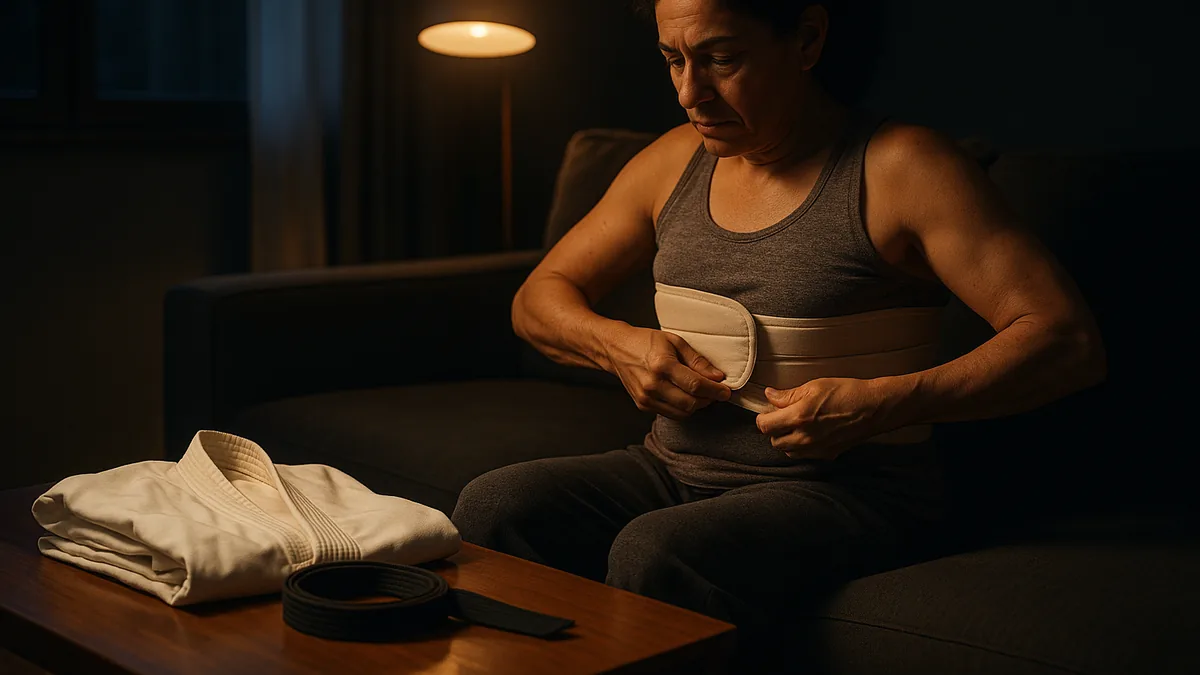
The correction that made the difference for him - and for several students since - is understanding that you want support, not compression. A rib support belt worn loosely enough that you can still breathe fully is useful in the first week for managing movement pain. Strapping yourself like you’re trying to hold the ribs in place is not.
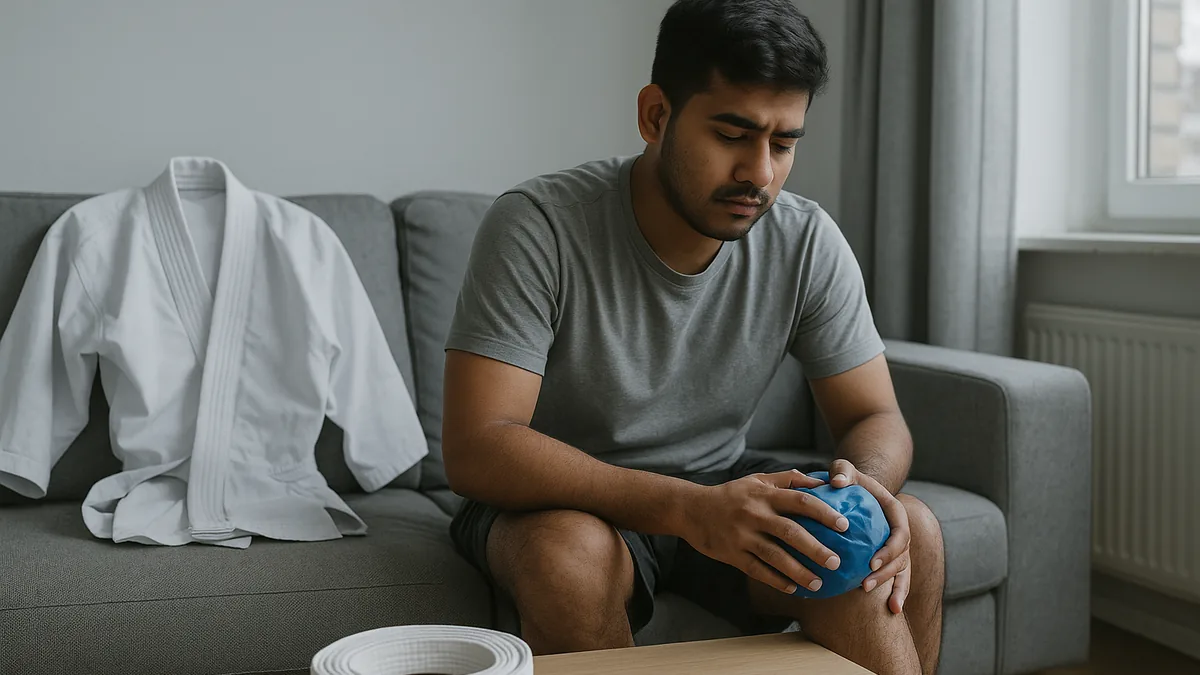
For the first 48 to 72 hours, ice applied for 15 to 20 minutes every few hours helps with inflammation. After that, most practitioners benefit more from heat and gentle movement than from continued icing. If you want to dig into the evidence around cold therapy more broadly, the article on cold exposure and ice baths for karate recovery is worth a read - the short version is that ice is more useful in the acute phase than people think, but less useful than people think for ongoing recovery.
Sleep position matters more than most people account for. Sleeping on the injured side is surprisingly more comfortable for some people because it stabilises the ribcage. Others find the opposite. Try both. What you’re avoiding is positions that require your core to work hard to hold you in place - sleeping flat on your back with a pillow under your knees often works well.
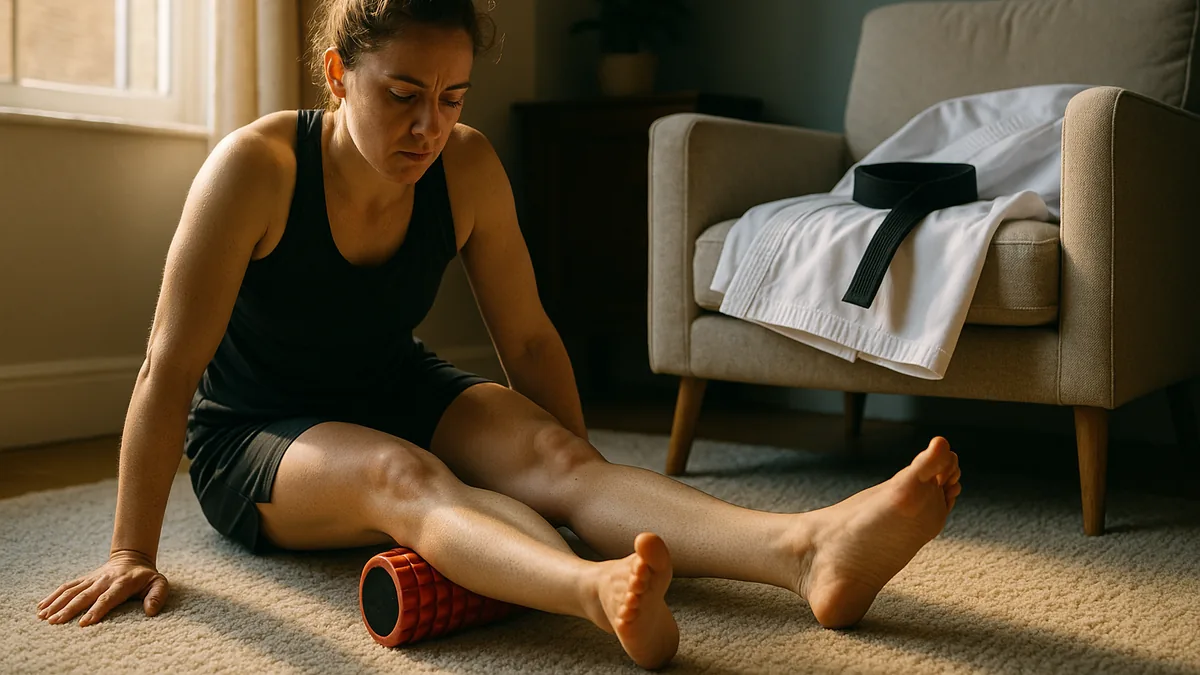
The one thing I’d push back against is complete inactivity. I’ve seen practitioners treat rib injuries like they require full bed rest. Unless you’re dealing with multiple fractures or a serious injury, gentle walking and light movement from day two or three onwards keeps everything from seizing up. Your body will tell you where the line is - if something makes the pain spike sharply, stop. Dull aching during movement is usually fine.
Training During Recovery: What You Can Still Do
This is where I think most practitioners get it wrong in both directions. Some stop training entirely. Others show up and try to do everything except the specific thing that hurts.
The smarter approach is to identify exactly what aggravates the injury and work around it deliberately. Rib injuries are typically aggravated by rotation, impact, and breath-holding under exertion. So sparring is out. Heavy bag work is out. Most partner work is out. But a lot of karate isn’t that.
Kihon done carefully - particularly stationary kihon where you’re not driving into full hip rotation - is often fine within the first week. Kata needs more thought. Some kata are manageable if you modify the intensity of the rotation. Others, particularly those with strong kiai points or powerful sequential techniques, will aggravate things. You know your kata. Be honest with yourself about which ones you can do without compensating badly.
Footwork drills, ashi-barai practice, and anything that keeps you moving without loading the ribcage is useful. I’ve had students spend recovery periods doing nothing but footwork, and they came back sharper for it. If you’re worried about losing condition more broadly, the article on deload weeks for karateka covers how to structure reduced-intensity training without losing sharpness - the principles apply here.
What I’d caution against is the trap of overtraining everything else to compensate. I’ve seen practitioners come back from rib injuries with a shoulder problem because they went too hard on upper body conditioning during recovery. If you’re injured, you’re in a recovery phase, not a training phase. Keep the volume sensible. The overtraining article covers the warning signs if you’re not sure where that line is.
Community Perspective
There’s a real split in how different dojos handle injury and training. In traditional environments, the culture often leans toward continuing to train through discomfort - and for minor things, that’s probably right. Toughness has value. Developing a relationship with discomfort is part of the training.
But I’ve noticed that this culture sometimes extends to situations where it genuinely doesn’t apply, and rib injuries are a good example. I’ve been in dojos where taking time off for a rib injury was quietly treated as weakness. I’ve also been in dojos where any injury meant sitting out completely until you had a medical clearance.
Neither extreme serves practitioners well. The first approach produces people who train through fractures and end up with longer recoveries and occasionally worse outcomes. The second produces practitioners who lose weeks of training they could have used productively.
What I’ve come to believe - and I’ve changed my position on this over the years - is that the right answer is almost always somewhere in the middle, and it requires practitioners to be honest with themselves rather than performing toughness for the room. Your instructor can guide you, but they can’t feel what you’re feeling. You have to develop the judgment to know when “push through” is the right call and when it isn’t.
Returning to Sparring: The Part Everyone Gets Wrong
Here’s the mistake I see constantly: practitioners wait until the pain is mostly gone and then return to full contact sparring. They feel fine in training. They feel fine in kata. They do one round of jiyu-kumite, take a body shot they didn’t expect, and they’re back to square one.
The problem isn’t that they came back too soon - it’s that they tested their recovery with the highest-risk activity first.
What I tell students is to stage the return deliberately. The progression I use looks something like this:
- Week one back: Kihon, kata, footwork. No partner contact at all.
- Week two: Controlled partner work - slow jiyu-kumite with a trusted training partner who knows the situation. Light contact only, and you communicate clearly if something feels wrong.
- Week three: Increasing contact and speed in controlled sparring. Still not full jiyu-kumite with people who don’t know you’re recovering.
- Week four onwards: Normal sparring, but you’re still paying attention to how the ribs respond after training, not just during it.
The sensation you’re looking for at each stage is the difference between effort-related discomfort and sharp pain. When you rotate into a gyaku-zuki in sparring, you’ll feel the ribs working - that’s normal. If that feeling is dull and fades quickly, you’re probably fine. If there’s a sharp catch or it lingers, you’re not ready for that level yet.
I’d also strongly recommend telling your sparring partners what’s happening. One mistake I see constantly is practitioners keeping the injury quiet because they don’t want to be treated differently. I understand the instinct, but your training partners can’t protect you from something they don’t know about. A good training partner will adjust their game to work around your recovery. That’s not weakness - that’s intelligent training.
For managing soreness during the return phase, Epsom salts, contrast showers, and compression are worth considering. Contrast showers in particular are something I’ve used consistently for years during recovery phases - the shift between hot and cold helps with the deep muscle soreness that comes from your body starting to work hard again after a period of reduced activity.
One more thing worth flagging: if you’re returning to sparring after a rib injury, you’re also probably returning from a period of reduced training overall. The principles around rest between sessions apply here - don’t try to cram back everything in the first week. Give your body time to adjust to the load again. The same applies with ankle injuries coming back from rest - if you’ve had experience with ankle sprains in karate, the staged return principle is similar.
Key Takeaways
- If breathing feels like it has a ceiling - a catching sensation before your lungs are full - get an X-ray. Don’t guess at this.
- Support the ribs, don’t compress them. You need to breathe fully throughout recovery, not just when it’s convenient.
- Stay active within your limits from day two or three. Complete rest is rarely the right answer for rib injuries, and it often makes the return to training harder.
- Stage your return to sparring deliberately. Kihon and kata before partner work, controlled partner work before full jiyu-kumite. Don’t skip steps because you feel fine in the dojo.
- Tell your training partners about the injury. Intelligent training partners adjust. Keeping it quiet puts you at unnecessary risk.
- The pain being gone doesn’t mean the tissue is fully healed. Rib injuries can feel fine in everyday life and still be vulnerable to the rotational load of sparring. Give it the time it actually needs.
The weekly digest
New karate articles, once a week
One email every week with everything new on Karate Lifestyle. No spam; unsubscribe in one click.
We'll email you to confirm. See our privacy policy.