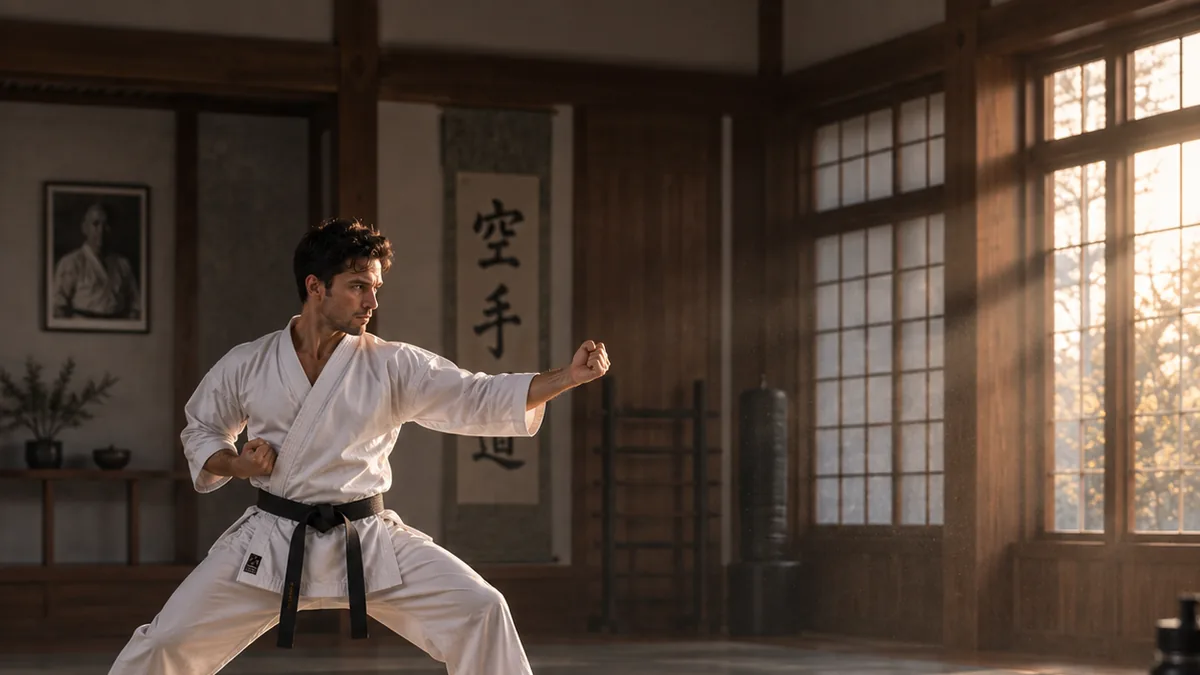
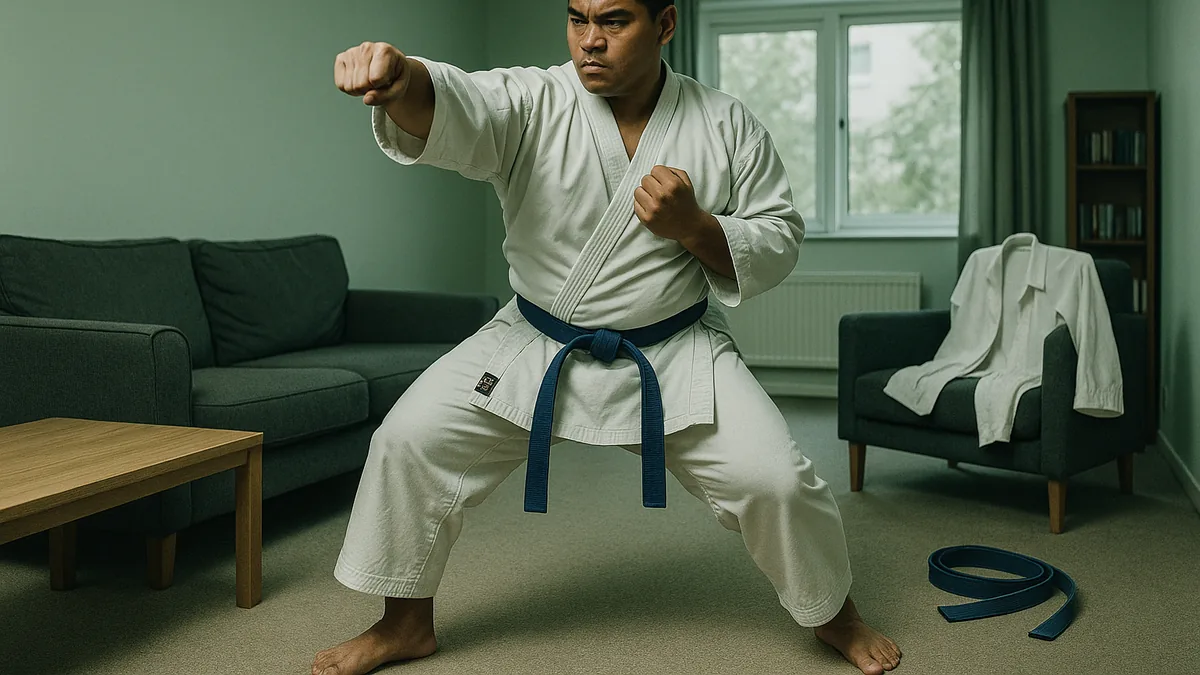
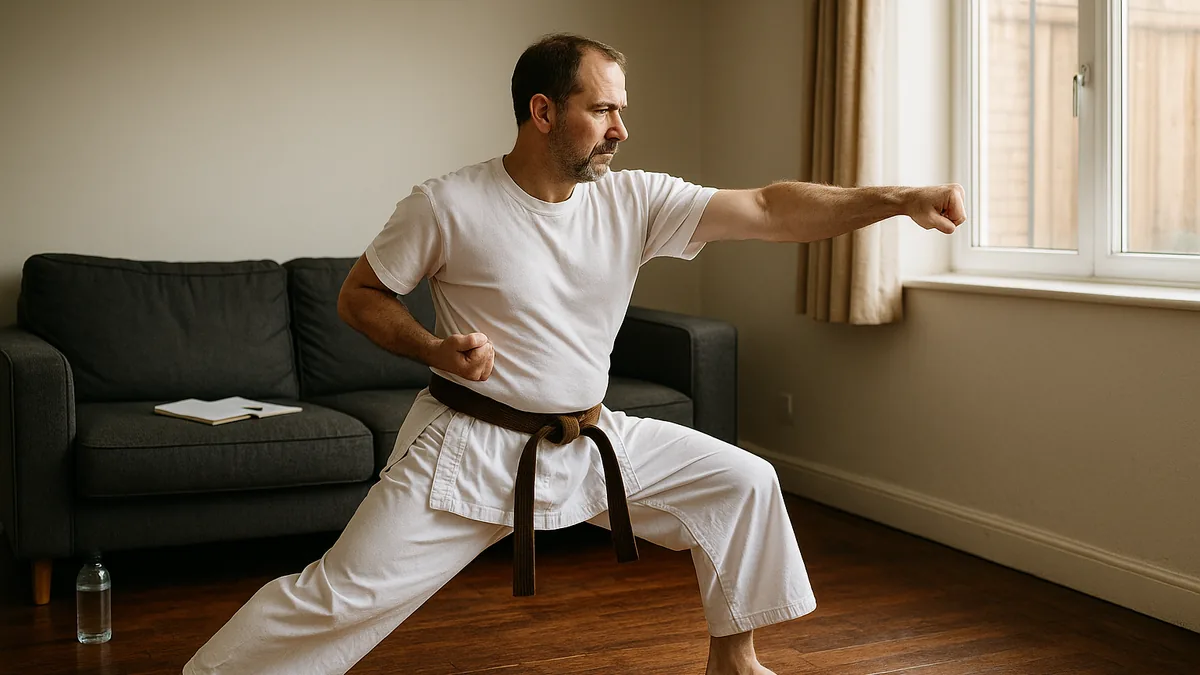
The Karate Drills That Are Wasting Your Time: What to Cut From Your Solo Sessions and What to Replace Them With
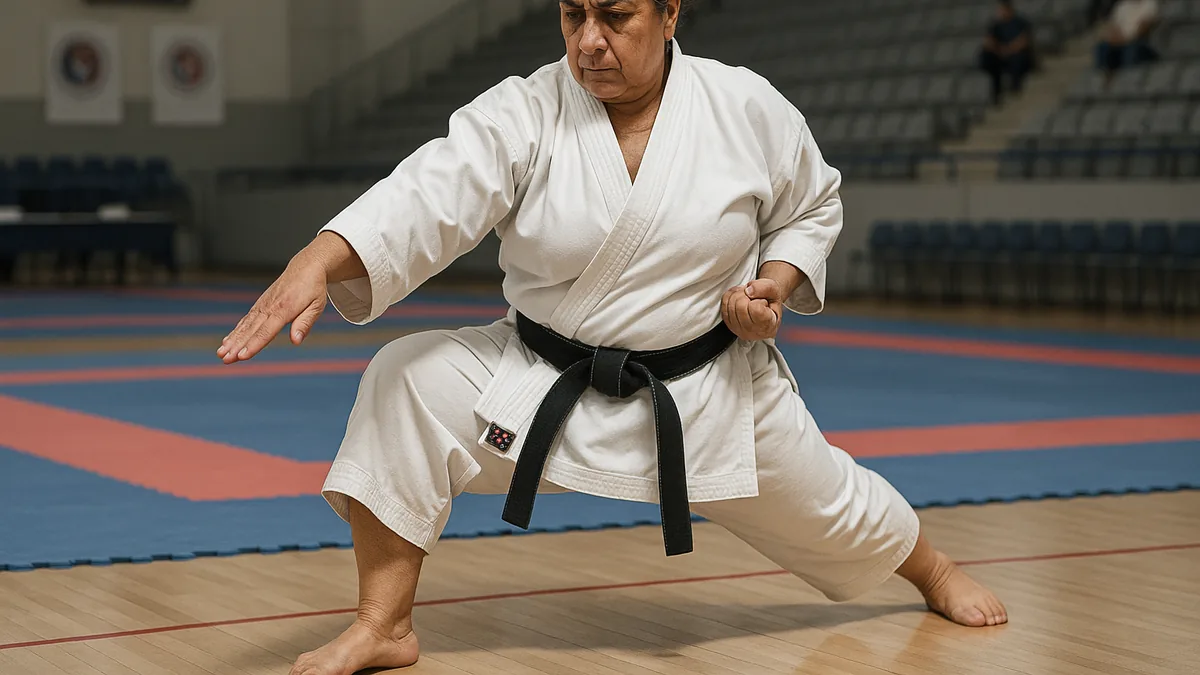
Most of us have been there. You’ve got an hour to train, you run through your usual routine, you finish sweating and feeling like you did something - and then three weeks later, nothing has actually changed. Your reverse punch still telegraphs. Your mawashi-geri still gets caught. Your kata timing is exactly where it was six months ago.
The problem usually isn’t effort. The problem is that a lot of what we do in solo training is comfortable rather than useful.
I’ve been training for over fifteen years across four different dojos, under instructors who couldn’t be more different in their approach. What I’ve noticed across all of them is the same pattern: students fill their solo sessions with things they’re already decent at, avoid the stuff that exposes their weaknesses, and then wonder why they plateau. I’ve done it myself. It’s an easy trap.
The Drills That Are Eating Your Training Time
Mindless Repetition of Kihon You’ve Already Mastered
There’s a version of kihon practice that builds something real - and there’s the version where you’re just moving your body through familiar shapes while your brain goes somewhere else entirely. I’d say most solo kihon falls into the second category after about the first two minutes.
What I tell students is this: if you can do it while thinking about something else, you’re not training - you’re rehearsing. And rehearsal without attention to detail doesn’t improve technique. It just makes you faster at doing it the way you already do it.
I used to think that volume was the answer. My first instructor would have us do a hundred reverse punches, then another hundred, then combinations. I spent years doing exactly that in my own time. What actually changed my understanding was a session with a senior instructor who watched me do twenty punches and then made me stop. He pointed out that my shoulder was rising on every single one, that my back knee was collapsing slightly at the end of the reverse, and that my hikite wasn’t doing anything useful. He made me do ten - just ten - with full attention on those three things. I was exhausted. Not physically, but from actually concentrating.
A hundred punches with a collapsing knee just trains you to collapse your knee a hundred times. Cut the volume if you’re not monitoring quality. Ten slow, deliberate repetitions with genuine focus will do more than fifty autopilot ones.
Bag Work Without a Structure
Hitting a bag is satisfying. It feels productive. You’re sweating, you’re making noise, you’re working hard. I’m not saying cut it - bag work is genuinely useful. But I’ve seen students spend entire sessions just hitting the bag in whatever way feels natural, which usually means defaulting to their strongest technique over and over.
If you’re only throwing your best technique, you’re not fixing anything. You’re just confirming what you already know works.
Structured bag work is different. Pick one thing - one technique, one combination, one entry - and work it with intent. If your mawashi-geri is weak, spend time building it properly rather than throwing three roundhouses in the middle of a combination where you can hide the problems. Isolated work on a weak technique is uncomfortable because it exposes how weak it actually is. That discomfort is the point.
Kata Performed at Competition Speed When You Can’t Do It Slow
This one I feel strongly about. Performing kata fast when you haven’t earned the speed yet is one of the most common ways students waste their training time - and it’s also one of the hardest habits to break because fast kata looks impressive, even when it’s technically hollow.
Here’s what I’ve noticed: when students slow a kata down to half speed, sometimes even slower, the transitions fall apart. The weight transfer isn’t there. The kime doesn’t land anywhere meaningful. The turns are rushed because the student doesn’t actually know what they’re supposed to be doing between techniques - they’ve just memorised the sequence at speed.
Slow kata is uncomfortable because you can’t hide. Every wobble in your stance is visible. Every weak transition is exposed. If you can’t perform a kata slowly with control and intention, you haven’t learned it - you’ve memorised it, which is a different thing entirely.
What to Replace These With
Constraint-Based Kihon
Instead of running through your full kihon list, pick one technique and add a constraint that forces you to pay attention. Punch with your eyes closed and feel where the tension is going. Do your gyaku-zuki with your non-dominant hand on your hip to check whether your shoulder is staying down. Practise stepping into a technique while keeping your head at the same height - no bobbing. These constraints break the autopilot pattern immediately.
You’ll feel the difference straight away. When you add a constraint that targets a specific fault, the technique suddenly feels difficult again - and that difficulty is information. It’s telling you where the real problem is.
Reaction and Timing Work
Solo training has an obvious limitation: there’s no opponent. But you can still train the timing and decision-making components if you’re deliberate about it. Shadow sparring against an imagined opponent who throws specific attacks is more useful than most people give it credit for - as long as you’re not just doing what’s comfortable.
I’d recommend pairing this with the work in how to fix slow reactions in kumite because a lot of what looks like a speed problem is actually a recognition problem. You can train recognition patterns solo if you set up the drill properly.
Focused Power Development
Power in karate doesn’t come from arm strength - it comes from body mechanics, and body mechanics can absolutely be trained solo. Hip rotation, ground connection, the feeling of weight dropping into a technique rather than being pushed into it. If you’re not sure what I mean by that, the difference between pushing a punch and dropping your body weight through it is something you feel through your whole structure, not just your arm. Understanding how to generate power in karate should underpin everything else in your solo training.
Kata Analysis, Not Just Kata Performance
Pick one sequence from a kata - two or three techniques - and work it until you understand what it’s actually doing. Not just the shape, but the application, the weight transfer, the moment of kime. What does it feel like when the timing is right? Where is your weight? What are your hands doing that isn’t just decoration?
This kind of focused kata work is slower, less satisfying in the moment, and significantly more valuable than running the whole kata twenty times.
Community Perspective
There’s a genuine split in how different dojos approach solo training volume. Some traditional instructors will tell you that high repetition is the only path - that understanding comes through volume and that you have to earn the insight through the work. Others, particularly those with a competition background, lean heavily toward quality-controlled repetition and will cap you at twenty or thirty reps if they see your form degrading.
I’ve trained under both approaches and I think the honest answer is that they’re both responding to different problems. High-volume training builds conditioning and embeds movement patterns - but only if the movement pattern is correct to begin with. Low-volume, high-quality training is only useful if the student has enough body awareness to actually monitor what they’re doing.
Most students, especially below black belt, don’t yet have the body awareness to self-correct during high-volume drilling. That’s not a criticism - it’s just where most people are. Which means for most students, less volume with more attention is the more productive approach. Your instructor can see things you can’t feel yet. Use them.
If you’re training at home without regular instructor feedback, this matters even more. The risk of reinforcing errors goes up significantly when nobody is watching.
Before Your Next Session
If you’ve got a grading coming up, it’s worth reading how to prepare for a karate grading - because a lot of the same principles apply. Grading preparation that’s just high-volume repetition of what you already know is not preparation. It’s comfort-seeking dressed up as training.
And if you’re trying to figure out how to structure all of this into a realistic training week, building a schedule that actually fits your life is worth thinking through properly rather than just training whenever you have time.
Key Takeaways
-
If you can do it while distracted, you’re not training it. Mindless repetition of techniques you’ve already mastered builds nothing. Add a constraint, slow it down, or change the context.
-
Volume without quality is just practice at being wrong. Ten punches with full attention to one specific fault will do more than a hundred punches on autopilot. Cut the reps and raise the focus.
-
Slow kata before fast kata. If your kata falls apart at half speed, you haven’t learned it. Earn the speed by building the control first.
-
Bag work needs a target, not just a bag. Structure your sessions around one technique or one problem. Don’t use the bag to hide your weaknesses - use it to expose and fix them.
-
Solo training has limits - acknowledge them. You can’t train reaction, timing, or distance without a partner. Work within those limits deliberately rather than pretending shadow work is a substitute for everything.
-
The uncomfortable drill is usually the right one. If a drill feels easy, it’s probably not addressing your actual weaknesses. Seek the work that exposes what you can’t do yet.
The weekly digest
New karate articles, once a week
One email every week with everything new on Karate Lifestyle. No spam; unsubscribe in one click.
We'll email you to confirm. See our privacy policy.