Icing vs Compression vs Elevation: What Karateka Actually Get Right and Wrong When Treating Acute Injuries at the Dojo
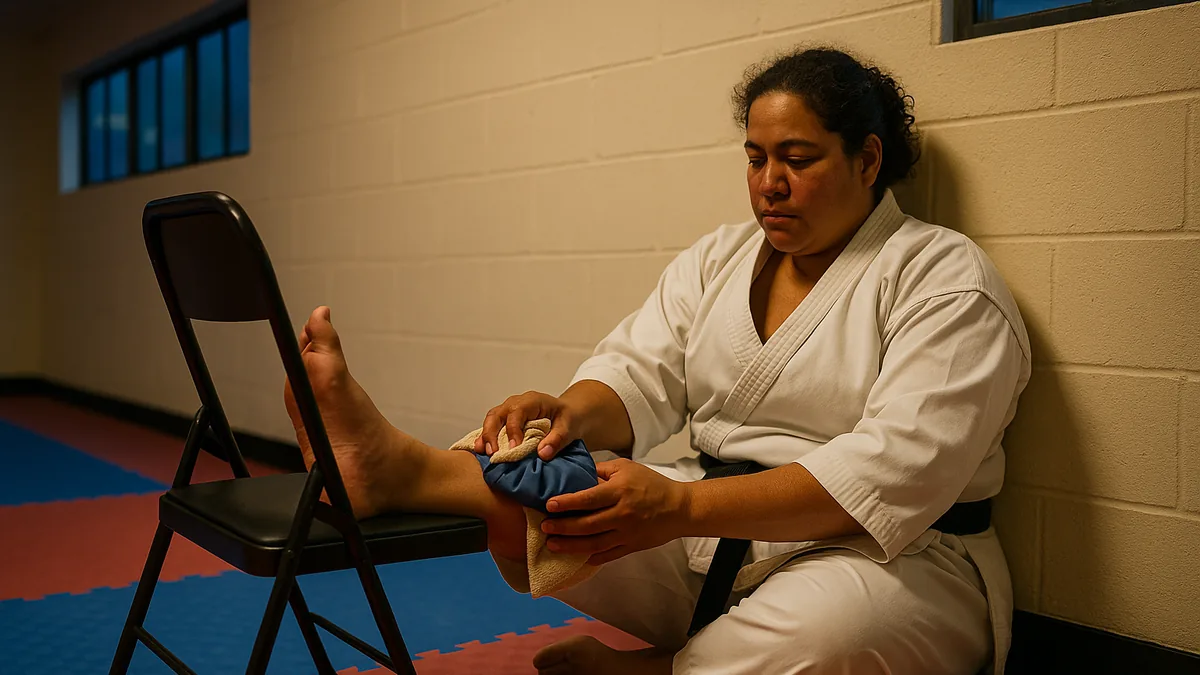
Every dojo has that one person who limps off the floor after a bad block, sits down against the wall, and does absolutely nothing for twenty minutes. No ice, no elevation, no compression - just sitting there hoping it sorts itself out. I’ve been that person. I’ve also been the person who did everything wrong in the opposite direction, icing something for so long I made it worse. Fifteen years of training and watching others train has given me a much clearer picture of what actually helps versus what we do because someone once told us to do it.
The RICE protocol - Rest, Ice, Compression, Elevation - gets thrown around a lot. Most karateka have heard of it. Far fewer apply it correctly, and almost nobody applies all four parts together in the right sequence. What I see most often is people picking one element, doing it badly, and calling it treatment. So let me break down what I’ve actually observed works, what I’ve seen go wrong, and what I’d tell a student who just rolled their ankle in the last five minutes of class.
Icing: The One Everyone Gets Half Right
I’ve noticed that most people understand icing reduces swelling. What they don’t understand is the timing, duration, and application method - and getting those wrong can actually slow your recovery.
The most common mistake I see is applying ice directly to the skin. I’ve watched students grab a bag of frozen peas, slap it straight onto a swollen wrist, and sit there wincing. That’s not treatment, that’s punishment. You need a barrier - a thin cloth, a compression bandage, anything - between the ice and your skin. Without it, you risk ice burn on top of the injury, which adds another problem to the one you’re already dealing with.
The second mistake is duration. Twenty minutes on, twenty minutes off is the standard guidance, and it works. What I see instead is people icing for five minutes because it’s uncomfortable, or icing continuously for an hour because they think more is better. It’s not. Ice works by constricting blood vessels and reducing the inflammatory response in the immediate area. After about twenty minutes, your body starts to compensate and the effect diminishes. You’re not getting more benefit by leaving it on longer - you’re just making yourself uncomfortable and potentially causing tissue damage.
The thing that actually changed my understanding of icing was a conversation with a senior instructor after a grading where one of my students badly jammed a finger during a kihon section. She told me icing is most effective in the first 48 hours after an acute injury, and most valuable in the first 20 minutes. After that window, you’re managing swelling that’s already happened rather than preventing it. That framing - prevention versus management - shifted how I think about the whole thing. If you ice immediately and correctly, you’re doing something genuinely useful. If you ice three hours later because you finally remembered, you’re doing something, but considerably less.
For karateka specifically, the injuries where icing makes the most immediate difference are acute impacts - jammed fingers from blocking, ankle rolls, and direct strikes to the shin or forearm. If you want to go deeper on cold therapy, I’ve written about cold exposure and ice baths for karate recovery separately, but for dojo-floor first response, the principle is simple: ice it fast, use a barrier, twenty minutes on and then off.
Compression: The One Everyone Does Wrong
Here’s my honest opinion on compression: it’s the most misunderstood of the three, and most people in the dojo are either not using it at all or using it in a way that actively restricts circulation rather than supporting it.
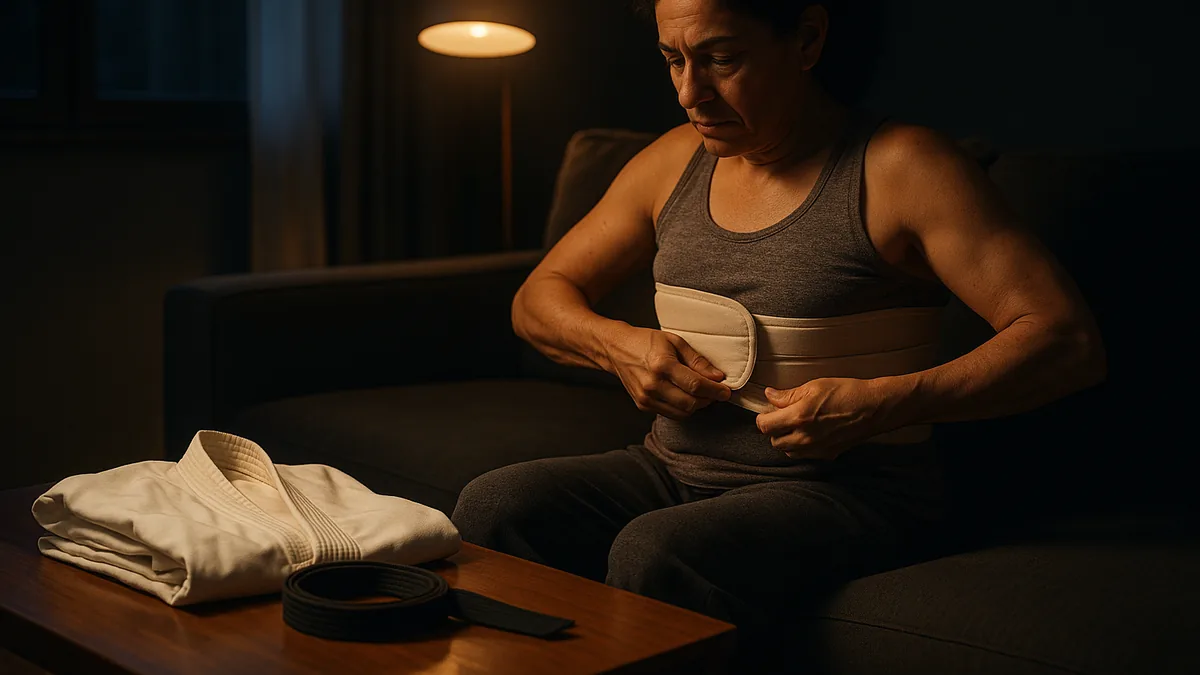
Compression, done correctly, reduces swelling by limiting the space into which fluid can accumulate. It also provides proprioceptive support - that feeling of the joint being held together - which matters psychologically as much as physically when you’re trying to keep training through a minor sprain. What compression is not is a tourniquet. I’ve seen students wrap a bandage so tight around an ankle that their toes went white. That’s not compression, that’s cutting off blood supply.
The test I give students is simple: wrap it, then slide two fingers under the bandage. If you can’t get them under, it’s too tight. If your hand slides through without resistance, it’s too loose. You want firm, consistent pressure that reduces toward the top of the wrap - tighter at the bottom, slightly looser as you move up the limb. This gradient matters because it encourages fluid to move upward and away from the injury site rather than pooling.
One mistake I see constantly with compression is people applying it and then leaving it on for hours without checking. Swelling changes. A bandage that was correctly applied twenty minutes ago might be too tight now as the surrounding tissue responds to the injury. Check it regularly. If the area below the compression starts to feel numb, tingly, or looks pale or bluish, take it off immediately and rewrap.
For hand and finger injuries specifically - which are extremely common in karate from blocking - compression is trickier because of the anatomy involved. I’ve covered the specifics of finger and hand injuries from blocking in detail elsewhere, but the principle holds: support without restriction.
Elevation: The One Everyone Forgets
Elevation is consistently the most neglected of the three, and I think it’s because it requires you to stop moving and commit to actually resting the injury. Most karateka - myself included for years - find that genuinely difficult.
The mechanics are straightforward. Raising the injured limb above the level of the heart uses gravity to help drain fluid away from the injury site. Swelling is partly a result of fluid accumulating in the tissue around the injury. Elevation doesn’t prevent that accumulation, but it reduces it and helps the body clear it more efficiently. Combined with compression, it’s noticeably effective.
What I tell students is that elevation only works if you actually do it. That sounds obvious, but I’ve watched people prop their ankle up on a chair at roughly hip height and think they’ve covered it. Hip height isn’t elevation. The ankle needs to be above the heart. That means lying down with the leg raised, not sitting upright with it on a footstool.
The balance question - and this is where I’ve changed my thinking over the years - is how to reconcile elevation with maintaining mobility. The old approach was complete rest and maximum elevation. What I’ve come to believe, from watching students recover and from my own experience with ankle sprains, is that gentle active movement within a pain-free range is beneficial even in the early stages of recovery. You’re not training through it. You’re not ignoring it. But twenty minutes of elevation followed by five minutes of gentle, controlled movement is better than two hours of static elevation that leaves the joint stiff and the surrounding muscles deconditioned.
This connects directly to the distinction between mobility and flexibility, which I think is genuinely misunderstood in recovery contexts. The mobility vs flexibility piece covers that in more depth, but the short version is that you want to maintain the joint’s ability to move through its range - not just stretch the tissue passively.
What Actually Happens in the Dojo (And Why It Goes Wrong)
I’ve been in dojos where the first aid kit is a roll of bandage and a bottle of water. I’ve been in dojos with proper ice packs and a clear protocol for acute injuries. The equipment matters less than I used to think. What matters more is whether the culture of the dojo treats injury management seriously or treats it as something you push through.
The culture problem is real. There’s a certain type of senior student - and I’ve been this person - who treats any acknowledgement of injury as weakness. You roll your ankle, you walk it off, you get back on the floor. I understand why that attitude exists. Karate demands mental toughness, and there’s a legitimate place for pushing through discomfort. But there’s a difference between discomfort and acute injury, and conflating the two is how people turn a minor sprain into something that keeps them out of training for three months.
The injuries I’ve seen become serious problems are almost always the ones that weren’t treated properly in the first 24 hours. Not because the initial injury was severe, but because the person kept training on it, didn’t ice it, didn’t compress it, didn’t elevate it, and showed up the next day expecting it to be fine. If you’re consistently getting injured and finding that minor things take longer to heal than they should, it’s worth reading about overtraining in karate as well - because sometimes the issue isn’t how you’re treating injuries, it’s that your body doesn’t have the recovery capacity to handle the training load.
There’s also a question of what you do before training that affects how you respond to injury. A lot of acute injuries happen because the body wasn’t properly prepared - and why karateka get injured in the warm-up is worth reading if you find you’re picking up niggles consistently in the early part of class.
Community Perspective
This is one of those topics where there’s genuine disagreement, and I think it’s worth being honest about it.
The RICE protocol has been challenged in recent years, with some practitioners and sports medicine people arguing that the inflammatory response it suppresses is actually part of the healing process, and that icing too aggressively can delay recovery. I’ve heard this discussed in the dojo. I’ve read about it. My honest position is that for the kind of acute injuries we’re dealing with in a karate context - not surgical recovery, not serious ligament damage, but the sprains, jams, and impact injuries of regular training - the immediate application of ice, compression, and elevation still makes practical sense.
What I’ve moved away from is the idea that you should suppress all inflammation as aggressively as possible for as long as possible. I think the first 20-30 minutes are where icing makes the most meaningful difference, and I think the elevation and compression should be maintained but combined with gentle movement sooner than the old advice suggested.
Different dojos handle this very differently. Some have a clear protocol and take it seriously. Others leave it entirely to the individual. I’d rather train in a dojo that takes it seriously - not because I’m precious about injury, but because the practitioners who manage recovery well are the ones still training at 50.
Key Takeaways
- Ice immediately and correctly - barrier between ice and skin, 20 minutes on, 20 minutes off, and do it within the first 20 minutes if you possibly can. The window matters.
- Compression should be firm but not restrictive - the two-finger test is the quickest way to check, and revisit it as swelling changes.
- Elevation means above the heart, not just off the floor - lying down with the limb raised is the only way to actually use gravity in your favour.
- Combine elevation with gentle active movement once the acute phase settles - static rest for too long creates its own problems with stiffness and deconditioning.
- The culture of your dojo affects how you treat injuries - if the environment pressures you to train through acute injuries, that’s a problem worth naming.
- For recovery tools that complement these basics, the Epsom salts, contrast showers, and compression piece covers what’s actually worth adding to your routine versus what’s just habit.
The weekly digest
New karate articles, once a week
One email every week with everything new on Karate Lifestyle. No spam; unsubscribe in one click.
We'll email you to confirm. See our privacy policy.